Categories
Books in Translation

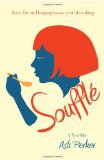
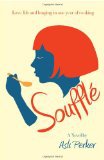
Soufflé by Asli Perker

Souffle Translated from the Turkish

Five words from the blurb: cook, family, freedom, loss, people

Soufflé is a multi-generational story, packed with a passion for cookery. Set in New York, Paris and Istanbul, the novel looks at family relationships and shows how cookery can help to heal emotional wounds.

The book has three main protagonists: Lilia, who is struggling in an unhappy marriage; Ferda, who is looking after her elderly mother; and Marc, who is grieving for his wife. All three discover that food can bring joy back into their lives.

I initially struggled with the number of characters, as the peripheral ones were fully developed and I didn’t realise who the central trio were for a while (I don’t read blurbs when I start a book, for fear of spoilers). But after about 70 pages everything clicked into place and I connected with them all. The emotions felt realistic and I developed a deep sympathy for their problems.

The novel was packed with beautiful descriptions of food. I especially loved the multi-cultural aspect, as many of the flavour combinations were unfamiliar to me. I found myself writing down the names of new dishes; longing to taste the things mentioned.

No, there was no extra ingredient in the bread Ferda baked; her friends were wrong about that. The delicious taste came from the organic wholemeal flour she used, which wasn’t purchased from the supermarket but came straight from the countryside. Her tarhana soup smelled different, of course, because the pepper she used it in had come from Urfa, one of the Eastern cities. What made her meat stew more delicious than other people’s was the lime tree leaf she always added to it. Anyone who ate this stew relaxed instantly and then went on to discover the love in their souls.

I also liked the way the characters struggled with the cooking, showing the mistakes they made and how they improved with practice. It inspired me to try cooking soufflés – I’ll be interested to see if I have better luck than the characters in the book!

My only complaint was that the different settings of the book often felt the same. There was little difference between the scenes set in Turkey and those set in New York. I’d have liked to have seen some more atmosphere, so it was instantly obvious which country the characters were in.

This book shares many similarities with The School of Essential Ingredients and I think anyone who enjoyed Bauermeister‘s book will appreciate this one.

Recommended to people who enjoy reading about cookery.

.
Categories
2000 - 2007 Non Fiction Uncategorized

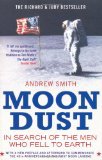
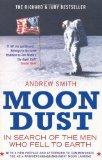
Moondust by Andrew Smith

Moondust: In Search of the Men Who Fell to Earth

Five words from the blurb: moon, journey, men, future, lives

Only twelve men have walked on the moon. Andrew Smith was intrigued by their rare experience and wondered how those few days in space affected their lives. He tracked down the nine moon walkers who were still alive (sadly Neil Armstrong died last year, leaving just eight) and attended space conferences in order to understand the unique place these people have in our hearts.

The book detailed the political and historical events that enabled the space program to occur, something I found particularly useful as I wasn’t alive at the time. It also gave me a new appreciation of how difficult the moon missions had been. I didn’t realise how frequently they came close to disaster and the knowledge that the entire command centre used the same memory as a couple of our modern mobile phones was a scary reminder of how much technology has advanced since then.

Unfortunately the book didn’t explain what daily life was like in space, giving only the briefest details of their time up there; instead the book focused on the way looking back at Earth changed their perspective on life.

….”with the right computer program, it would be possible to know precisely where everything else in the Universe will be ten, or a hundred, or a hundred thousand years from now. The one thing in the Universe that we can’t predict,” he concludes – and we know what’s coming, yet that doesn’t diminish the thought – “the one thing that we don’t know where it’s going to be even ten years from now, is us. We may be small, but we’ve been given the most extraordinary gift in the Universe.”

Most of the astronauts found being in space a profound, life changing experience and it was interesting to see how it had impacted each of their lives in a different way. Coping with their strange celebrity status was another issue they had to learn to master and I felt deep sympathy for the way some of the astronauts were pestered continually. 

My only complaint was the lack of photographs in this book – a small section containing a few black and white images would have been a big bonus. 

Overall this was a thought provoking piece of non fiction and I have a new-found appreciation for the men who risked their lives in order to step foot on the moon. 

.

Categories
2013 Novella

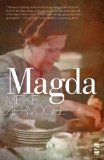
Magda by Meike Ziervogel

Magda

WARNING: Review contains spoilers. If you are unfamiliar with Magda Goebbels’ story and are sensitive to spoilers I recommend that you read the book, not the review!

Five words from the blurb: Goebbells. Hitler, relationship, mother, foreboding

A few years ago I read The History of History by Ida Hattemer-Higgins, a fantastic, albeit slightly weird, book set in Berlin. It introduced me to the story of Magda Goebbels and numerous other families who committed suicide during WWII. Since then I’ve been intrigued by the forces that drive people to kill their own children;  so when I was offered a review copy of Magda I jumped at the chance to read another book on the subject. The fact this one was written by Meike Ziervogel, the founder of Peirene Press, was an added bonus. She has published lots of fantastic novellas over the years and I was interested to see what kind of book she’d write herself.

Magda was an illegitimate child who had a difficult start in life. Her problems seemed to be solved when she fell in love with Josef Goebbels, but his place by Hitler’s side only lead to further heartache.

Humans need hope and faith in order to live. Some are born with the ability to have faith, to have hope. They are the blessed ones, like the Führer, Father and Mother. Most people, however, are born without hope and faith, but they can learn it from a Führer. And then there are people like me. We have to struggle, to fight for our faith and hope. We have to be continuously aware of the enemy inside us. We are never allowed to let go.

The book gives a brief glimpse into Magda Goebbels’ early life, but as the second world war draws to a close, and the family move into Hitler’s bunker, the point-of-view switches to that of her eldest daughter, Helga. I was initially disappointed to see the focus taken away from Magda, but as the book reached its conclusion I realised what a clever structure this was.

The plot was simple and, despite knowing how the story ends, it was still a heart wrenching shock to read the final chapter. The book shares many similarities with Beside the Sea by Veronique Olmi*, one of my favourite books. They both have the same sense of foreboding that permeates every page and a simple clarity that allows the characters and their emotions to shine.

The book left me with many questions about Magda’s decisions, but filling in the gaps gave the story an enduring quality and left me wanting to know even more about the women in Hitler’s bunker.

This is a brief, but powerful book. I highly recommend it.

 .

*published by Meike’s Peirene Press

Categories
1960s Classics

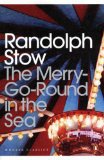
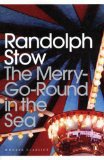
The Merry-Go-Round in the Sea by Randolph Stow

The Merry-Go-Round in the Sea (Penguin Modern Classics)

Five words from the blurb: Australia, remote, war, disillusioned, restless

I hadn’t heard of The Merry-Go-Round in the Sea until David, a regular commenter on my blog, recommended it. Further research revealed it to be an Australian classic, so I thought it would be the perfect book to read for Kim’s Australian Literature month. I’m surprised that it isn’t more well known outside Australia – it is a wonderful piece of literature!

The Merry-Go-Round in the Sea is set in Geraldton, Western Australian and shows how one family is affected by WWII. The story is narrated by Rob, who is six at the start of the book in 1941, and a teenager by the time it ends in 1949. Rob’s older cousin, Rick, is sent to fight and the whole family must deal with the changes brought on by war and the mental scars of those who return from it. 

The main joy of this book is the vivid sense of place – it contains some of the most evocative descriptions of the Australian landscape I’ve ever read:

In winter, rain flooded the gravelled verges of the street and made brown lakes where wooden and paper boats were floated. The soft mud squished up between the boy’s toes. In winter they were forced into shoes and socks, but they took them off and paddled home in the delicious mud.
The stark grey berry-bushes on the vacant land grew green and soft-looking, and put out small, mauve-tinged flowers. Then spring came, loud with bees, and the red berries formed, and in many yards were yellow flowering cassias. When the petals fell, the flowers turned into writhing green snakes full of seeds.

Rob was a fantastic narrator. He was initially too wise for his age, but I was willing to forgive this problem because of the wonderful narrative arc created. The blurb states that the story is semi-autobiographical and it is easy to see the way personal insight has added to the realistic feel of this story.

The only reason I didn’t fall in love with this book is because the plot was too slow for me. The family dynamics and emotions were flawlessly observed, but very little actually happened. It is a testament to the writing quality that I managed to enjoy a book with so little plot at all. 

Overall, I highly recommend The Merry-Go-Round in the Sea to anyone looking for a fantastic Australian book. This classic deserves a wider audience. 

.

australian

.

For more Australian fiction reviews head over to Kim’s blog.


Categories
2013 Historical Fiction Uncategorized

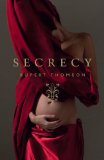
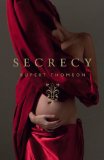
Secrecy by Rupert Thomson

Secrecy

Five words from the blurb: Italy, sculptor, hidden, dangers, revelations

Last year I read The Book of Revelation by Rupert Thomson and was impressed by its original and thought provoking plot. So when an unsolicited review copy of Thomson’s latest book popped through my letter box I was keen to see what he’d written. Secrecy is very different in style to The Book of Revelation, but his ability to write such accomplished books in different genres is a testament to his skill as an author.

Secrecy is a vivid piece of historical fiction set in 17th Century Italy. The central character, Zummo, is an artist who creates macabre models from wax. Zummo has many secrets and is forced to flee from his home town to Palermo, then Naples. Luckily he finds favour with Tuscany’s Medici ruler, Cosimo III, who commissions him to make a large wax sculpture, the nature of which is to be kept secret from everyone around them.

The writing was atmospheric and reminded me of Pure by Andrew Miller in the way it also contained depth and insight:

Secrecy has many faces. If it was imposed on you, against your will, it could be a scourge – the bane of your existence. On the other hand, you might well seek it out. Nurture it. Rely on it. You might find life impossible without it. But there was a third kind of secrecy, which you carried unknowingly, like a disease, or the hour of your death. Things that could be kept from you, maybe for ever.

The plot contained many twists and turns, but none were jaw-dropping – it was simply good old-fashioned story telling. Unfortunately I never connected emotionally with Zummo, but I remained interested in his story throughout. He was a fantastic character and I loved the fact that he was so flawed; encouraging the reader to be disgusted by him one moment and then feel sympathy for him the next.

This period of history was unfamiliar to me so I enjoyed learning at little about life in the Medici court. This book was clearly very well researched, but I liked the way that the historical facts were present, but never over-burdening.

Overall this was an enjoyable read and I’d recommend it to anyone looking for a good piece of literary historical fiction.

.

Categories
2013 Audio Book

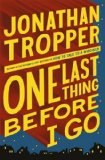
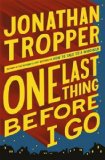
One Last Thing Before I Go by Jonathan Tropper (Audio Book)

One Last Thing Before I Go

Five words from the blurb: mistakes, divorced, refuse, operation, relationships

Jonathan Tropper is one of those authors that I’ve always wanted to try, but for some reason he never made it to the top of my TBR pile. When Sandy raved about the audio version of his latest book I added it straight to my wishlist. Since the book wasn’t published in the UK at the time she kindly offered to send her copy across to me. I’m so pleased that she did as this is a beautifully written book that works very well on audio.

One Last Thing Before I Go centres on Silver, a dysfunctional middle-aged man who is told that he will die unless he has surgery on his heart. Silver decides not to have the operation and is surprised when his ex-wife, daughter, and everyone else, try to persuade him that his life is worth living.

I have to admit that I initially struggled with this book. The first disc (of seven) bored me. I had no interest in this former rock star, his divorce, or his grumpy outlook on life.

Silver is forty-four years old, if you can believe it, out of shape, and depressed—although he doesn’t know if you call it depression when you have good reason to be; maybe then you’re simply sad, or lonely, or just painfully aware, on a daily basis, of all the things you can never get back.*

Then, part way into the second disc, Silver had his medical emergency and I was instantly engaged. The tone of the book changed as Silver began to think about his fate and I almost began to like him.

Many readers rave about the humour in this book, but I’m afraid it never made me laugh. The jokes were so dry that I barely registered their presence and I suspect that a lot of them went over my head as the Jewish culture is unfamiliar to me. Despite this problem I was impressed by the way Tropper made me sympathise with a man I’d never normally be interested in. His observations of a dysfunctional family felt realistic and there were many pieces of wisdom sprinkled through the text.

I initially thought the narrator was dry and boring, but as the book progressed I realised he was the perfect choice. He sounded exactly as I imagined Silver to be and his lack of enthusiasm reflected that of the character. By the end I was very impressed with everything he’d done.

One Last Thing Before I Go is one of those rare books that enables you empathise with characters that are initially repulsive. Recommended to those who like darker insights into dysfunctional families.

.

Have you read this book?

Which of Jonathan Tropper’s books should I read next?

* Quote taken from Goodreads, as it is difficult to get quotes from audio books.