Categories
2010 Memoirs Non Fiction

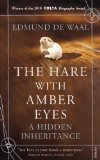
The Hare with Amber Eyes by Edmund de Waal

The Hare With Amber Eyes: A Hidden Inheritance

Winner of the 2010 Costa Biography Prize

Five words from the blurb: Japanese, carvings, history, family, century

Last year I tried to read The Hare with Amber Eyes, but abandoned it after about 50 pages. I was therefore a bit disappointed when my brand new book club picked it as their first title. Unwilling to be defeated by the very first book I battled through the entire thing. Unfortunately it wasn’t to my taste, but it did at least provoke a good discussion.

The book is a history of the author’s family. Edmund de Waal inherited a collection of tiny Japanese carvings called “netsuke” and, by investigating the way these passed through the generations, he charts the story of his family through the last century. Beginning in Paris in 1871, passing through Nazi occupied Vienna, and finishing in Tokyo; the book gives a detailed history of the family as their fortune changes.

Unfortunately this book was too dry for me. It was very well researched, but the details were of no interest to me:

Ten houses down from the Ephrussi household, at number 61, is the house of Abraham Camondo, with his brother Nissim at 63 and their sister Rebecca over the street at number 60. The Camondos, Jewish financiers like the Ephrussi, had come to Paris from Constantinople by way of Venice. The banker Henri Cernuschi, a plutocratic supporter of the Paris Commune, had come to Paris from Italy and lived in chilly magnificence with his Japanese treasures on the edge of the park. At number 55 is the Hotel Cattaui, home to a family of Jewish bankers from Egypt. At number 43 is the palace of Adolphe de Rothschild…..

I just didn’t care! I wanted to know about the lives of these people – their thoughts and emotions.  I didn’t care who they lived next to or how their house was constructed. 

It probably didn’t help that I have no interest in art or classical music and so the famous names mentioned did nothing for me. I was also well aware of the plight of Jews in occupied Vienna and so none of the details were new to me. There were some beautifully described scenes, but I’m afraid these weren’t enough to make up for the long boring sections. 

The first and last chapters, in which the author described his own thoughts, were the only ones that contained any emotion. I wished he’d been able to inject this emotion into other members of his family. I also wished that he’d been able to include more information about the life of his gay uncle. The story of a homosexual man living in less tolerant times would have been far more interesting than the story he actually told. 

Overall this book was too dry and boring for me. Recommended to those who love the history of art.

stars2


.

My Book Club

The first meeting of my new book club went really well. It was a lovely group of women and we had a great discussion about the book. I was a bit worried about going to the meeting having had such a negative reaction to the first book, but luckily most of the group felt the same way I did! Only one member of the group enjoyed The Hare with Amber Eyes, but we managed to discuss its positive attributes and its flaws without any bad vibes. I’m looking forward to discussing the next book, Cloud Atlas, and getting to know these lovely women better.
Categories
2013 Non Fiction Recommended books

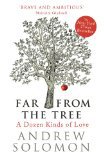
Far From the Tree by Andrew Solomon

Far From The Tree: A Dozen Kinds of Love

Five words from the blurb: parents, exceptional, children, difference, acceptance.

Far From the Tree is the most important book I’ve ever read. It is a masterpiece of research; giving an impressive insight into human relationships and our tolerance of those who are different. If everyone read this book the world would be a better place.

I requested a review copy of this book because, as the mother of a child with autism, I was hoping for some insight into the way my relationship with my son might develop. The book not only managed to do this, but also had a profound impact on the way I view the rest of society. It made me appreciate the similarities that exist between groups that I’d previously thought of as quite separate and it gave me an insight into the problems faced by other parents around the world.

The title takes its name from the phrase “the apple doesn’t fall far from the tree” and, through 700 pages of outstanding non-fiction, Andrew Solomon investigates how parents cope when their children turn out to be different from themselves. The book begins with Solomon’s own experiences as a gay man, and continues to include chapters on many different groups, including the parents of children who are dwarfs, deaf or born from rape. I expected to find the chapter on autism the most interesting, but this wasn’t the case as the details were already familiar to me. I was surprised to discover that I was most interested in the conditions I knew less about – the chapter on schizophrenia was particularly eye-opening and I found myself sympathising with those parents, along with the parents of children who committed horrific crimes, the most.

I normally like to make a note of the important passages that I find whilst reading a book, but just 10 pages into this one I gave up. Almost every page contained some sort of profound insight and this was especially true of the first chapter, Son.

Insofar as our children resemble us, they are our most precious admirers, and insofar as they differ, they can be our most vehement detractors. From the beginning, we tempt them into imitation of us and long for what might be life’s most profound compliment: their choosing to live according to our own system of values. Though many of us take pride in how different we are from our parents, we are endlessly sad at how different our children are from us.

This opening section was one of the most impressive pieces of writing I’ve ever read and, if the length of the entire book intimidates you, I urge you to at least read the first 48 pages – they summarise the key findings of Solomon’s research and, although you’ll miss out on many wonderful examples of parents explaining their problems and accomplishments, you’ll come to realise how people can be united and supported by others who experience difference.

The only negative aspect of this book was that after a while some of the parent’s testimonies began to feel repetitive. Overall this was a good thing as it emphasized the fact that the parents of this diverse range of children all experienced the same set of emotions.

For me, the take home message of this book comes from Ari Ne’eem, a man with Asperger’s syndrome who is quoted in the chapter on autism:

Society has developed a tendency to examine things from the point of view of a bell curve. How far away am I from normal? What can I do to fit in better? But what is at the top of the bell curve? Mediocrity. That is the fate of American society if we insist on pathologising difference.

I cannot over-emphasize the importance of this book. It is a modern masterpiece and I’m sure it will be quoted from and referred to for many years to come.

Very highly recommended.

.

Categories
2011 Books in Translation Other Prizes

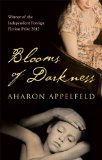
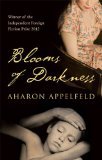
Blooms of Darkness by Aharon Appelfeld

Blooms of Darkness Translated from the Hebrew by Jeffrey M. Green

Winner of the 2012 Independent Foreign Fiction Prize

Five words from the blurb: Holocaust, Jewish, boy, hides, brothel

Blooms of Darkness is set during WWII and follows an eleven-year-old Jewish boy as he is forced to leave his family and hide from the Nazis in a brothel.

Blooms of Darkness is one of the most depressing books I’ve ever read. It isn’t a roller coaster of emotions, it is an endlessly bleak book without a glimmer of hope anywhere. I think the fact it is narrated by an innocent child, separated from his friends and family, makes it have even more impact. The loneliness and grief were heartbreaking and the thought of any child growing up in such terrible circumstances is hard to take.

Very little happened, but the observations and emotions were powerful and realistic – the author’s own experiences as a Jewish boy in hiding gave this book a painful authenticity. The writing style was simple and quiet and it was surprising to see how distressing a book could be without actually containing any graphic scenes.  The fear of discovery and imagining what might have happened to loved ones was enough to give this book a terrible sense of impending doom:

Hugo refused to think about what had happened to Erwin in the ghetto. One night they sealed off the orphanage on all sides, took the orphans out of their beds, and loaded them onto trucks while they were still in their pyjamas. The orphans wept and cried out for help, but no one did anything. Anyone who opened a window or went out would be shot.

It seems wrong to criticise a book for revealing the painful truth, but the continual darkness was too much for me. I longed for a few lighter moments to penetrate the bleakness, but I guess I’ll just have to take comfort in the fact that I’m lucky enough to never have experienced anything like this.

Recommended to anyone who’d like to know what it is like to be a child living in constant fear, but I’m sure it will be too distressing for many.

.

The thoughts of other bloggers:

Aharon has shown why he considered one of the foremost Hebrew writers. Winstondad’s Blog

…there’s nothing in the novel which makes it stand out amongst its peers and competitors. Tony’s Reading List

It’s a sombre work, because it deals with the Holocaust, but it’s beautiful all the same… ANZ Litlovers Litblog


Categories
Books in Translation

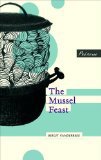
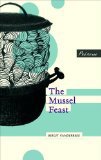
The Mussel Feast by Birgit Vanderbeke

The Mussel Feast Translated from the German by Jamie Bulloch

Five words from the blurb: German, family, issues, revolutions, understand

Beside the Sea is one of my favourite books, but I’ve had less success with other Peirene releases. A few weeks ago Meike, the founder of Peirene Press, assured me that The Mussel Feast would be to my taste, so I decided to accept a review copy. She was right – this is a fantastic book and the ending is particularly good.

The Mussel Feast is a 112 page monologue narrated by a daughter as she waits for her father to return home for dinner. The father is expected to receive a promotion so the family cooks a large pot of mussels to celebrate.  A wonderful sense of foreboding mounts as the father is increasingly late; mirroring Beside the Sea in the way an ordinary situation slowly becomes unbearably tense.

She opened the wine and we felt terribly insubordinate. We sat around the dead mussels as if part of some conspiracy and drank father’s second best wine without him, gradually realizing that the mood had been spoiled for all of us.

The book is set in Germany and was written shortly before the fall of the Berlin Wall. The repressed state that they live in is revealed over the course of the book, perfectly capturing what life is like for a family living under the power of a tyrannical father.

The writing was gripping, despite the meandering narrative, and the lack of chapter/page breaks encourages the reader to complete the book in a single sitting, giving the book maximum impact. 

This is a wonderful little book and I’m sure that a second reading would reveal even more depth. Recommended to anyone interested in thought-provoking international literature. 

.

The thoughts of other bloggers:

For a book so troubled in tone, I found it to be funny and inventive, and with surprising flashes of relatability to familiar aspects of family life… Tolstoy is My Cat

The style is curiously hypnotic… Book Word

…a work which is surprisingly powerful and layered for its size. Tony’s Reading List

Categories
2012 Non Fiction

Consider the Fork by Bee Wilson

Consider the Fork: A History of Invention in the Kitchen

Five words from blurb: kitchen, history, invention, human, decisions

Consider the Fork: A History of Invention in the Kitchen is a light, but thoroughly researched look at the way kitchen utensils have changed over the centuries.  Taking one object at a time, Bee explains how it first came into use and how its shape and popularity have altered over the years. The book includes everything from the most modern methods of sous-vide cookery, to the ancient art of cooking over a fire; charting the way technology has changed our cookery.

The book is easy to read and packed with little facts that surprised me. I found myself telling friends numerous anecdotes from this book and although nothing in here is really useful, it is the sort of information that any kitchen enthusiast will enjoy.

In the early nineteenth century there was even a brief vogue among ‘fashionables’ for eating soup with a fork. It was soon condemned as ‘foolish’ and the spoon was restored.

The only problem was that there was no narrative drive. Once put down, I could easily forget about this book and had no special urge to pick it up again. It is perfect for dipping into over time, but I found it hard to read in the set three week library lending period (another user had reserved my copy so I had no option to renew it).

The chatty writing style meant this book was very accessible, but after a while I craved more depth. I would have liked some tips to improve my own kitchen skills, but this book was more of a social history. There’s nothing wrong with that –  I just prefer books with a greater technical content.

Recommended to anyone with a passion for cookery, especially if you enjoy a lighter writing style.

.

Categories
2000 - 2007 Books in Translation

Hard-Boiled Wonderland and the End of the World by Haruki Murakami

Hard-Boiled Wonderland And The End Of The World

Five words from the blurb: unicorn, librarians, descent, tradegy, detachment

Hard-Boiled Wonderland is my fifth Murakami (I’ve read Wild Sheep Chase, Norwegian Wood, The Wind-Up Bird Chronicle and Kafka on the Shore) but although I loved the bizarre scenes, I think I understood this book less than any of the others I’ve read.

The book contained a dual narrative: one part set in an alternative version of modern Japan, the other in a mysterious walled city. These short, alternating chapters added pace and ensured the reader was never bored.

The plot revolved around unicorns; trying to avoid strange vicious creatures called INKlings; and bizarre experiments on the mind. I loved the first two aspects, but the third confused me. I also failed to understand the book’s concept. I think I’d benefit from reading a study guide, as far too much went over my head.

The writing style was simpler and less vibrant than the other Murakamis I’ve read and I initially struggled to connect with it. It took about 70 pages before I was gripped to the plot and there was one point, about 40 pages in, where I even considered abandoning it. Luckily I persevered and was rewarded with more of Murakami’s unique brand of weirdness.

“Your shadow is on the verge of death. A person has the right to see his own shadow under these circumstances. There are rules about this. The Town observes the passing of a shadow as a solemn event, and the Gatekeeper does not interfere.”

The joy of this book is the way it transports you out of your comfort zone. It is unpredictable, entertaining and completely bonkers, but I wish I there had been more adventure and less complex mind theory.

Recommended to those who are already Murakami fans, as I don’t think this is a good place to start.

.

Have you read this book?

Did you understand it?

Is it your favourite Murakami? 

To find more Japanese literature reviews head over to Tony’s January in Japan blog.