Categories
2014 Books in Translation

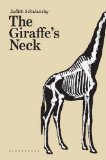
The Giraffe’s Neck by Judith Schalansky

The Giraffe's Neck Translated from the German by Shaun Whiteside

Five words from the blurb: teacher, scorns, students, species, succeed

The Giraffe’s Neck is narrated by Frau Lomark, a biology teacher who believes that Darwin’s principle of evolution should be applied to humans. She thinks that most teachers waste their time indulging their less-able pupils; whilst she prefers to concentrate on giving her knowledge to intelligent individuals – the ones that will make the most use of it.

Frau Lomark was a wonderfully bitter character. Her observations could be considered offensive, but there was something about their honesty that drew me in. The book raised many interesting questions about how much teachers are able to change the lives of their pupils and whether or not is it possible to engage everyone:

It just wasn’t worth it, dragging the weak ones along with you. They were nothing but millstones that held the rest back. Born recidivists. Parasites on the healthy body of the class. Sooner or later the dimmer bulbs would be left behind anyway. It was advisable to confront them with the truth as early as possible, rather than giving them another chance after each failure.

The writing quality was outstanding. Some people might find the biological details confusing, but I was very impressed. It is rare to find scientific information combined with such beautiful writing and I loved to see the moral arguments backed up with sound genetic data.

Unfortunately the plot didn’t develop as cleverly as I’d hoped. The momentum that built up over the first half of the book disappeared, leaving me a little disappointed.

Overall this was a thought provoking book, with many bold concepts. The minor problems with the plot can be forgiven because of the general intelligence of the text.

Recommended to anyone interested in the nature versus nurture debate and the way it applies to teachers.

.
Categories
2000 - 2007 Books in Translation

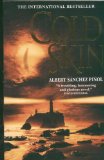
Cold Skin by Albert Sánchez Piñol

Cold Skin Translated from the Catalan by Cheryl Leah Morgan

Five words from the blurb: Antarctic, man, castaway, deranged, sea

I hadn’t heard of this book, but when I spotted it in a charity shop with an endorsement from David Mitchell on the cover I snapped it up. I’ve had amazing success with Mitchell’s recommendations and this didn’t disappoint either. Cold Skin is a beautifully creepy read, with a gripping plot that raises interesting questions about humanity.

Cold Skin begins with a young man taking up the position of weather observer on an island in the Antarctic Circle. He is left in this desolate environment for a year, with only the lighthouse keeper for company. This blurb led me to believe I’d be reading a quiet book about freezing temperatures and loneliness so I was shocked to discover that it is really a battle for survival involving giant humanoid toads!

The characterisation was fantastic. The interaction between the unnamed weather man and the lighthouse keeper was beautifully observed and I loved the way their differing personalities clashed. It’s unusual for the two central characters to hate each other so much and I found this a refreshing change from everything else I’ve read recently.

It had many similarities with Blindness by José Saramago, but I found Cold Skin easier to stomach. Giant toads don’t exist so they don’t give me nightmares; instead they made me think about fear and the instinctive behaviour it creates. It also cleverly showed Man’s impact on the environment, questioning our desire to control any elements of nature we don’t like:

The last flash of lightning illuminated my mind. I had a thousand nameless monsters against me. But they weren’t really my true enemies any more than an earthquake has a vendetta against buildings. They simply existed.

The pacing of the book was perfect. It wasn’t a thriller-like roller-coaster of emotion, but the tension slowly mounted and clever concepts were added throughout. The ending was also fantastic. I won’t spoil it, but I can’t think of many other books that end so perfectly.

This is the best book I’ve read so far this year. Highly recommended.

.

Cold Skin is a great companion read for War with the Newts by Karel Capek. I’ve only read two books containing humanoid amphibians and have loved them both. Can you recommend any others?

Categories
2000 - 2007 Historical Fiction

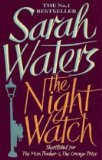
The Night Watch by Sarah Waters

The Night Watch

Five words from the blurb: Londoners, 1940s, streets, secrets, liaisons

The Fingersmith is one of my favourite books so I had high expectations for this one. The Night Watch wasn’t quite in the same league, but I was impressed by Waters’ ability to bring war-torn London to life.

The Night Watch begins in 1947 and goes backwards in time, showing how WWII affected four Londoners. It was a fairly quiet book, concentrating on the relationships and emotions of ordinary people living within the capital.

Every scene was vividly described and the characters were all well developed. I’ve read lots of books about WWII, but this was the first to really make me understand what daily life was like for those who weren’t fighting on the front line.

The period detail was fantastic and it was especially nice to recognise the places in London and to learn how landmarks that I am familiar with were utilised or damaged during the war. The resilience of the characters and their attitude to the ever-present danger of the bombings felt accurate and it was nice to see positive stories layered with the darker ones.

She’d never thought of that before, about all the secrets that the war must have swallowed up, left buried in dust and darkness and silence. She’d only ever thought of the raids as tearing things open, making things hard.

The only negative was the lack of forward momentum.  I’d heard a lot about the amazing backwards structure of this book, but I’m afraid I wasn’t impressed by it. I felt that it would have been stronger with a conventional timeline as the reversal seemed like a gimmick.

Overall this was a beautifully researched piece of historical fiction, packed with atmosphere. I’d have preferred a stronger narrative, but it is still an impressive book and I recommend it.

.

Categories
2000 - 2007 Non Fiction Uncategorized

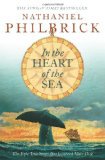
In the Heart of the Sea by Nathaniel Philbrick

In the Heart of the Sea: The Epic True Story that Inspired 'Moby Dick'

Five words from the blurb: whaleship, sinking, crewmen, dramatic, survival

In the Heart of the Sea is an account of the events that inspired Herman Melville to write Moby Dick. In 1820 the whaleship Essex was attacked by a spermwhaleBy combining historical narratives, Philbrick gives a shocking insight into the plight of the twenty crewmen who escaped into lifeboats in the middle of the Pacific. It is a gripping story that shows what happens to the human body when it is starved of food and water, but it is also a chilling reminder of what people are capable of doing in order to survive.

I found the first third of this book slow going. This was because it gave a solid introduction to the whaling industry – facts I was already familiar with from reading the outstanding Leviathan by Philip Hoare. I can’t fault this section and don’t feel it should have been written differently, it is just unfortunate in being the second to inform me of these facts.

Luckily the story quickly began to take a route I was unfamiliar with. The book clearly explained what life at sea was like and I was gripped to the adventure, willing the men to survive. The details of what happened to them as they became dehydrated were disturbing to read, but I also found them strangely fascinating:

Morning came quickly and, with it, a return to the agonies of hunger and thirst. They were now so severely dehydrated that they had begun to lose the ability to speak. “Relief,” Chase wrote, “must come soon, or nature would sink.” They wandered the beach like ragged skeletons, pausing to lean against trees and rocks to catch their breath. They tried chewing the waxy green leaves of the shrubs that grew in cliffs, but they were bitter to taste. They found birds that made no attempt to escape when they plucked them from their nests. In the crevices of the rocks sprouted a grass that, when chewed, produced a temporary flow of moisture in their mouths. But nowhere did they find fresh water.

The period detail was fantastic and the life of a whaler was brought vividly to life. I also liked the way it documented what happened to the women who had been left behind on Nantucket. Their independent life was inspiring to read, showing how a community coped without men in a time when many thought it wrong/impossible.

If you like historical fiction packed with adventure then this is for you. The fact it is all true only adds to its brilliance.


Categories
Film Other

The Book Thief: Film Review

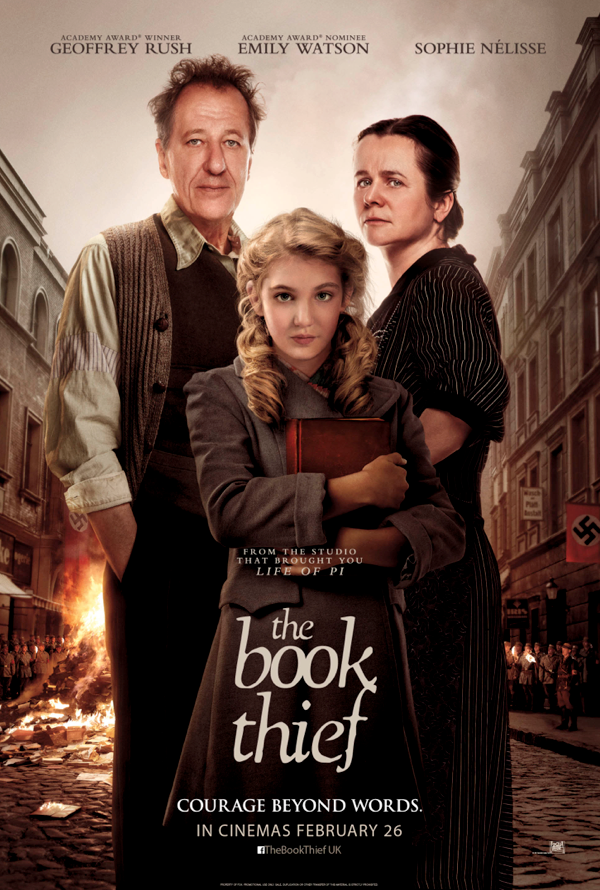
bookthiefI loved reading The Book Thief so was excited to be invited to a special preview screening of the film at the beginning of the month. I was worried about how they’d convert it onto the big screen, especially Death’s narration of events, but luckily my concerns weren’t justified as The Book Thief was a fantastic film and was just as moving as Zusak’s book.

The Book Thief beautifully captured the difficulties faced by German citizens during WWII – a side of the story rarely heard in the UK. It showed the dilemmas faced by ordinary people and the suffering they endured as the war progressed. The acting was flawless and the characters were all well cast. I especially liked Sophie Nélisse’s portrayal of Liesel. She managed to capture a childhood innocence whilst also showing resilience and strength in the face of adversity.

The pace was perfect and I was gripped throughout. It followed the plot of the book very closely and whilst a few scenes were left out this was made up for by the visual impact. Both the book and film contained a wonderful roller-coaster of emotion, but I don’t remember vivid descriptions in the book. Seeing the period detail of the houses, clothes and streets added an extra layer of impact to the story.

The director, Brian Percival, spoke to us briefly before the screening and he explained that he wanted The Book Thief to introduce young teenagers to the subject of the Holocaust. This meant he shied away from graphic scenes and ensured everything was suitable for a young adult audience. I don’t think this hampered the film at all. In fact I think it made some of the scenes more shocking as the observer was left to fill in the details themselves.

The only negative aspect of the film was the language. Most of the actors spoke English, but some original German news footage was included (with English subtitles) and occasionally side characters spoke in German. Common words like “ja” and “nein” seemed to be in German all the time. The switch between languages was sometime jarring – especially when one character spoke in German and another replied was in English. I’d have preferred the entire film to have been in German, but I appreciate that this wouldn’t work for a mainstream audience. It didn’t detract from my enjoyment of the film as a whole, but I’d have preferred more consistency in the language used.

Overall this was a wonderful film. It might even be one of those rare examples of where the film is better than the book. I highly recommend watching it!

.

The Book Thief is previewed in the UK this week and on general release from the 26th February.

Here’s the trailer to whet your appetite:

Categories
2009 Books in Translation

Wetlands by Charlotte Roache

Wetlands Translated from the German by Tim Mohr

Five words from the blurb: intimate, body, provocative, taboo, hygiene

Wetlands is a provocative book that investigates all aspects of female hygiene. It contains graphic descriptions of bodily functions, including detailed descriptions of vaginal discharge and the after effects of rectal surgery. The central character is Helen, an eighteen-year-old girl who is in hospital after a shaving accident resulted in an infection “down-below”. Her parents are divorced and she thinks that if she stays in hospital they may get back together.

I was unsure about whether or not to review this on my blog as it was nauseating to read. It contained endless disgusting descriptions of everything from popping boils to leaving used tampons to sweat in a box. I’ve never read anything like it and was totally gripped by the shocking frankness. When I reached the end I realised that this is an important book. Why do I accept graphic sex and violence in books, but wince at the mention of vaginal discharge?

Whenever I went to the bathroom, sat down, and let my sphincter muscles relax so the piss could come out, I would notice afterward when I looked down – which I like to do – that there was a lovely, big, soft, white clump of slime in the water. With strings of champagne bubbles rising form it.

This book discussed many of the last taboos that exist within our society and, whilst I was repulsed by most of the things Helen did, it was fascinating to learn what goes on inside other people’s heads!

I picked this book up at my local library, where it was sat on a shelf of books that will be released as films in 2014.  Having read the book I am amazed it is being turned into a film and can only imagine the divided response it will get! I’m not sure I’m ready to see all those bodily functions on the big screen, but if you have a strong stomach you’ll find this book different from anything you’ve experienced before.

.