Categories
2009 Chunkster Historical Fiction Mystery Recommended books

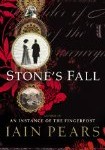
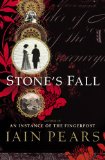
Stone’s Fall – Iain Pears

Let me start by saying that this is my favourite book of 2009 so far – I was completely unprepared for how much I would love this book.

The premise is quite simple: Why did John Stone die, falling out of a window at his London home? The story is a complex mystery, beginning in London in 1909 and gradually revealing the truth by going back in time – first to Paris in 1890, and finally to Venice in 1867.

The book is cleverly constructed so that in the first section John Stone has just died and all the information about him is vague and contradictory. In the second section he becomes a character, so we begin to build a better picture of him and in the final section he is the narrator, so we finally find out the truth about his fascinating life.

I did not want power or wealth for themselves, and did not in the slightest desire fame. But I wanted, on my death, to be able to expire feeling that my existence had made the world a different place.

This is a literary mystery, so the pace is quite slow and at nearly 600 pages it isn’t a quick read, but the length was necessary to create the vivid world and fully formed characters. The astonishing twists were reminiscent of Fingersmith and I am sure I will remember this book for a very long time.

The espionage and financial aspects of the book meant that I thought it would appeal to men more than women, but while I think this is probably true, I am a woman and it is my book of the year! I admit that there were a few sections where the financial implications of events went over my head, but I was quickly brought back to the gripping plot by another development.

This book has everything – a multi-layered complex plot, fantastic characters and a compelling mystery.

Highly recommended to lovers of suspenseful literary fiction.

stars51


I haven’t read anything by Iain Pears before, but after the success of this one I am definitely going to track down all his books.

Have you read anything by Iain Pears?

Which of his books is your favourite?
 

Categories
2008 2009 Books in Translation Chunkster Other Prizes Recommended books

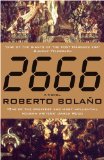
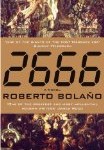
2666 – Roberto Bolaño. Part 5: The Part About Archimboldi

Steph and Claire are hosting a read-along for the highly acclaimed book, 2666, by Chilean author Roberto Bolaño. The novel is 900 pages long, and divided into 5 parts. We are reading one part a month.

Here are my thoughts on Part 5: The Part About Archimboldi

After nearly 6 months I have finally finished 2666! It took me a long time to decide if it was worth the effort – this book has confused me, bored me, and amazed me in equal measure.

I have learnt that Bolaño cannot be predicted and so I had no idea what to expect in this final section. What I found was an enjoyable novel, similar to part 3, in that it could be enjoyed independently. It was easy to read and beautifully written, but as an ending to this colossal book I was a bit disappointed. The explanations for some of the initial mysteries were very mundane and the majority of questions were left unanswered. I don’t mind ambiguity at the end of a book, but I had expected a few revelations and some clever twists. I was left feeling very deflated and a feeling of “is that it?” Hopefully Part 6 will be released soon and will have a much more satisfactory climax.

As a standalone novel, Part 5 was very good. I loved learning about Archimboldi and reading the rich descriptions of his family. I was hooked from the first sentence:

His mother was blind in one eye. She had blond hair and was blind in one eye. Her good eye was sky blue and placid, which made her seem slow but sweet natured, truly good. His father was lame. He had lost his leg in the war and spent a month in a military hospital near Düren, thinking he was done for and watching as the patients who could move (he couldn’t!) stole cigarettes from others.

As with the rest of the book there were also a lot of deeper, more philosophical quotes:

That night, as he was working the door at the bar, he amused himself by thinking about a time with two speeds, one very slow, in which the movement of people and objects was almost imperceptible, and the other fast, in which everything, even inert objects, glittered with speed. The first was called Paradise, the second Hell, and Archimboldi’s only wish was never to inhabit either.

I am very intrigued about why Heaven is slow. I always thought Heaven was perfect and can’t understand why he would say this. Can anyone enlighten me?

There is so much to discuss in this book that I am sure you could study it for years and still have more to uncover. The big question is whether I recommend that you read it and that is a very difficult question to answer. A quick glance as my ratings for each section would probably put you off this 900 page chunkster.

Part 1: The Part About the Critics  stars3h

Part 2: The Part About Amalfitano stars3h 

Part 3: The Part About Fate stars41

Part 4: The Part About the Crimes stars21

Part 5: The Part About Archimboldi stars41

I think this book should be approached with caution. I don’t think I would have made it to the end without the support of the other readalong participants:

RichardEmily, Frances,  Gavin, Isabella, Lu, E.L. Fay, and the wonderful hosts Steph and Claire.

It is a confusing, and at times overwhelming book, but I think it is also the sort of book which grows on you. I think that this book will remain with me, with my appreciation for it growing all the time. There are so many layers and little details which bubble to the surface weeks/months after reading it. I don’t think I will ever discover the point of this book, but I don’t think it matters. This book is a masterpiece, which will become a classic. For that reason I have to award it:

stars51


I have no idea how that happened when I struggled with so much of it, but I can’t deny the power this book has had on me over the last six months. I highly recommend this book to anyone that loves literary fiction. I promise that is is worth it in the end.

Do you think this book will still be read 100 years from now?

Do you recommend it to others?

If you haven’t read it, do you think you will attempt it?

Categories
2009 Non Fiction

Modern Delight – Various

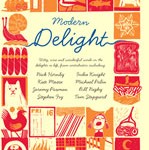
Modern Delight

Modern Delight is a collection of short essays by some of today’s eminent authors, artists, actors, politicians, comedians and celebrities on what gives them delight. The inspiration for the book came from JB Priestley’s Delight which has been re-released to celebrate the 60th anniversary of the publication.
The book gave me immense pleasure – I read a few ‘delights’ each night and frequently found myself laughing, or sharing quotes with my husband. Even the ones which weren’t funny left me with a warm, glowing feeling.

My favourite essay was the one in which Harry Hill (a British comedian) delights in the tormenting of telemarketers.

‘Brrrring! Brrring!’

‘Hello?’

‘Hello, to who am I speaking please?’

‘To whom.’

‘Hello?’

‘It’s to whom am I speaking. You could say “Who am I speaking to?” But not to who am I speaking please.’

‘To whom…I mean, who am I speaking to?’

‘To whom am I speaking?’

‘I’m calling from – Replacement windows.’

‘At last!!’ (as if calling to someone in another room) ‘Darling! fantastic news! – Replacement windows have called us!’

The mad conversation continues and I was crying with laughter by the end.

If you aren’t a fan of comedy then there are a lot more serious, thoughtful delights. I loved Lionel Shriver talking about ‘when anything goes right’ and agree completely with Clive James’s delight in the second-hand bookshop, but one of the most amazing delights was Charley Boorman talking about harvesting potatoes with his motorbike for which he thought after reading at Motorbike Sport. I wasn’t sure this was possible, so was very excited to see this video, proving it to be true!

There are over 80 contributors and I think this book would make a lovely gift. All profits raised from the sale of the book will be donated to Waterstone’s charity partners, Dyslexia Action and the London Library. Unfortunately, this book is only available from Waterstones in the UK, but if you are able to get hold of it, then I’m sure you will be delighted!

stars41


.

Have you read the original Delight?

What would your modern delight be?

Categories
2008 Audies Audio Book Booker Prize Other Prizes Recommended books Thriller

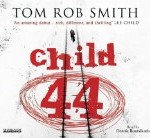
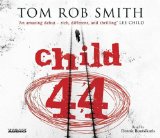
Child 44 – Tom Rob Smith (Audio Book)

Child 44 was longlisted for the Booker Prize in 2008 and it’s presence on the list caused a lot of controversy. I had heard so many different reactions to it that I really didn’t know what to expect. I was planning to read it, but when I saw that it won thriller of the year at the Audies I decided to listen to it instead. I am very pleased I made that decision as it is one of the best audio books I have ever listened to.

The book is set in Stalinist Russia during the 1950s and follows Leo, a state security agent, who slowly realises that the system he is part of arrests and tortures innocent people. He decides to work alone, risking everything to find the identity of a man who is murdering children across the country.

I loved every moment of listening to this book – I was gripped throughout. The complex plot was perfectly paced, the characters believable and packed with layers of emotion which were gradually revealed over the course of the book.

I can see why many people objected to this book’s inclusion on the Booker list – it is not literary fiction and contained no symbolism or hidden meanings buried in the text. It is simply a very good thriller, so anyone after a book to study for hours would be disappointed. As a thriller I can’t fault it – the twists were surprising and well thought out, the dilemmas the characters faced were thought provoking and tragic, and the cold, icy setting was perfect for adding to the chilling atmosphere.

There  were a few gruesome scenes, so the squeamish (especially those who love cats!) should proceed with caution, but I thought the violence was appropriate and was needed to emphasize the difficult circumstances the Russian people had to endure on a daily basis.

I highly recommend this book, especially the expertly narrated audio version, to anyone who loves engaging thrillers.

stars51


Did you enjoy Child 44?

Have you read the sequel, The Secret Speech?

Categories
2008 Science Fiction YA

The Knife of Never Letting Go – Patrick Ness

< ?php echo amazonim('1406320757'); ?>


I picked up this book after reading a powerful endorsement at Jenny’s Books. I have since seen many more rave reviews, so was expecting good things. Unfortunately, it just wasn’t for me.

< ?php echo amazon('1406320757','The Knife of Never Letting Go’); ?>  has one of the most original premises I’ve seen for a long time. The basic idea is that all the residents of Prentisstown have been affected by a virus which killed all the women and enabled the men to hear each other’s thoughts and those of the animals around them. The problem is that being able to hear every-one’s thoughts leads to a constant background noise which drove me mad – I guess this is the idea, but I found it very frustrating to read. 

The pace of the book is incredibly fast, in fact I don’t think I’ve ever read a book which encourages speed reading so much! The problem with this was that there was never any break from the action – you were swept along so quickly that was hard to build a picture of the characters or their surroundings.

I also found it quite confusing at times. It took a while for me to work out exactly what was happening – again I think this was due to the speed of the narrative. Nothing is really explained properly and so you have to grab snatches of information whenever it is dropped in the book.

The dialect in the book is annoying, but on top of that, I don’t understand why words like selecshun, expanshun and recognishun were mis-spelled – it just drove me mad!

Overall, I didn’t find anything good in this book, apart from the premise and I won’t be reading the rest of the trilogy.

Most other people seem to love it though, so don’t take my word for it!

stars21


Is Patrick Ness one of your favourite authors?

Can you explain why this is so good?

Categories
1940s Books in Translation Historical Fiction Nobel Prize

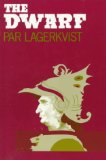
The Dwarf – Pär Lagerkvist

 Pär Lagerkvist won the Nobel Prize for Literature in 1951

Translated from the Swedish by Alexandra Dick

Regular readers of my blog may remember the wonderful post, Recommendations from a non-blogger, written by Heidi. In the post Heidi recommended  The Dwarf  by Pär Lagerkvist, which I have never seen mentioned in the blogging world, so was keen to give it a try.

The Dwarf  is set in an Italian City during the Renaissance. The central character is just 26 inches high and is a servant to the Prince. The story follows them as they are drawn in to war and have to deal with death, disease and betrayal.

The Dwarf is probably the most miserable, bitter and twisted character I have ever read about. He seems to be dissatisfied with every aspect of his life – his anger bubbling through onto every page.

It is my fate that I hate my own people. My race is detestable to me. But I hate myself too. I eat my own splenetic flesh. I drink my own poisoned blood.

This made it very different from any other book I’ve read. His bleak outlook on the world meant that he was a very hard character to like and I had little sympathy for him, but despite this I was fascinated by his story. I loved the historical detail about life in an Italian court and found the attitudes of the people really interesting.

This is a quick, easy book to read, but it is packed with messages about the nature of society and the evil that is lurking within us all.

Recommended.

stars41

Have you read any books written by Pär Lagerkvist?