Categories
2010 Books in Translation Chick Lit

Bad Karma – David Safier

 Translated from the German by John Brownjohn

I receive lots of email pitches from publishers and authors asking if I’m able to review their books. Most are dull and uninspiring, so I was pleasantly surprised when I read the synopsis for Bad Karma. Perhaps it was because I’d had a glass or two of wine before reading the message, but I found myself crying with laughter. I read the email to the relatives I had staying at the time and they all ended up laughing too (although maybe they were laughing at me?!) I instantly accepted the review request and went on to do a bit of research about the author. I discovered that David Safier is a successful German screenwriter, having won many awards including an Emmy. This book became a best seller in Germany, selling 850,000 copies.

Bad Karma is a funny, but thought provoking book about discovering the important things in life. Kim, the central character, is crushed to death by debris from a Russian space station and due to the fact that she mistreated her staff, ignored her daughter and cheated on her husband she is reincarnated as an ant:

Krttx glared after the. ‘Stupid males!’ she snarled. ‘They’re totally useless!’

That, I reflected, was a remark you often heard from human females.

‘The only thing they can do is mate with the Queen.’ Krttx growled.

That, I reflected, was a remark you didn’t so often hear from human females.

I stared after the flying ants. I was so inundated with sensory impressions, I didn’t even hear Krttx cussing. Which was unfortunate, because if I had I would have heard her shout: ‘Move, or I’ll bite you in the backside!’

‘OUCH!’ I yelped and lurched into action again.

Kim then goes on to be reincarnated several times – coming back as a guinea pig, a dog and even an earth worm. The animal point of views were realistic and insightful, but also highly amusing. It was great to see everyday human objects described from the the point of view of tiny insects. The only downside is that I now feel a bit bad about spraying “the Great Mist” at them!

Kim slowly realises what a terrible human being she was and makes an effort to become kinder, building up her karma so that she can be reincarnated as as more intelligent animal. It was only while reading this book that I realised how comforting a belief in reincarnation is. I was surprised at how many important issues were raised during the course of such an amusing book.

This has to be one of the most original books I’ve ever read and I really hope that it is able to gain the audience it deserves outside Germany.

Highly recommended.


Categories
2010 Historical Fiction Non Fiction Recommended books

Young Hitler – Claus Hant

I have recently developed an interest in the psychology behind people who commit acts of evil and so I jumped at the chance to read this book.

Young Hitler is a non-fiction novel showing Hitler’s life as a teenager and young man through the eyes of his best friend.  This was a fantastic device as it allowed us to see his actions and hear his words, but never know exactly what was going through his mind. This meant that many of his actions were open to interpretation, allowing to reader to come to their own conclusions about Hilter’s motivations.

‘No, sir! I live in a world of ideas!’ retorted Dolferl.

‘A mask is an idea,’ countered Herr Maurer. ‘Think of it as an idea that allows you to say and do anything you want amongst strangers who are also posing as ideas. Therefore, everyone and everything is on an equal footing. I find masks allow for a greater exchange of ideas and … everything.’

‘I don’t need any mask to hide behind,’ declared Dorlferl.

‘Then find a mask instead that allows you to become more of who you are,’ replied Herr Maurer.

‘I have that already,’ said Dolferl, pointing to his face. ‘I say whatever I want to whomever I want. And I allow that person the privilege of looking me directly in the eye. And sometimes that, my gracious host, is the most effective mask of all.’

The book was very easy to read and became increasingly gripping as it progressed. I knew very little about Hitler’s early life and so found the details fascinating. It also taught me a bit more about the history of Germany leading up to WWII.

My only problem with this book was that it was a non-fiction novel and there were times, especially in the beginning, when it was more non-fiction than novel. The book was meticulously researched, even including 150 pages of appendices to validate the facts, but there were times when I felt that every tiny detail known about Hitler had to be included. These random details sometimes got in the way of the story and I felt that a few more of these facts should have been left in the appendices.

Overall this was a fascinating book. It is a must-read for anyone interested in Hitler or the causes of WWII, but I think that this insight into Hitler’s life will be of interest to a far wider audience.

Highly recommended.

Categories
1950s Books in Translation Chunkster Classics Historical Fiction Nobel Prize Recommended books

Palace Walk – Naguib Mahfouz

 Naguib Mahfouz won the Nobel Prize for Literature in 1988

Translated from the Arabic by William Maynard Hutchins and Olive E.Kenny

Palace Walk is the first book in the Cairo trilogy, which is normally considered to be Naguib Mahfouz’s greatest achievement. It became a best seller in the Arab world on its release in 1956, but also enjoyed worldwide success, selling 250,000 copies in America.

The book is set in Egypt and describes the life of the Al Jawad family. Every aspect of their day is described in minute detail and so we learn exactly what life was like for the middle-class shopkeeper and his family. The book begins in 1917 and focuses on the complex task of finding someone suitable to marry each of the children.

Men play the dominant role in the household, using the words of the Qur’an to decide the most appropriate course of action. The women in the book were oppressed and spent most of their time shut inside, but at no point did this feel wrong to me. The book made me understand why this society worked in the way it did and at some points I was envious of their tight-knit community and the way the women were so close to each other.

No woman was anything more than a body to him. All the same, he would not bow his head before that body unless he found it truly worthy of being seen, touched, smelled, tasted and heard. It was lust, yes, but not bestial or blind. It had been refined by a craft that was at least partially an art, setting his lust in a framework of delight, humor and good cheer. Nothing was so like his his lust as his body, since both were huge and powerful, qualities that bring to mind roughness and savagery. Yet both concealed within them grace, delicacy, and affection, even though he might intentionally cloak these characteristics at times with sternness and severity.

I loved reading about the complex marriage negotiations and the way the household was run, but the text was so rich with detail that I found I could rarely read more than about twenty pages a day. This meant that it took me about six weeks to read the first 300 pages.

At about this point the style of the book changed, the pace picked up and I flew through the remaining 200 pages in just two nights. WWI brought British occupation to Egypt, changing the lives of the household completely. Seeing fear and tragedy brought to a family I knew so well made the impact much greater.

Palace Walk gives an impressive insight into Egyptian life. I loved the characters and the way I came to understand their very different way of living. I finished this book knowing a lot more about Egyptian history, but also feeling a little bit wiser and more tolerant. I’m looking forward to reading the rest of the trilogy.

Highly recommended.

Have you read The Cairo Trilogy? Are the other books in the trilogy similar in style/pace?

Do you recommend any of Naguib Mahfouz’s other books?

Categories
2010 Booker Prize Chunkster Recommended books

Skippy Dies – Paul Murray

 Long listed for 2010 Booker Prize

One of the reasons I love reading entire long lists is that I stumble upon fantastic books that I wouldn’t otherwise pick up. I had heard good things about Skippy Dies before the Booker long list was announced, but I couldn’t motivate myself to read 650+ pages about teenagers living in an Irish boarding school. I’m so pleased that I read this book as it was entertaining, gripping and insightful.

The book opens with Daniel ‘Skippy’ Juster dying. At first the reason for his death seems obvious, but the plot then goes back in time and we slowly discover that the cause of Skippy’s death isn’t as simple as people initially suspected.

Much of this book could be described as a coming-of-age story, but unlike most other books which describe the lives of teenagers, this book captivated me. Skippy drew me into his emotionally charged world and nearly managed to make me laugh and cry – something no other book has managed to do. I was amazed at how much the everyday school life engaged me – I flew through the book and found every single one of the pages to be captivating and necessary for the plot.

Skippy’s roommate is Ruprecht, an overweight genius trying utilise M-theory to travel to another dimension. I’m a big fan of complex science in literature, but I’m sure that those who struggle to understand physics will still love Ruprecht’s enthusiasm for invention. As well as physics we are also treated to war poetry, Irish folklore and an array of other subjects – I loved it!

As the book drew to a conclusion I became increasingly impressed with the complexity of the plot. When I reached the final page I wanted to start the book all over again, just so I could see the little clues that I’d failed to pick up on.

This book works on so many levels – it is easy to read, but the text hides enough to entertain multiple re-readings.

I can see future generations studying this book and I think it would be a worthy winner of the 2010 Booker Prize.

Highly recommended.

Have I persuaded you to try this book?

Do you think it deserves to win the Booker Prize?

Categories
2000 - 2007 Historical Fiction Other Prizes Recommended books

Sweetness in the Belly – Camilla Gibb

 Finalist for the 2005 Giller Prize

I hadn’t heard of this book, but during a discussion on Canadian literature Claire recommended it and kindly lent me her copy.  I’m so pleased that she brought it to my attention as it was a fantastic read.

Sweetness in the Belly is set in Ethiopia, Morocco and England. The main theme of the book is identity and what it means to be accepted in a community, but this book looks at things from a slightly different angle to other books on immigration.

The central character is Lilly, born to white British parents keen to explore the world. From birth Lilly travels the globe with them, but at the age of eight her parents are killed in Morocco, leaving Lilly to be brought up at a Sufi Shrine. This leads Lily to become a devout Muslim. Political unrest in Morocco forces her to leave the country as a teenager and so she heads for the Ethiopian holy city of Harar. She eventually finds a place for herself in this ancient walled city, but the start of Mengistu’s reign of terror leads her to return to London, a country that feels very alien to her.

It sounds as though I’ve just told you the whole plot, but we learn these facts quite quickly. The book flips forwards and backwards in time, showing us Lilly’s life in each country. It was fascinating to compare the traditions of each country and to learn a bit more about the terrible situation in 1970s Ethiopia. (I first learnt about of Mengistu’s reign of terror by reading Cutting for Stone earlier this year.)

“There is never anything about Ethiopia,” he laments as we watch the world morphing before our eyes. “It is as if it does not exist.”
“Ethiopia doesn’t matter to the West,” I say, stating the obvious. “We offer them nothing they can exploit.”
This has proved both a blessing and a curse. We can feel proud that Ethiopia resisted Europe’s colonial overtures, but then we have to accept that the country does not exist in the European imagination as anything but a starving, impoverished nation with just about the highest rates of infant mortality, the lowest average life expectancy and the lowest rates of literacy in the world. As a story of famine and refugees.

I loved Lilly’s character and was touched by the difficulties she faced. Sweetness in the Belly was easy to read, thought provoking and became gripping as it progressed.

I highly recommend this to anyone who loves epic tales of love and loss and those interested in cultural identity.

Have you read anything written by Camilla Gibb?

I loved this book and so plan to seek out as many of her books as I can.

Which ones do you recommend?


Categories
1950s Classics Science Fiction

The Day of the Triffids – John Wyndham

I hadn’t read any Wyndham before, but everyone seems to talk about him fondly and so I decided that it was time I tried one of his classic science fiction books.

The Day of The Triffids begins with the central character, Bill, waking up in hospital to discover that everyone around him has gone blind. Bill was recovering from an eye operation and so had his eyes covered the previous night when a beautiful green meteor shower appeared in the sky. He had been upset that he’d missed out on the spectacle, but now realises that this is the reason he managed to retain his sight.

Bill heads out into the world and begins the difficult task of trying to survive now that almost everyone is blind. The basic infrastructure has collapsed so even basic things are difficult to achieve. On top of the blindness people also have to deal with large plants that have learnt to walk. These triffids are beginning to hunt people down. I was aware of the killer plants in The Day of the Triffids, but I hadn’t realised that people went blind too. The moment I read this I began to compare the book to Blindness by Jose Saramago (one of my all time favourites), but I think this initially put The Day of the Triffids at a disadvantage. They are very different books and the light, entertaining tone of The Day of the Triffids didn’t have the same impact on me as the darker Saramago novel.

As the book progressed the oppressive nature of the triffids began to creep in. I had initially thought they were quite comical, but I was impressed by the way Wyndham began to make me fear these mythical plants. By the end I was totally convinced by the events of the book: loving the plot, the characters and the many important observations of our society.

It must be, I thought, one of the race’s most persistent and comforting hallucinations to trust that “it can’t happen here” – that one’s own time and place is beyond cataclysm.

This book showed a realistic vision of a society struggling to survive, but all the darker, more gory elements were removed. I can see why it is a classic and why people love reading Wyndham. It is a perfect, cozy disaster story!

Highly recommended.
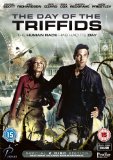
Which is your favourite John Wyndham book?

I was tempted to watch the recently released BBC adaptation of the book, but most of the reviews are terrible!

Have you seen it? Is it worth watching?