Categories
2009 Science Fiction

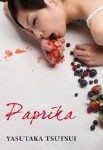
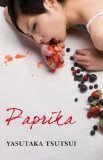
Paprika – Yasutaka Tsutsui

 Translated from the Japanese by Andrew Driver

I bought this book because I saw the following phrase on the cover:

A Japanese master to be ranked alongside Haruki Murakami

I hadn’t heard of the author, but I’m afraid I have no self control when I see the word Murakami – I just have to see if it is anywhere near as good as books like Kafka on the Shore or The Wind-up Bird Chronicle. I’m really pleased with my impulse buy – Paprika is as weird as anything Murakami has written!

Paprika is a science fiction novel, originally published in Japan in 1993. The book focuses on a group of scientists who have invented a machine which allows them to enter the dreams of others. The team use their invention to treat mentally ill patients, particularly those with schizophrenia. Everything goes wrong when one of the devices goes missing and is used as a weapon to turn people insane.

This book is very strange! Much of it is set within peoples’ dreams where anything can happen:

Atsuko was trying hard to vanquish the demons of sleep. “It’s just like a dream. A dream. No. This is a dream.”
Yes, I’m sure it is. ” The reporter suddenly sprouted a cow’s head, which flopped down low in front of her. The weight brought her to her senses with a sharp intake of breath, but the cow’s slobber still hung from her mouth. “Do excuse me. I’ve only eaten one helping of rice porridge this morning.” And she slurped the slobber back into her mouth.

Unfortunately most of the people have violent or sexual dreams and so scenes like the one above are quite rare. The tone is kept light so I didn’t find the book disturbing, but I know this sort of thing isn’t for everyone!

The plot was gripping throughout, but it wasn’t as thought provoking as I’d have liked. The book seemed to focus on the battles between good and evil instead of how much our dreams tell us about ourselves and to what extent we can be manipulated through unconscious thought.

I loved the way Japanese mythology was prevalent throughout this book and the fact that  you could never predict what was going to happen next.

Recommended to anyone who enjoys reading bizarre Japanese fiction.

Have you read any of Yasutaka Tsutsui’s other books?
Categories
1990s Historical Fiction

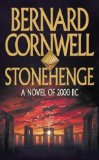
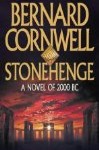
Stonehenge – Bernard Cornwell

In preparation for hearing Bernard Cornwell talk I wanted to read one of his books. The reviews on Amazon seem to indicate that his King Arthur books are the best, but unfortunately my library didn’t have a copy of The Winter King in stock and so I ended up with Stonehenge. I was equally intrigued by the historical setting, but the Amazon reviews were a lot less enthusiastic and so I wonder if I picked the wrong book to try.

Stonehenge gives a plausible account of events leading up to the construction of the iconic neolithic monument. The story focuses on two brothers who are battling to become the tribal King. We witness the tribal feuds and rituals and learn about the way people lived in 2000 BC.

The historical detail was fascinating and there were several scenes, especially those containing ritual sacrifice, that affected me deeply. The problem was that the sections between these gripping scenes were too long – the plot meandered and I frequently found myself loosing interest. It was a real chore to read much of this book and I almost gave up a few times. I had no emotional connection to the characters and although I learnt about their belief systems, I didn’t feel as though I really understood their fears or motivations.

I have been lucky enough to read several very well written books recently and Stonehenge stood out for the averageness of its writing. I can’t pinpoint what was wrong, but I felt that the scenes failed to come alive. The writing was serviceable, rather than special.

Saban hardly slept, but instead lay and listened to the noises of the night. Once he heard the crackling of twigs, the sound of a great body moving through the brush, then silence again in which he imagined a monstrous head, fangs bared, questing up to the elm. A scream sounded on the ridge, and Saban curled into a ball and whimpered. An owl screeched. The boy’s only comforts were the stars of his ancestors, the cold light of Lahanna silvering the leaves and his thoughts of Derrewyn. He thought of her a lot. He tried to conjure up a picture of her face. Once, thinking about her, he looked up and saw a streak of light slither across the stars and he knew that a god was descending to the earth which he took to be a sign that he and Derrewyn were destined for each other.

Overall I feel that the negatives far out-weigh the positives for this book and so I’m afraid I can’t recommend it.

Did I just pick the wrong Cornwell book?

Are the problems I describe present in the King Arthur books?

Categories
2009 Audio Book

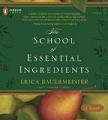
The School of Essential Ingredients – Erica Bauermeister (Audio Book)

Note: This book is called The Monday Night Cooking School in the UK, but is only available as an audio book under the title The School of Essential Ingredients.
I bought a copy of this book after Sandy raved about it and then included it in her top ten of the year. Good audio books are very hard to find, but Sandy listens to a lot of them and so if she raves about one then I know I’m in safe hands.

The School of Essential Ingredients is a weekly cookery class run by Lillian, a restaurant owner who taught herself to cook as a child in order to connect with her mother, a woman who had become depressed after her husband left her.

Each week the book focuses on a different one of the eight cookery students; we learn a bit about their lives and Lillian uses food to help them through their various problems.

Warning: This book will make you hungry!

The book is packed with amazing descriptions of food preparation – I could almost taste each dish as it was described and in many cases I wanted to rush out and make it. I think this is mainly down to the wonderful narration provided by Cassandra Campbell – she made the book come alive! I can’t imagine enjoying the print version of this book – I think I’d have found the recipes tedious and the lack of momentum would have led me to give up.

I’m not a fan of short stories and I’m afraid this book suffered from being more like a selection of short stories than a novel. The stories of each cookery student were very different and I had hoped everything would be brought together in the end, but I’m afraid they failed to link up and the book seemed to end quite abruptly.

I also found the book to be a bit overly sentimental and there were a few too many metaphors for my liking:

What did she do that made her happy? The question implied action, a conscious purpose. She did many things in a day, and many things made her happy, but that, Claire could tell, wasn’t the issue. Nor the only one, Claire realized. Because in order to consciously do something that made you happy, you’d have to know who you were. Trying to figure that out these days was like fishing on a lake on a moonless night–you had no idea what you would get.

Note: Trying to get a quote from an audio book is very hard, so I copied this quote from this wonderful quotes and passages blog.

A slightly amusing problem was caused by the fact this is an American book. Many foods have different names and although I knew most of them, there was a point when I wondered why she was decorating a cake with okra. It took me a few minutes to realise that Lady’s Fingers are something very different in America!!

Despite these criticisms it did inspire me to cook and on the whole I enjoyed listening to it.

Recommended to those interested in cookery.

I couldn’t find a negative review for this book:

I absolutely adored this book, and I’m going to be recommending it to everyone. Booking Mama

…if you’ve never read a food-related novel, this is where to start. A Reader’s Respite

Don’t read this book when you are hungry; it will probably be unbearable. S. Krishna’s Books

Categories
2010 Books in Translation Novella

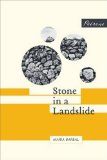
Stone in a Landslide – Maria Barbal


Translated from the Catalan by Laura McGloughlin and Paul Mitchell

I loved Beside the Sea, so wondered how the second book from the newly formed Peirene Press could ever live up to its emotional older sister. The two books were very different, but I’m afraid that I didn’t think Stone in a Landslide was in the same league as Beside the Sea.

Stone in a Landslide is set in a small village in the Pyrenees and follows 13-year-old Conxa as she leaves her parental home to live with her childless aunt. The book tells the story of her entire life, showing us how she finds a husband, cares for her children and copes with with the impact of the Spanish Civil War.

The book was very easy to read, but the simplicity of the prose left me cold. The 126 pages flew by, but I felt that it tried to cover too much in a short time and so I ended the book desperate to know more about her life. It is the same feeling I often get when reading a short story – I want more detail, more emotion and more complexity.

The gentle, simple narrative will appeal to a lot of people, but I felt that much of the book, especially scenes of the Spanish Civil War, were rushed.  Coxna led such an interesting life, but I never felt as though I knew her or what she was thinking. Descriptions of her surroundings seemed to be give more prominence than her emotions:

It was a bright day and I felt as if I was looking at everything in a huge mirror. The wind was fresh, you could still make out the snow on the mountain tops, even though the new grass had come up some days before. The birches stretched their arms to the sky waiting for their soft foliage.

Overall it was an interesting glimpse into life in the Pyrenees, but I felt it lacked depth.

Recommended to those who enjoy gentle short stories.

Opinions are divided on this one:

…each individual sentence is very plain, but somehow they combine to make a voice that is startlingly present and human. Stuck in a Book

I read the entire book feeling like an observer, and not a participant. Reading Matters

Stone in a Landslide is beautiful, simple and stark. Yet it is filled with warmth, the smell of grass on the mountains and the sunshine of a late afternoon. Chasing Bawa

Categories
2010 Non Fiction Richard and Judy Book Club

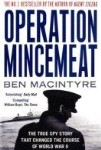
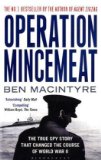
Operation Mincemeat – Ben Macintyre

 Richard and Judy Winter Read 2010

I don’t have any interest in military history or spy stories so when I saw that Richard and Judy had selected this as one of their Winter Reads I decided to challenge my preconceptions and give it a try. I’m afraid that it hasn’t converted me to into a lover of the genre, but I’m pleased that I gave it a chance.

Operation Mincemeat is a non fiction account of the planning that went into the invasion of Sicily during WWII. It details the deceptions that the British created to persuade German forces that an invasion would take place elsewhere – the plot centring on dropping a dead body into the sea off the coast of Spain with fake invasion plans.

The main problem I had with this book was that the plot was very simple. I was expecting a complex plan with lots of negotiations, spies and double-crossing, but I didn’t find Operation Mincemeat to be particularly cunning or original. It was interesting to see the massive amount of planning that went into this operation, but if this is the most exciting plot in WWII then I definitely don’t want to read any more military history.

This 400 page book was incredibly well researched, but I found many of the details boring. We were told the complete history of every person who was introduced and while some of it was relevant I didn’t care where they went to school or who their parents were.

I’m far more interested in the human side of war and this book lacked emotion. It was well written and readable, but I’d only recommend it to people who have an interest in military history.

Have you enjoyed any military history?

Can you recommend any that I might enjoy more than this one?

Categories
2010 Historical Fiction

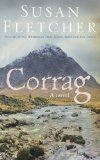
Corrag – Susan Fletcher

I received a copy of Corrag from the publishers a long time ago, but I wasn’t convinced I’d enjoy it. Words on the back cover like “haunting”, “lyrical” and “dreamlike” put me off, but continual raving from The Book Whisperer persuaded me to give it a try. Unfortunately my instincts were correct and this book wasn’t for me.

Corrag is set in Scotland in 1692. The book is narrated by Corrag, a 16-year-old girl who is imprisoned on suspicion of being a witch. Accused of involvement with the Glencoe Massacre, an event in which 38 members of the MacDonald clan were killed by soldiers, she is awaits her execution.

My main problem with this book was that nothing happened. Corrag is stuck in a prison cell telling her story to an Irish minister, but the snippets of action were very few and far between. The majority of the book revolved around tiny details about her life in prison. It was beautifully written, but after pages of these descriptions I became bored.

It snows. From the little window, I can see it snows. It’s been months, I think, of snowing – of bluish ice, and cold. Months of clouded breath. I blow, and see my breath roll out and I think look. That is my life. I am still living.

The repetition also wore me down. I can see that this is an accurate reflection of her experience, but as a reader I’m afraid I need to be entertained a bit more.

The Glencoe Massacre is a fascinating subject and so there were enough paragraphs of interest to keep me reading, but in many ways I wish this hadn’t been the case. I found myself ploughing through these “lyrical descriptions” waiting for a shred of plot to reveal itself. I reached the end wishing that I had given up early on. The only benefit of finishing was that I got to read the afterword, which was the most interesting section of the book.

Recommended to those who do not need a plot and are capable of immersing themselves in beautiful descriptions.

I’m in the minority. Everyone else seems to love it:

It is truly one of the most beautiful and lyrical books I have ever read. The Book Whisperer

Fletcher’s use of language is also impressive. Shelf Love

….it was a visual experience, a kind of conjuring. Eve’s Alexandria