Categories
1800s Chunkster Classics

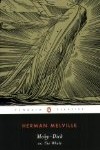
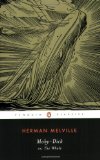
Moby Dick – Herman Melville

Five words from the blurb: whale, avenge, sailor, whaling, crew

Earlier this year I read the wonderful non-fiction book, Leviathan, which contained everything you’d ever want to know about whales. The book also contained discussions on many aspects of Moby Dick. Filled with a new enthusiasm for this classic I decided  it was the perfect opportunity to dust off my copy and finally get around to reading it. That was nine months ago and I’m happy to report that I’ve finally made it to the end.

Moby Dick tells the story of Ahab, the Captain of a whaling ship, who sets out to capture the elusive white whale that bit his leg off on a previous voyage. The book mixes historical facts about whales and whaling with the fictional story of life aboard a whaling ship. For those with the time to analyse the text (or those with a study guide to hand!) this book also contains a hidden depth, packed with symbolism.

I loved this book, but have to admit that it required a lot of effort and perseverance to make it to the end. Some sections were easy to read, packed with atmosphere and totally gripping; whilst others were so slow and difficult that I struggled to read more than a couple of pages at a time. I’d like to be able to say that I found particular sections slow, but I’m afraid both the narritive and the historical sections contained moments of genius as well as long, boring sections. Perhaps it all came down to whether I was in the right mood to cope with the long-winded, descriptive sentence structure?

Next morning the not-yet-subsided sea rolled in long slow billows of mighty bulk, and striving in the Peqod’s gurgling track, pushed her on like giants’ palms outspread. The strong, unstaggering breeze abounded so, that sky and air seemed vast outbellying sails; the whole world boomed before the wind.

I think reading this very slowly was the right thing to do. Nine months was probably a bit too long, but the subtler details would be lost if you tried to read this too quickly.

Moby Dick is a wonderful story, but I think this is one of the few occasions where I’d have prefered to read the abridged edition!

.

Have you read Moby Dick?

Did you enjoy it?


Categories
Books in Translation

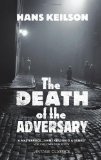
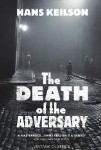
The Death of the Adversary – Hans Keilson

The Death of the Adversary Translated from the German by Ivo Jarosy

Five words from the blurb: masterpiece, dictator, Germany, Jewish, tyranny

Hans Keilson wrote this book whilst hiding from the Nazis during WWII. The narrator is a Jewish boy who witnesses a dictator rising to power. We see the way his life is changed by the increasing influence of this evil man. Although it is obvious he is referring to Hitler, the dictator is never named, giving the book a universal relevance.

The Death of the Adversary is so well written that I quickly gave up noting every profound quote that I found – there are original, powerful statements about the human psyche on almost every page.

People who ask what they should do had better do nothing at all. That is exactly the great misfortune, that they don’t know what to do but think they ought to do something. Those who know what they have to do and where they stand, act at the right moment; they act spontaneously, without having to enquire in advance what on earth they ought to do.

As you can imagine, the book gets progressively darker and more painful to read as the dictator’s power becomes greater. Some of the scenes were heartbreaking – the simplicity of the words a stark contrast to the complexity of the surrounding text.

They took the old people away.
My father carried his rucksack on his shoulders. Mother wept. I shall never see them again.

This is the kind of book where I wish I didn’t give ratings. It is clearly a masterpiece, containing powerful statements about evil, hatred and human endurance, but it is a book to appreciate rather than to enjoy. It contained very little plot and at times I found it difficult to motivate myself to read it. This is a book that requires effort and concentration and I have read so many books about WWII that I often struggled to focus on the complex sentence structures.

This is clearly one of the most important pieces of writing to come out of this period and if you are willing to put in the effort you will be rewarded with new ways of looking at the world.

Recommended to fans of deep, dark literary fiction.

.

I read this as part of German Literature Month. Head over to Lizzy’s Literary Life and Beauty is a Sleeping Cat to find out about a wide range of German literature.

Categories
2011 Audio Book Books for Children YA

My Sister Lives on the Mantelpiece – Annabel Pitcher (Audio Book)

My Sister Lives on the Mantelpiece

Shortlisted for Galaxy National Book Awards 2011 Children’s Book of the Year & Audiobook of the Year
Shortlisted for the 2011 Dylan Thomas Prize
Shortlisted for 2011 Red House Children’s Book Award

Five words from the blurb: boy, loss, family, heart-warming, struggle

My Sister Lives on the Mantelpiece is a children’s book that tackles many difficult themes. The story is narrated by Jamie, a ten-year-old boy who lost one of his twin sisters in a terrorist attack five years ago. His family are torn apart by grief, but Jamie was too young to remember much about his sister and just longs to be normal. He wishes that his father would stop drinking and that his mother would return. This book is a moving account of Jamie’s struggle to understand his family and his plans to lead a happy life.

I loved this book! Jamie was a fantastic narrator and I felt I understood his complex problems entirely.

That’s the thing no one seems to get. I don’t remember Rose. Not really. I remember two girls on holiday playing Jump The Wave, but I don’t know where we were, or what Rose said, or if she enjoyed the game. And I know my sisters were bridesmaids at a neighbour’s wedding, but all I can picture is the tube of Smarties that Mum gave me during the service. Even then I liked the red ones best and I held them in my hand until they stained my skin pink. But I can’t remember what Rose wore, or how she looked walking down the aisle, or anything like that.

He had an innocence that I was charmed by and he dealt with his problems with the realistic, but flawed thinking of a child.

My only problem with the book was that I felt some of the themes were a bit heavy-handed. The “not all Muslims are terrorists” plot thread was especially lacking in subtlety, but I suppose that it is a children’s book and so should be given some leeway.

David Tennant’s narration of the audio was fantastic. I can imagine that reading Jamie’s rambling thoughts in the print edition could become draining, but David Tennant added a warmth and humour to the text. He brought the story to life and I frequently found myself unable to turn the audio off, listening to the end of a section in the car after I’d reached my destination. I normally prefer audios narrated by multiple actors, but this was so well executed that it has just become my favourite single narrator audio book of all time.

Highly recommended.

.

Clips of the audio book are being released as part of a blog tour. The third section of the audio book and links to the other blogs taking part are below.

Categories
2011 Books in Translation

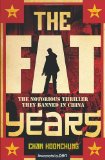
The Fat Years – Chan Koonchung

The Fat Years Translated from the Chinese by Michael S. Duke

Five words from the blurb: China, truth, memory, cheerfulness, world

The Fat Years is billed as “the notorious thriller they banned in China”, but closer inspection reveals that the fictional elements of this story are minimal and I think it can be more accurately described as a controversial exposé of the political situation in China today.

The book is set in the near future and revolves around a small group of people who realise that a month has disappeared from official records and no-one can remember what happened. The general population is suspiciously cheerful, seemingly oblivious to the situation. The friends travel around the country in search of the truth behind the strange event, uncovering numerous situations previously hidden from the public.

Initially I struggled to follow the plot because there were a large number of characters and many cultural references that I was unfamiliar with, but I persevered and after about 70 pages I began to understand what was happening. The more I read, the more impressed I was. The Fat Years is thought -provoking, clever and frighteningly realistic. This book was written a few years ago, but several of Koonchung’s predictions have already come true and the line between fiction and reality is incredibly small. There were several sections that I found unbelievable, but a quick bit of Internet research revealed that the events described had in fact happened.

The Fat Years does a fantastic job of explaining China’s place in the Global economy and provides an insight into their thoughts on the rest of the world. I admit that some of the financial aspects of the book went over my head, but some of the policies for bringing China out of recession were bold enough to give me real food for thought.

Twenty-five per cent of the balance of every National Bank savings account was to be converted into vouchers for use in China only. One third of these to be spent within ninety days, and two thirds within six months.

The book also explained the population’s thoughts on the political situation of the country.

…..in a moderately well-off society, the people fear chaos more than they fear dictatorship.

The ending was particularly profound and I’m sure I’ll be thinking about it for a long time to come.

The Fat Years won’t be for everyone, but if you have an interest in Chinese ideology or the financial influence of China on the world then this as a must read.

Highly recommended.

.

Categories
1990s Books in Translation Novella

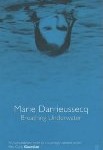
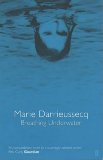
Breathing Underwater – Marie Darrieussecq

Breathing Underwater Translated from the French by Linda Coverdale

Five words from the blurb: coast, daughter, clues, looking, mistake

Last year I was amazed by the power of the novel, Beside the Sea, and so asked for recommendations of books with a similar level of impact. Breathing Underwater was suggested as a book that not only shared the themes of Beside the Sea, but also the power. I found it interesting to compare the two novellas and I think this pair would make an interesting combination for those studying differences in writing style.

Breathing Underwater follows a woman who walks out on her husband and then takes her daughter to the seaside. Her husband hires a private detective to track them down, but this isn’t a fast-paced chase. The events are very slow, with each scene intricately described.

She leaves the child on top of the dune. She feels something like relief, a pause; the intuition that she can leave her there, absorbed by the sea, eyes straining from their sockets; in the redundancy of the fishing poles, sinkers, floats, and even the buckets and shovels. She won’t rush down to the beach straight away, she won’t run off to drown in the waves; unlike logs blazing in fireplaces or outdoor bonfires, the sea does not make itself our friend, it doesn’t crackle within arm’s reach: you look at it for a long time before it dawns on you that you can touch it.

The book had very little plot and I often found that the surroundings were so well described that I forgot what was happening.

The reader is a casual observer of events, never quite understanding what will happen next or the reasons for the actions. This was a problem for me as it meant that I felt no emotional connection to the characters. The multiple narrators in this short book increased this sense of detachment.

If you enjoy slow, thoughtful narratives then I’m sure you’ll love this book, but I’m afraid the writing was too flowery for me and I don’t think it came close to matching the emotional power of Beside the Sea.

.

Categories
1950s Classics

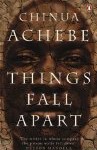
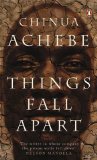
Things Fall Apart – Chinua Achebe

Things Fall Apart (Pocket Penguin Classics)

Five words from the blurb: masterpiece, strong, man, African, awareness

Things Fall Apart has been on my book shelf for a very long time. I knew it was an important book, but it intimidated me and so I avoided reading it. I imagined it to be a complex, disturbing read and so was surprised to discover its fast pace and simplicity.

The book shows how a small African village is affected by the arrival of missionaries from Europe. We see events from the perspective of Okonkwo, a man famed for his strength, but plagued by difficulties beyond his control. His flawed character was fascinating to read about as although I didn’t warm to him I felt great sympathy for his situation.

I also loved the insight into Nigerian tribal life and now feel I have a better understanding of their culture. Achebe did a fantastic job of portraying both the English and African people in a straight-forward, non-judgemental way; allowing the reader to form their own opinion of who was in the wrong.

“The white man is very clever. He came quietly and peaceably with his religion. We were amused at his foolishness and allowed him to stay. Now he has won our brothers, and our clan can no longer act like one. He has put a knife on the things that held us together and we have fallen apart.”

The ending was especially poignant and I think this is one of those books that will grow on me over time. I can see why it has become a classic and I hope that people will continue to read this book for many years to come.

 .

I read this book for Amy’s Nigerian Independence Day Reading Project. Head over there to see many more Nigerian book recommendations.