Categories
2012 Chunkster

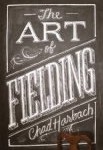
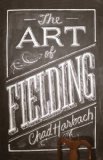
The Art of Fielding – Chad Harbach

The Art of Fielding

Five words from the blurb: college, baseball, friends, love, American

I hate watching sport, know nothing about baseball and haven’t enjoyed a sports themed book before (not that I’ve read many – I tend to avoid them), but increasing enthusiasm for The Art of Fielding persuaded me to give it a try. I’m pleased that I did as this is a modern classic that will be talked about for years to come.

The first few chapters did their best to put me off – I could see the writing quality, but the endless baseball references did nothing for me.

Henry played shortstop, only and ever shortstop – the most demanding spot on the diamond. More ground balls were hit to the shortstop than anyone else, and then he had to make the longest throw to first. He also had to turn double-plays, cover second on steals, keep runners on second from taking long leads, make relay throws from the outfield. Every Little League coach Henry had ever had took one look at him and pointed toward right field or second base. Or else coach didn’t point anywhere, just shrugged at the fate that had assigned him this pitiable shrimp, this born benchwarmer.

Without the hype I would probably have abandoned this book after the first few pages, but I persevered and at page 50 I was rewarded with chapter 6 which didn’t mention baseball at all. Instead it introduced Moby Dick, an English professor and a glimpse of the magical writing Chad Harbach is capable of when he talks about something other than sport.

As the book progressed I became increasingly attached to the characters in the book and completed its 500 pages in a surprisingly quick time, but on reaching the end I found I was quietly impressed rather than bowled over with excitement. I didn’t find anything particularly new or interesting in The Art of Fielding. It is simply a well written book about American college life – and I have read a lot of those, although I admit this is one of the best.

I think those who have been through an American college will have a far greater appreciation of this book than I did. I found it very similar to The Marriage Plot in terms of both style and subject matter – with The Art of Fielding being the better book in terms of consistency and message.

I’m also sure that I missed some of the relevant baseball references and their significance on the bigger picture. I’m afraid that those who claim this book will give the reader a passion for baseball are wrong, but I agree that it isn’t necessary to enjoy the sport to appreciate this book.

Despite my criticisms I do think this is a very good book. It is a simple story, but one that is very well told. It is hard not to feel compassion for the well developed characters. I just hope that next time Chad Harbach will devote his time to writing a book that doesn’t contain any sporting references.

Recommended, especially to American graduates.


Categories
2000 - 2007 Fantasy Science Fiction YA

The Shadow Speaker – Nnedi Okorafor-Mbachu

SHADOW SPEAKER, THE

Five words from the blurb: 2070, mysticism, West Africa, survival, magical 

Earlier this year Nnedi Okorafor-Mbachu won the World Fantasy Award for her novel, Who Fears Death. It sounded really interesting, but a few people on twitter suggested that her earlier novel, The Shadow Speaker, was even better and since it was available in my local library I decided to give it a try first.

The Shadow Speaker is a young adult fantasy set in West Africa in 2070. The world has been changed by a nuclear war that released “peace bombs” around the globe. These bombs caused the human population to mutate in a variety of different ways; the idea: to create so much diversity that no single group would be big enough to launch a war against another. Many of the population now possess magical powers – some can fly and the central character, Ejii, has the ability to hear the thoughts of plants, animals and people.

There is a lot going on in this book. African mythology is mixed with science fiction and fantasy to create something truly unique. The blend of magic with interesting predictions for the future created a book that I found very compelling and the fact it is aimed at teenagers means that it is easy to read and is the perfect introduction to African literature.

There is something for everyone in this book – there are talking cats, flesh-eating bushes, links to other worlds and a myriad of new inventions. At times there was a bit too much going on for my liking – so many new ideas on each page that I longed for a bit of calm.

My only other criticism is that the characters weren’t very well developed. There was so much world building crammed into this book that the characters remained a bit flat. They lacked an emotional depth and I failed to connect with any of them, but this wasn’t a major problem as other aspects of the book were so strong.

The best thing about The Shadow Speaker is that it contains a depth behind the words. I found this interesting blog post about the religious messages in the book and I’m sure that it contains equally insightful thoughts about many other aspects of our civilisation.

Recommended to anyone looking for something a bit different, especially if you are interested in African literature.

.

Categories
2011 Books in Translation

Seven Houses in France – Bernardo Atxaga

Seven Houses in France Translated from the Spanish by Margaret Jull Costa

Five words from the blurb: Congo, fortune, jungle, enslaved, kidnapping

I hadn’t heard of Atxaga before this unsolicited review copy popped through my letter box, but the impressive list of awards he has won (including the Spanish National Literature Prize and a shortlisting for the European Literature Prize) grabbed my attention. The Observer also listed him as one of the top 21 writers of the 21st century, so I was keen to discover why his writing is so highly regarded.

Seven Houses in France is set in 1903 and follows a French Captain who is sent to the Congo to pillage the rain-forest of rubber, mahogany and ivory. He sends a vast amount of wealth back to France, enough to buy the seven houses mentioned in the title.

The quality of the writing was very high, but I hated the actions of the central character so much that I struggled to read it. At one point I almost gave up, but the entire book was a bit like a car crash – you know you are going to witness something horrible, but you are unable to avert your gaze.

The screeches of those vile monkeys was the worst thing about Yangambi, the worst thing about the Congo and about Africa, and he wanted to flay them with his chicotte, to whip them to the bone. He bounded down the first stretch of the path, slithering in the mud, then gradually slowed to a halt.

There were no redeeming scenes – the entire book is about one despicable man who kidnaps young girls from local villages and rapes them; a man who thinks it is entertaining to tie monkeys to posts and use them for target practice – and that is before I even mention the gathering of ivory, the enslavement of local people and all the other shockingly bad things he does without batting an eyelid.

I’m really hoping that Atxaga is being deliberately provocative with his writing; creating an obnoxious character to ensure that we become enraged by his actions. I’m sure some people will love the strong emotions produced by reading this book, but I’m afraid I can’t recommend it to anyone. It is important we know these terrible events happened, but I don’t like the images I now have in my head.

.

Have you read anything written by Bernardo Atxaga?

Are his other books less disturbing to read?

Categories
1960s Classics

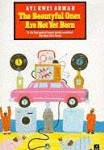
The Beautyful Ones Are Not Yet Born – Ayi Armah

The Beautyful Ones are Not Yet Born (Heinemann African Writers Series)

Five words from the blurb: Ghana, bribes, corruption, temptation, scorn

This week Kinna Reads is hosting Ghanaian Literature Week. Keen to join in I went online to research books from Ghana. The Beautyful Ones Are Not Yet Born was described as “a cornerstone of African literature” and “as important as Things Fall Apart by Achebe “. I hadn’t heard of it, but with quotes like that I felt I had to read it.

The Beautyful Ones Are Not Yet Born is set in the mid 1960s and confronts the corruption present in the country after its independence. The central character is an unnamed railway clerk who resists bribes. The book explores issues of integrity and shows what life is like for ordinary citizens who have to live with corruption on a daily basis.

Unfortunately this book was so slow and tedious to read that any impact was lost on me.

Crossing over to the side of the main connecting road nearer the sea, the man walked the whole distance to the Essei area, keeping just behind the breakwater that kept the sea from destroying the road. Now and then the headlights of some oncoming vehicle came and blinded him and afterward the darkness of the night was even deeper and more infinite than before, so that a little of the lost comfortable feeling of the man alone in the world outside, so unlike the loneliness of the beloved surrounded by the grieving loved ones, came back to him in little frustrating sweet moments that were gone before they could be grasped. And yet, in some region of his mind, the thought almost rose: that it should not really be possible for the guiltless to feel so beaten down with the accusation of those so near….

The sentence structure was often awkward and difficult to follow and the pace was so slow that it would take him several pages just to get out of his chair. Lots of profound statements were buried in the text, but I had so little connection to the characters that I didn’t care.

Things picked up a bit towards the end and so I managed to complete this short book (180 pages), but it took a lot longer than expected.

I can see why this is an important piece of African literature and I’m sure that much more would be revealed if you were to spend time studying the text, but I’m afraid I found it a frustratingly slow read.

.

Head over to Kinna Reads to discover more Ghanaian Literature.

Categories
1950s 1980s Books in Translation Nobel Prize

Two Abandoned Nobels

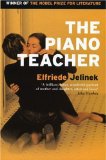
The Piano Teacher Translated from the German by Joachim Neugroschel

The Piano Teacher by Elfriede Jelinek

Elfriede Jelinek won the Nobel Prize for Literature in 2004

Five words from the blurb: Vienna, emotional, self-destruction, intensity, porn

The Piano Teacher is an unrelenting, intense tale of one woman’s self-destruction.

Erika is a piano teacher who lives with her controlling mother. She begins an affair with one of her young students, but he cannot save her from her destructive cycle of self-harm.

I initially loved the gripping, emotionally charged narrative, but I quickly found I needed space to breathe, wishing there were some breaks from the darkness. I then began to find the narrative style, with its capitalised pronouns, irritating:

SHE only has to glance at this scene, and HER face instantly becomes disapproving. SHE considers her feelings unique when she looks at a tree; she sees a wonderful universe in a pinecone.

As the book progressed it became increasingly dark and sexually explicit. I found the scenes of her self-harm uncomfortable to read and her trips to watch pornographic shows held little interest.

I skimmed over several sections and then decided to give up entirely. This book has a grippingly original narrative voice, but it was too harsh for me.

Recommended to those with a strong stomach.


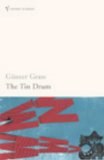
The Tin Drum (Vintage Classics)Translated from the German by Ralph Manheim

The Tin Drum by Günter Grass

Günter Grass won the Nobel Prize for Literature in 1999

Five words from the blurb: Germany, Nazis, dwarf, scathing, horrors

The Tin Drum is one of those classics that had intimidated me for far too long. Inspired by German Literature month I decided to set my fears aside and give this imposing chunkster a try. Unfortunately, in this case, the intimidation was justified and I failed to finish this complex, multi-layered masterpiece.

The Tin Drum is narrated by Oskar, a dwarf with learning difficulties who calms himself by beating his toy drum. I’d love to be able to tell you what happens, but I’m afraid I can’t:

a) because very little happens
b) I didn’t get that far into the book

The writing was impressive and I loved Oskar’s character, but the book had very little narrative drive. It skipped from one scene to the next and I struggled to see the connection between them.

I crawled at a snail’s pace through the first 100 pages, becomingly increasingly bored. After another difficult 20 pages I decided to abandon it. I’m sure that this book is a masterpiece and everything makes sense in the end, but I don’t think I’m in the right stage of life to appreciate it. I think I’ll give it another try in twenty years.

Have you tried reading either of these books?


Categories
2000 - 2007 Books in Translation Crime

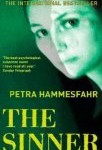
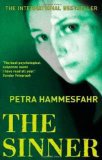
The Sinner – Petra Hammesfahr

The Sinner Translated from the German by John Brownjohn

Five words from the blurb: killed, man, past, childhood, horrors

The Sinner was a bestseller in Germany, staying at the top of the book charts for fifteen months. I can see why it was so popular – it is well written, intelligent, and packed with unexpected twists. It is a shame that it is not well known outside it’s country of origin as I think it is a fantastic piece of crime fiction.

The Sinner begins with Cora, a young mother, stabbing a man in front of her family and friends during a quiet picnic by the lake. She immediately confesses to the crime, but no one can understand why a seemingly normal woman would turn into a cold blooded killer. Through police interviews and a series of flashbacks we discover details of Cora’s troubled childhood and the reason for her violent outburst.

The book is narrated by both Cora and Police Commissioner Rudolf Grovian, allowing us to see inside the head of both parties.

Cora Bender had attacked a defenceless man like a maddened beast. She’d gone berserk with her little knife and was showing no hint of remorse or sympathy for her victim. Yet to see her sitting there with her lips trembling, enumerating her husband’s good qualities, anyone would have thought she was the victim.

It is perfectly structured with little hints (and red herrings!) dropped at frequent intervals, ensuring the momentum is maintained throughout.

As well as being a clever why-dunnit piece of crime fiction The Sinner is also a gripping psychological insight into the mind of a troubled woman. Cora’s difficult childhood is described with great empathy, giving the reader that rare ability to have sympathy with a murderer.

The concentration on the troubled female mind means that this book will appeal to women more than men, but I loved reading a piece of crime fiction where the central character is so well drawn.

Recommended.

.

I read this as part of German Literature Month. Head over to Lizzy’s Literary Life and Beauty is a Sleeping Cat to find out about a wide range of German literature.