Categories
2012 Audio Book Books for Children Recommended books YA

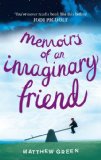
Memoirs of an Imaginary Friend by Matthew Green (audio book)

Memoirs Of An Imaginary Friend Note: Author is known as Matthew Dicks in the US

Five words from the blurb: boy, danger, loyalty, imagination, friend

Memoirs of an Imaginary Friend has the most original premise I’ve come across this year. The book is narrated by Budo, an imaginary friend who explains what life is like for those who only exist because a human has thought of them. Most live brief lives with young children, but Budo is special. Budo was imagined by Max, an 8-year-old boy with autism. Because Max has autism his attention to detail is excellent and so Budo is very life-like – unlike most other imaginary friends he even has ears! Budo can talk to Max and other imaginary friends, but cannot communicate with other people or touch anything in the real world. One day Max disappears and Budo is the only one who can save him. This leads to a thrilling, entertaining plot that is packed with emotion.

I am drawn towards books that deal with autism and this one did a fantastic job of showing the condition in a realistic, but positive light. Matthew Green’s career as a teacher has obviously helped him to understand children and this engaging story was filled with lovely little details about school life.

There were a few moments when I became frustrated by the plot – in the middle it became far fetched and I could see easier ways for Max to be rescued. But as this is a children’s book I’ll give it the benefit of the doubt – especially since the plot was so compelling.

There were also times when it got a bit too sentimental for me, but on the whole the messages were good and so I’ll forgive this too.

You have to be the bravest person in the world to go out every day, being yourself when no one likes who you are.

The audio book narration was wonderful! Matthew Brown was perfect, effortlessly managing all the different voices and capturing the heartache and emotion of the situation. I’m not sure I’d have enjoyed it as much if I’d read the print edition. The style reminded me of My Sister Lives on the Mantelpiece and I’m sure that anyone who enjoyed Annabel Pitcher’s book will also like this one.

Because it addresses so many issues this book would make a fantastic classroom resource for older children. Themes of bullying, death, friendship and disability could all be discussed. The fact that most of the problems were faced by imaginary friends somehow made them less oppressive. But this isn’t just a book for children; as an adult I loved the original approach and was charmed by Budo’s insight in human behaviour.

This has become one of my favourite books with an autistic character. Recommended.

.

Many thanks to Bay State Reader’s Advisory for drawing this book to my attention!

The thoughts of other bloggers:

I listened to the entire 10 hour audiobook over the course of a single day because I just could not bear to put it down. Devourer of Books

….for all the suspense, the writing wasn’t quite as tight as Emma Donoghue’s in Room. Capricious Reader

That Matthew Dicks crafted his novel in such a way as to give an almost 3D view of the life of a child with emotional and social issues impressed me. The Literate Housewife
 

Categories
Other

Three Abandoned Books

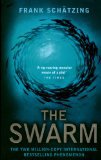
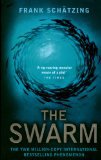
The Swarm: A Novel of the Deep Translated from the German by Sally-Ann Spencer

The Swarm by Frank Schätzing

Five words from the blurb: sea, killed, mankind, science, ecological

I’ve been wanting to read this for a long time, but at nearly 900 pages it intimidated me. German Literature Month inspired me to put aside my fears and I dived in. I was reminded of the wonderful Michael Crichton books I used to read and was immediately gripped by the compelling plot.

The book is set in the near future at a time when the world is being battered by a series of natural disasters. People keep dying at sea and the number of unexplained deaths is increasing every day. Groups of experts gather to research the situation, but as the condition escalates it becomes increasingly hard for them to understand what is happening.

The writing was very good and there were lots of powerful warnings about the damage mankind is doing to the planet.

Understanding the planet was no longer enough for most people; they were trying to change it. In the Disneyland of botched science, human intervention was forever being justified in new and disturbing ways.

I initially loved this book – the science was well researched and the scenes were tense, exciting and full of foreboding. As the book progressed I found that this wasn’t enough and I began to lose interest. There was no central character to engage with and, although the science was technically accurate, I couldn’t believe the events would ever occur. Instead of becoming increasingly scary I found the action increasingly ridiculous. I abandoned the book after 250 pages.

The Dogs Of War

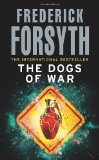
The Dogs of War by Frederick Forsyth

Five words from the blurb: African, secret,  mercenaries, tycoon,  government

I was inspired to read this book after attending a wonderful talk from the author a few weeks ago. Unfortunately it quickly became obvious that his thrillers aren’t for me – I have no interest in precious metals and became bored by the detailed information on military operations.

The Dogs of War is set in a fictional West African country where a valuable amount of precious metal has been found. A band of mercenaries set out to take control of this resource and gain power of the country.

Unfortunately the characters were flat and so I didn’t care what happened.

‘G’bye, Patrick,’ he said. ‘I’m afraid it’s over now. Take the Landrover and dump it. Bury the guns and mark the spot. Leave your uniform and go for bush. Understand?’
The lieutenant, who a year ago had been a recruit with the rank of private and had been promoted for his ability to fight rather than eat with a knife and fork, nodded somberly, taking in the instructions.

The book felt dated and lacked the emotional depth I like to see in a book. I abandoned it after about 60 pages.

The Sweetness of Life: A Kovacs and Horn Investigation Translated from the German by Jamie Bulloch

Winner of the 2009 European Literature Prize

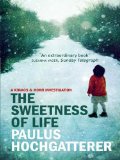
The Sweetness of Life by Paulus Hochgatterer

Five words from the blurb: grandfather, victim, silent, child, psychological

I spotted this book in my library and thought it would be perfect for German Literature Month. Unfortunately it failed to engage me, but I suspect the quality of the writing will be enough to entertain most people.

It was cold. A narrow bank of fog was sitting on the hill behind the buildings. Kovacs had also forgotten his gloves. I forget the camera because Demski’s not here, he thought, and I forget my gloves because I don’t have a wife any more. He bent down. There was something in the snow, driven into the broad tyre tracks which were all over the place. A small, dark, brown stone, that was all. He put it into his pocket.

The book begins with a six-year-old girl discovering the body of her grandfather in the snow outside their home. The girl goes into shock and refuses to talk, hampering efforts to work out who committed the crime.

This was a well written piece of crime fiction, but too many characters were introduced and I struggled to differentiate between them. Each chapter was narrated by a different person and so I found it impossible to connect with anyone. It may well all come together in the end, but I’m afraid I didn’t care enough about the story to want to persevere. I abandoned the book after 80 pages.

Categories
2012 Recommended books

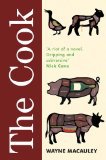
The Cook by Wayne Macauley

The Cook

Five words from the blurb: young offender, rehabilitation, course, cook, succeed

I love cooking and watching reality television programs in which celebrities train the unemployed to do a useful skill (eg Jamie’s Fifteen, Gordon’s Bad Boys and Mary Portas’ Bottom Line); so I was instantly drawn towards The Cook, a novel that follows one young offender who has been given the opportunity to take part in a reality television show organised by a celebrity chef.

This book shows life in a professional kitchen and the dedication required to succeed in this competitive industry. Zac is just 17-years-old, but he is determined to perfect his culinary technique. He quickly discovers that the best food relies on sourcing quality ingredients and so he begins to look after a range of animals, feeding them with the herbs and flavourings he’d like in his final dishes. His extra effort is noticed and Zac begins his rise to the top, but this book questions just how much an individual should do to succeed.

The writing was vivid and engaging, but the lack of punctuation was initially confusing. Zac’s strong personality made up for this and after a while I got used to the rhythm and I barely noticed the lack of commas.

It was strange how calm I felt cooking had done this all my old anger melting like butter and me saying hit me kick me I don’t care I’m here to serve. How many times did they tell me to pull my head in well look here I am my head’s in I hope they’re happy cops social workers all that I’m going to do what I am told

The book showed the preparation of various dishes. I initially loved this, but towards the middle of the book it became a bit repetitive. I wish some of these sections had been removed to allow the story to progress faster, or for other cookery techniques to be investigated.

This fault was forgiven once I made it to the end. The Cook is now leading the competition for my mythical “2012 Ending of the Year Award”. To say any more would ruin it, but I haven’t enjoyed an ending as much as this in a long time.

If you can cope with harsh language and the occasional slaughter scene then you will be rewarded with an original, gripping novel that questions the way our society operates. Highly recommended.

.

The thoughts of other bloggers:

…a dark parable that deserves to race up international best-seller lists. ANZ Lit Lovers Litblog

The Cook is a confident and potent piece of work. The Medusa vs. The Odalisque

….a real talking point… Eleutherophobia


Categories
2012 Books in Translation

The Finno-Ugrian Vampire by Noémi Szécsi

The Finno-Ugrian Vampire Translated from the Hungarian by Peter Sherwood

Five words from the blurb: Hungarian, grandmother, vampires, traditional, independence

The Finno-Ugrian Vampire is set in Hungary and focuses on Jerne, a young woman who has just found a job in a small publishing company. Her 200-year-old grandmother is disappointed – she wanted Jerne to abandon her modern ways and become a fully-fledged vampire. I accepted this book for review because I was looking for a spooky Halloween read and was interested in how an East European would re-invent the traditional vampire story. Unfortunately this book contained a lot of Hungarian satire that went over my head, but that is due to my inadequate knowledge of the country rather than a fault of the author.

The book was light and easy to read with many sections that made me smile.

A herd of rats was frolicking on the carpet, while two of the bigger ones were fighting it out over a large bone in the kitchen.
‘I hope you don’t mind them taking refuge here. The exterminators could be here any moment and I had to make sure they were somewhere safe,’ Grandma said by way of welcome, badly and without a hint of an apology.
‘Grandma, you have frightened the caretaker’s wife half to death with your creatures.’
‘I have the right to keep whatever household pets I want.’
‘Right. Well, you go and explain to her that these are your pets.’
‘She is too stupid to understand.’
‘It’s you who are stupid. Not everyone delights in seeing slimy rats fattened on cat food popping up from the toilet bowl. She could have dropped dead from the sight.’

The black comedy continued with a string bizarre scenes, including one in which Grandpa is put through a meat mincer.

Unfortunately things went downhill and I found myself increasingly unable to understand the jokes. There were a lot of references to aspects of Hungarian society I knew nothing about (eg. Magyars & Komi) and even when I did recognise something (eg an artist or composer)  I didn’t feel I knew enough to appreciate the humor.

If you are familiar with Hungary and its culture I think you’ll love this book, but I’m afraid it wasn’t for me.

.

Categories
1980s Books in Translation

The Cow by Beat Sterchi

The Cow Translated from the German by Michael Hofmann

Five words from the blurb: cow, relationship, man, abattoir, village

I was drawn towards The Cow because it is set in a small Swiss farming village at a time when Swiss mountain dogs were used to herd cattle and pull milk carts. As the owner of a Bernese mountain dog I was keen to learn more about their working life on the alpine slopes and was rewarded with some wonderful scenes of dogs working with cattle.

The book begins with Ambrosio, a Spanish man, arriving in the Swiss highlands in order to work for farmer Knuchel. The rest of the local farms are busy installing milking machines, but Knuchel is determined to avoid modernisation and stick to traditional methods. The book captured the time when life on these farms changed and by alternating modern scenes with ones from the past it was possible to see exactly what has been lost.

All the cows are named and some scenes are written from their perspective. It was unusual, but it worked really well and I came to know the cows; understanding their personalities and feeling their fears.

The only real negative was that this book contains horrific scenes from an abattoir and I have to admit that some sections were too disturbing for me. This is an example from the start of a scene – I think you can imagine how it progresses to become deeply disturbing:

The cow lifts her head. All wobbles and trembles: she pulls her weight on to her front feet. She’s trying to get up.
With nostrils dripping red, she trumpets through the slaughterhouse. She sits there and rolls her head round to the right, the left, the right again. I retreat……I close my eyes, with my back to the wall, I slip down into a crouch, and try not to think any more.

These scenes had more impact because they were surrounded by tranquil images of the cows enjoying life on the Alpine pastures, each with their own individual cow bell. Some of the abattoir descriptions were necessary to convey the issues, but there were too many for my taste.

Some reviews have suggested that this book will turn the reader into a vegetarian, but I found it simply encouraged the responsible sourcing of meat. Modern mass production of food is displayed in all its ugly glory and this book left me craving a time when all the animals were known as individuals, treated with love and respect, and never knew fear.

This is a disturbing book, but it carries an important message. Recommended to those with a strong stomach.

For more German language recommendations take a look at German literature month organised by Lizzy and Caroline.

Categories
British Libraries

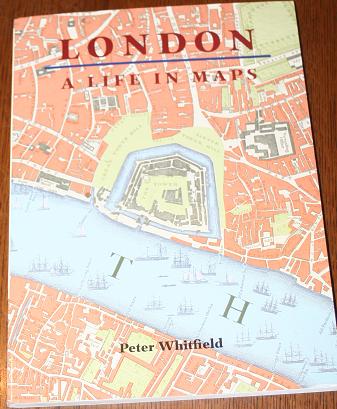
London: A Life in Maps by Peter Whitfield

….

.

.

.

.

.

London: A Life in Maps is a beautiful A4-sized paperback containing approximately 200 important maps from the mid-sixteenth century to the present day.

The book is divided into four sections:

  • London Before the Great Fire
  • The Age of Elegance
  • The Victorian Metropolis
  • The Shock of the New

Each of these contains about 50 pages of maps, illustrations and photographs to show how London has changed over the ages.

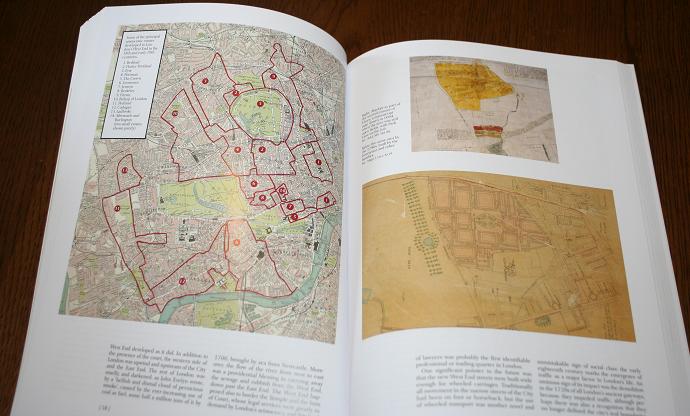
As an example, here is a map highlighted to show the principle aristocratic estates present in London’s West End in the 18th and early 19th centuries:

The maps on the right-hand-side of the page show Mayfair in 1664 and 1790. All these images are accompanied by a text that details the key changes and the reasons behind them.

Anyone interested in seeing how London has changed and developed will be fascinated by this book containing old maps of London.