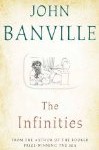
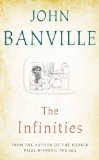

The Infinities is one of those rare books that I enjoyed despite the lack of any real plot. It is a gentle, reflective book observing a household for one day, as the father lies dying in his bed. You’ve probably read lots of books that sound similar to that, but what makes this one special is that it is narrated by a playful God.
But what attention we lavished on the making of this poor place! The lengths we went to, the pains we took, that it should be plausible in every detail – planting in the rocks the fossils of outlandish creatures that never existed, distributing fake dark matter throughout the universe, even setting up in the cosmos the faintest of faint hums to mimic the reverberations of the initiating shot that is supposed to have set the whole shooting-match going.
This book questions many of our beliefs, so probably isn’t for those with a strong religious background, but anyone who is tolerant of religious satire will find a lot to enjoy. The above quote is a good example of the gentle humour in the book, so if you were offended by that, avoid it.
Nothing can be taken at face value in this book. At first it seems like a typical household, but it is soon revealed that it isn’t in our world, but in a similar, parallel universe in which there are subtle differences:
….the greater part of the world’s energy nowadays is converted from brine.
It is easy to miss these little oddities and I often found myself re-reading to check that I had read it correctly. There were several things that didn’t quite ring true, but I wasn’t entirely sure. I’m not going to admit what I looked up on wikipedia, but it is a very clever book that makes you question things you know to be true – so much that you are forced to look them up.
The main thing that let this book down was the lack of plot, but I also felt that many of the characters were not developed properly – they were more like objects in a bizarre world; there to serve a purpose in the weird narrative, rather than people to love and bond with. These were minor issues though, and I feel this is a much more accomplished work than The Sea
Recommended.

Have you read any of John Banville’s books?
Which is your favourite?


 I read The Age of Innocence for the