Categories
1930s Classics Other

A Farewell to Arms by Ernest Hemingway

A Farewell to Arms

Five words from the blurb: WWI, horrors, nurse, loyalty, lovers

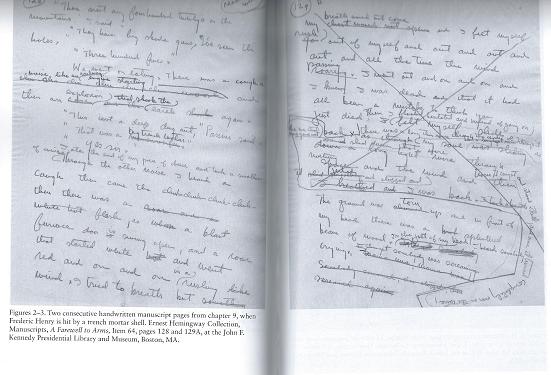
I hadn’t read any Hemingway so when I was offered the opportunity to review the new special edition of A Farewell to Arms I jumped at the chance. Fans of the book will love this new edition – it is beautifully produced, includes photographs of Hemingway’s revisions, and for the first time it brings together all 39 different endings considered by the author.

Unfortunately I discovered that I’m not a Hemingway fan. Some people describe his writing as “sparse”, but I think “wooden” is a more fitting description. It reads more like a poor quality translation than the work of an American Nobel laureate.

She was carrying a thin rattan stick like a toy riding-crop, bound in leather.
“It belonged to a boy who was killed last year.”
“I’m awfully sorry.”
“He was a very nice boy. He was going to marry me and he was killed in the Somme.”
“It was a ghastly show.”
“Were you there?”
“No.”
“I’ve heard about it,” she said. “There’s not really any war of that sort down here. They sent me the little stick. His mother sent it to me. They returned it with his things.”

The central characters were flat and lacked emotion, a problem made worse by the fact this book is about World War I and contained many scenes that should have been disturbing.

Another problem was that the romance was unconvincing. I became so frustrated that I decided to abandon the book, but intrigued as to why it is an enduring classic I decided to read the Wikipedia plot summary. This revealed that the praise seems to revolve around the ending; so I picked up the book again and read the final section. I’ll admit that the ending was poignant and slightly more emotional than the earlier sections, but the writing quality was so poor that I failed to be moved.

This special edition contained 39 different endings, most just a paragraph long. It was interesting to read all the alternate endings and to see Hemmingway’s thought process as he changed things. It was also good to see photographs of the original manuscripts.
But despite all these wonderful extra features I’m afraid I can’t see why  A Farewell to Arms is an enduring classic. If you’re a fan, please enlighten me!

DNF
Categories
1990s Books in Translation Recommended books

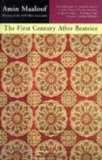
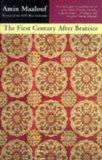
The First Century After Beatrice by Amin Maalouf

The First Century After Beatrice Translated from the French by Dorothy S. Blair

Winner of the 1993 Prix Goncourt

Five words from the blurb: beans, guarantee, birth, male, survival

I hadn’t heard of The First Century After Beatrice until it was recommended by A Fiction Habit, but I’m very pleased I read it and am surprised that this compelling, thought provoking book is not more well known.

The First Century After Beatrice begins with the discovery of a bean on an Egyptian market stall. This bean, derived from the scarab beetle, is said to guarantee the birth of a male child. Word quickly spreads and societies that favour male offspring are quick to take up the new invention. Slowly the population begins to be dominated by men and this book gives a realistic portrayal of the devastating effect this has on the human race.

The writing style was unusual in that the ideas were modern and very relevant to our society today, but the text felt as though it had been written a hundred years ago. It had the feel of a timeless classic, with fantastic quotable sections on almost every page:

‘You must think of public opinion as some bulky individual lying asleep. From time to time, he wakes up with a start, and you must take advantage of this to whisper an idea in his ear, but only the simplest, most concise idea, for he’s already stretching himself, turning over, yawning, he’s going to fall asleep again and you won’t be able to keep him awake or awaken him again.’

The pace was quite slow, but I was gripped to the moral dilemmas and interesting concepts that were introduced throughout. It reminded me of Blindness, one of my favourite books, in the way it took a simple idea and followed it through to its frighteningly realistic conclusion.

My only complaint was that the writing was quite detached from the horrors that were occurring. Normally this would be a big problem for me, but in this case I was so busy trying to decide what I’d do in each scenario that I didn’t mind the coldness.

Overall this was a fantastic book that deserves a far larger audience. Highly recommended.

.

Categories
2012 Crime Non Fiction Recommended books

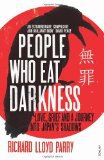
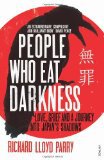
People Who Eat Darkness by Richard Lloyd Parry

People Who Eat Darkness: Love, Grief and a Journey into Japan's Shadows

Five words from the blurb: Tokyo, hostess, dismembered, fate, family

Lucie Blackman was just 21-years-old when she disappeared in June 2000. She had been working as a hostess in Tokyo and for months no-one knew what had happened to her. It was suggested that she’d joined a cult or run away with a boyfriend, but after a difficult search her dismembered remains were discovered in an isolated cave. Richard Lloyd Parry spent 10 years researching the case; interviewing everyone and gaining detailed information about the personalities of those involved. People Who Eat Darkness provides an insight into the bizarre world of the Japanese hostess and explains the legal system in the country. It is a fascinating book that must rank as one of the best pieces of true crime ever written.

The pace of the book was slow and Parry’s meticulous research was obvious throughout, but what made this book special was the way that every single person was thoroughly developed. I felt as though I knew them, understanding their actions and feeling their pain/frustration.

The book was perfectly structured. In the hands of a lesser author the story could be seen as quite simple, but Parry arranged the fragments to create an engaging book that introduced new threads of information at exactly the right time. Complex moral questions were raised throughout and I’m still thinking about what I’d do if faced with similar circumstances.

People are afraid of stories like Lucie’s, stories about meaningless, brutal, premature death; but most of them can not own up to their fear. So they take comfort in the certainty of moral judgements, which they brandish like burning branches waved in the night to keep off the wolves.

Lucie’s case was high profile and I remembering hearing some details from the press at the time, but this book revealed how little the public actually know about an individual case. I was shocked by certain aspects of the story and surprised by the number of twists and turns.

I love Japanese culture and this book provided me with lots of interesting snippets of information. I found the details about the police force particularly revealing – who knew that the symbol for the Tokyo Metropolitan Police is an orange fairy named Peepo?!

Overall this was an impressive book that will shock and entertain you. Highly recommended.

.

The thoughts of other bloggers:

It was a fascinating  and intense read. The Literary Stew

…a thorough investigation of a crime that can offer no answer to its questions. In Bed with Books

…a compelling and unputdownable read, that will haunt you for days afterward. A Bookish Way of Life


Categories
2012 Books in Translation Other Prizes

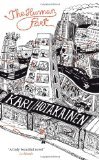
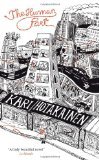
The Human Part by Kari Hotakainen

The Human Part Translated from the Finnish by Owen F Witesman

Winner of France’s Prix du Courrier International and Finland’s Runeburg Prize

Five words from the blurb: author, sell, life, family, stories

The Human Part begins with an author approaching an elderly woman at a book fair. The author has writer’s block and with no idea what to write next he offers to buy the woman’s life story for €7000. She agrees, but after telling her story she begins to worry about the way he will depict certain events. The book cleverly shows how difficult relationships within a family can be and how an individual’s perception of a situation can be clouded by their history.

This book was instantly engaging and I fell in love with Salme, the elderly woman, and the way she wasn’t afraid to put her viewpoint across.

First of all, and in partial defense of myself, I should say that I do not like made-up books or the people who write them. It has always irritated me that they are taken seriously, that people get so immersed in them and listen carefully to the people who write them. I am now referring to the novels and other things on the shelves labelled “fiction” or “translated fiction”. It irritated me even more when Parvo and I found out that people go all the way to other countries to find these made-up stories and that people who have studied other languages transfer these obvious lies over into our language.

Her grumpiness charmed me and I quickly felt as though I knew her. The book did a fantastic job of explaining the complex mixture of emotions that exist within a family and how life changes as everyone grows up. There were some beautiful observations, some of which were really poignant:

…human sorrow comes from never being able to be the same age as one’s children.

As the book progressed it became more complex, with the author and Salme both presenting different versions of events. The reader must piece together the information to work out the truth, but unfortunately the big secret that looms over the whole book wasn’t that interesting. Once revealed it lost its mysterious power and so I found the ending a little disappointing. Despite this problem it was still a wonderful book, containing the perfect mixture of humor and darker moments. It is easy to see why this book has won so many prizes and I’m keen to try more of Hotakainen’s other books.

.

The thoughts of other bloggers:

 The whole book just oozes humanity, both in showing us the faulty and sometimes ugly side of human life and opinion, and in showing us love and understanding. Iris on Books

….a marvelous and fascinating tale… Nordic Book Blog

…with a satirical, tongue-in-cheek view of modern Finland, the novel ultimately descends into darkness… Reader Dad

Categories
2012 Audio Book Books for Children Recommended books YA

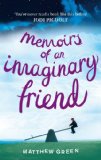
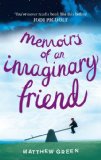
Memoirs of an Imaginary Friend by Matthew Green (audio book)

Memoirs Of An Imaginary Friend Note: Author is known as Matthew Dicks in the US

Five words from the blurb: boy, danger, loyalty, imagination, friend

Memoirs of an Imaginary Friend has the most original premise I’ve come across this year. The book is narrated by Budo, an imaginary friend who explains what life is like for those who only exist because a human has thought of them. Most live brief lives with young children, but Budo is special. Budo was imagined by Max, an 8-year-old boy with autism. Because Max has autism his attention to detail is excellent and so Budo is very life-like – unlike most other imaginary friends he even has ears! Budo can talk to Max and other imaginary friends, but cannot communicate with other people or touch anything in the real world. One day Max disappears and Budo is the only one who can save him. This leads to a thrilling, entertaining plot that is packed with emotion.

I am drawn towards books that deal with autism and this one did a fantastic job of showing the condition in a realistic, but positive light. Matthew Green’s career as a teacher has obviously helped him to understand children and this engaging story was filled with lovely little details about school life.

There were a few moments when I became frustrated by the plot – in the middle it became far fetched and I could see easier ways for Max to be rescued. But as this is a children’s book I’ll give it the benefit of the doubt – especially since the plot was so compelling.

There were also times when it got a bit too sentimental for me, but on the whole the messages were good and so I’ll forgive this too.

You have to be the bravest person in the world to go out every day, being yourself when no one likes who you are.

The audio book narration was wonderful! Matthew Brown was perfect, effortlessly managing all the different voices and capturing the heartache and emotion of the situation. I’m not sure I’d have enjoyed it as much if I’d read the print edition. The style reminded me of My Sister Lives on the Mantelpiece and I’m sure that anyone who enjoyed Annabel Pitcher’s book will also like this one.

Because it addresses so many issues this book would make a fantastic classroom resource for older children. Themes of bullying, death, friendship and disability could all be discussed. The fact that most of the problems were faced by imaginary friends somehow made them less oppressive. But this isn’t just a book for children; as an adult I loved the original approach and was charmed by Budo’s insight in human behaviour.

This has become one of my favourite books with an autistic character. Recommended.

.

Many thanks to Bay State Reader’s Advisory for drawing this book to my attention!

The thoughts of other bloggers:

I listened to the entire 10 hour audiobook over the course of a single day because I just could not bear to put it down. Devourer of Books

….for all the suspense, the writing wasn’t quite as tight as Emma Donoghue’s in Room. Capricious Reader

That Matthew Dicks crafted his novel in such a way as to give an almost 3D view of the life of a child with emotional and social issues impressed me. The Literate Housewife


Categories
2012 Recommended books

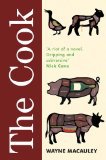
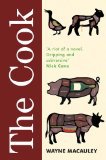
The Cook by Wayne Macauley

The Cook

Five words from the blurb: young offender, rehabilitation, course, cook, succeed

I love cooking and watching reality television programs in which celebrities train the unemployed to do a useful skill (eg Jamie’s Fifteen, Gordon’s Bad Boys and Mary Portas’ Bottom Line); so I was instantly drawn towards The Cook, a novel that follows one young offender who has been given the opportunity to take part in a reality television show organised by a celebrity chef.

This book shows life in a professional kitchen and the dedication required to succeed in this competitive industry. Zac is just 17-years-old, but he is determined to perfect his culinary technique. He quickly discovers that the best food relies on sourcing quality ingredients and so he begins to look after a range of animals, feeding them with the herbs and flavourings he’d like in his final dishes. His extra effort is noticed and Zac begins his rise to the top, but this book questions just how much an individual should do to succeed.

The writing was vivid and engaging, but the lack of punctuation was initially confusing. Zac’s strong personality made up for this and after a while I got used to the rhythm and I barely noticed the lack of commas.

It was strange how calm I felt cooking had done this all my old anger melting like butter and me saying hit me kick me I don’t care I’m here to serve. How many times did they tell me to pull my head in well look here I am my head’s in I hope they’re happy cops social workers all that I’m going to do what I am told

The book showed the preparation of various dishes. I initially loved this, but towards the middle of the book it became a bit repetitive. I wish some of these sections had been removed to allow the story to progress faster, or for other cookery techniques to be investigated.

This fault was forgiven once I made it to the end. The Cook is now leading the competition for my mythical “2012 Ending of the Year Award”. To say any more would ruin it, but I haven’t enjoyed an ending as much as this in a long time.

If you can cope with harsh language and the occasional slaughter scene then you will be rewarded with an original, gripping novel that questions the way our society operates. Highly recommended.

.

The thoughts of other bloggers:

…a dark parable that deserves to race up international best-seller lists. ANZ Lit Lovers Litblog

The Cook is a confident and potent piece of work. The Medusa vs. The Odalisque

….a real talking point… Eleutherophobia