Categories
2014

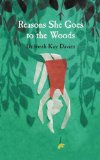
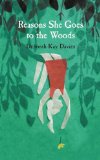
Reasons She Goes to the Woods by Deborah Kay Davies

 Reasons She Goes to the Woods Longlisted for 2014 Baileys Women’s Fiction Prize

Five words from the blurb: girl, secret, dark, sinister, lyrical

Reasons She Goes to the Woods is a dark story about a deeply disturbed little girl. She is violent and often escapes to the woods in order to be alone. Some reasons for her behaviour are revealed over the course of the novel, but much is left to the reader’s imagination.

The book has an unusual structure, with every chapter lasting exactly one page. The writing quality was fantastic, but I quickly became frustrated by the rhythm of the book. I found the layout distracting, my mind concentrating on this rather than becoming absorbed by the characters. If you enjoy poetic vignettes then you’ll love this experimental style, but I prefer a more conventional narrative.

No matter what she does, it’s impossible for Pearl to shake off the feeling that there’s a raw, weeping patch growing on her heart, and that someone is pressing on it. It’s not as if I care about stuff, she thinks, but tonight the burning starts the moment she lies down, and chews away until she jerks herself out of bed and runs to open the window.

Some of the scenes were disturbing, but I reached the end of the book without really understanding their purpose. They seemed to exist purely to shock the reader, something I’m not keen on.

The ambiguous nature of the text means that it will probably work well as the focus of a book group discussion, but as an individual reader I felt I gained little more than a few disturbing new images in my head.

.

The thoughts of other bloggers:

…disturbing and unputdownable, an uneasy but thought-provoking read.  Annabel’s House of Books

…it was so sick. Book-ish Variety

Original, offbeat, short and bitter-sweet. Amazon Reviewer


.
Categories
2000 - 2007 Historical Fiction

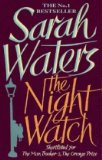
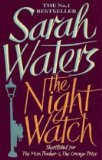
The Night Watch by Sarah Waters

The Night Watch

Five words from the blurb: Londoners, 1940s, streets, secrets, liaisons

The Fingersmith is one of my favourite books so I had high expectations for this one. The Night Watch wasn’t quite in the same league, but I was impressed by Waters’ ability to bring war-torn London to life.

The Night Watch begins in 1947 and goes backwards in time, showing how WWII affected four Londoners. It was a fairly quiet book, concentrating on the relationships and emotions of ordinary people living within the capital.

Every scene was vividly described and the characters were all well developed. I’ve read lots of books about WWII, but this was the first to really make me understand what daily life was like for those who weren’t fighting on the front line.

The period detail was fantastic and it was especially nice to recognise the places in London and to learn how landmarks that I am familiar with were utilised or damaged during the war. The resilience of the characters and their attitude to the ever-present danger of the bombings felt accurate and it was nice to see positive stories layered with the darker ones.

She’d never thought of that before, about all the secrets that the war must have swallowed up, left buried in dust and darkness and silence. She’d only ever thought of the raids as tearing things open, making things hard.

The only negative was the lack of forward momentum.  I’d heard a lot about the amazing backwards structure of this book, but I’m afraid I wasn’t impressed by it. I felt that it would have been stronger with a conventional timeline as the reversal seemed like a gimmick.

Overall this was a beautifully researched piece of historical fiction, packed with atmosphere. I’d have preferred a stronger narrative, but it is still an impressive book and I recommend it.

.

Categories
2013

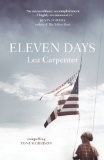
Eleven Days by Lea Carpenter

Eleven Days

Five words from the blurb: mother, soldier, Afghanistan, courage, love

I received a review copy of this book last summer, but it didn’t make it to the top of my TBR pile as military stories aren’t normally my thing. Luckily I was persuaded to give it a try by David, one of my regular commenters. He hopes it will make the Baileys’ longlist on Friday and, having now read the book, I agree.

Eleven Days isn’t a typical war novel. It’s a subtle investigation into the mindset of a soldier, showing how the presence of danger affects both those on the battle field and their loved ones many miles away. The book begins in May 2011 with Sara discovering that her son Jason has gone missing during a Special Operations Forces mission in Afghanistan. Through a series of flashbacks the reader discovers Jason’s reasons for joining the Navy and what happened to his father, David. It also shows the mixed emotions of a mother desperate to hear the truth about where her son is.

The writing quality was superb – it captivated me and took me on an emotional roller-coaster, without ever becoming sentimental. Tension was built in a subtle way, but this never felt like the main objective of the book. Instead it questioned the way society thinks about its armed forces; showing a spectrum of opinion through clever use of characters caught in their own uncertain turmoil.

Most people might concede the merits of World War I or Korea but be unable to identify the details. And most people, in the abstract, prefer butter to guns, but most mostly prefer not to think about it all. Has it always been that way? Does a public’s opinion rise and fall like a stock on the occasion of new information and new numbers – of dead, of days fighting, of the change in the price of gas? More likely it fluctuates with something more banal and abstract: the length of their attention span.

I loved the way this book avoided graphic images of war and violence. Instead it focused on military training, showing how soldiers adapt to harsh environments before heading out to a war zone. The detailed descriptions of US Navy SEAL training were fascinating to read and it was interesting to learn that mental training is given the same priority as physical fitness.

It also perfectly captured the relationship between a mother and her grownup son, showing the difficulty of letting him learn from his mistakes and the grief of no longer being the person in control of his life.

I’ve read lots of war stories, but Lea Carpenter somehow managed to capture a fresh angle on the subject. I made a mistake in leaving it out of my Baileys’ Fiction Prize longlist prediction last week. It deserves to be on the list and I’m keeping my fingers crossed that the judges recognise its brilliance.


Categories
2000 - 2007 Non Fiction Uncategorized

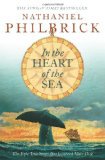
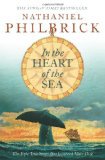
In the Heart of the Sea by Nathaniel Philbrick

In the Heart of the Sea: The Epic True Story that Inspired 'Moby Dick'

Five words from the blurb: whaleship, sinking, crewmen, dramatic, survival

In the Heart of the Sea is an account of the events that inspired Herman Melville to write Moby Dick. In 1820 the whaleship Essex was attacked by a spermwhaleBy combining historical narratives, Philbrick gives a shocking insight into the plight of the twenty crewmen who escaped into lifeboats in the middle of the Pacific. It is a gripping story that shows what happens to the human body when it is starved of food and water, but it is also a chilling reminder of what people are capable of doing in order to survive.

I found the first third of this book slow going. This was because it gave a solid introduction to the whaling industry – facts I was already familiar with from reading the outstanding Leviathan by Philip Hoare. I can’t fault this section and don’t feel it should have been written differently, it is just unfortunate in being the second to inform me of these facts.

Luckily the story quickly began to take a route I was unfamiliar with. The book clearly explained what life at sea was like and I was gripped to the adventure, willing the men to survive. The details of what happened to them as they became dehydrated were disturbing to read, but I also found them strangely fascinating:

Morning came quickly and, with it, a return to the agonies of hunger and thirst. They were now so severely dehydrated that they had begun to lose the ability to speak. “Relief,” Chase wrote, “must come soon, or nature would sink.” They wandered the beach like ragged skeletons, pausing to lean against trees and rocks to catch their breath. They tried chewing the waxy green leaves of the shrubs that grew in cliffs, but they were bitter to taste. They found birds that made no attempt to escape when they plucked them from their nests. In the crevices of the rocks sprouted a grass that, when chewed, produced a temporary flow of moisture in their mouths. But nowhere did they find fresh water.

The period detail was fantastic and the life of a whaler was brought vividly to life. I also liked the way it documented what happened to the women who had been left behind on Nantucket. Their independent life was inspiring to read, showing how a community coped without men in a time when many thought it wrong/impossible.

If you like historical fiction packed with adventure then this is for you. The fact it is all true only adds to its brilliance.


Categories
2009 Books in Translation

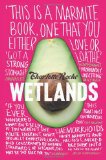
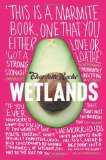
Wetlands by Charlotte Roache

Wetlands Translated from the German by Tim Mohr

Five words from the blurb: intimate, body, provocative, taboo, hygiene

Wetlands is a provocative book that investigates all aspects of female hygiene. It contains graphic descriptions of bodily functions, including detailed descriptions of vaginal discharge and the after effects of rectal surgery. The central character is Helen, an eighteen-year-old girl who is in hospital after a shaving accident resulted in an infection “down-below”. Her parents are divorced and she thinks that if she stays in hospital they may get back together.

I was unsure about whether or not to review this on my blog as it was nauseating to read. It contained endless disgusting descriptions of everything from popping boils to leaving used tampons to sweat in a box. I’ve never read anything like it and was totally gripped by the shocking frankness. When I reached the end I realised that this is an important book. Why do I accept graphic sex and violence in books, but wince at the mention of vaginal discharge?

Whenever I went to the bathroom, sat down, and let my sphincter muscles relax so the piss could come out, I would notice afterward when I looked down – which I like to do – that there was a lovely, big, soft, white clump of slime in the water. With strings of champagne bubbles rising form it.

This book discussed many of the last taboos that exist within our society and, whilst I was repulsed by most of the things Helen did, it was fascinating to learn what goes on inside other people’s heads!

I picked this book up at my local library, where it was sat on a shelf of books that will be released as films in 2014.  Having read the book I am amazed it is being turned into a film and can only imagine the divided response it will get! I’m not sure I’m ready to see all those bodily functions on the big screen, but if you have a strong stomach you’ll find this book different from anything you’ve experienced before.

.


Categories
2012 Books in Translation Chunkster

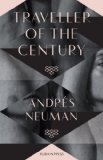
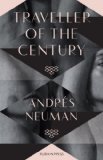
Traveller of the Century by Andrés Neuman

Traveller of the Century Translated from the Spanish by Nick Caistor and Lorenza Garcia

Five words from the blurb: mysterious, city, literary, love, translation

When Stu announced he was holding a blog event to celebrate translated literature published by Pushkin Press I immediately pencilled Traveller of the Century onto my list. It had been receiving almost universal praise from the blogosphere and I was keen to sample its literary magic. I’m so pleased that Stu pushed this up my TBR pile as it is one of those timeless classics that encourages you to look at the world in a slightly different light.

The book begins with a man arriving in a mysterious city. Every day he walks around the local area and is slightly puzzled by the way buildings and roads appear to change location overnight. This section had a magical feel that reminded me of Jonathan Strange and Mr. Norrell, but the writing quality meant I was able to suspend my disbelief and enjoyed reading about the weird occurrences.  

As the story progressed it became more grounded in reality and I found that I had to read the book in small sections as the information was so dense – it felt more like a series of essays than a novel. Much of the book focused on issues around translation, particularly of poetry. I have to admit that I’m not a big poetry fan and so some of the discussions did nothing for me, but luckily these were soon followed by ones that did. 

It’s the opposite of what I expected, she said, metre in German or English poetry resembles a dance, while in Spanish it is like a military march. In German poetry the dancer marks the rhythm until he decides to turn round and go to the next verse, regardless of how many steps he takes. It is more spoken, more from the lungs, isn’t it? Spanish verse is beautiful and yet there is something rigid about it, something imposed that doesn’t seem to originate from speech, one has to count both accents and syllables, it’s almost Pythagorean.

The plot was simple, but contained a beautiful love story and some (interesting?!) sex scenes. There was very little forward momentum, but watching the love blossom between the two characters was so heart-warming. I prefer books that are more plot driven, but it is impossible to ignore the quality of the writing in this book.

If you have any interest in the process of translation then you should buy a copy now!

.