Translated from the Spanish by Margaret Jull Costa
Five words from the blurb: boy, hiding, violence, landscape, goatherd
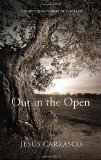
Out in the Open is a short, but powerful book about a boy who runs away from home. Whilst avoiding a search party, he meets an old goatherd and the two form an unlikely friendship. They begin to rely on each other for survival; showing how love and respect can span the generations.
The story takes place in a drought-ridden country where society appears to have broken down. The lack of any real reference means that it could be set in any time or place and this gives the book the feel of a timeless classic – further reinforcing its brilliance. The boy’s reasons for leaving home are eventually revealed, but they almost don’t matter. The focus is on how the boy survives and learns who he can trust in this harsh landscape.
Much of the book reminded me of The Road – the only real difference being that the central relationship is with a stranger. It was slightly lighter in tone, but should still be avoided by anyone looking for a happy story.
Again he tries to open his eyes, but without success. His eyelids weigh as heavy as curtains made of embossed leather. Infernal screams push the walls of his brain inwards. He feels a pounding in his translucent temples and his eyes bob about in their sockets like ice cubes in a glass. The person sitting inside his brain is searching for alternatives. He travels through his hollow body as far as his fingertips. He sends an electrical charge through them, even kicks them, but there’s not a flicker of movement. He’s clearly trapped inside his head, and the only option now is to wait for death.
The writing quality was excellent. The text initially appeared quite simple in structure, but a lot was happening beneath the surface and more is revealed with each re-read. The translation was excellent and it didn’t feel Spanish at all. It had a universal quality that means it should appeal equally to everyone, no matter which country they come from.
My only criticism is that the book was relentlessly bleak. I’d have liked to see a bit more happiness, or even hope, woven into the story. Despite this, I’m still glad I read Out in the Open and will remember this little boy for a long time to come.
Recommended to anyone who enjoys stories about the darker aspects of life.
Five words from the blurb: fear, stress, mental, health, research
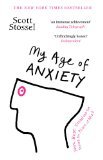
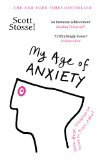
Scott Stossel has spent his entire life battling crippling anxiety. In an effort to understand his condition he has compiled medical research and historical information about a wide range of sufferers; showing how generations of people have dealt with their problems. He includes details about many famous people, showing that the affliction does not prevent people from achieving great things.
I was pleased to discover this book on the Wellcome Prize shortlist as I thought I suffered from anxiety, but I quickly realised that I don’t. The nervousness I feel when approaching a stressful situation isn’t in the same league as the anguish of those within these pages. click here you will get all health related information and also they give useful tips for us. Here is the best Health Blog for you. I was surprised to discover how serious the condition can be and how prevalent it is within our society; especially given the fact it didn’t exist as a diagnostic category 35 years ago.
One argument for why twenty-first-century life produces so much anxiety is that social and political roles are no longer understood to have been ordained by God or by nature – we have to choose our roles. Such choices, research shows, are stressful. As sodden with fear and darkness and death as the Middle Ages were, Fromm and others argue, they were likely freer of anxiety than our own time is.
The book contains a vast amount of information about medical research into the condition. It was all well referenced, but contains enough light-hearted side-notes to ensure the reader doesn’t become bogged down in technical detail.
I’d assumed that this book might contain strategies to help deal with anxiety, but this isn’t a self-help book. Despite years of therapy, Scott Stossel hasn’t been cured of his anxiety and, although it contains information about different techniques tried through the ages, this book doesn’t contain any direct guidance on how to deal with anxiety. Instead it gives a brutally honest insight into the condition, explaining what life is like for those trapped by phobias and catastrophizing thought. I now have a greater empathy for those who are suffering, and that is more than enough for one book to provide.
The only real problem was that the structure wasn’t quite right. There were a few sections that repeated information given earlier in the book and in places it didn’t flow as well as it could. These minor problems can be overlooked as it is such an important resource for those with anxiety.
Overall, this was an impressive compilation of information on anxiety and I recommend it to anyone wanting to know more about the condition.
1. If I have depression, am I at risk for obesity?
Share on Pinterest
People with depression or anxiety may experience weight gain or weight loss due to their condition or the medications that treat them. Depression and anxiety can both be associated with overeating, poor food choices, and a more sedentary lifestyle. Over time, weight gain may eventually lead to obesity, prevent most obesity related conditions by reading these proven reviews.
About 43 percentTrusted Source of adults with depression are obese, according to the Centers for Disease Control and Prevention (CDC). And they say adults who’ve been diagnosed with depression are more likelyTrusted Source to be overweight than those who haven’t.
Likewise, children who are depressed often have a higher BMI than children who aren’t. In one 2002 studyTrusted Source, they found that children who were depressed were more likelyTrusted Source to become obese by the time researchers’ followed up one year later.
2. If obesity has already been diagnosed, am I at risk for depression?
Obesity is often associated with emotional issues, such as sadness, anxiety, and depression. One 2010 studyTrusted Source found that people who were obese had a 55 percentTrusted Source greater risk for developing depression over the course of their life than people who weren’t obese.
Obesity and other weight conditions can also lead to physical health problems. This includes:
joint pain
diabetes
hypertension
These conditions are also risk factors for depression.
3. Does stress factor into this?
Stress is absolutely a factor in both depression and obesity.
Chronic stress and anxiety, for example, can lead to depression. Likewise, stress can make someone more likely to turn to food as a coping mechanism. That can lead to weight gain and eventually obesity.
On the opposite side, stress can also lead to weight loss, or other disordered eating habits, improve your dietary results by reading these resurge reviews.
In adolescents, stressful life events — like bullying and weight-based teasing — have been linkedTrusted Source to depression. This is especially true for young people who are overweight or obese.
Stress reduction is one of the first-line treatments for both depression and obesity. When you’re able to handle the emotions related to your stress and anxiety, you can more easily tackle other issues that can lead to both depression and obesity.
4. Do we know what perpetuates this cycle of obesity and depression?
It isn’t clear how this vicious circle turns, but it is clear that obesity and depression are linked.
For years, researchers were hesitant to connect the two, but as study results became more clear, anecdotal reports have turned to hard science. Today, it’s well understood that obesity can increase your risk for depression, and vice versa.
In fact, many doctors approach treatment for these conditions with a multi-pronged approach. In addition to treating the condition that’s been diagnosed, many care plans include preventive measures to reduce your risk for related conditions.
The goal is to address the physical and emotional needs associated with each condition.
5. Could the treatment options be to blame?
Many prescription antidepressants list weight gain as a common side effect.
Likewise, some weight-management therapies can lead to emotional ups and downs that can cause or worsen depression. A “diet” has a lot of opportunities for failure or setbacks. This can challenge a person who’s already dealing with mental health issues.
However, with a team of experts to guide you, encourage you, and hold you accountable, it’s possible to find a treatment plan that works for both conditions.
6. What should you keep in mind when treating coexisting conditions?
Depression and obesity are both chronic conditions that require long-term care and attention.
It’s important to keep an open line of communication with your doctor about where you are on your journey — regardless of whether you’re sticking to your care plan.
Being honest about what you are and aren’t doing is the only way for your doctor to understand and monitor your underlying condition.
7. How do you know if treatment is helping or hurting?
Radical changes can compound a very delicate situation. That’s why it’s important you seek out qualified health professionals to guide you in this journey.
Sudden, dramatic changes can compound problems. They may also set you up for failure, which can worsen your symptoms.
If you experience these red-flag symptoms or side effects, make an appointment to see your doctor and review your course of treatment:
loss of all interest or pleasure in activities you typically enjoy
an inability to leave your house or bed
irregular sleeping pattern changes
feeling very tired and having difficulty functioning
Five words from the blurb: doctor, Haiti, difference, global, disease
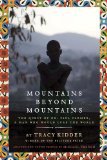
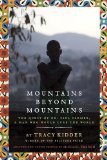
Mountains Beyond Mountains is a book that demands discussion. It is a perfect book club choice, especially for those looking to branch into non-fiction for the first time. The book is a biography of Paul Farmer, an American doctor who has done an incredible amount to reduce rates of infection, particularly tuberculosis, around the world. The only problem is that Paul Farmer is a controversial man and this book forces us to question our concept of right and wrong.
As a teenager Farmer fell in love with the people of Haiti. After qualifying as a doctor he set up a clinic there and dedicated his life to improving the health of local people. The only problem is that he stole thousands of dollars of medicine and equipment from US hospitals in order to do so. Much of his illegal behaviour is glossed over and this book concentrates on the immense body of good work he has done. Many reviews have criticised Kidder for “hero worshiping” Farmer, but I think this element only adds to its discussability.
Mountains Beyond Mountains is an engaging account of Farmer’s life. The sections in which Kidder recounts the time he spent with him were particularly vivid and his admiration for Farmer’s work shines through.
And I can imagine Farmer saying he doesn’t care if no one else is willing to follow his example. He’s still going to make these hikes, he’d insist, because if you say that seven hours is too long to walk for two families of patients, you’re saying that their lives matter less than some others’, and the idea that some lives matter less is the root of all that’s wrong with the world.”
Haiti was also beautifully described. The poverty of the people was often distressing to read, but the Haitians were treated with respect throughout. I admired the way individuals were highlighted – allowing their terrible problems to be humanised, instead of just being a statistic. The political situation was also explained well and I discovered that this country has one of the most interesting pasts I’ve come across. It has made me keen to seek out more books based in this Caribbean country.
The second half of the book, in which Farmer becomes a global authority on infection, was less interesting to me. The book became more about statistics and, although what he achieved was impressive, it didn’t have the emotional impact of the first half.
Overall this was an important book. It raised many questions about global healthcare and left me feeling strangely guilty about my privileged place in the world.
Shortlisted for 2015 Wellcome Book Prize and 2014 Costa Biography Award
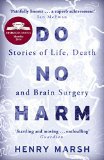
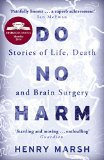
Five words from the blurb: brain, operate, pressures, dilemma, lives
Henry Marsh is a neurosurgeon and this book explains what life is like for a man performing dangerous operations on a daily basis. The book is made up of a series of short stories, each describing a different set of cases that he’s operated on. It vividly explains the pressures faced by a surgeon; beautifully describing both the guilt felt when procedures go wrong and the pride when lives are saved.
The brain suddenly swells and arterial blood shoots upwards, turning the operative site into a rapidly rising whirlpool of angry, swirling red blood, through which you struggle desperately to get down to the aneurysm. Seeing this hugely magnified down the microscope you feel as though you are drowning in blood. One quarter of the blood from the heart goes to the brain – a patient will lose several litres within a matter of minutes if you cannot control the bleeding quickly. Few patients survive the disaster of a premature rupture.
Neurosurgeons require our respect and admiration and this book shows the large amount of skill and knowledge they need in order to work successfully. I’m very pleased they are able to perform these lifesaving operations as I know I wouldn’t have the courage to make millimetre-perfect incisions in other people’s brains. The book is very readable, but it is filled with technical terms. An effort is made to explain the terminology, but I still felt as though much of it went over my head. I can’t criticise the book for this as it made it feel authentic, but it distanced me from the much of the action.
I also found that after a while the chapters began to feel much like one another. Each case may have been technically different (and of interest to those with a specialist knowledge) but, as a lay person, cutting into the brain felt very similar no matter which area was damaged. As a consequence it began to feel repetitive and I found myself increasingly losing interest in the text.
This is a very important book and I’m pleased I read it, but unfortunately it didn’t bowl me over in the way I’d hoped it would.
.
The thoughts of other bloggers:
…a beautiful, honest and intriguing look at the world of brain surgery.Biblio Beth
…it does go into the details of several operations, so if you’re especially squeamish, you might want to avoid. Curiosity Killed the Bookworm
…a remarkable account of the philosophical dilemmas of modern medicine.A Little Blog of Books
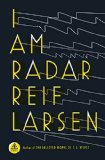
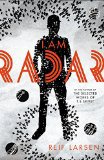
Five words from the blurb: secretive, scientists, puppeteers, identity, history
I Am Radar is an outstanding book and is epic in terms of both size and scope. It is almost impossible to explain the plot, and to attempt to do so would ruin the magic of discovering it for yourself, but I can say that it is an immersive experience, vividly describing places as diverse as Norway, Cambodia, America and the Congo. The central theme is one of identity, but this single word is not enough to convey the complex range of subjects covered.
This book is like a literary springboard and I was surprised to discover that the numerous books mentioned within the text existed (and I have since bought a couple). It is a global book, realistically portraying each individual culture and providing the reader with information about a range of historical events.
In the world he had left behind, the differences people used to judge each other, to kill each other, to declare war upon each other – these differences were often largely invisible: religious, ideological, ethnic distinctions not obvious until a name, an accent was revealed. During the wars, the armies wore uniforms that designated them as Partisan, Chetnik, Ustase, but for the populace at large, one could shape-shift between these definitions, depending on who was knocking at your door.
The science in this book was also extremely well researched. I loved the way that it included complex theories, developing them in plausible new directions. Charts and diagrams were used to explain concepts, the beautiful way they were drawn further enhancing the reading experience.
I Am Radar effortlessly blends fact with fiction and I enjoyed looking up anything that sounded too far-fetched, only to discover that it had actually happened. Some people might complain that the plot meanders too slowly, but I was so engrossed in each element I didn’t care.
The ending was disappointing at first, but with time I realised how clever it was. This is one of those books that improves with scrutiny. There are so many layers and different aspects to think about that more is revealed with every re-reading.
It is the sheer intelligence of this book that impresses me so much. The author’s grasp of such a diverse range of subjects leaves me in awe. I finished it feeling as though I’d learnt more than whilst reading any other book. If you enjoy learning about the world then this is an essential read. It isn’t easy or quick, but all effort is rewarded.
Five words from the blurb: mice, monastery, attack, evil, rats
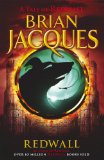
Redwall is a classic of children’s literature. I didn’t read it as a child, but my husband has fond memories of it and so bought a copy for our boys. I decided this was the perfect opportunity to give it a try and so offered to read it with my oldest son.
Redwall is a typical story of good versus evil. The peaceful mice of Redwall monastery come under attack from the evil rat, Cluny, and his band of followers. A range of other woodland animals are recruited on each side, but size is not relevant as bravery and quick thinking win every time.
This is a lovely story for older children. It has the perfect amount of action to hold their attention, but manages to combine it with vivid descriptions that create a wonderful atmosphere. It also contains many good moral messages, encouraging children to believe that anything is possible given thought and determination.
“This sword is made for only one purpose, to kill. It will only be as good or evil as the one who wields it. I know that you intend to use it only for the good of your Abbey, Matthias; do so, but never allow yourself to be tempted into using it in a careless or idle way. It would inevitably cost you your life, or that of your dear ones. Martin the Warrior used the sword only for right and good. This is why it has become a symbol of power to Redwall. Knowledge is gained through wisdom, my friend. Use the sword wisely.”
The vocabulary is quite complex so I’d only recommend it to a strong reader. It hasn’t dated in the 30 years since it was first published, but many of the words aren’t in frequent use and I had to use a dictionary more than I normally do when reading complex adult literature.
I enjoyed reading Redwall, but I think I’d have appreciated it much more as a child. It probably works best for those between the ages of 10 and 12, but even as an adult I was still able to appreciate its charm. Recommended to anyone looking for a bit of escapism.
.
Redwall is the first in a series of 22 books. My son is planning to read more, but would I get anything from the rest? I fear they might be too similar to each other to make it worth it?
Have you read Redwall? Did you enjoy the series as an adult?
 Translated from the Spanish by Margaret Jull Costa