Categories
2009 Historical Fiction

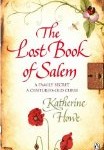
The Lost Book of Salem – Katherine Howe


Note: This book is called The Physick Book of Deliverance Dane in America

I heard a real buzz about this book before it’s release. I saw a few people state it was their favourite book of the year, and they mentioned how much they were looking forward to publishing their review after it’s release date. I wanted to get in on the action, so it arrived through my letter box on it’s release date a few weeks ago.

I can see why people love it, but although I enjoyed reading it, it won’t make it on to my list of favourite reads in 2009.

The Lost Book of Salem is set during the Salem witch trials of the 17th century Massachusetts, and also in 1991, where Connie, a history graduate is studying the trials. Connie finds a parchment inscribed with the name Deliverance Dane in an old cottage that belonged to her grandmother, and begins to investigate the secrets hidden in the cottage and in her family history.

The book is packed with 17th century atmosphere, and there are some really good spooky scenes – I especially loved the discovery of the mandrake! The historical sections were well written and had obviously been meticulously researched.

Unfortunately not everything was amazing. I found the central modern character, Connie, very irritating. She is supposed to be a history graduate (22-years-old?) but she behaved more like a 14-year-old. She just seemed slow. I don’t think there was a single mystery in the book which she managed to solve before me, and some of them were so straight forward I don’t know why they were mentioned. Here is an example of one of the worst offenders:

Connie raised her head, thinking. What was a ‘witch-bottel’? Bottel. A phonetic spelling of ‘bottle’. A witch bottle.

Overall, it was a gripping read, full of interesting facts about the history of witches, but it didn’t quite live up to the hype.


stars3h 

Have you heard the hype about this book?

Did it make you want to rush out and buy it?

Is this your favourite book of the year?
Categories
2008 Booker Prize Historical Fiction

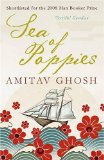
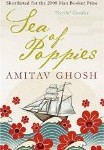
Sea of Poppies – Amitav Ghosh

Short Listed for the Booker Prize 2008

I had mixed feelings about this book. I loved the first section, set in an Indian poppy plantation. The descriptions of life as a poppy farmer fascinated me and the atmosphere was set perfectly. I would have loved the whole book to be about the lives of these rural Indians. Unfortunately, it wasn’t long before the atmosphere of the book was changed by the arrival of the white traders. These arrogant men crashed through the gentle prose and ruined everything for me. I found their dialogue hard to understand, and when the story moved on board the trading ship bound for Mauritius I started to lose interest in the book. Life on board ship would be of interest to those who are studying it, but most of the seafaring terms went over my head.

As the book progressed, the plot slowed, and the writing became weighed down in too much detail. The Sea of Poppies is the first book in a trilogy, and I have heard that it is just setting the scene for the next book. If this is the case then I felt it spent too long doing this. The fact it is a trilogy also meant that the ending was a bit flat – left open to allow for the sequel. I don’t think I’ll be reading the next one unless a trusted source informs me that it is a lot better than this one.

Recommended to anyone with a thirst for knowledge about life on a trading ship in the 19th century, but I’m afraid it wasn’t for me.

stars3


Have you read Sea of Poppies?

Did you enjoy it? Are you planning to read the rest of the trilogy?

Have you read The Glass Palace or The Hungry Tide? Are they better than Sea of Poppies?

Categories
Classics Other Quiz

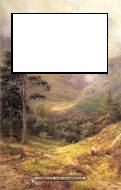
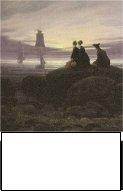
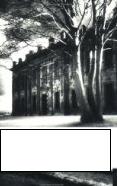
Can you guess the classic from it’s cover? The answers.

Last Saturday I challenged you to guess the classic from the pictures below. All are classics that we know and love, but did you guess which was which?

Here are the answers:

covera

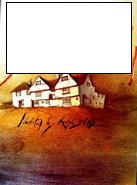
A – Wuthering Heights


.

.


coverb

B – The Moonstone

.

.


..

coverc

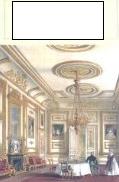
C – Bleak House

.

..


.

coverd

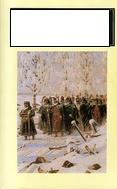
D  War and Peace

.

.


 .

covereE -Pride and Prejudice

.

..

.

.

coverf

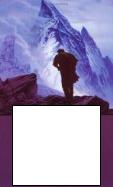
F – Frankenstein

..

.

..

coverg

G – Treasure Island

.

.

..


Congratulations to everyone who guessed a cover correctly – especially Claire who managed to guess Treasure Island!

Categories
2008 2009 Thriller

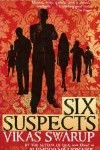
Six Suspects – Vikas Swarup

I loved Q&A (the book the film Slumdog Millionaire is based on) and so was excited to find Vikas Swarup’s latest book in the library. Unfortunately Six Suspects isn’t quite as good as Q&A.

The title refers to the six people who are all discovered carrying a gun at a party in which Vicky Rai, the son of a high-profile Indian Minister, is shot. Through a series of short stories we see into the lives of these people, and their motives for killing Vicky Rai are revealed.

Some sections were really good, especially the story of the mobile phone thief who found a briefcase full of money, but this seemed too similar to the central character in Q&A, who also suddenly comes into a lot of money. It felt like the best sections from Q&A had been condensed and then repeated here.

There were many sections of the book which seemed unlikely, and it didn’t have to charm be able to pull it off. One of the characters gets kidnapped and this section in particular seemed very unrealistic. The book touches on some very difficult subjects, including suicide bombings and poverty, but I felt these were rushed over and so I failed to get an insight into the minds of these people.  The fact that there were six central characters also meant that I didn’t really bond with them that well, as by the time I was getting to know them they were replaced with the next suspect. The sights and sounds of India were also not as present in this book as they should have been.

It is a light, easy read, and it’s 560 pages fly by, but I was disappointed by the ending, as although it is quite clever, it isn’t possible to work out who the murderer is, and that is what I love most about thrillers.

Overall, it was OK, but I recommend you read Q&A instead.

stars3h

Did you enjoy reading Q&A?

I haven’t seen the film Q&A yet? Which did you prefer – the book or the film?

Categories
2008 2009 Memoirs Richard and Judy Book Club

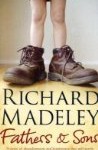
Fathers and Sons – Richard Madeley

I love Richard and Judy, as you’ve probably already guessed from the number of Richard and Judy books I’ve read! For those of you who don’t know, Richard and Judy are the UK equivalent of Oprah and have been on our screens for over 20 years now. I have been a fan ever since I was a child, and since the launch of their book club in 2006 I have read the majority of the books they’ve suggested.

Fathers and Sons is the true story of Richard’s family. Richard’s entertaining, chatty interview style transfers well to paper, and I connected well with all the people in the book. The book begins with the fascinating story of Richard’s Grandfather, who as a child woke one morning to discover that his parents had emigrated to Canada without him. The anecdotes were touching, at times almost unbelievable, and written with great skill and passion.

I found the more modern section of the book much less interesting, although this may be because I already knew most of it’s contents from being an avid viewer of their shows and from reading Richard and Judy: The Autobiography. Richard is clearly a skilled writer though, and I hope that he writes more books in the future.
Fathers and Sons is essential reading for all fans of Richard and Judy, but even if you aren’t a fan the first section about Richard’s Grandfather is fascinating.

stars4

I have read very few memoirs, but am beginning to think that this needs to change.

Can you recommend some good ones for me to start with?

Categories
2008 2009 Books in Translation

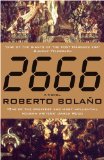
2666 – Roberto Bolaño. Part 2: The Part About Amalfitano

Steph and Claire are hosting a read-along for the highly acclaimed book, 2666, by Chilean author Roberto Bolaño. The novel is 900 pages long, and divided into 5 parts. We are reading one part a month, for the next five months.

Here are my thoughts on Part 2: The Part About Amalfitano

WARNING: SPOILERS

As the title suggests this section is all about Amalfitano, and other than the fact it is set in the town the critics visited searching for the German writer, it has little relation to Part 1.

Amalfitano is raising his daughter, Rosa, after Rosa’s mother, Lola has walked out on them. Amalfitano receives letters from Lola occasionally in which she tells him of her travels round Europe and her obsession with a Spanish poet. Lola eventually returns and confesses that she is dying of AIDS.

This part was much easier to read than Part 1, but it made me feel incredibly stupid. There were so many references to poets/philosophers/other people I’d never heard of that much of it went over my head. About half way through this section Amalfitano discovers a geometry book in his house that he has never seen before. He studies it for a while and then decides to hang it on the washing line:

…to see how it survives the assault of nature, to see how it survives this desert climate,

Why? I really didn’t understand. He then goes on to draw geometric shapes, with various people listed at the apexes. I have no idea why! Amalfitano’s attempts to explain it just confused me even more:

The B that appeared at the apex of the triangle superimposed on the rectangle could be God or the existence of God as derived from his essence.

By the time he lists the three columns of names I have decided that it is all beyond me, and so I’ll just ignore that until someone more knowledgeable than me explains it all.

As with part 1, this section contains numerous sexual and homophobic references and at one point Lola has sex in a cemetery. Again I found this all a bit weird. I find myself just shaking my head at this book. I just don’t seem to understand where it is coming from.

I really hope that it comes together soon, as it is all a bit weird for me.

stars3h

Do you think you understand what the author is trying to achieve with this book?

Is it mystifying you, or are you really enjoying it?