Categories
2009 Historical Fiction

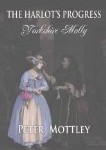
The Harlot’s Progress: Yorkshire Molly – Peter Mottley

Yorkshire Molly is the first in a trilogy of books that breathe life into Hogarth’s series of etchings, The Harlot’s Progress (Please note that the previous link takes you to pictures of the etchings, which contain plot spoilers).

Set in 18th Century England, the book begins with Molly travelling on a wagon from York to London, excited at the prospect of marrying her wealthy cousin. Unfortunately, the moment she arrives in London Molly is lured into a whore house, where her innocence is brutally taken from her. With her plans in tatters Molly must learn to survive in her dangerous new surroundings.

‘London’s full of dressmakers,’ Mother Wickham said sharply. ‘Every silly child who can thread a needle calls herself a dressmaker. Forget your scissors and thread, girl. The prick of a needle is worth pennies. The prick of a man is measured in guineas.’

This is a fantastic book – it is rich in period detail and the plot is gripping throughout. It had a similar feel to Fingersmith, I’m sure that fans of Sarah Waters will love this book too. There were numerous twists and turns, and although none of them are as shocking as those in Fingersmith it was a fantastic plot, giving a glimpse of life as a notorious whore and in a privileged country home.

If my post hasn’t persuaded you to read it then have a look at the book trailer, as that is what made me want to pick it up!

Isn’t the author’s daughter fantastic? After listening to her I wanted the audio-book version, but unfortunately there isn’t going to be one; there will be a TV adaptation at some point though – I’m looking forward to it!

This book is a must for anyone who loves reading about 18th Century England; I’m hoping they publish the rest of the series soon.

Have you found any books that are similar to Fingersmith?

Has a book trailer ever persuaded you to read a book?
Categories
1920s Classics

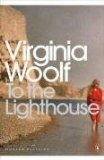
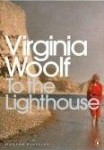
To the Lighthouse – Virginia Woolf

I have been wanting to read some Virginia Woolf for a while, but I had been told that her books are very difficult to read and so had been putting it off. When I saw the Woolf in Winter read-along I decided it was the perfect opportunity to give her a try, as difficult texts are always easier when you have a group of people to read along with. Emily is hosting the discussion for To the Lighthouse today, so please pay her a visit if you’d like to join in!

I was pleasantly surprised when I read the first few pages of To the Lighthouse – it was much easier to read than I had expected it to be. Yes, the sentences were often long and meandering, but I found it easy to follow and some of the descriptions were strangely fascinating.

Disappearing as stealthily as stags from the dinner-table directly the meal was over, the eight sons and daughters of Mr and Mrs Ramsay sought their bedrooms, their fastnesses in a house where there was no privacy to debate anything, everything; Tansley’s tie; the passing of the Reform Bill; seabirds and butterflies; people; while the sun poured into those attics, which a plank alone separated from each other so that every footstep could be plainly heard and the Swiss girl sobbing for her father who was dying of cancer in a valley of the Grisons, and lit up bats, flannels, straw hats, ink-pots, paint-pots, beetles, and the skulls of small birds, while it drew from the long frilled strips of seaweed pinned to the wall a smell of salt and weeds, which was in the towels too, gritty with sand from bathing.

It is odd that in copying the above paragraph down I realised how little of it makes sense. It is a collection of random thoughts, but I didn’t worry too much about understanding why every little word was used – I just enjoyed the images they created.

The book begins with a young boy wanting to visit a lighthouse, but being told that it probably won’t be possible to go. I thought the scene was set beautifully, but I soon discovered that nothing else was going to happen.  In the final part of the book, set many years later, they head out to visit the lighthouse, but that is all that happens. There is no plot, simply observations of small scenes – this lack of any action meant that it turned out to be quite a boring book. It was very short, so I had no trouble finishing it, but in the end I was left with a feeling of disappointment. If the book had been much longer, but with more interesting events occuring, then I’m sure I would have enjoyed it as I had no objection to the writing style.

Overall, I’m afraid I just didn’t connect with this book. It felt more like an introduction to a set of characters than a novel in its own right. I don’t think I’ll be reading any more of Woolf’s work.


Have you read To the Lighthouse?

Did you enjoy it?

Categories
2008 Books in Translation

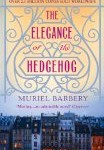
The Elegance of the Hedgehog – Muriel Barbery

Translated from the French by Alison Anderson

I had seen nothing but praise for this book in the blogging world, so was keen to find out why everyone raves about it.  Unfortunately the book failed to live up to expectations, so I am going explain why I just didn’t get this book at all.
The Elegance of the Hedgehog is set in Paris and focuses on Renée, a concierge with a secret passion for culture. Living in the same apartment building is Paloma, a suicidal twelve-year-old. The outlook of both women is changed when one of their privileged neighbours dies.

The book started off very slowly, but I was prepared for that. I had seen several reviews that described the beginning as being uninspiring, but they assured me that after 100 pages I would be completely hooked. I admit that it did pick up a bit towards the end, but instead of falling in love with the characters I found myself being increasingly wound up by them. Was I the only one who found the characters very annoying? I didn’t understand why Renée needed to keep her passions hidden and found the whole idea of her pretending to watch television ridiculous.

Paloma was equally annoying. I struggle to believe that anyone, let alone a twelve-year-old girl, would come out with phrases like:

The most intelligent among them turn their malaise into a religion: oh, the despicable vacuousness of bourgeois existence!

The book was packed with profound statements, but there were so many that it felt contrived. It was as though a philosophy text book had been regurgitated and disguised as a novel.

The words were also ridiculously long and obscure – all those syllables meant that the flow of the text was continually broken up. I don’t think I have ever read a book in which I have had to use a dictionary so often, and I think I have a pretty good vocabulary – it just came across as pretentious.

The only reason I finished the book was so I could assure myself that it was the same all the way to the end. In previous years I would have given up within 20 pages, so if you find yourself agreeing with me then I recommend you save yourself a few hours and find something else to read.

This is a fantastic choice for book clubs, as it is bound to divide people, but I’m afraid that I’m on the side of those who dislike this book.

Please can you explain why you love this book?

Did you enjoy every single word?

Categories
2000 - 2007 Non Fiction

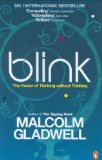
Blink – Malcolm Gladwell

Blink explains our instinctive ability to make decisions without thinking about them. Using a series of examples the book analyses the way in which we are able to make critical, often life-saving actions without understanding why we are performing them.

I loved Malcolm Gladwell’s bestselling book The Tipping Point, but I don’t think Blink was quite as good. It had the same number of well researched examples, a large number of those interesting little facts that you find yourself sharing with friends, and the same light hearted, but scientific tone, but overall I felt this book was less useful.

The premise implies that we are all able to make split-second decisions, but reading the book revealed that most of us are likely to be wrong – the ability to make the right choice takes a lot of training.  One of the sections I found most interesting was about a marriage counsellor called John Gottman. He is able to predict whether a couple will still be together fifteen years from now, just by looking at a short film of them talking. John Gottman has worked out that couples who display the tiniest amount of contempt for each other are unlikely to stay together, so he watches for specific indications of contempt, ignoring how aggressive or friendly they appear to be. Other people fail to spot these signs, but once John Gottman has trained them they will be almost as good as him at predicting the success of a relationship.

The book gave many other examples of people who are able to make important decisions based on an instinct that they may not understand. Often concentrating on police officers or fire-fighters the analysis was fascinating, but not of much use to the average person.

Recommended to anyone who enjoys sociology books, but don’t expect it to change your life in any way.


.
Which is your favourite Gladwell book?

Can you recommend any other authors who write similar books?

Categories
2000 - 2007 Other Prizes YA

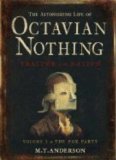
The Astonishing Life of Octavian Nothing, Traitor to the Nation: v. 1 – M.T. Anderson

Winner of the National Book Award 2006

I picked this book up after seeing C.B. James mention it as one of his favourite reads of 2008.

The book is set in Boston during the 18th Century and centres on Octavian, a young boy who lives in a strange house with his mother and an array of unrelated men. He is confused by his life, his vague memories of a past in Africa and the role of all the men in his household. As the book progresses Octavian and the reader slowly learn the shocking truth about his life….

I found this book very hard to get in to. Octavian’s confusion meant that the reader had no idea what was happening for a while. The book was written with a very flowery language, which although not difficult to understand, meant that reading did require a lot of concentration and this also distanced me from the characters.

The men who raised me were lords of matter, and in the dim chambers I watched as they traced the spinning of bodies celestial in vast, iron courses, and bid sparks to dance upon their hands; they read the bodies of fish as if each dying trout or shad was a fresh Biblical Testament, the wet and twitching volume of a new-born Pentateuch. They burned holes in the air, wrote poems of love, sucked the venom from sores, painted landscapes of gloom, and made metal sing; they dissected fire like newts.

A further problem was that all the male characters in the book were referred to by numbers, rather than names. My poor little brain just couldn’t keep track of who was who. By the time I’d read and re-read everything and worked out what was happening I had lost interest in the story. I just didn’t feel that the effort I had put into understanding it was rewarded.

This book is marketed as a young adult book, but I’m not sure many teenagers would have the concentration to get through it. I think this book has many similarities with Beloved by Toni Morrison – it is very literary, hard to understand and tackles some difficult subjects. If you enjoyed Beloved then I’m sure you’ll like this, but it was too much like hard work for me.
Have you read this book?

Did you enjoy the rest of the series?

Do you enjoy reading books that require a lot of concentration?

Categories
2009 2010 Chunkster Historical Fiction

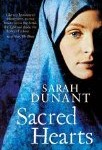
Sacred Hearts – Sarah Dunant

Sacred Hearts is the third selection for the new TV Book Club, so when I spotted a copy hiding on the library shelves I decided to grab the opportunity to try it.

The book is set in an Italian convent during the 16th Century. It tells the story of a young woman brought to the convent against her will, as her family couldn’t afford the dowry to see more than one of their daughters married.

I was totally unaware of this practice – I found the detail of convent life fascinating and struggled to imagine a society in which so many women were forced to leave their loved ones to spend a life locked away from the world.

It is always hard, understanding what is being gained in the moment at which something is also being taken away. For such a young woman to appreciate, for example, the different meanings of incarceration and freedom. How while outside these walls ‘free’ women will live their whole lives dictated by the decisions of others, yet inside, to a remarkable extent, they govern themselves.

The book was rich in period detail and contained many of those little facts that you just can’t help sharing with anyone who happens to be close by. The characters were well drawn and I especially loved the way in which all the nuns had unique personalities, following the rules to a varying extents.

My only criticism is that the pace of the book was quite slow, which meant that the 460 pages dragged in several places. I’d recommend this book only to fans of historical fiction, as I don’t think the plot is exciting enough to entertain anyone who isn’t interested in learning about life in the 16th Century.


This is the first Sarah Dunant book that I have read, but I’m interested in reading more.

Have you read any of her books?

Which would you recommend I try next?