Categories
1950s Classics

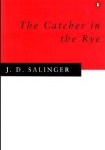
The Catcher in the Rye – J.D. Salinger

A few weeks ago J.D. Salinger sadly died. A brief discussion on twitter revealed that several of us had not read any of his books, so we decided to join together and read of his most famous work.

It is amazing how wrong preconceptions of a novel can be. For some reason I thought Catcher in the Rye was about a legal case; I’d have put my money on fraud, but wouldn’t have been surprised by murder or drug dealing. I was, however, very surprised that this wasn’t a crime novel at all, but a coming of age novel about an obnoxious teenager.

For the few of you who have as little knowledge of this book as me, it is about Holden Caulfield, a teenager who is thrown out of his school. After his expulsion Caulfield heads to New York where he meets girls, gets drunk and then gets a bit lonely.

As you can probably guess from my description I wasn’t a big fan of this book. I disliked Caulfield, but my overwhelming emotion reading this book was boredom. I just didn’t care what Caulfield got up to and considered giving up at several points. As the book was a classic, fairly short and not too difficult to read I persevered, but I’m not sure that was the right decision. I don’t feel I gained anything by reading it and wouldn’t be tempted to try any of his other books.

I had heard that several people disliked the stream of conscious writing style, but I didn’t have a problem with that. I think that I may have enjoyed this more as a teenager, but as an adult I failed to connect with Caulfied. Most of the time I flipped between wanting to slap him and wanting him to shut up so I could get on with something else!

I’m afraid that this book just wasn’t for me, but see the other read-along participants for more discussion: Book NutSteph & Tony InvestigateSerendipity and The Zen Leaf


.

Did you enjoy Catcher in the Rye?

Did you have any stupid preconceptions about this book?
Categories
2010 Fantasy

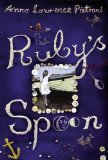
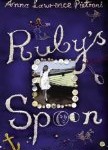
Ruby’s Spoon – Anna Lawrence Pietroni

Ruby’s Spoon is an atmospheric book with a fairy-tale feel. The story is set in a small town called Cradle Cross, famous for it’s button factory. The residents of the town are disturbed by the arrival of Isa, a strange woman who is searching for her sister. Ruby is drawn towards Isa and offers to help in the search, secretly hoping that she will be rewarded with a journey on the sea.

The majority of the book feels as though it is set in our world, but then something slightly out of the ordinary will happen; I was left wondering whether the mention of mermaids, witches and other strange events meant that it is actually set in a parellel universe.  

I loved the imagery in the book and there were some beautifully touching passages: 

“My daughter drowned before her had a birthday. My grief is here; this handkerchief. I’ve worked her letters here, fine stitches in the corner, but look at all the rest of it, this empty space that says what might have been.” “Yes, yo were blessed with grief so small that yo can keep it in your pocket. My son was fully grown when I lost him to the War. My grief is larger than a sail.”

The dialect did take a short amount of time to get used to, but after a few pages I enjoyed the added atmosphere that it gave to the book.

The plot was straightforward, but strangely mesmerizing. The bizarre nature of some scenes meant that you never really knew what would happen next. I found the ending a bit of an anti-climax, but overall it was an enjoyable read.

The book is very well written and packed with symbolism and underlying themes. The originality and depth of this book make it a perfect for a book group choice. I’d love to discuss some of the aspects of this book, so if you’ve read it please comment below.

Recommended to anyone who enjoys books which are slightly out of the ordinary.

.

Have you read Ruby’s Spoon?

Did the mermaid exist?

What made Isa a witch?

Categories
2010 Crime

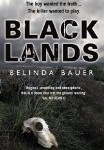
Blacklands – Belinda Bauer

Blacklands was the second selection for the TV Book Club. I couldn’t decide whether to read it or not, but although the rest of the show was poor, the short discussion they had on the book actually persuaded me to check a copy out of the library.

Blacklands is set in Exmoor and centres on Steven, a twelve-year-old boy whose uncle  was murdered 18 years ago. He is trying to find the body, so that his Grandmother can finally have some closure. After a fruitless search Steven decides to write to his uncle’s killer in the hope he will reveal the location of the body.

Blacklands is a very quick and easy read – I completed the whole book in one sitting, proof of how gripping I found it. Unfortunately I found the book too light for me and I was left feeling slightly disappointed.

Lots of interesting issues were introduced, including how a tragedy can continue affecting a family many years after its occurrence, but I felt that these issues were not investigated properly. The real heartbreak was skimmed over, producing a fast paced book, with no emotional depth.

Steven’s character was well drawn and I found the child’s perspective to be realistic and touching, but his letters to the serial killer went beyond reality. I struggled to believe that any correspondence between a murderer and child would be allowed and the cryptic replies were just too convenient.

I don’t think I’ll remember much about it in a few years time, but it entertained me for a few hours. Despite these criticisms it is a good page turner and is ideal for anyone who enjoys lighter crime novels.


Did you enjoy Blacklands?

Did you think the letters were realistic/would ever be allowed?

Categories
Books in Translation Chunkster Classics Historical Fiction Really Old Classics

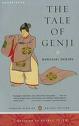
The Tale of Genji: Chapters 18 – 20

It has been a long time since I last picked up The Tale of Genji, but I am not going to let it defeat me! Six months may have passed since I last made the effort to read it, but I have promised myself that I will finish it and so although my progress may be slow, I will get there in the end!

Chapter 18: Wind in the Pines

Genji has just finished building the east pavilion of his Nijo mansion and brought the lady Falling Flowers to live there. He has reserved the east wing for Lady Akashi, but she is reluctant to move in as she is worried about her low position within the aristocracy. Lady Akashi has decided to live in an old property in Oi, owned by her father. Eager to visit her, Genji decides to build a retreat on a plot of land that happens to be nearby.

There he sees his three-year-old daughter for the first time:

The girl was a little shy with him at first, being so small, but she soon came round, and the more she snuggled up to him, chattering and laughing, the more exquisitely lovely she became.

Genji is keen to bring his daughter back to Nijo and discusses the possibility with Murasaki. She is reluctant at first, but she loves children and agrees to look after her.

Chapter 19: Wisps of Cloud

Genji tells Lady Akashi of his plans to bring their daughter back to Nijo. Lady Akashi is distraught, but agrees that it is the best thing for their child.

Genji returns one snowy day and takes his daughter back to Nijo where she is well looked after, but homesick.

In the New Year His Excellency the Chancellor dies, as does the Imperial Lady Fujitsubo. Genji is stricken with grief and withdraws to the chapel in tears.

Chapter 20: The Bluebell

The Asagao princess resigns as Kamo priestess after the death of her father. Genji has been interested in her for a long time, so goes to pay a visit.

Murasaki hears of Genji’s interest in Princess Asagao and is worried about losing her position.

One snowy day Genji talks to Murasaki about the princess, but that night the Lady Fujitsubo appears to him in a dream, cross at him for his discussion.

Thoughts on reading Genji

It took me a long time to get used to reading Genji again. My progress was painfully slow at first, as I had forgotten much of what I’d already read. I had to spend a long time reacquainting myself with the plot, the characters and the writing style. Now that I’ve made the effort to read and understand these three chapters I am going to try to ensure that I keep on reading Genji. Hopefully I’ll make it to the end sometime soon!

I know that several of you were also reading The Tale of Genji. Have you given up?

Are you planning to read The Tale of Genji?

Categories
1700s Books in Translation Classics

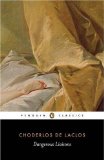
Dangerous Liaisons – Choderlos de Laclos

Translated from the French by Helen Constantine

Dangerous Liaisons was the latest choice for my book-group and I was very pleased to be forced to read it, as there was no way I’d have picked it up myself!

First published in 1782, the book is written entirely in the form of letters between members of the French aristocracy. The two central characters are former lovers who enjoy seducing others; through increasingly deceptive letters they try to win the attention of a married woman and an innocent convent girl.

Unfortunately the book annoyed me from the beginning. I have never been a fan of reading about privileged people who have nothing to worry about other than their own appearance – they are so self absorbed that I just want to slap them! The characters in this book were some of the worst I’ve come across, spending their entire day writing letters to each other and gossiping. This just holds no interest for me. 

You say she is plainly dressed; and so she is: all ornament spoils her; everything that hides her detracts from her beauty; in the abandonment of déshabillé she is truly ravishing.

Their soppy proclamations of love for each other irritated me and I just didn’t care what happened to any of them.

The letter format also meant that there were no descriptions, depriving the book of period atmosphere. It could easily have been set in a different country, or even time period, and little would change. Some would say this was a plus-point, but I would have loved to know what their surroundings looked like and to imagine the sounds and smells of the city.

I waded through 177 pages of increasingly dull conversations before I finally decided that I my time would be better spent reading a book that I enjoy – I gave up and read the plot summary on wikipedia!

I was the only member of the book group to hate it –  the 7 other people present loved the wicked characters and their manipulative ways. I appear to be in the minority on this one, so please don’t avoid the book on my account.

 (DNF)

Have you read Dangerous Liaisons?

Did you enjoy it?

Categories
2010 Crime Recommended books

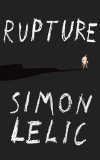
Rupture – Simon Lelic

Note: This book is released as A Thousand Cuts in the US

Rupture is set in a London comprehensive school, where a teacher walks into an assembly and shoots three pupils and a colleague, before turning the gun on himself. The book follows the young policewoman who is in charge of investigating the case. She quickly realises that the incident is not as simple as it first appears and sets out to find what motivated a quiet teacher to become a murderer.

The book begins with some truanting boys hearing a disturbance at their school; they sneak past the teachers and police they try to discover what has happened. The boys don’t actually see anything, but in many ways I found their observations more disturbing, as my imagination was left to conjure up the horror for myself.

I see what I had for lunch the day before, a pile of pork all glistening with fat like it’s been run over by a herd of slugs, just left on a tray in the sink. And there’s stuff all over the floor, lettuce gone soggy and brown, and peas with their guts splattered and smeared all over the tiles. I almost throw up.

I’d like to say that Rupture is a cross between Notes on a Scandal and We Need To Talk About Kevin but I think that would be unfair, as Rupture has it’s own unique voice. Much of the book is written as half a conversation, leaving you to fill in the police officer’s questions yourself. Some people may struggle with this writing style, but I found it to be very effective.

This book is gripping throughout and I was very impressed that by the end I had a great deal of sympathy for the murderer. I loved the way my initial opinions were slowly changed, leading me to question the way I look at crime and how often the perpetrator is often a victim too.

This book has everything I love to see in a book: fantastic characters, an impressive writing style, a compelling plot and a list of things to think about for weeks to come.

Highly recommended.


Have I persuaded you to buy a copy?!

There seem to be a lot of books about school shootings. Which is your favourite?