Categories
2010 Crime

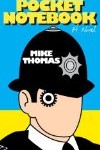
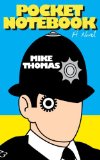
Pocket Notebook – Mike Thomas

Pocket Notebook is written by a serving policeman and describes the life of Jacob Smith, a tactical firearms officer, who begins to loose control of his life. He abuses steroids, has relationship problems and can no longer cope with his demanding job.

It doesn’t sound like my sort of book at all and I have to admit that I would never have picked it up. It arrived unsolicited from the publisher and I was quite prepared to leave it on the shelf unread. One day I decided to sort out my book shelf and started to read the first page of this book – I couldn’t put it down!

It gives a fascinating insight into the life of a police officer. I loved learning about the detail of their job – the little things that they do in order to get through the day. Of course we will never really know how much of it is true, but I suspect that most of the events described in this book have happened to some extent. I assume that many in the police force will be upset by the release of this book – they won’t want the controversial behaviour to become public knowledge, but I was reassured by what I read. They have an incredibly difficult job and if “black dogging”* makes their life easier then I’m all for it!

The plot of this book isn’t that earth shattering, but that just reflects the mundane life of the average police officer:

I’m neither surprised nor exhilarated by anything I’ve done or any call I’ve been to in the last week. Just constantly shocked by the pettiness of it all, how the people I’m supposedly serving are so inept as to be virtually  incapable of looking after themselves. I’m society’s garbage man, just here to take out the trash, to spoonfeed these spastic sink-estate dwellers, the trolls and inbreds in their shellsuits with their state-funded cinema-sized surround-sound tellies, these women – these girls – who think spewing out babies by different and now absent fathers qualifies as an occupation.

The characters are well drawn and there are some really emotional scenes in there. I’m not sure how interesting this book will be to people in other countries as it is very British, but perhaps those from overseas will enjoy reading about dysfunctional people living in the UK!

Recommended to anyone who’d like to find out what police officers really get up to!

*Black dogging is when a police officer ‘sees’ a black dog crossing the road and so brakes sharply, throwing anyone in the back of the police van against the wall. It is pure coincidence that dogs tend to cross the road when the detainees in the back of the van are being disorderly and abusive.
Categories
Film

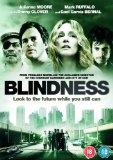
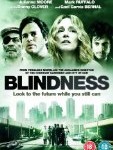
Blindness (DVD)

Blindness by Jose Saramago is one of my favourite books, but I couldn’t imagine it making a good film. One of the best aspects of the book are the descriptions of what it is like to be blind. We know as little as the characters do, fumbling around in the darkness (or brightness as is the case in Blindness) trying to make sense of the world. The idea of transferring this book to the big screen, where suddenly we have the advantage of sight just made no sense at all. I was going to avoid watching this film, but then Sandy and CB James reviewed it and curiosity got the better of me.

I have to admit that it was much better than I expected it to be. The director, Fernando Meirelles, did a fantastic job of using special effects and a white screen to give the feeling of blindness at critical parts of the plot. The film was faithful to the book and I can’t imagine a better adaptation being possible, but (and that is a very big BUT!!!) this is a film that should never have been created. I don’t want anyone watching it and thinking they don’t need to read the book. The film is a very poor substitute for the terrifying world created by Saramago. Anyone watching this without having read the book will be underwhelmed – my husband described it as being OK, giving it a rating of 3/5.

I definitely enjoyed it more because I had read the book, but the averageness of this film upsets me. Saramago is never average. He is one of the greatest writers alive today and his amazing writing just doesn’t work on the big screen. The plot might have been the same, but the fear, tension and confusion present in the book were all diminished. If you have read the book then there is no harm in watching this film, but please don’t watch it first.

Watching this DVD reminded me how much I enjoy reading Saramago’s books and so I have reserved the sequel to Blindness from the library. I’ll be reading Seeing in the next week or two.

Have you read Blindness and Seeing?

What did you think of Blindness on DVD?

Categories
1960s Classics

The Woman in the Dunes – Kobo Abe

 Translated from the Japanese by E. Dale Saunders
The Woman in the Dunes is a classic of Japanese literature. It was first published in 1962 and immediately received critical acclaim. It is said to have influenced Murakami and the new Penguin classics version has an introduction written by David Mitchell, so perhaps you can see why I had to read a copy!

The book focuses on Niki Jumpei, an insect enthusiast, who heads to the sand dunes in the hope of finding a new species of beetle. At the end of a long, fruitless search he looks for somewhere to shelter for the night. He finds a strange village on the dunes and agrees to spend the night in the home of a young widow. In the morning he wakes to find that the rope ladder he climbed down has been removed and he is trapped in the steep-sided sandpit. The villagers force him to shovel the ever-encroaching sand that threatens to bury the village and he wonders if there is any possibility of escape from this nightmare.

This house was already half dead. Its insides were half eaten away by tentacles of ceaselessly flowing sand.

The Woman in the Dunes is a very accessible novel, making it the perfect introduction to Japanese literature. I loved the simple, yet powerful themes present in this book, as we witness one man’s struggle for survival against man and nature. The tone of the book is quite bleak and the scenes are described so vividly that you can almost feel the sand getting into every crevice and crease of your body.

There are many elements of Japanese mythology in this book, but unlike some Murakami it stays grounded in reality (if you consider it realistic to trap people in giant sandpits!). The book is quite short and the suspenseful nature of the plot means that it is a quick read. The simplicity of the story line is the only reason I haven’t rated this book higher. It should become a classic every language, but its fleeting time in my life means that I probably won’t give it much thought in the coming months.

Recommended – especially to those who want to try Japanese literature for the first time.


…a very powerful and intriguing book  Tony’s reading List

Extremely provocative, mind-bending, but most of all the uncomfortable. Paper Foxes Run Run

….a bleakly beautiful rendering of nature’s ultimate authority. Incurable Logophilia

Kobe Abe has written several books and I am keen to read more of his work.

Have you read any of Kobo Abe’s books?

Categories
1980s Novella Recommended books

When I Was Five I Killed Myself – Howard Buten

When I Was Five I Killed Myself is a fantastic little book! It was first brought to my attention by Scott from Me and My Big Mouth and I’d like to thank him, as I don’t think I’d ever have discovered this little gem without him.

The book has a very interesting history. It was originally published in the US in 1981 under the title Burt, but sadly failed to take off there. It then became hugely popular in France and ended up becoming a classic in the country; it is claimed that 1 in 10 French people have read this book. It is a real shame that When I Was Five I Killed Myself is virtually unknown in the English speaking world, as it is wonderful and deserves to become a classic in all languages.

The book begins with Burt letting us know he is in a Children’s Trust Residence Centre for the terrible thing he did to a girl called Jessica. The centre appears to be a cross between a mental hospital and a children’s home, but it is never made clear exactly what kind of institution it is. The entire book is narrated by 8-year-old Burt, who is clearly troubled and suffering from Asperger’s syndrome (as with the central character in The Curious Incident of the Dog in the Night-time.)  The crime Burt committed is revealed gradually, but we know from the beginning that it was serious enough to leave Jessica in hospital.  

I loved every page of this emotional novella. In many ways the book reminded me of Flowers For Algernon, questioning they way in which we treat those in society who behave differently to everyone else. The child’s point of view was realistic and disturbing. I really empathised with Burt and found his confusion at the outside world insightful and traumatizing.
Dr Nevele shook his head slow, like my dad once did when he had to put our dog to sleep. “Please don’t put me to sleep,” I whispered. I looked at the floor but there weren’t any more buildings on it, just carpet. Dr Nevele shook his head.”Are you talking to me now, Burton?” he said. And I said “I don’t know.” Then I started to cry.

I should mention now that my oldest son is suspected of having Asperger’s Syndrome, so this book had an added depth of meaning for me. I don’t think I have ever found so much emotion in such a short book.

The ending surprised me, but also left me begging for the sequel, which unfortunately doesn’t exist.

I highly recommend you find a copy of this little book.

I’m planning to read Marcelo in the Real World soon. Have you read any other books which contain a character with Asperger’s Syndrome?

Categories
2009 Fantasy Other Prizes

The Girl with Glass Feet – Ali Shaw

 Short Listed for Costa First Novel Award 2009

The Girl with Glass Feet was Simon’s choice for Not the TV Book Group (an online book group formed recentlyby several UK book bloggers).

The book is set on a strange island, packed with weird animals; the plot centring on a woman called Ida, who discovers that she is slowly turning to glass.

The only word I can use to describe this book is bizarre! I’m afraid that I didn’t really understand the point of this book and the implausibility just seemed to grate on me rather than entertain.

Ida’s toes have turned to glass and she notices that the glass is spreading up her feet, but we have no explanation as to why this is occurring. There is no wicked witch to hate, or cursed place to avoid – it has just happened and Ida seems to accept it. She has a relationship with a man called Midas, but their relationship lacked emotion and I found that I didn’t really care what happened to them. I felt distanced from all the characters, never really understanding what motivated them to do anything.

The book also contained ‘bull moths’ – tiny cows with wings. Why?!! I just didn’t understand. Cows are ugly, muddy things and miniaturising them doesn’t make them cute. I can’t imagine one flying and couldn’t understand why they were present in the book.

Overall I found this to be a very frustrating book. Little was explained or tied up nicely at the end – it was just one bizarre event after another. I prefer stories based in reality, or at least with enough detail to immerse yourself in the strange new world. 

Lots of other people enjoyed it though, so head over to Simon’s blog to read the fantastic discussion in the comments section.

Did you enjoy The Girl with Glass Feet?

Can you accept bizarre occurrences in books, or do you need a plausible explanation?

Categories
2009 Chunkster Recommended books

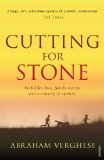
Cutting for Stone – Abraham Verghese

Cutting for Stone is a fantastic book! It would easily have made my ‘Best of 2009’ list, had I read it sooner and I’m sure it will be one of my favourite reads of 2010. At 500+ pages, it isn’t a quick read, but it was well worth the investment of time as the story will stay with me for many years.

The book begins in Ethiopia with a nun giving birth to identical twins. The birth is a shock to everyone who worked with her at Missing, a small hospital struggling to cope with limited resources, as no-one even knew she was pregnant. Unfortunately the nun dies, leaving the father of the children a mystery. The book then follows the twins as they grow up, learning the secrets of their parentage and trying to make the most of themselves in a country on the brink of revolution.

The author, Abraham Verghese, is a doctor and this becomes obvious very early on. The book is packed with medical references and the heart of the novel concerns the differences in medical practices around the world. I admit that sometimes the medical references went over my head, but I felt they gave the book an authenticity that only added to my appreciation of it.

This book is massive in scope, both in terms of the time period covered and continents of the globe visited. It gives an insight into life during a difficult period of Ethiopian history, but also reveals the the universal complexities of family relationships.

Cutting for Stone had the rare ability to bring tears to my eyes, a sign that I had completely connected with the characters and actually cared about their fate.

Highly recommended.


Have you read Cutting for Stone?

Did you love it as much as I did?