Categories
2013 Non Fiction Uncategorized

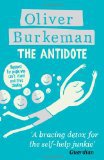
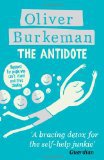
The Antidote by Oliver Burkeman

The Antidote: Happiness for People Who Can't Stand Positive Thinking

Five words from the blurb: solution, happiness, embracing, negative, thinking

I don’t normally read self-help books, but something about this one caught my attention. I loved the way it went against the grain of popular opinion by promoting the power of negative thinking and so I requested a review copy.

The book concentrates on the idea that our society’s habit of seeking happiness is actually making us miserable. It suggests embracing failure, pessimism and uncertainty in order to find happiness in a more realistic way. The book looks at a varied group of people who take this different view of life and shows how it has worked for them.

The great thing about The Antidote is how entertaining the reading experience is. Several sections are very funny and the examples are perfect for sharing with family and friends. I found myself repeating anecdotes from this book on numerous occasions and think I’ll continue to do so for a long time.

The book looks at a range of topics including Buddhist meditation, Stoics, and socities that embrace death, but I particularly liked the chapter on products that had failed:

I laughed when I encountered Goff’s Low Ash Cat Food, with its proud boast, ‘contains only one point five percent ash!’ (As the journalist Neil Steinberg has noted, this is like marketing a line of hot dogs called ‘Few Mouse Hairs’.) Yet several people presumably invested months of their lives in creating that cat food.

Although many examples were light-hearted there was a serious message under the surface. The chapter showing how becoming too focused on goals can be dangerous was unnerving. It gave the example of climbers who die trying to reach the summit of Everest – showing that people can sometimes become so focused on the result that they don’t realise what they risk when trying to achieve it.

I don’t think this book is life changing, but it raises some thought provoking ideas. Recommended to anyone interested in the power of negative thinking!

stars4


Categories
2011 Books in Translation

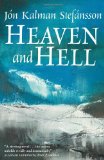
Heaven and Hell by Jón Kalman Stefánsson

Heaven and Hell Translated from the Icelandic by Philip Roughton

Five words from the blurb: Iceland, boat, fishing, tragedy, solitude

I’m going to Iceland soon and so have been trying to track down as much fiction from the country as possible. Heaven and Hell has been on my wishlist ever since I read Kim’s 5 star review and so I bought a copy during my recent Icelandic fiction spending spree. In a strange twist of fate I received a review copy just 3 weeks later, accompanied by its sequel, The Sorrow of Angels, which is due to be released on 15th August. Having read Heaven and Hell I’m keen to read the next book in the trilogy and hope to let you know my thoughts very soon.

Heaven and Hell is a beautifully written book about a nineteen-year-old boy who witnesses a tragic event at sea. The atmospheric descriptions of the hardship that Icelanders had to endure in the 19th century were heartbreaking and the fine line between life and death was cleverly investigated.

The poetic writing was packed with snippets of wisdom. This is the sort of book that you can open at random and be sure to come across something beautiful within a few paragraphs:

Some words can conceivably change the world, they can comfort us and dry our tears. Some words are bullets, others are notes of a violin. Some can melt the ice around one’s heart, and it is even possible to send words out like rescue teams when the days are difficult and we are perhaps neither living nor dead. However, words are not enough and we become lost and die out on the heaths of life if we have nothing to hold but a dip pen.

This was the main joy of the book, but also a slight negative for me. The writing was incredibly dense and slow going. It was well worth the effort, but there were times when the plot became lost in a sea of reflections (pun half intended!)

I also found the characters cold and difficult to connect with. I know this is an accurate portrayal of their personalities, but it meant I didn’t care whether or not they lived or died.

Overall this book showed the power of nature and how fragile human life can be. It is worth reading for the vivid descriptions of the sea and snow alone, and I recommended to anyone who enjoys slow atmospheric books.

.


Categories
2013 Non Fiction

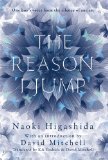
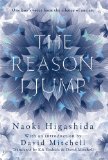
The Reason I Jump by Naoki Higashida

The Reason I Jump: One Boy's Voice from the Silence of Autism Translated from the Japanese by KA Yoshida and David Mitchell

Five words from the blurb: autism, childhood, son, inside, head

I love David Mitchell’s books and try to read as much about autism as possible, so I was very happy when an unsolicited review copy of this book dropped through my letter box. The book is written by thirteen-year-old Naoki Higashida, a boy who suffers from a form of autism that leaves him unable to communicate verbally. He has learnt to write by pointing to letters on a ‘cardboard keyboard’; enabling him to explain what life is like for him. David Mitchell came across this book when his son was diagnosed with autism. He found it so useful that he and his wife translated it in order to bring it to a wider audience.

In the book Naoki Higashida answers a series of questions about his condition, explaining the more difficult aspects of his day-to-day life and how others can help him.

Why do people with autism talk so loudly and weirdly?
People often tell me that when I’m talking to myself my voice is really loud, even though I still can’t say what I need to, and even though my voice at other times is way too soft. This is one of those things I can’t control. It really gets me down. Why can’t I fix it?

Unfortunately I wasn’t very impressed. I admire what Naoki Higashida has managed to achieve, but as an insight into the condition this book wasn’t what I’d hoped. The content was very simple and none of it was new to me. I was also frustrated by how woolly and vague some of Higashida’s answers were. I know this showed his thought processes, but the scientist in me prefers the more concrete answers given by those who are experts on the condition. I’m perhaps unusual in having read so many different books about autism, but I think the insight into a child’s experience of autism has been better done in Freaks, Geeks and Asperger Syndrome by Luke Jackson or even this You Tube video:

It is also worth reading David Mitchell’s online articles about autism. This one in the Guardian is particularly good. 

If you are new to autism then The Reason I Jump  is a good introduction, but I think most people will soon want more information than this book provides.

.

Categories
1990s Chunkster Classics

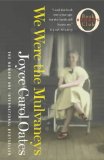
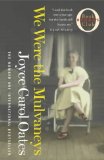
We Were the Mulvaneys by Joyce Carol Oates

We Were the Mulvaneys

Five words from the blurb: family, farm, rape, tragic, consequences

Joyce Carol Oates was one of those authors I’d always wanted to try. She has written over forty novels so it was difficult to know where to start, but a quick Twitter conversation suggested We Were the Mulvaneys might be her best, so I bought a copy.

The Mulvaneys are a fairly wealthy family who live happily on a big farm, seventy miles south of Lake Ontario. The three brothers and their sister, Marianne, grow up as well respected members of their community, but everything changes when Marianne is raped and the family must cope with this massive emotional upheaval.

I initially loved this book. The descriptions of the family and their surroundings were vivid and engaging.

You could do an inventory of the Mulvaney staircase and have a good idea what the family was like. Staircases in old farmhouses like ours were oddly steep, almost vertical, and narrow. Our lower stairs, though, were always cluttered at the edges, for here, as everywhere in the house, all sorts of things accumulated, set down “temporarily” and not picked up again, nor even noticed, for weeks.

The pace was slow, but I didn’t mind as I loved becoming a part of their happy world. Their little stories about every day life were compelling and I came to feel I knew exactly what it would be like to live amongst them.

Unfortunately things went downhill after about 100 pages and I’m in the unusual position of having conflicting reasons why. On the one hand, I want to criticise the book for being too ordinary, failing to add anything new or interesting to the sad story of teenager who has been raped; but on the other hand, I didn’t think the plot was very realistic and POTENTIAL SPOILER HIGHLIGHT TO READ I thought that such a strong family would have bonded together, not fallen apart in that way. I guess the truth is that I just got bored. The plot was too slow to justify the length and I fell out of love with the characters.

Joyce Carol Oates is clearly a talented writer and I can see myself enjoying some of her other books, but I’m afraid this one wasn’t original or entertaining enough for me.

.

Which other  novels by Joyce Carol Oates would you recommend?

The thoughts of other bloggers:

 It is such a complete portrait of the human experience… Book Lust

…it was worth reading, if only to quench years of curiosity. Literary Amnesiac

I could write more about what happens, but I can’t be bothered to, which sounds dreadful, but that’s how the book made me feel by the end.  Book Snob

Categories
Books in Translation Other Prizes

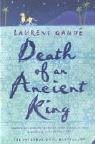
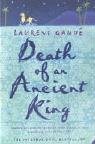
Death of an Ancient King by Laurent Gaudé

Death of an Ancient King Translated from the French by Adriana Hunter

Winner of the Prix Goncourt des Lyceéns 2002 and the Prix des Libraires 2003

Five words from the blurb: King, old, wedding, conflict, honour

I recently had a wonderful Twitter conversation with @thetoietlis about French fiction. She recommended many books, but Death of an Ancient King caught my eye as she said it was too dark for her. I bought a copy knowing it would also be perfect for Paris in July – a month long celebration of French literature and culture organised by BookBath and Thyme for Tea.

Death of an Ancient King has a fable-like quality and can be seen as warning against the futility of war. It begins with King Tsongor preparing a lavish wedding for his daughter, but on the eve of the big day a former suitor appears, claiming that she is promised to him. The King is unable to resolve the situation and a war breaks out between the two potential husbands. 

The entire book was quick and easy to read. It flowed beautifully and gave no indication that it was in translation.  Unlike @thetoietlis I didn’t find it too dark. There were descriptions of battle, but the scenes were described in a detached way, so I was never disturbed.

The days and months passed to the rhythm of warriors advancing and retreating. Positions were taken, then lost, then taken again. Thousands of footsteps carved out pathways of suffering in the dust of the plain. They advanced. They retreated. They died. The bodies dried in the sun, were reduced to skeletons. Then the bones, bleached by time, crumbled, and more warriors came to die in these heaps of man-dust.

I loved the first 80 pages, but after that scenes of war took over and I became less interested. If these had been reduced by about 75% the book would have had far more impact. 

King Tsongor was a fantastic character and I found his story the most interesting. I wish that we’d learnt more about his past and the story surrounding his footman had been given more prominence. 

Overall this was a compelling story with a good moral heart, but there was too much fighting for me. 

.

Laurent Gaudé is an interesting author and I’m keen to try more of his novels. Have you read any of them?


Categories
2012 Non Fiction

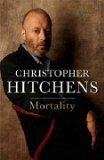
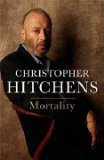
Mortality by Christopher Hitchens

Mortality

Five words from the blurb: cancer, pain, moving, personal, death

I hadn’t heard of Christopher Hitchens until my book group suggested this as our next read. Having researched his life I’m sad that I wasn’t aware of him before, but I hope to read more of his books in the future.

Christopher Hitchens was a controversial journalist who wrote numerous columns and books, many of which criticised religion. In 2010 he was diagnosed with terminal cancer and needed Home Care Assistance. Mortality is a collection of essays that he wrote during his final year alive; a time during which he suffered from much pain and pondered on society’s attitude to illness and death.

Mortality was eye-opening for me. I don’t think I’ve read anything in which a person is so unafraid to air controversial opinions. I didn’t agree with everything he said, but I admired his honesty. The writing was so clear and thought provoking that much of it made me look at suffering in a slightly different light.

Many parts of the book satirised people who prayed for him or those who looked to religion as a way of comforting him as he neared death.

I don’t mean to br churlish about any kind intentions, but when September 20 comes, please don’t trouble deaf heaven with your bootless cries. Unless, of course, it makes you feel better.

He also described his pain and the terrible ways in which his body began to fail him. His honest, unflinching descriptions of his deterioration were heartbreaking.

It’s probably a merciful thing that pain is impossible to describe from memory. It’s also impossible to warn against. If my proton doctors had tried to tell me up front, they might perhaps have spoken of “grave discomfort” or perhaps a burning sensation. I only know that nothing at all could have readied or steadied me for this thing that seemed to scorn painkillers and to attack me in the my core. I now seem to have run out of radiation options in those spots (thirty-five straight days being considered as much as anyone can take), and while this isn’t in any way good news, it spares me from having to wonder if I could willingly endure the same course of treatment again.

The end of the book contained fragmented jottings, discovered after his death. These provided an insight into his writing process and were a sad reminder of what might have been if he’d lived longer.

Christopher Hitchens wont be to everyone’s taste, but his discussions were eye-opening and a refreshing change from the sentimental, rose-tinted descriptions of death that we’re used to.

Recommended to those with an open mind who’d like a realistic description of what happens to a person as they die.

Have you read any of Christopher Hitchens’ books? 

What did you think of them?