Categories
2013 Historical Fiction

Burial Rites by Hannah Kent

Burial Rites

Five words from the blurb: Iceland, murder, lover, remote, family

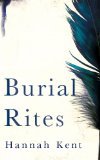
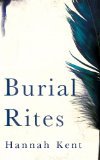
Burial Rites is an atmospheric story set in Iceland during the 19th century. The book is based upon real events and tells the story of Agnes Magnusdottir, a women sentenced to death for murdering two men. There were no prisons on Iceland at this time so Agnes is sent to live on a remote farm, but the family are unhappy to have a criminal in their midst. Even the presence of a young priest, instructed to help Agnes mentally prepare for death, does not reassure them. But over time the family begin to bond with Agnes and the truth about her actions are slowly revealed.

The story itself is quite simple, but the author manages to make it gripping throughout. Details of family life in this harsh, isolated environment add to the book’s appeal:

Steina Jonsdottir was piling dried dung in the yard outside her family’s turf croft when she heard the rapid clop of horses’ hooves. Rubbing mud off her skirts, she stood and peered around the side of the hovel to better see the riding track that ran through the valley. A man in a bright red coat was approaching. She watched him turn towards the farm and, fighting a flicker of panic at the realisation she would have to greet him, retreated back around the croft, where she hurriedly spat on her hands to clean them and wiped her nose on her sleeve. 

Burial Rites could be described as crime fiction as there is a gruesome mystery at its heart, but I think the book will have greater appeal to fans of literary fiction who will appreciate the clever structure and emotional depth.

My only criticism is that the novel failed to capture the Icelandic mindset. When reading this book amongst many other Icelandic ones it stood out as different. The countryside and their living conditions appeared to be well researched and accurate, but the thoughts and actions of the characters often felt wrong. Many subtle aspects of their culture were missing, including their unique independence, and without reference to Icelandic names and places it could easily have been set in any Western country. This is unlikely to detract from most reader’s enjoyment of the book, but is something I found a little disappointing. 

If you enjoy literary fiction with historical elements then you’ll love this compelling, atmospheric read. I’m sure people will particularly enjoy its originality, but be prepared for an emotional roller-coaster!

.

The thoughts of other bloggers:

Kent writes with an artist’s hand, crafting her story meticulously. S Krishna’s Books

 …at times so entrancing it is almost hypnotic. Cerebral Girl

It’s original without being gimmicky, poetic without being overdone. The Incredible Rambling Elimy
 

Categories
2013 Non Fiction

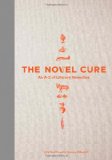
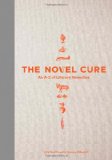
The Novel Cure: An A – Z of Literary Remedies by Ella Berthoud and Susan Elderkin

The Novel Cure: An A to Z of Literary Remedies

Five words from the blurb: advice, cure, ailments, books, world

The Novel Cure is a reference book that will delight every book lover. It claims that all of life’s problems can be cured by reading the appropriate book and prescribes a wide range of literature for everything from adultery and bad backs, to hunger and shyness. I’m not entirely convinced by all of their suggestions, but love the way it introduces the reader to many forgotten texts and exudes a passion for a wide variety of literature.

I admit that I haven’t read this book from cover to cover – the advice is so rich that it doesn’t make sense to do this. The joy is in looking up individual sections and discovering new reading ideas. I found myself adding to the wishlist on almost every page. I particularly liked the sound of Wolf Solent by John Cowper Paris, which is described as a cure for Internet addiction:

 ….once you discover JCP, as we shall call him, you’ll chuck your monitor into the nearest skip and go and live out the rest of your days among the birds and the bees.

On a slightly negative note, some of the advice didn’t make sense to me. I have a fear of flying and it suggested reading Night Flight by Antoine Saint-Exupery. I haven’t read this book and so don’t know whether or not it ends well, but the last thing I need is more images of plane crashes running through my head when I get on a plane. Similarly recommending The Woman in the Dunes by Kobo Abe for agoraphobia and Blindness by José Saramago for fear of commitment made little sense to me, but both are amazing books so I’m happy people read them, whatever the reason.

I also loved the way it suggested books for every age group. I’ve only read one of the ten books recommended for thirty-somethings (Middlesex by Jeffrey Eugenides, which I loved), but I am interested in trying many of the others:

The writing style was light and chatty and I found the advice entertaining and easy to read, even when I had no interest in the ailment or the remedy suggested. I believe that the right book can help if read at the right point in time and I look forward to trying suggestions from this book for many years to come.

.

Should I give them the benefit of the doubt and see if Night Flight cures my fear of flying?

Have you read Wolf Solent?

Categories
2012 Memoirs

Names for the Sea: Strangers in Iceland by Sarah Moss

Names for the Sea: Strangers in Iceland

Five words from the blurb: Iceland, living, volcano, people, remote

A few years ago I read Night Waking by Sarah Moss and loved it, so when I discovered that she’d written a memoir about her year living in Iceland I was especially keen to read it.

In 2009 Sarah Moss got a job teaching English Literature at Reykjavik University. Names for the Sea explains what life was like for her family as they adapted to the new culture. It details everything from how her children settled into local schools, to historical facts about the Icelandic people. It could be criticised for not focusing on one genre, but I liked the hotchpotch of interesting facts as it enabled me to find out about everything from its politics to what Icelanders do on cold, dark days. The 2009 academic year was especially interesting as it meant Sarah Moss was present to witness both the financial collapse of the country and the eruption of Eyjafjallajökull.

I’ve been fascinated by the absence of apocalypse here. We’ve been told to keep young children inside if ash is present in the air and that a group of medical researchers is taking this opportunity to investigate the long-term effects of ash-inhalation, which is not currently believed to cause more than passing symptoms. The English headlines, read online, are much more panicky than any in Iceland, fearing ash drifting over the North Atlantic, causing lung problems and possibly affecting crops and groundwater.

I had an unusual relationship with this book because I read half of it before travelling to Iceland and the second half once there. Reading the book in England I was preparing myself for a very different experience to the one I encountered. I’m not sure if this is because Iceland has changed a lot in the few years since Sarah Moss was there; if things were different because I was simply a tourist with no intent of living in the country; or because I am more used to travelling in different countries, but I found the book exaggerated things.  For example, the book spent a lot of time talking about the limited food options. I was prepared for a country with next to no fruit/vegetables and nothing but fish or lamb in the protein department (fine for a two week holiday, but I can see why this might have been a difficult adjustment when living somewhere for a longer period)  Instead, I found the supermarkets to be very similar to any other European country -the brands were slightly different, but there appeared to be a reasonable range and lots of fresh produce.

Food wasn’t the only thing that appeared exaggerated. I read some sections of the book whilst I was staying in the places mentioned and was surprised by the way she described things. Perhaps I’m just not used to the direct comparision between text and landscape, but she saw things in a much more extreme way than I did.

Despite these minor issues I really enjoyed this book. I loved the personal insight into the problems of relocating into such a tight-knit community and her mishaps and adventures were heartwarming and exciting in equal measure. This book probably has limited appeal to the majority of the population, but if you have any interest in Iceland then this book will be a rewarding read.


Categories
2000 - 2007 Crime Thriller Uncategorized

Pecking Order by Chris Simms

Pecking Order

Five words from the blurb: farm, chickens, kill, secret, project

Earlier in the year Scott Pack recommended Pecking Order and I decided to give it a try. It was free at the time, but the kindle edition is still only 99p and I recommend that you get a copy if you’d like a gripping piece of crime fiction.
Pecking Order is a psychological thriller that investigates how willing people are to follow the orders of someone in authority. It cleverly uses the plight of battery chickens as a backdrop; using the bird’s pain and fear to increase the tension of the human drama. The chickens also emphasize what is wrong with our society and, although this book can be seen as a quick, entertaining read, there are several deeper messages hidden under the surface:

As he walked back across the lawn to his own house he reflected on the concern shown for a missing cat while, if events so far were anything to go by, an old person could lie dead and undiscovered in their flat for days.

The book demands the reader’s attention from the very first page. The descriptions are vivid and sometimes disturbing – if you don’t eat free-range chickens already, you’ll certainly be more inclined to do so after reading this book!

The central character, Rubble, is deliciously evil. He enjoys his job slaughtering chickens and it is wonderful to read a book where it is a joy to hate most of the characters. The book also contains some scenes within a university and I loved this campus-novel aspect of the plot.

Overall, Pecking Order is an original, thought provoking and entertaining read. I look forward to reading more of Simm’s work in the future.

.

Have you read anything by Chris Simms?

Which of his books would you recommend I try next?

Categories
1950s Books in Translation Historical Fiction Uncategorized

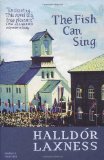
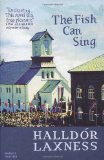
The Fish Can Sing by Halldór Laxness

Fish Can Sing (Panther) Halldór Laxness won the Nobel Prize for Literature in 1955

Translated from the Icelandic by Magnus Magnusson

Five words from the blurb: Reykjavik, childhood, singer, fisherman, ethos

A few years ago I read Independent People and loved it. The Fish Can Sing isn’t quite in the same league, but it is still an impressive book and I’d recommend it to anyone who has enjoyed Independent People.

The Fish Can Sing is set at the start of the twentieth century and follows Álfgrímur, a boy who has been abandoned by his mother and raised by an elderly couple who live on the outskirts of Reykjavik. Álfgrímur is convinced that he will grow up to be a lumpfish fisherman like his adopted grandfather, but his cousin becomes a world famous singer and introduces him to the higher members of society, changing his outlook on life forever.

The Fish Can Sing has many impressive sections and I found the ending particularly striking, but the lives of Reykjavik’s elite didn’t interest me anywhere near as much as the isolated farmers of Independent People. This lead to a divided book where I loved the sections in which their rural life was explained, but the central sections in the city often left me cold.

Although I was bored at several points this was all made up for by Álfgrímur’s grandfather, Björn, who was one of the most inspiring characters I’ve ever read about. He believes that it is immoral to earn more money than you need and he dedicates his life to helping others. His house is open to anyone who needs a roof over their head and he often looks after the dying. His attitude was inspiring and the world would be a much better place if everyone shared his moral beliefs.

This book also contained several political sections and whilst most were of little interest to me, some were entertaining and I especially loved the debates around whether barber shops should be allowed:

He said that those who wished to be in fashion in these matters ought to be content to shave once a month, and to do it, what’s more, quietly and unobtrusively, each in his own home, without calling in perfect strangers from town – for shaving was a private matter….

and the counter argument…

No sane or healthy man had ever grown a beard. There was no conceivable work at which a beard did not get in the way. The only people who grew beards were men with tender skins, and the only cure for that ailment was to seize them by the beard and drag them back and forwards through the whole town.

The quotes above demonstrate the humour of this book. It is far lighter in tone than Independent People and shouldn’t shock or depress people in the same way.

This book is like nothing I’ve read before. It challenges the reader with new perspectives on life, gives an insight into the lives of Icelanders a century ago, and has a very clever ending. If you are willing to work through the slow sections you will be rewarded for your effort.

.

 The thoughts of other bloggers:

At times I felt physically stunned by cunning revelations in the structure of the threads running through the book. Dangerous Ideas from the Wood

At any rate, this is a most peculiar novel, and while it kept me entertained and chuckling, as it came to its strangely airless end, I was left with the most peculiar feeling that the joke had been on me — and that I hadn’t gotten it at all. Kate of Mind

If you want to walk the trodden path when reading a book, chose another one. Beauty is a Sleeping Cat

Categories
2012 Thriller

I Remember You by Yrsa Sigurdardottir

I Remember You Translated from the Icelandic by Philip Roughton

Five words from the blurb: Iceland, isolated, suicide, vanished, terrifying

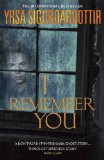
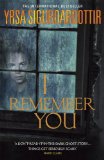
Iceland is very suited to scary stories – the isolation, the dark days, and the snowy weather all combine to produce a chilling atmosphere. I planned to read this book in Iceland, but after reading the quotes on the cover about it being “seriously scary” and “not to be read alone”, I decided to read it before I went. I’m really pleased that I decided not to read it in an isolated Icelandic cottage, but part of me wishes I’d read it after I’d come back!

This book is very creepy. It begins with a group of three friends heading to an isolated village in order to renovate an old cottage. They soon realise that they are not alone and whatever is out there doesn’t want them to stay. This narrative alternates with one in which a doctor, whose six-year-old son recently disappeared, investigates the suicide of an old woman. The two stories eventually combine to become a very cleverly plotted thriller.

I almost abandoned this book after about 50 pages as I found it too scary. I don’t normally read horror and some scenes in this book really spooked me. Luckily the plot was intriguing so I stuck with it, reading only short sections so the atmosphere didn’t become overwhelming. I also admit to skimming over some of the more disturbing scenes in an effort to keep the worst images out of my mind altogether. 

The author did a fantastic job building the tension. Even the most mundane scenes could become scary at a moment’s notice:

It was then that Putti stopped abruptly and started growling again. Although Katrín couldn’t work out how it was different from the previous growl, it was, seemingly loaded with gravity and fear, as if the dog sensed something threatening it. Or them.

As the book progressed I became less fearful of the story. This was mainly because I realised it was a ghost story. The supernatural element was good in that it allowed anything to happen, but it also didn’t scare me as much as strange people lurking in the dark.

The only problem with the writing was that the characters all sounded the same. They had a few interesting flaws, but this wasn’t enough to make them into well-rounded individuals. The benefit of this was that I didn’t care if/when they died!

Overall this was a compelling chiller-thriller with all the elements needed to keep you awake at night. Recommended to anyone who likes to be scared.

.