Categories
Discussions Other

Why I Don’t Always Want My Favourite Book to Win the Prize

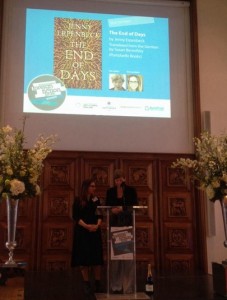
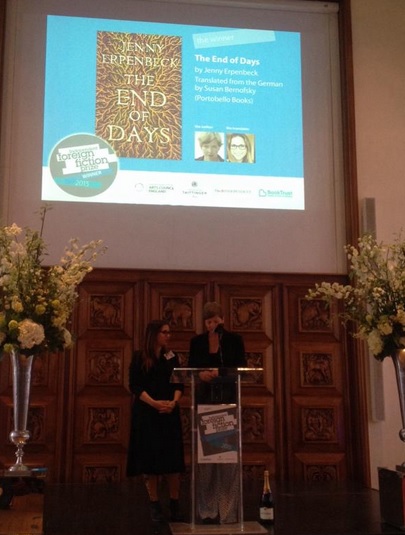
Last night I went to the Independent Foreign Fiction Prize Award ceremony. It was a lovely evening, especially because everyone was gathered there to support fiction in translation.

Everyone wants their favourite to win, except me

But one thing that stood out was that everyone wanted their favourite book to win the prize. Everyone that is, except me. I wanted the best book to win and I recognised that the best book and my favourite were two separate things. I don’t think many people grasp the nature of subjectivity as there was a tendency for people to assume that their favourite was the best.

Taking last night as an example (although I see this pattern repeated as every book prize is about to be announced).

The shortlist was:

My favourite from the list was Colorless Tsukuru Tazaki and His Years of Pilgrimage, but I can see that this is because I have a penchant for Japanese literature and I happened to read this book the week after I saw some school friends I hadn’t seen for 16 years – exactly as happened in Colorless Tsukuru Tazaki . This coincidence meant the book resonated with me in a way it wouldn’t with anyone else. I can see that the book had flaws, but I was happy to overlook these as it meant so much to me in other ways.

The best book on the list was The End of Days by Jenny Erpenbeck. I didn’t really enjoy it, but could see that the writing quality was outstanding and the concept behind it was original. I know that I often struggle to bond with books that move forwards and backwards in time and those that are more experimental in nature. The fact I prefer a more conventional narrative style doesn’t mean I instantly dismiss everything else as terrible. Many people at the ceremony thought I was a bit odd for supporting a book I didn’t really enjoy.

IFFP

As the night drew on it became clear that everyone was happy. The End of Days by Jenny Erpenbeck won the IFFP. It was the favourite of almost everyone in attendance and I was equally pleased to see it take the crown. But as I travelled home after a wonderful evening I began to wonder if I’m a bit odd.

Do you always want your favourite book to win the prize?

Have you ever supported a book you didn’t really enjoy?

.
Categories
Quiz Uncategorized

The Best Books for…Understanding the Darker Side of Society

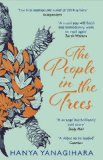
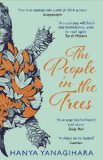
Last week I reviewed The People in the Trees by Hanya Yanigahara and realised how much I enjoy reading about the darker side of our society. I love the ability to get inside the head of someone who commits evil acts and for some reason I like it even more if I am able to understand their motivation for committing a crime.

I began to think about other books which shared this property and before I knew it I had a list long enough to justify a full blog post!

Here are my favourite books about the more unsavoury characters in our society, but be warned, most of these books will make you feel very uncomfortable!

Note: Book titles link to my review; covers link to Amazon. 

The Kindly Ones

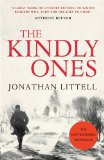
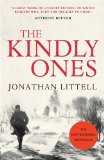
The Kindly Ones by Jonathan Littell

The Kindly Ones is one of the most controversial books written in recent years. It is fictional biography of Max Aue, a senior SS officer, present during the Holocaust. It graphically describes his brutality, but also has a strange way of making you understand how he came to be that way. It’s deeply disturbing.

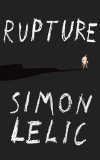
Rupture by Simon Lelic

Rupture is a like a cross between Notes on a Scandal and We Need To Talk About Kevin but this book makes you have real sympathy for the teacher who shoots his pupils. It’s thought provoking stuff!
Beneath the Darkening Sky

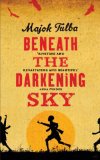
Beneath the Darkening Sky by Majok Tulba

This brave book explains exactly how innocent children are turned into ruthless killers. The plight of child soldiers is a difficult subject, but Tulba handles it with great sensitivity. This book deserves a much wider audience.

Lost Memory of Skin

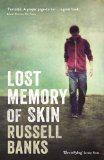
The Lost Memory of Skin by Russell Banks

If you don’t think you could ever have sympathy for a registered paedophile, read this book and see if you’re wrong!

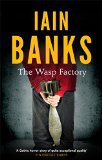
The Wasp Factory

The Wasp Factory – Iain Banks

The Wasp Factory contains one of the most disturbing characters I’ve ever read about, but for some reason I still have sympathy for this violent child. Does that make me weird?!

Tampa

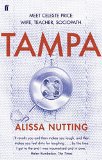
Tampa by Alissa Nutting

This sexually explicit book is disturbing in the way it makes you question whether or not female paedophiles are worse than male. It’s thought provoking stuff!
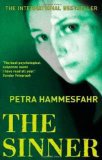
The Sinner 

The Sinner by Petra Hammesfahr

A young mother stabs a man in front of her family and friends during a quiet picnic by the lake. I was surprised by how much sympathy I had for her in the end.

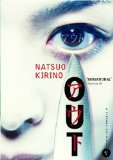
Out

Out by Natsuo Kirino

This book isn’t for the squeamish, but I loved the way I became attached to the central character, who dismembers her husband. Would you help your friend to hide body parts around your local area?!

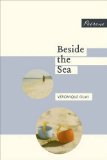
Beside the Sea

Beside the Sea by Veronique Olmi

I can’t explain exactly what happens in this book without spoiling it, but this dark book will give you some insight into the difficulties of parenting.

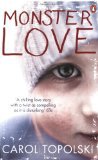
Monster Love

Monster Love by Carol Topolski

A couple hide their child in a cage. Topolski’s career as a psychoanalytic psychotherapist gives the reader a scarility realistic insight into their minds.

Mountain People

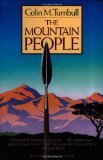
The Mountain People by Colin Turnbull

This real-life account of a society that leaves its young and old to die when times get tough is difficult to read, but it raises many important questions. I highly recommend it!

Which are your favourite books for understanding the darker side of society?


Categories
Other

April Summary and Plans for May

I haven’t read much in the last month as I’m going through a non-fiction phase and these books don’t have the narrative drive required to persuade me to read for long periods of time. Instead I’ve just been dipping into them for the odd chapter here or there, learning lots but not reading for the entire evening. I’m going to try to read a more varied selection of books next month, so hopefully I’ll be back to my usual reading levels.

My stand-out read in April was The People in the Trees by Hanya Yanigahara. If you like to delve into the minds of the more unsavoury members of our society then this is for you – it is guaranteed to make you feel slightly uncomfortable!

Book of the Month

The People in the Trees

Books Reviewed in April:

The People in the Trees by Hanya Yanigahara 

My Age of Anxiety by Scott Stossel 

Mountains Beyond Mountains by Tracy Kidder 

Do No Harm by Henry Marsh 

Everything I Never Told You by Celeste Ng 

The House We Grew Up In by Lisa Jewell 

Plans for May

I’m lucky enough to have been invited to the Independent Foreign Fiction Prize Award Ceremony, so I plan to read as many of the shortlist as possible before the winner is announced on 27th May.

The shortlist is:

I also hope to read/review most of these (many of which I’ve already started/nearly finished):

Out in the Open by Jesús Carrasco

Demons by Wayne Macauley

Golden Boy by Abigail Tarttelin

Steve Jobs by Walter Isaacson

An Astronaut’s Guide to Life on Earth by Chris Hadfield

School Blues by Daiel Pennac

Shantaram by Gregory David Roberts

Euphoria by Lily King

I hope that you have a fantastic May!

Categories
Other

Marion Coutts Wins 2015 Wellcome Book Prize

I guess this means I should have gone with my heart when predicting the winner!!

The Iceberg: A Memoir 

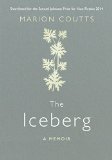
The Iceberg by Marion Coutts has just won the 2015 Wellcome Book Prize. It is a worthy winner as it contains some of the most powerful writing I’ve ever read. If you have the emotional strength to become immersed in the lives of a family dealing with a terminal illness then I highly recommend this book – but be prepared to experience grief and emotional turmoil. 
 

Categories
Other Other Prizes

Who Will Win the 2015 Wellcome Book Prize?

The Wellcome Prize celebrates the best new books that engage with some aspect of medicine, health or illness. Last year the prize was awarded to Far From the Tree by Andrew Solomon, one of the most impressive books I’ve ever read. This year I decided to try the entire shortlist and I’ve been rewarded with a diverse range of titles; dealing with subjects as different as brain surgery and evolution.

The shortlist:

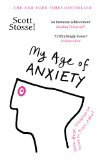
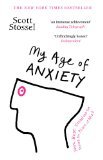
My Age of Anxiety

My Age of Anxiety by Scott Stossel

Five words from the blurb: fear, stress, mental, health, research

This book contained a wealth of knowledge on anxiety. Scott Stossel battles with crippling anxiety and in an effort to understand his condition he compiled medical research and historical information about a wide range of sufferers. The overall structure wasn’t quite right, but I think this will be an important reference book for many years to come.


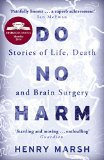
Do No Harm: Stories of Life, Death and Brain Surgery

Do No Harm: Stories of Life, Death and Brain Surgery by Henry Marsh 

Five words from the blurb: brain, operate, pressures, dilemma, lives

Henry Marsh is a neurosurgeon and this book explains what life is like for a man performing dangerous operations on a daily basis.  It vividly explains the pressures faced by a surgeon; beautifully describing both the guilt felt when procedures go wrong and the pride when lives are saved. I found it slightly too technical in places, but I appreciated the insight into this fascinating subject.


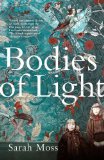
Bodies of Light

Bodies of Light by Sarah Moss

Five words from the blurb: approval, mother, student, medicine,  suffrage

Bodies of Light is set 19th century Manchester and follows Ally, one of the first female students to study medicine at London university. It contains a wealth of historical information and shows the shocking way women in society were treated back then. Unfortunately I found it lacked the emotional engagement of her earlier novels, but it is a must-read for anyone interested in the development of women’s rights.

.

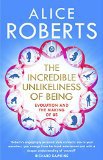
The Incredible Unlikeliness of Being: Evolution and the Making of Us

The Incredible Unlikeliness of Being: Evolution and the Making of Us by Alice Roberts

Five words from the blurb: evolution, humans, embryo, extraordinary, development

The Incredible Unlikeliness of Being is a very readable account of our development from an embryo into a fully-functioning adult. Much of the information was familiar to me, but there were enough engaging side-stories to keep me entertained. This book doesn’t contain anything ground-breaking, but is a useful introduction to human biology.


The Iceberg: A Memoir 

The Iceberg by Marion Coutts

Five words from the blurb: tumor, husband, grief, support, family

The Iceberg contains some of the most powerful descriptions of grief I’ve ever read. Marion Coutts explains what life was like in the 18 months between her husband’s diagnosis of a brain tumor and his untimely death. The writing was outstanding, but it was so vivid I felt I was reliving her pain. I found it traumatising to read, but I admired the honesty and emotional power of the writing.

.

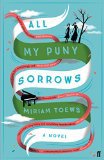
All My Puny Sorrows

All My Puny Sorrows by Miriam Toews

Five words from the blurb: sisters, different, depressed, happy, lives

All My Puny Sorrows is a very well written book, as proved by its inclusion on the Folio shortlist. It beautifully describes a family trying to cope with depression and suicide; showing how strong the bonds of love within a family can be. It was too melancholy for me, but I can see why many admire the sensitive way this difficult subject was handled.

Who Will Win the 2015 Wellcome Book Prize?

I wouldn’t be completely surprised to see any of the shortlist win, as they all have something special about them. All My Puny Sorrows contains the most accomplished writing; whilst My Age of Anxiety will probably be the most useful of the books in years to come. But for me the winner is a difficult choice between two books: The Iceberg and Do No Harm.

The Iceberg has an emotional power I haven’t come across before. Books like The Son by Michel Rostain have come close, but I don’t think I’ve ever found a book too difficult to read because of the volume of tears in my eyes! I couldn’t even finish the book as I was grieving for a man I’d never even met. If you want a masterclass in emotional writing then this has to be top of your list!

Do No Harm was the most interesting book on the list. It made me think about the brain in a different way and gave me a new-found respect for these ground-breaking surgeons. Parts of it went over my head and it occasionally felt a bit repetitive, but I think this is just a reflection of a surgeon’s life and should be forgiven.

So, head or heart?!!

In the end I have to let the head win. Do No Harm is an impressive book. The skill and emotional strength of neurosurgeons should be celebrated and I hope Henry Marsh picks up the Wellcome Book Prize tomorrow.

Do No Harm: Stories of Life, Death and Brain Surgery

Who do you think should win the Wellcome Book Prize?

Categories
Uncategorized

Mini Reviews: Everything I Never Told You, The House We Grew Up In and The Iceberg

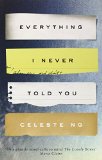
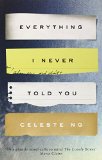
Everything I Never Told You

Everything I Never Told You by Celeste Ng

Five words from the blurb: murder, child, parents, mystery, relationships

I decided to read Everything I Never Told You because it was Amazon.com’s book of 2014 and praise for it seems to be everywhere. Unfortunately I didn’t enjoy it as much as everyone else. It was very readable and contained a few interesting insights into the problems of inter-racial marriage, but the murder-mystery aspect was underwhelming and I felt the entire book lacked that magical spark. I’ve heard the same story many times before and, although this was better written than similar books, it didn’t do anything particularly groundbreaking. You should probably ignore this review though – everyone else seems to love it!

.

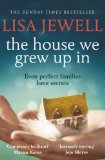
The House We Grew Up In 

The House We Grew Up In by Lisa Jewell

Five words from the blurb: hoarding, family, dysfunctional, relationships, secrets

This was chosen by my book club and the majority of the group enjoyed it. I had my reservations, but it did produce one of the most interesting discussions we’ve had so far. It contained some good observations on hoarding, but then meandered off on too many unrealistic tangents. Members of my group compared it to a soap opera and this think this is a good analogy. If you enjoy the non-stop, but shallow, actions of dysfunctional families then you’ll love this, but I prefer to read more realistic books.


The Iceberg: A Memoir Shortlisted for the 2015 Wellcome Prize

The Iceberg by Marion Coutts

Five words from the blurb: tumor, husband, grief, support, family

The Iceberg contains some of the most powerful descriptions of grief I’ve ever read. Marion Coutts explains what life was like in the 18 months between her husband’s diagnosis of a brain tumor and his untimely death.  It showed his gradual decline and the way this affected his friends and family. The writing was outstanding, but it was so vivid I felt I was reliving her pain. I’m afraid I wasn’t strong enough to continue reading and so abandoned this important book before the end.

Have you read any of these books?

Did you enjoy them more than I did?