Categories
Other Pulitzer Prize

Who is going to win the Pulitzer Prize 2010?

The winner of the 2010 Pulitzer prize is going to be revealed on Monday 12th April. I am looking forward to seeing who will win, but as I’m not American I find it very hard to predict.

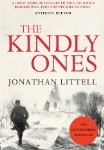
If I was going to give an award to the best book published by an American author in 2009 I’d give it to Jonathan Littell. It is amazing that he was able to create such an outstanding work in a second language and I am very impressed by the book’s scope and emotional power.

Unfortunately I don’t think books in translation are eligible and the Pulitzer prize for fiction is awarded for:

distinguished fiction by an American author, preferably dealing with American life.

The Kindly Ones is set in Europe during WWII, so it doesn’t meet the ideal Pulitzer requirements of a truly American novel.

The best qualifying books I’ve read this year are:

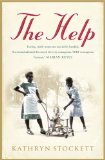
I loved The Help and it deals with issues that the Pulitzer judges will love, but although it was included on the Orange long list I don’t think that it contains enough literary elements for a Pulitzer win.

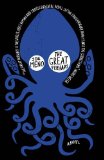
The Great Perhaps is the best American book I’ve read this year, but I haven’t heard anyone else mention it. I would love to see it win, but I haven’t read that many American novels this year – perhaps there is a better one lurking in my stacks?

Thanks to the wonderful world of blogging I have quite a few potential Pulitzer winners in my TBR pile. The praise these books have received leads me to think that the Pulitzer winner is somewhere amongst them.

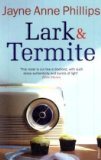
If I was forced to choose then I’d put my money on Lark and Termite, as it has received impressive praise:

….a true work of art, literature that makes other contemporary novels seem flat by contrast… San Francisco Chronicle

…. an electrifying novel…. National Book Critics Circle

….reverberates with echoes of Faulkner, Woolf, Kerouac, McCullers and Michael Herr’s war reporting… New York Times

Have you read Lark and Termite? Do you think it will win the Pulitzer?

Who do you think will win the Pulitzer prize this year?

Categories
Blog Improvement Project Other

Who would you like me to profile?

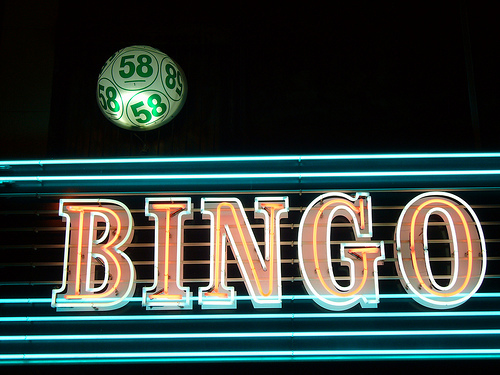
This month’s blog improvement task is Blog Post BINGO!

I loved trying to write all the different types of blog post last year and encourage you to participate. We’re giving away some book vouchers – does that help persuade you to try?!

This year I’m not going to try to achieve BINGO!, but I would like to attempt the three post types that I haven’t tried before.

  • A Profile or Case Study Post — both of these types of posts involve writing about a person or group in your niche; find out what they do, how they got there, or interesting stories then share with your readers (more details from ProBlogger)
  • A Post Contrasting Two Different Options – compare and contrast two similar items, let people know the pros and cons of each and ultimately decide which is the best.
  • A Collation Post – gather quotes or opinions on a subject and place them together in a post. Then use these opinions to draw conclusions on the topic.
  • I have an idea for the post contrasting two options, but would love your help on the other posts.

    Is there anyone you’d like me to see profile?

    Is there a topic you’d like me gather opinions on?

    Categories
    Other

    J.K. Rowling to Write Vampire Trilogy

    This morning J.K. Rowling announced that she will be writing a trilogy of books based on teenage vampires.

    The first book in the series, April’s Wings, will be released this time next year.

    What do you think?

    Will the Harry Potter author be able to successfully follow in the footsteps of Stephenie Meyer?

    Categories
    Other

    March Summary and Plans for April

    I read 16 books in March and managed to get a fair way through a few more. A combination of miserable weather and my family suffering from colds and flu meant that I spent a lot longer than normal in the house. It isn’t nice looking after people who aren’t well, but it did mean that I had a lot of spare time to read while they slept. 

    As usual I read a range of book in terms of both in enjoyment and subject matter. I especially recommend When I Was Five I Killed Myself which I am considering promoting to 5 stars! 

    Books reviewed in March

    When I Was Five I Killed Myself – Howard Buten 

    The Blasphemer – Nigel Farndale 

    Bonk – Mary Roach stars4

    The Woman in the Dunes – Kobo Abe stars4

    Buddha Da – Anne Donovan stars4

    This is How – M.J. Hyland stars4

    Small Island – Andrea Levy stars4

    Pocket Notebook – Mike Thomas stars4

    Thaw – Fiona Robyn stars3h

    Red Dog, Red Dog – Patrick Lane stars3h

    The Solitude of Prime Numbers – Paolo Giordano stars3h

    My Driver – Maggie Gee stars3h

    Black Mamba Boy – Nadifa Mohamed stars3

    The Native Hurricane – Chigozie John Obioma stars3

    July’s People – Nadine Gordimer stars3

    So Much For That – Lionel Shriver stars3

    Plans for April

    I am going to finish and write reviews for:

    Small Wars – Sadie Jones

    The Great Perhaps – Joe Meno

    The Kindly Ones – Jonathan Littell

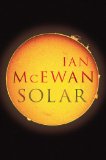
    Solar – Ian McEwan

    Hurting Distance – Sophie Hannah

    My Father’s Paradise – Ariel Sabar

    The Weight of a Mustard Seed – Wendell Steavenson

    Seeing – Jose Saramago

    Due to the vast amount of reading I did in March I have actually finished/nearly finished all of the above. I haven’t quite managed to keep up the 50 page a day pace I set on The Kindly Ones, but I have now read 300 pages and hope to finish it this month.

    I have a lot of books that I plan to read in April. It wasn’t until I wrote them all down that I realised I had far too many! I’m not sure which ones I’ll get round to reading, but here is my over ambitious plan!

    Nights at the Circus – Angela Carter for Claire’s Angela Carter month

    The Hiding Place – Trezza Azzopardi

    The Love We Share Without Knowing – Christopher Barzak

    Marcelo in the Real World – Francisco Stork

    Angelology – Danielle Trussoni

    The Rehearsal – Eleanor Catton

    Good to a Fault – Marina Endicott

    The City & The City – China Mieville

    The Sound and the Fury – William Faulkner

    A Life Apart – Neel Murkherjee

    I Do Not Come to You by Chance – Adaobi Tricia Nwaubani

    The Temple-goers – Aatish Taseer

    The Sweetness at the Bottom of the Pie – Alan Bradley

    The Long Song – Andrea Levy

    Even the Dogs – Jon McGregor

    Our Tragic Universe – Scarlett Thomas

    Which books from my list should I ensure I read?

    Do you plan to read any of the same ones?

    I hope you have a fantastic April!

    Categories
    Other

    Links I’ve stumbled across this week and Solar winners

    Thank you to everyone who entered my Solar give away.

    The winner of the signed copy of Solar is: Lu from Regular Rumination

    The 3 Solar T-shirts go to: Jane Willis, Natalie Newham and Teresa Majury

    Congratulations to the winners! I will get in touch by email soon.

    Blogger discussions of the week 

    • Next Read had an interesting discussion about deciding which books to read and review.
    • Regular Rumination wrote a great post about how negative book reviews can make the book more intriguing to the reader.
    • Book Lust discussed falling for book hype.

    Elsewhere on the Internet

    As a book seller on Amazon I am quite annoyed by their new policy which forces sellers to ensure their books are not cheaper on other selling platforms. Luckily I don’t normally have the same stock for sale on different sites at the same time, but this will have a big impact on some people.

    This is a lovely little video about the publishing industry – I thought it was very clever!

    Categories
    Discussions Other

    Does the age of the author matter?

    I have heard lots of discussions recently about whether the race or gender of an author makes a book more appealing, but I feel both these factors are irrelevant. I have recently stumbled upon a more important factor: The Age of the Author.

    I have discovered that I am far more likely to enjoy a book if the author is slightly older than me (I’m 31). If the author is younger than me then the book tends to lack depth and I find I have little to learn from reading it – I just don’t enjoy reading these simpler books.

    If the author is significantly older than me then I struggle to connect with the themes in the book – older authors seem to produce more reflective and thoughtful works, lacking the complex plots and action I enjoy.

    Connecting with authors who are of the same generation makes sense to me. In real life we tend to become friends with people who are of a similar age group as we have more in common with them. That doesn’t mean we don’t occasionally want to spend time with other generations, but that we share the majority of time with our own.
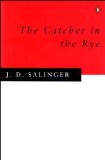
    Catcher in the Rye was published when J.D. Salinger was just 32. It seems no coincidence that this book has huge appeal to teenagers, but fails to resonate with adults.

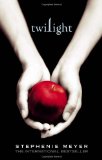
    Stephanie  Meyer was exactly the same age when Twilight was published. This book is also a teen phenomenon, but seems to have a corresponding fall in popularity as the age of the reader increases.
     .
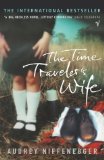
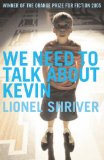
    Audrey Niffenegger was 40 when The Time Traveller’s Wife was published and Lionel Shriver was 45 when We Need to Talk about Kevin shot to fame. I loved both of these books, but have heard many older people (and younger in the case of We Need to Talk About Kevin) saying that they didn’t enjoy them.


    At the older end of the spectrum, Marilynne Robinson was 65 when Home was published. I tried really hard to read this book, but it just bored me. It won the Orange prize, so some people clearly love it. I wonder if I am simply not old enough to appreciate the slow, reflective pace of this book.

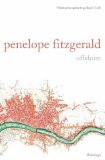
    Offshore wins the prize for the dullest book I’ve ever read, but with an author aged 63 my lack of passion for it can now be understood. Perhaps it will become one of my favourites in 30 years time?

    All these numbers seem to support an optimal author age 10 years greater than the reader.

    So I propose the formula:

    For maximum reading pleasure:

    Reader Age + 10 years = Author Age on Publication (+/- 5 years)


    I’ve included this table of books, so you can see if my calculation works for you:

    Book Author Author’s Age at Publication
    The Solitude of Prime Numbers Paolo Giordano 26
    Twilight Stephanie Meyer 32
    To Kill a Mockingbird Harper Lee 34
    Cloud Atlas David Mitchell 35
    Fingersmith Sarah Waters 36
    Gone with the Wind Margaret Mitchell 36
    Flowers for Algernon Daniel Keyes 39
    Middlesex Jeffrey Eugenides 42
    A Fine Balance Rohinton Mistry 43
    Generation A Douglas Coupland 48
    Possession A S Byatt 54
    Wolf Hall Hilary Mantel 57
    Offshore Penelope Fitzgerald 63
    Home Marilynne Robinson 65

    These findings could have big implications for the judging panels of major book prizes. If reading taste changes so drastically over a life-time then I think it is important to have representatives of each generation on any panel. Following this theory only those under the age of 30 should be able to spot books that will appeal to teenagers and should be the only ones allowed to judge YA book prizes.

    If the big literary prizes, such as the Booker and Orange, want to appeal to a larger audience then they simply need to include a full spectrum of age ranges on their judging panels.
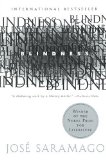
    There are of course exceptions to every rule. Saramago was 73 when Blindness was first published in Portugal. I put this down to his genius, one rarely matched whatever the age of the author. Or perhaps he is just young at heart?

    What do you think of my theory?

    Highly flawed?

    ….or do authors slightly older than you have a special ability to connect with you?

    Has your reading taste evolved with age?

    Do you now love books that you once hated?

    Should we all start checking the age of the author before deciding to read a book?

    I’d love to know your thoughts!!