Categories
Uncategorized

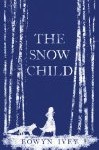
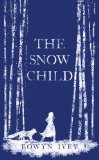
The Snow Child by Eowyn Ivey

The Snow Child

Five words from the blurb: Alaskan, wilderness, snow, girl, magical

The Snow Child is a magical little book. It manages to balance on the fine line between magical realism and reality, ensuring the reader is kept guessing as to which side of that fence this book lies.

The story is set in the Canadian wilderness, where one couple relocate in an effort to forget the pain of being childless. One day they build a snowman in their garden and are surprised to wake up the next morning to discover that it has gone. They see a girl running through the woods and are sure their snowman has come to life, but is the child real or a figment of their over-active imagination?

Mabel was no longer sure of the child’s age. She seemed both newly born and as old as the mountains, her eyes animated with unspoken thoughts, her face impassive. Here with a child in the trees, all things seemed possible and true.

This book was quick and easy to read, but packed with an oppressive snowy atmosphere. The basic story is heavily influenced by a Russian fairytale and although this book did have a childlike feel it was tinged with the grief of being unable to produce a child. I often have difficulties with adult fairy-tales, but this book was so grounded in reality that I didn’t have this problem.

The characters weren’t that well rounded, but there was something about their simplicity that added to that magical feel. I connected to them straight away and felt their roller-coaster of emotions throughout.

It isn’t a particularly heavy read, but it is an entertaining one. It will make you smile and keep you guessing.

Recommended to anyone looking for a bit of escapism.

.

The thoughts of other bloggers

It hooked me from page one and did not let me go until I closed the final pages… The Book Whisperer

I wasn’t completely sure what was going on ….. but ultimately the charm and the strengths of this fairytale re-imagined won out over minor confusions and quibbles. Linus’s Blanket

Everything about it felt utterly authentic and completely effortless… Book Monkey
Categories
Other

December and January Summary + Plans for February

I had a lovely break from blogging over the Christmas/New Year holiday and so am including my December reading in this post. My blogging break means that I read far more books in December than I reviewed. This has enabled me to get a bit ahead of myself and I’m loving the extra buffer this has given me. It means that I’ve been able to read some books that aren’t published for months and indulge in chunksters without impacting the number of posts I can write.

For some reason I lost my harsh abandonment policy at the beginning of December and let several disappointing reads creep into the schedule. I’m having a big crackdown at the moment and I’m pleased to say that my January reading has been outstanding. I read three 4.5 star books and one 5 star one (review for The Death of Grass coming shortly). I just hope I can keep this up!

Books of the Month

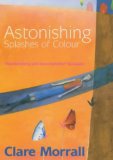
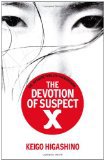
Astonishing Splashes Of Colour : The Devotion Of Suspect X

Books Reviewed in December and January

Astonishing Splashes of Colour by Clare Morrall 

Glasshopper by Isabel Ashdown 

Central Reservation by Will le Flemming 

The Child Who by Simon Lelic 

The Lady’s Slipper by Deborah Swift 

Riding the Black Cockatoo by John Damalis 

Chang & Eng by Darin Strauss 

The Sandalwood Tree by Elle Newmark 

The End of Everything by Megan Abbott 

The Sealed Letter by Emma Donoghue 

All Is Song by Samantha Harvey DNF

Rules of Civility by Amor Towles DNF

Plans for February

I’m going to continue reading randomly, but these books are calling to me loudly at the moment:

Into the Darkest Corner by Elizabeth Haynes

In Cold Blood by Truman Capote

The Swarm by Frank Schatzing

Do No Harm by Carol Topolski

The Twyborn Affair by Patrick White

The Orphan Master’s Son by Adam Johnson

Have a wonderful February!

Categories
Discussions Other

A Year of Abandoning Books

This time last year I resolved to abandon any book that failed to excite me. When I made that resolution I failed to appreciate how difficult this task would be, but a year down the line I’m getting better at it, having learnt a lot more about my reading personality.

How Does it End?

The problem with abandoning books is that you don’t get to find out what happens in the end. That sounds obvious, but, particularly in the case of popular classics, this really bothered me. I initially found it very difficult to abandon these books, wasting days of valuable reading time ploughing through to the end. There are a few solutions I’ve utilised in the past year, but you’re probably not going to like them:

  • Skim read the dull sections
  • Ask someone else what happens in the end (Twitter is particularly useful for this!)
  • Read the plot summary on wikipedia
  • Watch the film version

Over the course of the past year I’ve used all these tactics at some point and now have a vague idea of what happens in a large number of books that weren’t to my taste, freeing my time to enjoy those books that do capture my imagination. I’m sure that some people will be appalled that I advocate skimming the classics, but the reality is that there are far too many to read in a lifetime and so I’d prefer to dedicate my reading time to those that are enjoyable.

Abandonment Dilemmas

My biggest abandonment dilemmas come from books that have both positive and negative attributes. The problem is that these often make the most interesting reviews and I enjoy thinking and writing about these flawed books. As I mentioned last week, these flawed books frequently stick in my memory and  go on to become favourites. So for the time being I am going to continue reading/reviewing them.

Boring Books

I don’t have any qualms about abandoning boring books. Anything that fails to elicit a response (either positive or negative) will be abandoned. I’ve discovered that the more ruthless you are, the higher the overall quality of your reading will be. Earlier this month I read two amazing books. I then went through a mini reading slump where everything seemed dull in comparison. I ended up abandoning 6 books in a row, but that 7th book was outstanding. When reading books in quick succession the gems seem to shine far brighter and I’m so pleased that I’ve set high standards for my reading.

How This Affects the Blog

It amuses me to read the part in my post last January about my blog being a more positive place to be. I didn’t realise that mentioning all my abandonments would mean that the negatives would far out-weigh the positives. This is a reflection of reality as there are very few outstanding books in the world, but I quickly realised that it wouldn’t be right to mention all the books I abandon on my blog. I now only mention those where I feel I have something to add – the times when I find myself going against the tide of public opinion or find a particularly well written book that I know others will love.

I will probably not mention:

  • Books I give up after just a few pages and can’t really explain why
  • Books from debut authors, especially those that haven’t had much coverage
  • Older books that aren’t well known
  • My failed attempts to investigate unusual genres

I will still continue to give honest negative reviews and mention books I’ve abandoned (particularly prize winning books). I’m hoping the only difference you’ll see is the higher number of highly rated books.

I think the key is to be open to trying new things. I am often surprised by which books I end up loving. My battles with dull books have shown that you normally know which ones will work for you from the first few pages.

Don’t be scared to abandon books!

Be ruthless and spend your reading time wisely!


Categories
Books in Translation Thriller Uncategorized

The Devotion of Suspect X – Keigo Higashino

The Devotion Of Suspect X 

Translated from the Japanese by Alexander O. Smith with Elye J. Alexander

Five words from the blurb: Tokyo, ex-husband, shattered, Police, genius

I hadn’t heard of this book until one of my sister’s friends recommended it to me, but I love Japanese thrillers and so decided to give it a try. I’m pleased that I bought a copy because I’ll be recommending this intelligent thriller to everyone.

The Devotion of Suspect X begins with a woman murdering her ex-husband with the help of her daughter. Their neighbour hears the crime and offers to help dispose of the body, beginning a gripping narrative that centres on the question: Will they get away with it?

The premise is very similar to Out by Natsuo Kirino (my favourite thriller), but The Devotion of Suspect X is a much lighter novel. It is quicker and easier to read and doesn’t contain the same level of violence or dark emotion. For this reason I’d recommend it to those trying Japanese fiction for the first time.

The plotting in this book is perfect. There are no unnecessary scenes and the pace is relentlessly intriguing throughout. The main battle of wits is between the neighbour, a maths genius, and a friend of the police officer who happens to be a physics genius. I admit that this scenario is unlikely to occur, but I didn’t care because it led to one of the cleverest series of twists I’ve come across.

The characters were all well formed, with interesting flaws. I didn’t develop an emotional attachment to any of them, but this ended up being a positive as I found myself rooting for both sides equally. This is quite unusual in a police procedural as I normally find myself less interested in one of the plot threads.

The Devotion of Suspect X is a perfect thriller. It isn’t particularly deep or meaningful, but it is endlessly entertaining. I can see why it sold 2 million copies in Japan and I hope that word-of-mouth spreads it around the world.

Highly recommended.


Categories
Other

Two Realistic Tales of English Life


Glasshopper (Myriad Editions)

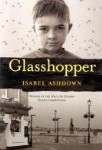
Glasshopper by Isabel Ashdown

Five words from the blurb: family, turbulent, childhood, secrets, alcoholic

Glasshopper contains a dual narrative covering the childhood of a boy called Jake, growing up in 1980s Portsmouth, and that of his mother coming-of-age in the 1960s.

Jake’s childhood is a troubled one. His father has moved out and his mother is an alcoholic. The reasons for his mother’s alcoholism are slowly revealed over the course of the novel; as are Jake’s strength and resilience.

This is the perfect book for anyone wanting to reminisce about life in England. The tiny details about Texan bars and sherbet Flying Saucers had me smiling in recognition. The story itself was very ordinary, but Jake’s charm was hard to resist.

Unfortunately the 1960s section didn’t come alive in the same way. I’m not sure if this was because I wasn’t alive and so didn’t pick up on the little details or because they weren’t there in the first place.

The writing was reminiscent of Maggie O’Farrell, so anyone who loves her books is sure to enjoy this one.

Recommended to anyone who remembers 1980s England.

.
Central Reservation

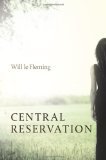
Central Reservation by Will le Flemming

Five words from the blurb: rural, England, twin, ghost, grief

Central Reservation is set in rural England during the foot and mouth outbreak of 2001. The central character is Holly, a teenage girl, who is followed everywhere by the ghost of her twin sister. The ghost is an unnerving presence, rather than the scary, malevolent kind that you normally find in novels and it can be seen as a metaphor for the grief that she carries around with her.

The book started off really well, with an intriguing first line:

On a grey Thursday morning Holly lay in bed, staring at the ceiling, and wished her sister would die. Five hours later her wish came true.

The first few chapters were equally gripping, with a particularly vivid description of a bus crash.

Unfortunately the middle section was a bit ordinary. Events was realistically described, but the quiet study of a family’s grief did nothing but leave me feeling faintly depressed. I know a lot of people love this type of story, but I suspect that because I am lucky enough not to have lost a close member of my family it didn’t resonate with me as much.

Luckily everything picked up towards the end and the foot and mouth aspect of the book was very well done. I remember travelling home during the outbreak and seeing (and especially smelling) the pyres of dead cattle everywhere. I hadn’t come across a book that covers the subject before, but I’m sure everyone will be moved by some of the scenes in this book.

The specific Englishness of this story means that it is unlikely to have universal appeal, but if you’re looking for an emotional read this is a good choice.

Recommended to those familiar with rural England.

.

Categories
Other

Some of the best books aren’t very good?

Whilst compiling a list of my favourite 2011 books  I noticed a strange thing. Many of the books I remembered vividly were ones I hadn’t enjoyed, whilst I often forgot about the seamlessly good ones. Re-reading my reviews produced some interesting findings. I seem to remember the books with an excessive number of coincidences, or characters that behave in unrealistic manner, far more than those with accurately observed ones.

I also noticed that I was more likely to recommend these books to others. I’d always warn them about the unrealistic aspects of the book, but state that it was worth reading anyway.

Meanwhile the beautifully written books quickly faded from my mind; the plots so ordinary that there was nothing to jog the memory afterwards. My reviews reminded me about the clarity of the writing and the perfect plotting, but although I enjoyed every minute of the reading experience, these books do not seem to live on after the final page has been turned and so I have not gone on to recommend them.

Longevity is often thought of as a sign of quality, so does this mean that the annoying books are the best?

Should a beautiful, but quickly forgotten book, be marked down for its inability to stand out from the crowd?