Categories
Booker Prize

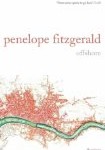
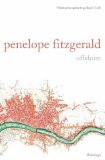
Offshore – Penelope Fitzgerald

Offshore won the Booker Prize in 1979.

From the back-cover:
On Battersea Reach, a mixed bag of the temporarily lost and the patently eccentric live on houseboats, rising and falling with the tide of the Thames.

I actually finished reading this last week, but haven’t written a review until now, as I was trying to think of constructive things to say about it. Despite having had a few days, and the help of the amazingly knowledgeable people over at the Booker yahoo group I am still no further towards my goal. The only positive thing I can say about this book is that it is very short!

This book has to be the most boring one I have ever read! The characters don’t annoy me as they are too dull, the plot is barely existent and the setting is dreary and lifeless. This has to be one of the only books that has failed to elicit any emotion in me other than pure boredom! I read all the words, but I didn’t care about a single one. It is not intellectually challenging, thought provoking or poetic. I can see no reason why anyone would like it, let alone why it won the Booker Prize!

stars1

If you’ve read this book and can see any merit in it, then I’d love to know what it is!

Is this the worst Booker Prize winner? Or have I got worse ones to come?

What is the most boring book you’ve ever read? Can it possibly be as bad as this?!

Remember the Comment of the Week Competition! I’m looking forward to reading your comments!

Categories
Booker Prize Other Pulitzer Prize

The Bookworms Carnival # 26: Book Awards and Prizes

Michelle from 1morechapter has done a great job in compiling the latest edition of the  Bookworms Carnival. The theme this time is book awards and prizes. I was lucky enough to have my article Booker or Pulitzer? accepted to the carnival – Thank you Michellle!

Please go and have a look at all the other great articles in the carnival!


Categories
Booker Prize Other Pulitzer Prize

Which prize do you prefer – Pulitzer or Booker?

I love reading prize winning books, and often try to compare them, to decide which prize produces the best novels.

The Pulitzer v. Booker prize is probably the most debated combination, and it has added rivalry of being American authors against Commonwealth ones.


There are many different ways to analyse the prizes, but I thought it would be interesting to compare the winners for each year. I have listed them for the past ten years, and highlighted my favourite of the two in bold. I have to admit that I haven’t read all twenty of the books below, so where I haven’t read both books I have awarded it to the one I think I’d prefer.

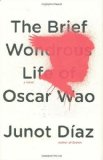
1999 – Michael Cunningham v. J.M. Coetzee
2000 – Jhumpa Lahiri v. Margaret Atwood
2001 – Michael Chabon v. Peter Carey
2002 – Richard Russo v. Yann Martel
2003 – Jeffrey Eugenides v. DBC Pierre
2004 – Edward P. Jones v. Alan Hollinghurst
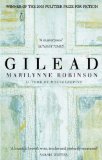
2005 – Marilynne Robinson v. John Banville
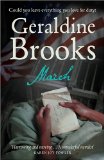
2006 – Geraldine Brooks v. Kiran Desai
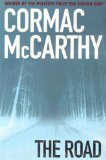
2007 – Cormac McCarthy v. Anne Enright
2008 – Junot Diaz v. Aravind Adiga

The results show that I prefer the Pulitzer in seven of the ten years, and in the three years that the Booker produced the best one, I think the result was so close, that if asked the same question on another day I might change my mind! Looking back further into the history of the awards it appears that the Pulitzer generally seems to be the more interesting book, although I have read less of them, so it is harder to tell.

I think the reason that I have found the Pulitzer prize winners so much better is that they tend to have more complex plots, and often a powerful social theme underlying them. It is this thought provoking moral message that often leads me to remember the book vividly months, or even years after I have finished reading it.

In many cases I have found the winner of the Booker prize to be very disappointing. The Bookers tend to be less plot driven, and more character based. The language appears to be given a higher priority than any storyline, so they often have beautiful sentences, but the book as a whole is disappointing, and instantly forgettable.

The main problem with all the prizes is that they are so subjective. Unless you find a prize where the judge has the same taste in books as you, and this judge doesn’t change each year, then you are always going to find that the winners will vary in how much you love them.

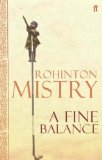
My favourite book is A Fine Balance by Rohinton Mistry. This was short listed for the Booker prize in 1996, and I’d love to hear an explanation from the judges as to why it didn’t win. A Fine Balance did win the Giller Prize, but looking through the list I haven’t read any of the other Giller winners. Perhaps the Giller Prize is the best one out there, and it just hasn’t had enough publicity. I’ll have to read a few of them to find out!

Do you prefer the Booker or the Pulitzer prize?

Categories
1980s Booker Prize

A Month in the Country – J. L. Carr

A Month in the Country was short listed for the Booker Prize in 1980.

My penguin modern classic copy is only 85 pages long, so this was a very quick read. The book is set just after the First World War, and describes the month Tom Birkin spent in rural Yorkshire one summer. Tom was traumatised by his experiences in the war, and so retreats to the country to enjoy the peace and quiet. He spends his time uncovering a medieval painting on the church wall, and making many friends in the village.

The writing was beautiful, and I enjoyed it initially, but after a while I need more than this in a book. I became bored of the quaintness – it was all too ordinary for me. Perhaps I’d feel differently if  I was 30 years older, but reminiscing about one perfect summer, in which not much happens was a bit too dull for me, so I’m off to read something a bit more exciting! 

I read this for Cornflower’s book group, and everyone else seemed to enjoy it much more than me. You can see their opinions here.

stars2

Categories
1980s Booker Prize

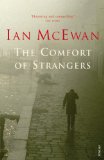
Comfort of Strangers – Ian McEwan

The Comfort of Strangers was short listed for the Booker prize in 1981. It is the second Ian McEwan book I have read, and I’m afraid it is in the same ‘very average’ league as Amsterdam.

It begins with a couple on holiday, in an unnamed city (although it is assumed to be Venice by many people). They are trying to revive the passion in their relationship, but for much of the time they are cold and distant with each other. After a few days they meet Robert in a bar. He invites them back  to his home, and despite many warning signs, the couple end up in grave danger.

I had many problems with this book; the characters just seem too distant, the plot too simple and contrived, and many aspects of the book highly implausible.

The book deals with many taboo subjects, including incest and dometic violence, but although many of the events described in the book were potentially shocking, I felt no disgust, as I hadn’t built up any relationship with the characters.

The couple, Colin and Mary, irritated me with their naivety. They return to Robert’s house despite their reservations, and the brutal ending seemed obvious.

I felt that McEwan had deliberately picked controversial topics for the book, and forced as many as possible into such a small number of pages that they were almost glossed over. There was no time to investigate any of them properly, and so I didn’t really see the point of them being there.

Overall, I was very disappointed with this book. Will I ever find an Ian McEwan book I like? Are all his characters distant and slightly stupid?!

stars2

Categories
1990s Books in Translation Nobel Prize Recommended books

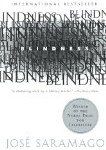
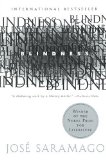
Blindness – José Saramago

Translated from the Portugese by Giovanni Pontiero

Blindness is the most powerful book I have ever read. From the beginning, to the end my adrenaline levels were high, and my heart was beating so fast you’d have thought I’d been out running!

Blindness is a terrifying account of what could happen to us, if we were all to lose our sight. The book begins with one man suddenly losing his vision while waitng at traffic lights in his car. Someone offers to help the blind man back home, and it isn’t long before he becomes blind too. It quickly becomes obvious that the blindness is highly contagious, and so all the blind people, and those who have been in close contact with them, are rounded up and sent to an old mental hospital. Trapped in this old building, with an increasing number of people, conditions quickly deteriorate. Fights break out over the small amount of food, sanitation becomes almost non-existent, and it isn’t long before people are dying.

There is one woman who has not gone blind; she lied in order to stay with her husband. At first it seems as though she is the lucky one, but as time goes on this is not necessarily true. Would it be better to be blind than to see the horrors that are all around her?

This book is worryingly realistic. What would our governments do if there was an epidemic of blindness? How quickly would society break down? I thought I’d be able to cope without electricity, but when you stop to think about the infrastructure, you realise how soon you’d run out of food, and water. It’s enough to make me want to move to the country and become self sufficient as soon as possible!

This book took a little bit of time to get used to. The characters are all nameless, and there is little punctuation to break up the paragraphs, so the text is unusually dense. It was, however, completely gripping from beginning to end. I’m not sure I can say that I enjoyed reading it though. It will stay with me for a long time, and is a powerful statement about the fragility of our society, but I’m not sure enjoyable is the right word!

Highly recommended, as long as you can cope with the stress!

José Saramago was awarded the Nobel Prize in 1998.