Categories
2009 Booker Prize Recommended books

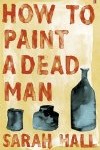
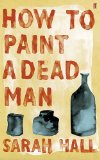
How to Paint a Dead Man – Sarah Hall

Long listed for the Booker Prize 2009

The great thing about reading the Booker long list is that I read books I would never normally pick up and am occasionally rewarded by finding a gem like this. I shouldn’t have liked this book – it has virtually no plot and has whole chapters about a person who paints bottles. It sounds like the sort of book I’d run a mile from, but for some reason I loved it!

I was transfixed from the first page. The heart-breaking emotions of a woman who has lost her twin brother affected me straight away. I think I had the tissues out within a few pages and it is so rare for me to be moved by a book that I knew this was going to be something special.

The second chapter introduces the life of an Italian painter, and while I found this section the weakest of the three, it was an important lull in the heightened emotions of the surrounding sections.

The final scene describes the father of the twins and his battle for survival after he becomes trapped in the hills. The book weaves together these three separate scenes, and that is all they are really, exceptionally well. There is no plot – just glimpses into the lives of these three characters.

I don’t know how this book managed to grip me from beginning to end when so many seemingly similar books have failed. I can only assume that Sarah Hall has an outstanding talent, or is perfectly in tune with my fears and emotions.

Sarah Hall is from Cumbria, so the occasional snippets of dialect may prove difficult for some to understand, but as I spent my teenage years in the Lake District this wasn’t a problem for me.

Overall, I highly recommend this book. It deserves it’s place on the Booker long list and I plan to seek out all her previous books.

stars4h

Have you read any books written by Sarah Hall?

Which one was your favourite?
Categories
2000 - 2007 Books in Translation Nobel Prize

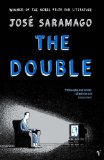
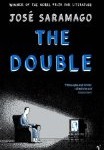
The Double – José Saramago

José Saramago won the Nobel Prize for Literature in 1998.

Translated from the Portugese by Margaret Jull Costa

Blindness is one of my favourite books and so I have been keeping an eye out for Saramago’s other books ever since I finished reading it. Unfortunately I haven’t been very successful – they never seem to turn up!  Then,  last week I finally spotted one in the library.

The Double is the story of a history teacher who sits down to watch a rented video one evening and is shocked to discover that one of the actors is identical to him in every physical detail. He tracks down his look-alike and confirms that they are exact copies of each other – so alike that even their wives cannot tell them apart.

As with Blindness, Saramago’s writing style takes a bit of time to get used to. There are very few paragraphs and the words just seem to flow together at times, each page just packed with a sea of words:

Although he does not really believe in Fate, distinguished from any lesser destiny by that respectful initial capital letter, Tertuliano Máximo Afonso cannot shake off the idea that so many chance events and coincidences coming all together could very well correspond to a plan, as yet unrevealed, but whose development and denouncement are doubtless already to be found on the tablets on which that same Destiny, always assuming it does exist and does govern our lives, set down, at the very beginning of time, the date on which the first hair would fall from our head and the last smile die on our lips.

It doesn’t take long to adapt to his style though, and I quickly became caught up in this imaginative plot. It doesn’t have the pace or fearful adrenaline rush I experienced with Blindness, but it is just as thought-provoking. If it were possible, would you want to swap lives with someone? Would you feel threatened by someone who was identical to you in every way? What would you do to protect your identity?

I loved the ending – it was cleverly written and left me with lots to think about.

The Double isn’t in the same league as Blindness, but it  is a very good book.

Recommended.

stars4

Is Blindness one of your favourite books?

Have you read any of Saramago’s other books?

Categories
2009 Booker Prize

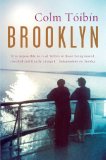
Brooklyn – Colm Tóibín

 Long listed for the Booker prize 2009

Brooklyn is a gentle story about a young woman emigrating from a small town in Ireland to Brooklyn in the 1950s.

The writing is very simple and the plot basic, but this meant it could be read very quickly. The book captures the nostalgia of someone who leaves their home and the culture-shock they encounter when moving to a new country.

I found the book too gentle for my tastes, but I can see that it would appeal to a lot of people. The story is one I’ve heard many times before and although the writing is carefully controlled it didn’t offer anything that I hadn’t seen before.

The characterisation was also a bit flat for me. The central character, Eilis, didn’t display any strong emotions. The story was revealed through her observations and she just seemed to be pulled along by the plot rather than taking an active part in it. I prefer my characters to display a bit more strength or emotion than she did.

Overall I was a bit under-whelmed by this book and would only recommend it to those who enjoy books with a gentle plot.

stars3h

I have heard great things about Colm Tóibín, but this is the first of his books which I have read.

Have you read any of his other books?

Are they written in a similar way to this?

Categories
1990s Other Prizes

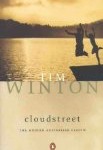
Cloudstreet – Tim Winton

 Winner of the Miles Franklin Award 1992

Cloudstreet is described as an Australian classic and I was really looking forward to reading my first Tim Winton novel, but I’m afraid I was a little bit disappointed.

The book follows two working class families who are forced to live together in the same large house in a suburb of Perth. Set over a thirty year period, beginning in the 1930s, it started off well, building up each character vividly, but by about 100 pages in I was beginning to lose interest. The story was too gentle for me and although the writing was beautiful I found myself becoming bored.

The large number of characters further distanced me from the emotions of each individual. The plot was slow and rambling, focusing on minute details of their lives. I’m sure that a lot of people will love this, but I prefer a bit more action in my books.

The ending of the book was also a bit strange – it just seemed to stop, without tying up many lose ends. I felt as though my book was lacking the last few chapters. I don’t mind ambiguous endings, but this didn’t even seem to do that. It was a bit like the ending of Sea of Poppies in that respect, but at least we are expecting a sequel for that.

Another problem I had was that I found some of the Australian dialect difficult to understand and this was further hampered by the large number of Australian slang words used.

Overall, I can see why Australians adore this book, but I’m afraid it was too gentle for me.

stars3

Tim Winton is the only author to win the Miles Franklin award 4 times and I am still interested in reading his other books.

Have you read any of them?

Which is the best?

Categories
2008 Other Prizes Recommended books

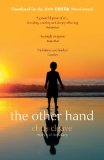
The Other Hand – Chris Cleave

 Note: This book is published as Little Bee in the US.

It has been a long time since a book has moved me to tears, and even longer since one this length (375 pages) has been compelling enough to read in a single sitting, forcing me to stay up late into the night to finish it.  

This book is one long emotional roller coaster. The horrific lows enhanced in intensity by the touching, laugh out loud highs. The poignancy of the book was increased for me, by the fact that my eldest son is a very similar age to the little four-year-old boy in the book. My son’s character is so similar to his,  so I kept picturing my family when reading the book, with moving results.

The book is set in Kingston-upon Thames, which is only a few miles from my house, further increasing my relationship with it. The story focuses on two women, one a mother leading a supposedly normal life in England; the other a young woman from Nigeria who has come to the UK seeking asylum. After meeting each other their lives are never the same again.

I won’t give away any more of the plot, but just be assured that this is going straight into my top 20 books of all time.

Highly recommended.

stars51

I have just discovered Chris Cleave’s blog and it has instantly become my favourite author blog. His humour and observations are so original. I wouldn’t be surprised if Chris Cleave becomes one of my all-time favourite authors on the publication of his next book.

Have you read this book?

Have you read a more emotional book this year? Ever?

Categories
Booker Prize Other

The Booker long list 2009 has been announced…..

The long list this year is….

The Children’s Book by AS Byatt  stars3h
Summertime by JM Coetzee
The Quickening Maze by Adam Foulds
How to Paint a Dead Man by Sarah Hall
The Wilderness by Samantha Harvey  stars51
Me Cheeta: The Autobiography by James Lever
Wolf Hall by Hilary Mantel stars1
The Glass Room by Simon Mawer
Not Untrue and Not Unkind by Ed O’Loughlin
Heliopolis by James Scudamore
Brooklyn by Colm Tóibín stars3h (review coming soon)
Love and Summer by William Trevor
The Little Stranger by Sarah Waters stars4

I have read 5 of the list, counting Wolf Hall which I didn’t manage to finish.

I have just ordered the rest of the list, so I’m afraid you’ll have to put up with quite a few Booker books on my blog for the next few months.

I am so happy that Wilderness made the long list. I really hope it wins, as it is one of my favourite books of the year so far.

What did you think of the list?

Are you planning to read them all?