
Categories
1940s Books in Translation Historical Fiction Nobel Prize

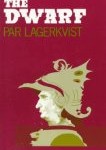
The Dwarf – Pär Lagerkvist

 Pär Lagerkvist won the Nobel Prize for Literature in 1951

Translated from the Swedish by Alexandra Dick

Regular readers of my blog may remember the wonderful post, Recommendations from a non-blogger, written by Heidi. In the post Heidi recommended  The Dwarf  by Pär Lagerkvist, which I have never seen mentioned in the blogging world, so was keen to give it a try.

The Dwarf  is set in an Italian City during the Renaissance. The central character is just 26 inches high and is a servant to the Prince. The story follows them as they are drawn in to war and have to deal with death, disease and betrayal.

The Dwarf is probably the most miserable, bitter and twisted character I have ever read about. He seems to be dissatisfied with every aspect of his life – his anger bubbling through onto every page.

It is my fate that I hate my own people. My race is detestable to me. But I hate myself too. I eat my own splenetic flesh. I drink my own poisoned blood.

This made it very different from any other book I’ve read. His bleak outlook on the world meant that he was a very hard character to like and I had little sympathy for him, but despite this I was fascinated by his story. I loved the historical detail about life in an Italian court and found the attitudes of the people really interesting.

This is a quick, easy book to read, but it is packed with messages about the nature of society and the evil that is lurking within us all.

Recommended.

stars41

Have you read any books written by Pär Lagerkvist?
Categories
1980s Booker Prize

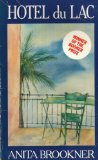
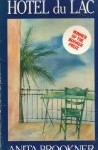
Hotel du Lac – Anita Brookner

 Winner of the Booker Prize 1984

In my quest to read all the Booker prize winners I was convinced that this tiny book would be one of the quickest, easiest reads. It is only 184 pages, long, but the type and size of the book make it appear even smaller. Unfortunately, the content of the book made it feel as though it would never end. I was bored from page one, and it took enormous effort and determination for me to complete it.

The central character, Edith Hope, is sent to recuperate in a quiet Swiss hotel after becoming involved in a scandal. Whilst staying in the hotel Edith works on her new romance novel and observes the people around her. There is no real plot – this is one of those quiet, reflective books that I don’t enjoy reading.

I found Edith’s character to be slightly odd and I didn’t seem to find the same things amusing as her. The humor was lost on me and I became increasingly irritated by her passive nature. There was far too much thought and hardly anything happened in the entire book.

The pianist, sitting down to play, gave her a brief nod. She nodded back, and thought how limited her means of expression had become: nodding to the pianist or to Mme de Bonneuil, listening to Mrs Pusey, using a disguised voice in the novel she was writing and, with all of this, waiting for a voice that remained silent, hearing very little that meant anything to her at all.

This book reminded me of Home by Marilynne Robinson and I am sure that if you like one, then you will enjoy the other.

I’m afraid this just wasn’t for me.

stars2

I know that a lot of people love the quiet beauty of this book.

Did you enjoy reading it?

Do any of her other books have more plot?

Categories
Book Prizes Other Other Prizes

Giller Prize Longlist 2009

The longlist for the Giller Prize 2009 was announced yesterday. The Giller prize is awarded annually to the best Canadian fiction. The titles to make it through were:

  • The Year of the Flood – Margaret Atwood
  • The Incident Report – Martha Bailie
  • The Disappeared – Kim Echlin
  • The Heart Specialist  – Claire Holden Rothman
  • The Color of Lighting – Paulette Jiles
  • The Factory Voice – Jeanette Lynes
  • The Golden Mean – Annabel Lyon
  • The Bishop’s Man – Linden MacIntyre
  • Fall – Colin McAdam
  • The Winter Vault – Anne Michaels
  • Valmiki’s Daughter – Shani Mootoo
  • The Mistress of Nothing – Kate Pullinger

The only authors I had heard of were Anne Michaels and Margaret Atwood, but a quick browse through the list of previous books to make the shortlist revealed a lot of ones that I not only recognised, but also loved. Although I am not planning to read the entire longlist, or even the shortlist when it is announced on 6th October, I am going to pay much more attention to this prize in the future.

I am planning to read a few books shortlisted for the Giller prize soon.

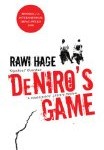
Next week I am going to read De Niro’s Game by Rawi Hage. This was originally recommended to me by Claire from Kiss a Cloud. It won the 2008 International IMPAC Literary Award, but I didn’t realise it had been shortlisted for the Giller as well.

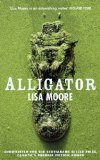
I am also planning to read Alligator by Lisa Moore soon. I discovered it at a car boot sale and loved the cover and blurb. I have never heard anyone mention it before though – have you read Alligator?

On twitter yesterday we were discussing the Giller prize; Nymeth recommended Monkey Beach by Eden Robinson and Claire recommended The Garneau Block by Todd Babiak. I ordered both, so I’ll get round to reading them at some point too.

I’d like to remind you that my favourite book won the Giller Prize in 2001. If you haven’t read A Fine Balance by Rohinton Mistry yet – you are missing out!

Do you follow the Giller Prize?

Which is your favourite book from the Giller Prize shortlists?

Categories
1990s Other Prizes Science Fiction

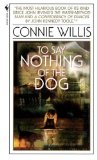
To Say Nothing of the Dog – Connie Willis

Winner of the Hugo Award 1999

To Say Nothing of the Dog was the first book I bought as the direct result of a recommendation from a book blogger. Last year I was new to blogging and was overwhelmed by the number of blogs I discovered. I jumped from one to the next, leaving random comments, but never remembering where I’d been or how to get back there.

Beth’s blog was one of the first that I subscribed to and she was the first person I felt I developed a relationship with. When I saw Beth recommend this book in her Best of 2008 post, I bought a copy. I then decided that I’d better read Three Men in Boat first, and so bought that too. Buying two books in quick succession, as a result of a blogger recommendation, quickly became a worryingly common occurrence, but back then it felt very new and strange. Could I really trust the judgement of someone I didn’t really know? It turns out I can!

I’m not sure why it has taken me so long to get round to reading this, but I am really glad that I have. To Say Nothing of the Dog is a lovely, heart warming book which begins with a frantic search for the bishop’s bird stump in the ruins of Coventry cathedral. The bird stump is crucial to the reconstruction of the cathedral in 2057 and is believed to have been lost during bombing raids in WWII. Historian, Ned Henry, is sent back in time to try to recover it before it is lost forever. His hunt is unsuccessful, so he is sent back to the Victorian era to track it down. Unfortunately for Ned, the frequency of his time travel leads him to suffer from time-lag – a condition similar to jet-lag, that leaves him disorientated and confused.  Ned ends up in a boat on the River Thames and begins a mad-cap adventure involving everything from cats to complex time travel phenomenon.

It is based around Jerome K. Jerome’s Three Men in a Boat and shares it’s classic Victorian wit. To understand this book it isn’t necessary to have read Three Men in a Boat beforehand, but if you aren’t familiar with the text then you will miss out on some of the subtle parodies.

The book lost a lot of momentum in the middle section, but picked up again towards the end. Some aspects of the book didn’t work very well – the romance didn’t feel very natural and the characters didn’t behave very realistically in some situations, but as this book is a spoof rather than a serious piece of literature I will forgive it!

Overall, if you pick this book up expecting a light, humorous read then you are sure to enjoy it, just don’t analyse it too much!

Recommended to Jasper Fforde fans.

stars41

Did you enjoy To Say Nothing of the Dog?

Do you recommend any of her other books?

Categories
2009 Books in Translation Other Prizes

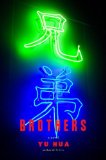
Brothers – Yu Hua

Winner of France’s Prix Courrier International 2008, Shortlisted for the Man Asian Literary Prize 2008

Translated from the Chinese by Eileen Cheng-yin Chow and Carlos Rojas

I bought this book after seeing a wonderful review written by Frances from Nonsuch Book on the Lost in Transtaltion Challenge site, and I was very pleased that this book was brought to my attention.

Brothers is an epic story of life in modern China. At over 600 pages it was a daunting book to read, and took me over 6 weeks to reach the end, but it was well worth the effort.

Baldy Li and Song Gang are step-brothers, living in poverty in a small Chinese town. The book follows them as they grow up together, striving to make the most of their lives and bring themselves out of the cycle of poverty. I loved Baldy Li’s character – his entrepreneurial spirit warmed my heart and I was rooting for him throughout. As with all great characters he exhibited some flaws – his childish obsession with looking at women’s bottoms was very strange for me to read about, but I think it accurately reflected the thoughts of a teenage boy and so I felt that I understood him more as a result.

This book had many strange moments and contained things that you would never find in a typical western novel. One of the most enjoyable aspects of reading books from other cultures, especially Asian ones – is that you never know what is going to happen next! I don’t want to say too much about the plot, as I don’t want to spoil anything, but Brothers has it all: tragedy, comedy and a touching, complex plot.

Baldy Li lay on the floor like a dead pig, then crawled and sat in the entrance like a sick dog. His hunger made him let out a few wails, but crying made him feel even hungrier, so he immediately stopped. Baldy Li could hear the sound of the wind blowing through the tree branches and could see the sunlight shining on his toes. He thought to himself, If I could munch the rays of sunlight like stir-fried pork and drink the wind like a bowl of meat broth, then I’d be set.

It is easy to read, but it’s length means that I would only recommend it to those who have already fallen in love with Asian literature and are looking for something with a bit more depth.

stars4

Note: This book isn’t for the prudish – it contained many sexually explicit scenes (including a very unusual section concentrating on hymens!) and some graphic violence.

I have never looked at the Man Asian Literary Prize 2008 before, but after the success of this book I am very intrigued.

Have you read any books shortlisted for this prize?

Do you love Asian literature?

Categories
2009 Books in Translation Chunkster Other Prizes

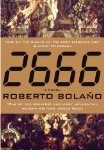
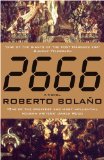
2666 – Roberto Bolaño. Part 4: The Part About the Crimes

Steph and Claire are hosting a read-along for the highly acclaimed book, 2666, by Chilean author Roberto Bolaño. The novel is 900 pages long, and divided into 5 parts. We are reading one part a month.

Here are my thoughts on Part 4: The Part About the Crimes

I loved Part 3, I felt that all the random, seemingly unconnected events of the first two parts were finally coming together. The end of the third section was such a cliffhanger that for the first time in this read-along I was tempted to dive straight into the fourth part. I had also read many reviews for 2666 which stated that all the action finally occurred in Part 4.

Unfortunately, Part 4 did not live up to my expectations, and I found it to be the weakest section so far.

As suggested by the title, this section focuses on the crimes. Throughout the first three sections we had heard snippets of information about the chain of women murdered in the town of Santa Teresa, but no specific facts. This section corrects that by giving detailed information about every victim. Almost every paragraph introduces us to a new victim, noting the month they were murdered, their physical appearance and the way in which they were killed. Instead of giving a voice to each of these unfortunate woman I felt that the repetition distanced me from each of them. The continual jumping from one person to the next meant that I didn’t connect with any of them, and they became of blur of names, dates and physical attributes.

I had been worried about the violence in this section, as several people had warned me about the graphic detail, but because I felt no emotional connection to the victims the violence did not bother me at all. Some of the descriptions were more brutal than others, but none of them affected me at all. In fact this entire section left me cold. It felt more like police notes than a novel and I gained little enjoyment from reading it at all.

I made a note of several quotes that I thought would be representative of this chapter and was interested to discover that they all sounded more beautiful and profound when taken out of context:

I’m talking about visions that would take away the breath of the bravest of brave men. In dreams I see the crimes and it’s as if a television set has exploded and I keep seeing, in the little shards of screen scattered around my bedroom, horrible scenes, endless tears.

It seemed as though being surrounded by the details of the crimes reduced the beauty of everything.

I am now apprehensive about reading the final section. I am really hoping that everything comes together in a complex and impressive way, as otherwise I think I will be disappointed by the book as a whole.

stars21

Were you affected by the graphic violence in this section?

Are you looking forward to reading the final part?