Categories
Audies Other

The 2010 Audie Nominees

The nominations for the 2010 Audies have just been announced. The Audies recognise excellence in audio book production and this list is a fantastic place to look for the best books to listen to.

There are 27 different categories, so I recommend that you spend time browsing the lists of all the 2010 Audie nominees, but I have listed the categories I am most interested in here: 

FICTION


Face of Betrayal by Lis Wiehl and April Henry, narrated by Pam Turlow
Slumdog Millionaire by Vikas Swarup, narrated by Christopher Simpson
The Bonfire of the Vanities by Tom Wolfe, narrated by Joe Barrett
The Help by Kathryn Stockett, narrated by Jenna Lamia, Bahni Turpin, Octavia Spencer, and Cassandra Campbell
The Pigman by Paul Zindel, narrated by Eden Riegel and Charlie McWade

LITERARY FICTION

Come Sunday by Isla Morley, narrated by Jennifer Wiltsie
Good-Bye and Amen by Beth Gutcheon, narrated by Joyce Bean
The Coral Thief by Rebecca Stott, narrated by Simon Prebble
The Elegance of the Hedgehog by Muriel Barbery, narrated by Barbara Rosenblat and Cassandra Morris
Wolf Hall by Hilary Mantel, narrated by Simon Slater
 

I have heard wonderful things about The Help on audio, but I’m not aware of anyone who has listened to any of the other nominees.

Have you listened to any of the above books?

Which of the books appeals to you most?

Categories
2009 Other Prizes

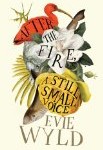
After the Fire, A Still Small Voice – Evie Wyld

Winner of 2009 John Llewellyn Rhys Prize for best work of literature by a UK or Commonwealth writer aged 35 or under

I have heard a few people rave about this book, certain that this is going to win numerous literary awards in 2010; so I thought I should get a head start on the prize lists and read it beofre all those long lists are announced.

After the Fire, A Still Small Voice is set in Australia and is split into two different narratives. The first follows Frank who moves to an old shack previously owned by his grandparents, to escape his violent relationships.

The second focuses on Leon, the child of European immigrants who sought refuge in Australia after their lives were threatened in WWII. Their new life is shattered when his father volunteers to fight in the Korean war.

This book is beautifully written and there are some evocative descriptions of the Australian landscape, but I’m afraid the plot was too gentle for me. The style reminded me of Brooklyn in that the story and prose are very simple, but the emotion is there, bubbling under the surface.

I am sure that this book will pick up some more award nominations, but it was too quiet for me. If you love gentle stories examining relationships and the sense of belonging then you’ll love this book, but I need a bit more action in my novels.

.

Have you read this book?

Categories
1990s Booker Prize

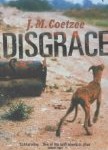
Disgrace – J.M. Coetzee

 Winner of the 1999 Booker Prize

I had always assumed that Coetzee wrote complex books, which were difficult to read. This idea was confirmed when I attempted to read Summertime last year. I am trying to read all the Booker winners and so decided to get through Disgrace before it intimidated me any more. I was pleasantly surprised to find that Disgrace is a fantastic book, which is easy to read yet tackles many thought provoking issues.

Disgrace is set in South Africa and centres on a professor of Romantic poetry who is forced to resign from his position after he is discovered having an affair with a student. With nothing to keep him in the city he retreats to his daughter’s small farm, where they become the victims of a brutal attack.

I was surprised by how modern and readable the book was. I had the idea that Coetzee wrote pretentious, poetic prose, but this was the opposite. The writing was clean and simple, with no flowery descriptions. It was this simplicity that gave power to the words, drawing me into the disturbing life of South Africans struggling to adapt to their changing society.

I was gripped from beginning to end, reading the book in just two sittings. The title is very appropriate, as the book deals with one disgraceful issue after another. I was impressed by the way layers of symbolism were woven into the seemingly simple story. The fact that the book can be taken at face value, or studied to reveal more complex themes, means that this is the perfect introduction to literary fiction.

Disgrace is a worthy winner of the Booker prize and I highly recommend it.


Did you enjoy Disgrace?

Are any of Coetzee’s other books written in the same simple writing style?

Categories
Interview Nobel Prize Other Weekly Geeks

Some interesting things about José Saramago

This week’s Weekly Geek task is to find out some interesting facts about your favourite author. I wasn’t sure whether I’d participate, but once I started looking up José Saramago I couldn’t stop – he is such an interesting man!

.

Portuguese author José Saramago was born in 1922 into a family of landless peasants. Their surname was De Sousa, but an error in registering his birth meant that his father’s nickname ‘Saramago’ was accidentally added to his birth certificate. The drunken registrar also wrote his birth date wrong on the form  – meaning his official birth date is two days after his real one!

Saramago is proud of his impoverished background:

“If my grandfather had been a rich landowner and not an illiterate pig breeder, I wouldn’t be the man I am today,”

At the age of 2 Saramago’s family moved from their small village to the city of Lisbon where his father became a policeman. This failed to improve their financial situation and the family had to pawn their warm blankets to have enough money to survive.

At 13, Saramago started at a vocational school, where he trained to be a car mechanic. He didn’t own any books, but his love of reading meant that he often went to the library after studying.

In 1947 his first book The Land of Sin was published, but it wasn’t until 1982 that he finally acheived critical acclaim for his book Baltasar and Blimunda.

Saramago is a member of the communist party and a proclaimed atheist. His views have caused controversy in the strongly Catholic country of Portugal and on the publication of The Gospel According to Jesus Christ in 1991 he was forced to move to the Canary Islands.

He won the Nobel Prize for Literature in 1998, but described winning as not being very important.

He is often described as being cold,” “arrogant,” and “unsympathetic.” but when questioned about his attitude Saramago replied:

“I am not a bad person,”  “I hurt only with my tongue!”

I love Saramago’s writing. If you haven’t read any of his books then I highly recommend you try Blindness.

Do you love Saramago’s books?

Categories
2000 - 2007 Other Prizes YA

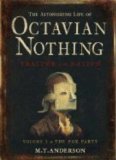
The Astonishing Life of Octavian Nothing, Traitor to the Nation: v. 1 – M.T. Anderson

Winner of the National Book Award 2006

I picked this book up after seeing C.B. James mention it as one of his favourite reads of 2008.

The book is set in Boston during the 18th Century and centres on Octavian, a young boy who lives in a strange house with his mother and an array of unrelated men. He is confused by his life, his vague memories of a past in Africa and the role of all the men in his household. As the book progresses Octavian and the reader slowly learn the shocking truth about his life….

I found this book very hard to get in to. Octavian’s confusion meant that the reader had no idea what was happening for a while. The book was written with a very flowery language, which although not difficult to understand, meant that reading did require a lot of concentration and this also distanced me from the characters.

The men who raised me were lords of matter, and in the dim chambers I watched as they traced the spinning of bodies celestial in vast, iron courses, and bid sparks to dance upon their hands; they read the bodies of fish as if each dying trout or shad was a fresh Biblical Testament, the wet and twitching volume of a new-born Pentateuch. They burned holes in the air, wrote poems of love, sucked the venom from sores, painted landscapes of gloom, and made metal sing; they dissected fire like newts.

A further problem was that all the male characters in the book were referred to by numbers, rather than names. My poor little brain just couldn’t keep track of who was who. By the time I’d read and re-read everything and worked out what was happening I had lost interest in the story. I just didn’t feel that the effort I had put into understanding it was rewarded.

This book is marketed as a young adult book, but I’m not sure many teenagers would have the concentration to get through it. I think this book has many similarities with Beloved by Toni Morrison – it is very literary, hard to understand and tackles some difficult subjects. If you enjoyed Beloved then I’m sure you’ll like this, but it was too much like hard work for me.
Have you read this book?

Did you enjoy the rest of the series?

Do you enjoy reading books that require a lot of concentration?

Categories
2010 Booker Prize Books in Translation

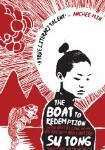
The Boat to Redemption – Su Tong

 Winner of the Man Asian Literary Prize 2009

Translated from the Chinese by Howard Goldblatt

The Boat to Redemption focuses on the boat people of a Chinese River. The central character is Dongliang, who was once the revered grandson of a revolutionary martyr, but when his ancestry is questioned his life quickly deteriorates.

The main theme of the book is the relationship between Dongliang and his father. It is essentially a coming of age story showing how hard it is to adjust to adulthood, but although it is a very Chinese novel, similar in style to Brothers, the themes of love, heartache and fear are universal.

The book was interesting at the beginning, but the pace was quite slow. It picked up at is progressed and by the half way stage I was captivated – the characters were fascinating and so different from those in Western novels as their superstitions and respect for authority add a different dimension to their problems.

I don’t have a big knowledge of Chinese culture and so I felt that some things went over my head – there were several points where there appeared to be a wise saying, but it didn’t translate well into English. This wasn’t because of a translation problem (I think Howard Goldblatt did a great job) but because there wasn’t an equivalent phrase in English.

‘If your mother finds you, then you’ll be a drowned ghost too, with moss growing all over your body.’

As with many other Chinese novels there was an obsession with genitalia in this book. I found that some of the scenes put me off my food for a few hours, but there was no explicit sex or extreme violence, so most people will cringe rather than be offended.

I’m sure that this book would be even more impressive if read in the Chinese, but even with a limited knowledge of the culture there is still a lot to enjoy.

Recommended to fans of Chinese literature.

stars41