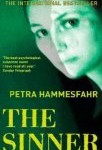
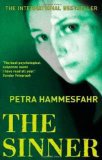
 Translated from the German by John Brownjohn
Five words from the blurb: killed, man, past, childhood, horrors
The Sinner was a bestseller in Germany, staying at the top of the book charts for fifteen months. I can see why it was so popular – it is well written, intelligent, and packed with unexpected twists. It is a shame that it is not well known outside it’s country of origin as I think it is a fantastic piece of crime fiction.
The Sinner begins with Cora, a young mother, stabbing a man in front of her family and friends during a quiet picnic by the lake. She immediately confesses to the crime, but no one can understand why a seemingly normal woman would turn into a cold blooded killer. Through police interviews and a series of flashbacks we discover details of Cora’s troubled childhood and the reason for her violent outburst.
The book is narrated by both Cora and Police Commissioner Rudolf Grovian, allowing us to see inside the head of both parties.
Cora Bender had attacked a defenceless man like a maddened beast. She’d gone berserk with her little knife and was showing no hint of remorse or sympathy for her victim. Yet to see her sitting there with her lips trembling, enumerating her husband’s good qualities, anyone would have thought she was the victim.
It is perfectly structured with little hints (and red herrings!) dropped at frequent intervals, ensuring the momentum is maintained throughout.
As well as being a clever why-dunnit piece of crime fiction The Sinner is also a gripping psychological insight into the mind of a troubled woman. Cora’s difficult childhood is described with great empathy, giving the reader that rare ability to have sympathy with a murderer.
The concentration on the troubled female mind means that this book will appeal to women more than men, but I loved reading a piece of crime fiction where the central character is so well drawn.
Recommended.

.
I read this as part of German Literature Month. Head over to Lizzy’s Literary Life and Beauty is a Sleeping Cat to find out about a wide range of German literature.