Categories
2012 Books in Translation

The Hundred-Year-Old Man Who Climbed Out of the Window and Disappeared by Jonas Jonasson

The Hundred-Year-Old Man Who Climbed Out of the Window and Disappeared Translated from the Swedish by Rod Bradbury

Five words from the blurb: escaping, unlikely, journey, momentous, life

The Hundred-Year-Old Man Who Climbed Out of the Window and Disappeared is the word-of-mouth bestseller of 2012. Positive reviews seem to be cropping up on a daily basis – so I thought I’d add another one to its arsenal.

The book begins with Allan jumping out of his bedroom window just before his 100th birthday party. Tired of being cooped up in his retirement home he decides to escape and have one last adventure. He begins an unrealistic journey involving murder, a suitcase of stolen money, and many narrow escapes from the police. Over the course of his travels we learn about his life; an equally unlikely story about meeting the greatest leaders of the last century at key moments in history.

This book was totally mad, but it had a heartwarming charm that thoroughly entertained me.

The corpse fell forwards and hit his forehead on an iron handle.
‘That would have been really painful if the circumstances had been a little different,’ said Allan.
‘There are undoubtedly advantages to being dead,’ said Julius.

My only problem was that I felt the book was a bit too long. I enjoyed seeing Allan meet Harry Truman, Chairman Mao and Churchill, but by the time he met Kim Il Sung I thought the joke was wearing a bit thin – there are only so many world leaders a person can meet without the stories becoming a bit repetitive. I think it might have been better if he’d been an ordinary citizen having a mad adventure, instead of a book that included so many famous people and a potted history of the 21st century.

Overall this was an entertaining, original book and as long as you don’t take it too seriously I’m sure you’ll be charmed by it too.

.

The thoughts of other bloggers:

It’s very funny with enough intelligence in the historical flashbacks to keep more serious readers engrossed. The Tattooed Book

…fresh, funny and different, but I can’t say that it is very good. Swamp of Boredom

…one of the most unique books I’ve read this year. The Savvy Reader
Categories
1950s Classics

Fahrenheit 451 by Ray Bradbury


.

.

.

.

.

.

Five words from the blurb: fireman, burns, books, media, insight

Ray Bradbury is one of those authors I’ve been meaning to try for a long time, so when I was offered a Folio Society edition of Fahrenheit 451 I jumped at the chance to review it.

The book is set in the near future and depicts a world where books are banned. Any books that are discovered are burned by special firemen:

And so when houses were finally fireproofed completely, all over the world (you were correct in that assumption the other night) there was no longer need of firemen for the old purposes. They were given the new job, as custodians of our piece of mind, the focus of our understandable and rightful dread of being inferior: official censors, judges, and executors.

I’m pleased I’ve read this classic piece of literature, but it wasn’t as good as I’d hoped. My main problem was that it was overly verbose. It was difficult to understand the meaning of any given paragraph and I frequently found myself re-reading sections in order to work out what was happening. This meant reading was more of a chore than a delight.

I also think that society has unfortunately reached a stage dangerously close to the one described by Bradbury. Our attention span has been reduced, we enjoy Twitter’s 140 characters and like everything as simple as possible. So, although I was impressed by his predictive powers, I don’t think it had the impact it would have done had I read it 50 years earlier. (I can also see the irony of the complaint in my previous paragraph – it just proves how society has corrupted me!)

On a positive note, there was some fantastic imagery in this book and I can see why it has become a classic. Now I’ve made it to the end I can appreciate all that Bradbury was trying to achieve and think I’ll remember it for a long time. It is one of those classics everyone should read, even if the experience isn’t entirely positive.

.

A note on the Folio edition
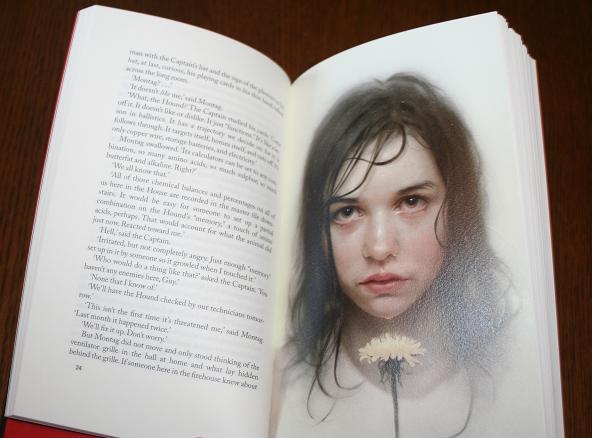
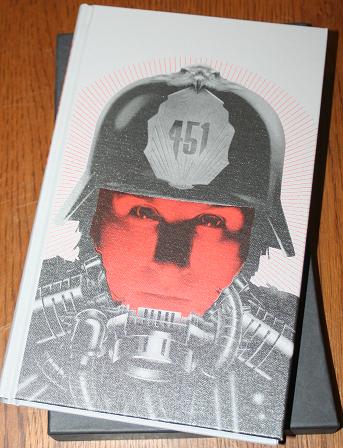
The book comes in a study slip case and is well constructed with quality paper. The illustrations were beautiful, but I was slightly disappointed to discover that there were only six in the entire book. This was my favourite:


Categories
1950s 2000 - 2007 Books in Translation

Jamilia by Chingiz Aïtmatov

Jamilia Translated from the Russian by James Riordan

Five words from the blurb: husband, newcomer, village, letters, love

I knew nothing about this book, but accepted a review copy because the author was said to be “Kyrgyzstan’s best known literary figure”  and it was described as “the greatest love story ever told”.  I’d never read a book from Kyrgyztan before, but whilst it was interesting to learn about village life in this country, Jamilia was too sparse for my taste.

The book is set during WWII at a time when all the men from the village have gone away to fight; leaving the women and the elderly to run the farms by themselves. Jamilia is a spirited young woman who has little interest in the letters she receives from her husband on the front line, but the arrival of Daniyar, a stranger who has been injured on the battlefield, changes everything and they soon find themselves falling in love.  

The writing was beautiful and there were lots of vivid scenes, but I found the emotional connection to the characters wasn’t there – it was all too passive for me.

He took no notice of my presence; he just sat there, hugging his knees and gazing into the distance with a pensive, yet unclouded look. And once again I felt he was listening intently to sounds I could not hear. Now and again he would shudder and freeze, his eyes open wide. Something was bothering him and I fancied he would get up at any moment and unburden his soul, but not to me – he didn’t even notice me – rather to something vast, unbounded, unfathomable.

At just 96 pages long this novella can be read in a single sitting and I think this brevity also increased my frustration with it. I prefer a more complex plot, especially when looking for “the greatest love story ever told”. It probably didn’t help that the best love story I’ve ever read is  The Dark Side of Love by Rafik Schami, an 850 page epic in which I came to understand everything there was to know about the couple in love. In comparison Jamilia barely scratched the surface and I didn’t fully understand their culture or ambitions. 

I’d also warn readers who dislike spoilers to avoid reading the blurb, or most reviews for this book. Every plot point for this short story is given away, with no surprises at the end.

Overall it is worth reading this book – simply because little other literature from Kyrgyzstan is available in translation, but I’m sure there are many better love stories out there in the world.

.

The thoughts of other bloggers:

…a truly lovely story, that was a joy read. Bart’s Bookshelf

I am not as in love with Jamilia as others have been, but I am in love with Seit’s idea of being in love. The Stardust Reader

…a book that will linger with you long after you have put it down. Winstonsdad’s Blog


Categories
Other

October Summary and Plans for November

The colder weather of the last month encouraged me to spend more time inside, curled up with a book, and so I read more than twice as much as I did in September. Overall they were a fairly mixed bag, but the majority were entertaining enough to satisfy me. I’m currently enjoying half term with my boys and so don’t have time to write reviews, but I’ll let you know about all the books I’ve read once the schools have gone back.

Book of the Month
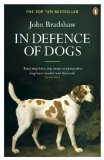
In Defence of Dogs: Why Dogs Need Our Understanding

Books Reviewed in October:

In Defence of Dogs by John Bradshaw 

The Garden of Evening Mists by Tan Twan Eng 

So Big by Edna Ferber 

Arcadia by Lauren Groff 

The Creator by Guðrún Eva Mínervudóttir 

The Yellow Birds by Kevin Powers

Swimming Home by Deborah Levy 

The Light Between Oceans by M L Stedman 

The Portrait by Iain Pears 

Plans for November

I plan to take part in German literature month organised by Lizzy and Caroline. I’ve already read The Cow by Beat Sterni and am making good progress with The Swarm by Frank Schätzing. I may try to squeeze in another German book before the end of the month too.

I also hope to read most of these:

The First Century After Beatrice by Amin Maalouf

A Farewell to Arms by Ernest Hemingway

The Testimony by James Smythe

The Human Part by Kari Hotakainen

Jerusalem by GM Tavares

The Cook by Wayne Macauley

Fahrenheit 451 by Ray Bradbury

The Hundred-Year-Old Man Who Climbed Out of the Window and Disappeared by Jonas Jonasson

I hope you have a wonderful November!

Categories
Uncategorized

My Life in Books

Today I’m taking part in My Life in Books over at Stuck in a Book. Head over to Simon’s blog to see me talk about my favourite books from the past and try to predict who I’m paired with. 

Categories
1920s Classics Pulitzer Prize

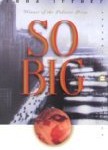
So Big by Edna Ferber

SO BIG By Ferber, Edna (Author) Paperback on 22-Aug-2000 Winner of 1924 Pulitzer Prize

Five words from the blurb: Chicago, society, Illinois, farmers, ideals

Selina Peake, the central character in So Big, is one of the strongest women in literature. After the death of her father, a gambler who always looked for the most exciting things life had to offer, Selina moves to Illinois to become a teacher. This rural community is very different from the high society life she led in Chicago and Selina must work hard to survive. Life isn’t good to Selina and she has a string of problems, but she copes with them all, despite the disapproval of a society who believe women should not work outside the home. Selina was a groundbreaking character for the time and nearly a century on it is still possible to admire her courage and resilience.

I wasn’t convinced I’d enjoy a story about Dutch farmers in Illinois, but Selina was an amazing character and I fell in love with her. The plot felt quite slow, but on reflection an amazing number of events occurred in Selina’s life. The writing was wonderful and apart from having to get the dictionary out a few too many times, I had no complaints.

The main theme of the book was encouraging people to live life to the full and that money does not bring happiness – topics which are just as relevant now as they were back then. I loved the advice given to others throughout this book:

“The more kinds of people you see, and the more things you do, and the more things that happen to you, the richer you are. Even if they’re not pleasant things. That’s living. Remember, no matter what happens, good or bad, it’s just so much” – he used the gambler’s term, unconsciously – “just so much velvet.”

This is a wonderfully rich story that can also be taken as a guide to the important things in life. Recommended.

.

The thoughts of other bloggers:

Exquisitely crafted and lovingly plotted, it is story that is worthy of the Pulitzer.  Caribousmom

Selina is one of the most powerful and memorable characters I’ve ever read. The Book Nest

…infused with meaning not found in many books. Musings