Categories
2000 - 2007 Other Prizes YA

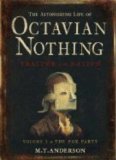
The Astonishing Life of Octavian Nothing, Traitor to the Nation: v. 1 – M.T. Anderson

Winner of the National Book Award 2006

I picked this book up after seeing C.B. James mention it as one of his favourite reads of 2008.

The book is set in Boston during the 18th Century and centres on Octavian, a young boy who lives in a strange house with his mother and an array of unrelated men. He is confused by his life, his vague memories of a past in Africa and the role of all the men in his household. As the book progresses Octavian and the reader slowly learn the shocking truth about his life….

I found this book very hard to get in to. Octavian’s confusion meant that the reader had no idea what was happening for a while. The book was written with a very flowery language, which although not difficult to understand, meant that reading did require a lot of concentration and this also distanced me from the characters.

The men who raised me were lords of matter, and in the dim chambers I watched as they traced the spinning of bodies celestial in vast, iron courses, and bid sparks to dance upon their hands; they read the bodies of fish as if each dying trout or shad was a fresh Biblical Testament, the wet and twitching volume of a new-born Pentateuch. They burned holes in the air, wrote poems of love, sucked the venom from sores, painted landscapes of gloom, and made metal sing; they dissected fire like newts.

A further problem was that all the male characters in the book were referred to by numbers, rather than names. My poor little brain just couldn’t keep track of who was who. By the time I’d read and re-read everything and worked out what was happening I had lost interest in the story. I just didn’t feel that the effort I had put into understanding it was rewarded.

This book is marketed as a young adult book, but I’m not sure many teenagers would have the concentration to get through it. I think this book has many similarities with Beloved by Toni Morrison – it is very literary, hard to understand and tackles some difficult subjects. If you enjoyed Beloved then I’m sure you’ll like this, but it was too much like hard work for me.

Have you read this book?

Did you enjoy the rest of the series?

Do you enjoy reading books that require a lot of concentration?
Categories
2009 2010 Chunkster Historical Fiction

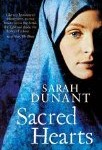
Sacred Hearts – Sarah Dunant

Sacred Hearts is the third selection for the new TV Book Club, so when I spotted a copy hiding on the library shelves I decided to grab the opportunity to try it.

The book is set in an Italian convent during the 16th Century. It tells the story of a young woman brought to the convent against her will, as her family couldn’t afford the dowry to see more than one of their daughters married.

I was totally unaware of this practice – I found the detail of convent life fascinating and struggled to imagine a society in which so many women were forced to leave their loved ones to spend a life locked away from the world.

It is always hard, understanding what is being gained in the moment at which something is also being taken away. For such a young woman to appreciate, for example, the different meanings of incarceration and freedom. How while outside these walls ‘free’ women will live their whole lives dictated by the decisions of others, yet inside, to a remarkable extent, they govern themselves.

The book was rich in period detail and contained many of those little facts that you just can’t help sharing with anyone who happens to be close by. The characters were well drawn and I especially loved the way in which all the nuns had unique personalities, following the rules to a varying extents.

My only criticism is that the pace of the book was quite slow, which meant that the 460 pages dragged in several places. I’d recommend this book only to fans of historical fiction, as I don’t think the plot is exciting enough to entertain anyone who isn’t interested in learning about life in the 16th Century.


This is the first Sarah Dunant book that I have read, but I’m interested in reading more.

Have you read any of her books?

Which would you recommend I try next?

Categories
2000 - 2007 Science Fiction YA

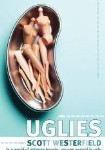
Uglies – Scott Westerfeld

I have a love-hate relationship with YA novels, so approached this one with extreme caution. I was prepared for a thought provoking plot, but I was pleased to discover that it was also a gripping, page turner that I’d happily recommend to everyone.

The book is set approximately 300 years in the future, in a world where everyone is ugly until their 16th birthday when they are transformed in adults of uniform beauty. The central character, Tally, is fast approaching her 16th birthday and is preparing to be re-united with her childhood friend, Peris, who has already undergone the operation. Everything changes when Tally meets Shay, a fellow Ugly, who wants to avoid the change, but Shay runs away, leaving Tally to make some difficult decisions….

The book started off quite slowly and after the first few chapters I was beginning to wonder why so many people rave about this book, but then I slowly became immersed in the story and it wasn’t long before I couldn’t put it down. I love dystopian fiction and this world came across very realistically. The book mocked our society in which tall people have an advantage at job interviews, or fights break out over the colour of someone’s skin and their observations of skinny models on our magazine covers were fantastic! I can easily imagine someone deciding to give us all a uniformly pretty appearance in a few hundred years time and it was these thought provoking issues that made the book special for me.

I loved all the characters in the book, the plot was fast-paced without losing any atmosphere and I thought that the twists were great and often unexpected.

This is what YA writing should be like – a fantastic, light read which can be appreciated by all age groups. I look forward to reading the rest of the series.

Recommended.

 stars4

Have you read Uglies?

Will I enjoy the rest of the series?

Categories
1990s Books in Translation Chunkster

The Wind-up Bird Chronicle – Haruki Murakami

Translated from the Japanese by Jay Rubin

I have enjoyed many Murakami books in the past, but for some reason I’d avoiding reading this, often described as his most famous book. I felt as though I was saving it as a special treat and built up my expectations accordingly. Unfortunately it was nothing like I expected it to be, and in the end I was quite disappointed by it.

The first half of the book was fantastic. I think the word ‘mesmorised’ is the only way I can describe it. I was glued to every word, unable to read quickly, savouring the simple story of a man struggling to find satisfaction in his life. The central character, Toru, has quit his job and so is spending much of his time alone. He starts to receive strange phone calls, his cat disappears and he is then visited by a series of fabulous characters. The stories told by each of these visitors were fantastic. I was particularly gripped by the story of the soldier and his journey into enemy territory. The story of his capture and torture was a bit gruesome in places, but it was so powerful that I think I’ll always remember it.

In the second half of the book it started to go weird, but (and this might sound strange) it wasn’t weird enough for me. It was teetering on the fine line between reality and the bizarre, but didn’t cross it. I felt that the surreal twist in the story was unnecessary and that the book would have benefited from being grounded in reality. The perfectly constructed stories of the first half were ruined by the ambiguous and unrealistic occurrences at the end. The characters introduced later in the book (Cinnamon, Nutmeg etc) failed to engage me and I don’t think I really understood their presence in the novel.

The ending was even more disappointing. The book just seemed to peter out, leaving almost all the ends untied. I was left feeling frustrated and confused, with more questions than answers. The last third of the book really dragged as there was no forward momentum and I felt as though I was wading through random, meaningless paragraphs.

Overall I’m afraid that there were too many negatives for me to be able to recommend this book. If you’re after a fantastic Murakami then I suggest you try Kafka on the Shore.

stars3h

Did you enjoy The Wind-up Bird Chronicle?

What did you think of the ending?

Have you thought about sitting in the bottom of a well?!

Why did Murakami write this book? Can you see a point to it?

Categories
2010 Booker Prize Books in Translation

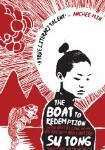
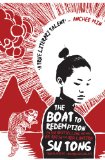
The Boat to Redemption – Su Tong

 Winner of the Man Asian Literary Prize 2009

Translated from the Chinese by Howard Goldblatt

The Boat to Redemption focuses on the boat people of a Chinese River. The central character is Dongliang, who was once the revered grandson of a revolutionary martyr, but when his ancestry is questioned his life quickly deteriorates.

The main theme of the book is the relationship between Dongliang and his father. It is essentially a coming of age story showing how hard it is to adjust to adulthood, but although it is a very Chinese novel, similar in style to Brothers, the themes of love, heartache and fear are universal.

The book was interesting at the beginning, but the pace was quite slow. It picked up at is progressed and by the half way stage I was captivated – the characters were fascinating and so different from those in Western novels as their superstitions and respect for authority add a different dimension to their problems.

I don’t have a big knowledge of Chinese culture and so I felt that some things went over my head – there were several points where there appeared to be a wise saying, but it didn’t translate well into English. This wasn’t because of a translation problem (I think Howard Goldblatt did a great job) but because there wasn’t an equivalent phrase in English.

‘If your mother finds you, then you’ll be a drowned ghost too, with moss growing all over your body.’

As with many other Chinese novels there was an obsession with genitalia in this book. I found that some of the scenes put me off my food for a few hours, but there was no explicit sex or extreme violence, so most people will cringe rather than be offended.

I’m sure that this book would be even more impressive if read in the Chinese, but even with a limited knowledge of the culture there is still a lot to enjoy.

Recommended to fans of Chinese literature.

stars41

Categories
2000 - 2007 YA

Twilight – Stephenie Meyer (Book and Film)

I had been wanting to read Twilight for a long time, as I hate not knowing what everyone else is talking about. I suspected that I wouldn’t enjoy it, but tried to approach it with a fairly open mind.

Unfortunately I quickly realised that it wasn’t for me – the writing style grated, the characters lacked depth and there was no atmosphere. After trudging through 50 pages of this drivel I gave up and decided to watch the film.

I immediately liked watching it a lot more – the characters, who had been so dull on paper came to life! The film was beautifully shot and was packed with colour, action and even emotion at times. After 20 minutes I paused the film and picked the book up again, wondering if I’d been wrong about it, but after struggling through another ten pages I realised that my initial reaction was still holding up. The dialogue was so cheesy and as the book consists of almost nothing but talking it was impossible to avoid!

I finished the rest of the film and found that I really enjoyed it. I’m not normally a fan of vampire films, but I found that Twilight was different to many of the others due to the lack of excessive violence. The plot concentrated more on the love story than the vampires chasing each other round and killing one another. I even found the love story almost believable on screen – there were several touching scenes.

Once I had  finished watching the film I skim read the rest of the book, reading only the important scenes. I noticed a few differences between the two, but generally the film seemed to follow the book very closely. I’m afraid that the writing quality remained quite low for the rest of the book and I was never tempted to finish it properly. I’m sure that I would have loved Twilight when I was 14, but as an adult I was thoroughly bored with it.

I won’t be reading any more of the books, but will ensure I watch the DVDs as they are released.

Book: stars1 (DNF)

DVD:  stars41

Did you enjoy Twilight?

Did you prefer the book or the film?