Categories
2010

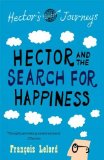
Hector and the Search for Happiness – Francois Lelord

 Translated from the French by Lorenza Garcia

Hector and the Search for Happiness is a short, quirky book about one man’s search for happiness.

Hector is a young psychiatrist who decides to travel around the world finding out what makes people in other countries happy. As he learns about their feelings he makes notes, developing a set of rules which he uses to find happiness within himself.

The writing was very simple, almost child-like and the entire book can be read very quickly. 

I think my main problem with this book was that it wasn’t really a novel. It had much more in common with a self-help guide, a type of book that I avoid. Perhaps I’m just lucky enough to already know that the secret of happiness relies on strong relationships and not material wealth, but I felt I gained nothing from reading this book.

I found the lessons to be patronising and there were several points when I wanted to throw this book across the room.

Lesson no. 12: It is harder to be happy in a country run by bad people.

and possibly even more annoying:

Lesson no. 22: Women care more than men about making others happy. 

I think this book will appeal to fans of Mitch Albom and self-help guides, but I found it to be overly sentimental.

It seems as though I’m the only one that didn’t enjoy it….

It was very sweet and I think it had a number of good lessons in it. Medieval Bookworm

 ….has a genuine edge to it, with on-the-button observations about human beings and the way they think and behave. Vulpes Libris

…. it is warm and insightful, and it cleverly avoids the pitfalls of silliness and sentimentality. Fleur Fisher Reads

Did you enjoy Hector and the Search for Happiness?
Categories
2010 Booker Prize

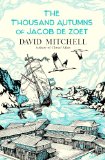
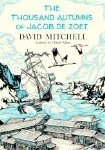
The Thousand Autumns of Jacob de Zoet – David Mitchell

David Mitchell is one of my favourite authors, so I was very excited about the release of this new book. Unfortunately I think that David Mitchell has matured as an author very quickly and so this book will disappoint much of his broad fan base.

The Thousand Autumns of Jacob de Zoet is set on the island of Dejima at the beginning of the 19th Century. Dejima is the Japanese trading post, the only place where Europeans are allowed to exchange goods with the Japanese. The small island is inhabited only by translators, prostitutes and traders; with access to mainland Japan over a small fiercely guarded bridge. To Buying or reselling authorized user trade Jacob de Zoet is a Dutch clerk trying to prevent corruption on the island, but his life is changed when he falls in love with Orito, a young midwife.

The first chapter is a gripping, but graphic account of a childbirth in which Orito breathes the life back into a seemingly dead baby. Unfortunately the next 150 pages of the book lack this vivid story telling and I found it very hard to understand what was happening. New characters seemed to be added on every page, their names changing based on who referred to them.  The added problem of the Dutch and Japanese misunderstanding each other only compounded my confusion.

As a piece of historical fiction this book is a masterpiece. It is very well researched, but at times I felt the accuracy was its downfall. It took me six weeks to read the first section as I had to re-read it several times. If I hadn’t been a massive David Mitchell fan then I admit that I might have given up at this point, but I am pleased I made the effort.

The next 200 pages were a big improvement. The story of Orito’s imprisonment in a monastery and the shocking baby farm that existed there was a satisfying read. I loved Orito and wish the whole book had concentrated on her.

I was quite disappointed by the ending, but I’m afraid I can’t let you know about that without giving things away. All I can say is that I wasn’t a big fan of any section including Jacob de Zoet. The complexity of the text meant that  I couldn’t generate an emotional response and so I didn’t connect with him. I found all his sections confusing and almost impossible to follow with a single reading.

Overall this is an impressive book which deserves to win the Booker prize, but I think the complexity will put off all but the most determined reader.

Are you a big David Mitchell fan?

Do you hope this wins the Booker prize?


Categories
2009 2010 Orange Prize Recommended books

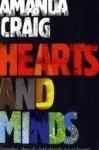
Hearts and Minds – Amanda Craig

 Long listed for the Orange Prize 2010

Hearts and Minds seems to be one of the most praised books on the Orange long list this year. It’s London setting appealed to me and so I decided to read it, despite the fact it didn’t make the short list.

Hearts and Minds gives a snap-shot of life in London today. Its range of characters shows the diversity of people living in the capital city and the problems faced by them. We see asylum seekers, teachers, prostitutes, taxi-drivers and a whole range of other people. I normally struggle to cope with this many characters, but the vividness of the writing meant that each one jumped off the page and I had no trouble keeping track of them all.

The book impressively manages to combine a murder mystery with literary fiction. In many ways it reminded me of The Road Home by Rose Tremain, but I actually think that Hearts and Minds is the better book.

The story is split into several narratives which at first seem independent, but as it progresses connections are made until everything comes together in the final poignant chapters.

This isn’t a pleasant read; we witness the worst of London society, but the power of the words had me gripped from beginning to end.

He thinks about how, all along the street, there must be flats like this one in which other girls have been raped and beaten, flats that are perhaps now occupied by happy couples or successful professionals or pensioners, all with the same sash windows and lumpy corniced ceilings; and yet this horror has happened here. A sensation of lives layered on top of each other, which he will never know about, overwhelms Ian momentarily.

I have no idea why this book didn’t make the Orange short list. It deserved to be there.

The Thoughts of Other Bloggers

…even more gripping and packs more of a punch than anything I’ve read in 2010 so far. The B Files

It is page after page of unrelenting misery. Books Please

….characters so well-drawn that they become so close to you It’s a Crime!

…somehow Amanda Craig touches on the reality and the truth of this and you really do want to weep. Dovegreyreader

Are you planning to read Hearts and Minds?

Why didn’t this make the Orange short list?

Categories
2010

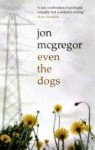
Even the Dogs – Jon McGregor

I have seen a few people raving about this book, describing it as their favourite of the year so far and a certainty for the Booker short list. I can’t ignore comments like that and so reserved a copy from my local library.

Even the Dogs is certainly an original novel. Written mainly from the first person plural point-of-view and often with a stream of consciousness flow of words, it has a distinctive style:

We stand together in the hallway, uncertainly. We can hear the two policemen talking outside, the crackle and mutter of their radios. We can hear footsteps moving around upstairs, and someone laughing.

Even the Dogs has a dark theme, focusing on drug addicts, alcoholics and the homeless. The book begins with the discovery of Robert’s dead body and the simple plot describes the events leading up to his death.  From a distance we see how he became an alcoholic, opened his home up to drug addicts and eventually lost his life.

This book is packed with graphic descriptions, swear words and misery. I know this will not appeal to a lot of people, but I found it to be a compulsive read. It is quite short (less than 200 pages), but it is an impressive description of a wasted life.

I prefer books with a more complex plot, but as a snapshot of the lives of these people I can’t fault it.

Do you think this will make it onto the Booker long list this year?

Categories
2010 Book Prizes Chunkster Science Fiction Thriller Uncategorized

Angelology – Danielle Trussoni

Angelology takes place in a world where angels walk among us. Their wings are tied flat beneath their clothing so you have no way of knowing who they are, but these angels have been breeding with humans to create dangerous hybrids called Nephilims. Unlike the immortal angels these nephilims are dying and so are trying to do everything within their power to get hold of the angelogogist’s research in the hope it will reveal a cure for their disease.

Angelology is a fast paced thriller, which I’d describe as a well written hybrid of The Da Vinci Code, The Historian and Twilight – so if you enjoyed these three books then you are bound to love this one.
I loved the atmospheric descriptions:

The angelologists examined the body. It was intact, without decay, the skin as smooth and as white as parchment. The lifeless aquamarine eyes gazed heavenward. Pale curls fell against a high forehead and sculptural shoulders, forming a halo of golden hair. Even the robes-the cloth woven of a white shimmering metallic material that none of them could identify exactly-remained pristine, as if the creature had died in a hospital room in Paris and not a cavern deep below the earth.

This initial scene setting was quite slow, but the pace soon sped up. I enjoyed the beginning, but about 100 pages in I began to lose interest. The plot was convoluted, meandering and never reached any real conclusion. There was a lot of history added to the book, but as most of it was made up this didn’t hold the same appeal as other pieces of historical fiction.

The central character in the book is a young nun called Evangeline, but she never really engaged me. I felt as though I was carried along by the fast flow of the words, rather than any real desire to know what happened.

The book is being made into a film by Sony and I am sure that this will be a  much better medium for the story – especially once the plot has been condensed into a two hour time slot!

The lack of a fully resolved ending means that I’m sure there will be a sequel, but I’m in no rush to read it – I am happy to wait until its inevitable DVD release!

Overall I found it to be a fast paced, inventive book, but I just didn’t care what those fictional angel-hybrids were doing.

This book is getting very mixed reviews, but I am sure it will be a massive hit – especially after its release in paperback.

…an incredible novel that I can’t recommend highly enough. S. Krishna’s Books

….in the end Angelology falls far short of its potential. Muse Books Review

…too many weak points to the overall story for me to end up really invested in the story. Fantasy & SciFi Lovin’ News and Reviews

I loved the world Trussoni has created with its mixture of the esoteric, history and myth and not least for Trussoni’s quality prose. Chasing Bawa

Do you think you’ll enjoy Angelology?

Categories
2010

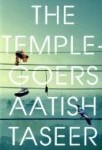
The Temple-goers – Aatish Taseer

The Temple-goers has an impressive blurb. It is described as being as “seductive and unsettling” as The Reluctant Fundamentalist and like an Indian version of Netherland. The author was heralded as the ‘Indian Brett Easton Ellis’ by The Bookseller and as ‘a writer to watch’ by V.S. Naipaul. I’m a big fan of Indian novels and so was excited about reading it.

Unfortunately I don’t think The Temple-goers lived up to the hype, but I wonder if that is because I didn’t fully understand/appreciate the complexity of the novel.

The book is set in modern day India and focuses on a young man who has returned from the West to rewrite his novel in cosmopolitan Delhi. The central character, Aatish, is named after the author and we follow him as he struggles to adapt to the fast changing city.

Aatish strikes up a friendship with a gym trainer and together they enjoy getting drunk and having sex, always ensuring they visit the temple afterwards to atone. The balance between ancient tradition and the modern way of life is an interesting concept for a novel, but I failed to connect with any of the characters and so I found myself not caring what they got up to.

Throughout the book we hear about Aatish’s novel writing, which is often criticised:

Sanyogita didn’t like the writer. She felt he wasn’t kind; that was her word. She had begun many books of his. I think she read them for my sake rather than out of any real interest; and later I felt she finished them for the same reason. One lay by her bedside now.

‘I can’t!’ she said, standing in front of a dressing-table mirror, her head cocked to one side as she put in an earring, ‘I just can’t. I’ve tried, but they’re so dry. And he’s not kind to his subjects.’

All the criticisms reflected my thoughts on The Temple-goers, so I wonder if this book is a satire on novel writing.  I can’t understand why someone would deliberately create a dry novel with characters that you can’t connect to, but that does appear to be the case here. The way the author has named the character after himself also seems to suggest this.

There were some interesting sections on life in modern day India and the book had an easy-to-read, fast pace, but I found most of the book quite dull.

Recommended to people who enjoy experimental writing – perhaps one of you will be able to explain this book to me at some point!