Categories
2010 Pulitzer Prize

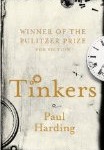
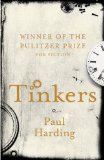
Tinkers – Paul Harding

 Winner of 2010 Pulitzer Prize

Tinkers surprised everyone by winning the Pulitzer Prize earlier this year. It’s a debut novel from a tiny publishing house so few people had heard of it before its Pulitzer win, let alone predicted that it would scoop the biggest prize in American literature. I’m trying to read all the Pulitzer winners, so naturally Tinkers went straight onto my wish list.

Tinkers begins with George Washington Crosby lying in a hospital bed with eight days left to live. He starts to hallucinate and through a series of flashbacks we come to learn about George’s life and his about his father, Howard.

The book is very short (190 well spaced pages) and contains many beautifully written passages, but I think I might have given up on this book had it been any longer. I felt that most of the scenes were over described:

It was a dim, murky scene, lit perhaps by a single candle not visible within the frame, of a table on which lay a silver fish and a dark loaf of bread on a cutting board, a round of ruddy cheese, a bisected orange with both halves arranged with their cross sections facing the viewer, a drinking goblet made of green glass, with a wide spiral stem and what looked like glass buttons fixed around the base of the broad cup. A large part of the cup had been broken and dimly glinting slivers of glass lay around the base. There was a pewter-handled knife on the cutting board, in front of the fish and the loaf. There was also a black rod of some sort, with a white tip, running parallel to the knife.

There were so many lists of objects in this book that I began to laugh whenever I spotted one – not a good sign for a supposedly serious book.

George used to repair clocks and I did learn a few interesting facts about tinkers, but it isn’t the most exciting profession in the world! Numerous quotes from The Reasonable Horologist by the fictioanl Kenner Davenport were sprinkled through the text and I thought that the best quotes from the book all came from these sections.

Chose any hour on the clock. It is possible, then, to conceive that the clock’s purpose is to return the hands to that time, a time which, from the moment chosen, the hands leave and skate across the rest of the clock’s painted signs and calibrations and numbers. These other markings on the face become irrelevant in themselves; they are now simply clues pointing in the direction of the chosen time.

This is one of those books that takes a look at the deeper things in life. If you enjoy slow, thoughtful books then you’ll probably enjoy it, but if you like a book to have some plot then stay away!


Tinkers is receiving very mixed reviews:

….a book to divert but not necessarily to detain. Asylum

I have never read a book like this, and will not forget it. Page247

….a combination of beautiful and flowery writing, with a boring memory based story. Bibliophile by the Sea

Harding’s mastery of language and character are mesmerizing. Nomadreader
Categories
2010 Books in Translation Novella

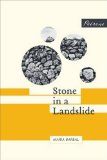
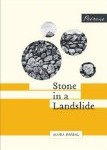
Stone in a Landslide – Maria Barbal


Translated from the Catalan by Laura McGloughlin and Paul Mitchell

I loved Beside the Sea, so wondered how the second book from the newly formed Peirene Press could ever live up to its emotional older sister. The two books were very different, but I’m afraid that I didn’t think Stone in a Landslide was in the same league as Beside the Sea.

Stone in a Landslide is set in a small village in the Pyrenees and follows 13-year-old Conxa as she leaves her parental home to live with her childless aunt. The book tells the story of her entire life, showing us how she finds a husband, cares for her children and copes with with the impact of the Spanish Civil War.

The book was very easy to read, but the simplicity of the prose left me cold. The 126 pages flew by, but I felt that it tried to cover too much in a short time and so I ended the book desperate to know more about her life. It is the same feeling I often get when reading a short story – I want more detail, more emotion and more complexity.

The gentle, simple narrative will appeal to a lot of people, but I felt that much of the book, especially scenes of the Spanish Civil War, were rushed.  Coxna led such an interesting life, but I never felt as though I knew her or what she was thinking. Descriptions of her surroundings seemed to be give more prominence than her emotions:

It was a bright day and I felt as if I was looking at everything in a huge mirror. The wind was fresh, you could still make out the snow on the mountain tops, even though the new grass had come up some days before. The birches stretched their arms to the sky waiting for their soft foliage.

Overall it was an interesting glimpse into life in the Pyrenees, but I felt it lacked depth.

Recommended to those who enjoy gentle short stories.

Opinions are divided on this one:

…each individual sentence is very plain, but somehow they combine to make a voice that is startlingly present and human. Stuck in a Book

I read the entire book feeling like an observer, and not a participant. Reading Matters

Stone in a Landslide is beautiful, simple and stark. Yet it is filled with warmth, the smell of grass on the mountains and the sunshine of a late afternoon. Chasing Bawa

Categories
2010 Non Fiction Richard and Judy Book Club

Operation Mincemeat – Ben Macintyre

 Richard and Judy Winter Read 2010

I don’t have any interest in military history or spy stories so when I saw that Richard and Judy had selected this as one of their Winter Reads I decided to challenge my preconceptions and give it a try. I’m afraid that it hasn’t converted me to into a lover of the genre, but I’m pleased that I gave it a chance.

Operation Mincemeat is a non fiction account of the planning that went into the invasion of Sicily during WWII. It details the deceptions that the British created to persuade German forces that an invasion would take place elsewhere – the plot centring on dropping a dead body into the sea off the coast of Spain with fake invasion plans.

The main problem I had with this book was that the plot was very simple. I was expecting a complex plan with lots of negotiations, spies and double-crossing, but I didn’t find Operation Mincemeat to be particularly cunning or original. It was interesting to see the massive amount of planning that went into this operation, but if this is the most exciting plot in WWII then I definitely don’t want to read any more military history.

This 400 page book was incredibly well researched, but I found many of the details boring. We were told the complete history of every person who was introduced and while some of it was relevant I didn’t care where they went to school or who their parents were.

I’m far more interested in the human side of war and this book lacked emotion. It was well written and readable, but I’d only recommend it to people who have an interest in military history.

Have you enjoyed any military history?

Can you recommend any that I might enjoy more than this one?

Categories
2000 - 2007 Booker Prize Recommended books

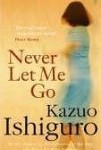
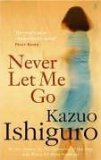
Never Let Me Go – Kazuo Ishiguro

 Shortlisted for the Booker Prize 2005

I have been wanting to read this book for ages, but for some reason it never made it to the top of my reading pile. I’m making a conscious effort to ensure that this doesn’t happen to the most important books in my collection and so Never Let Me Go became a priority. I’m so happy that it lived up to my expectations and that I will be joining the hoards of people who rave about this book.

Never Let Me Go is set in an English boarding school, but things aren’t quite as you’d expect them to be. Over the course of the book we slowly discover that it isn’t set in our world, but in one with subtle differences. I won’t say any more than that as I’d hate to give it away. All I can say is that it is an incredibly well constructed book, where the power is in what is left unsaid, as much as what is.

Maybe from as early as when you’re five or six, there’s been a whisper going at the back of your head, saying: “One day, maybe not so long from now, you’ll get to know how it feels.” So you’re waiting, even if you don’t
quite know it, waiting for the moment when you realise that you really are different to them; that there are people out there, like Madame, who don’t hate you or wish you any harm, but who nevertheless shudder at the very thought of you – of how you were brought into this world and why–and who dread the idea of your hand brushing against theirs.

It was such a subtle book that I found myself reading it very slowly, studying each paragraph for clues about what was happening. The ending left me with more questions than answers, but I quite liked the way some things were left open –  it means that it can be discussed for longer, making it a perfect book group choice.

I had expected the text to be challenging and so I was impressed by how easy and accessible it was to read. This combined with a thought provoking and original plot make Never Let Me Go a modern classic.

Highly recommended.

The Never Let You Go movie is released in the US on 1st of October and in the UK on 14th January 2011.

WARNING!! DO NOT WATCH THE AMERICAN TRAILER FOR THIS FILM IF YOU HAVEN’T READ THE BOOK – IT GIVES EVERYTHING AWAY!

The UK trailer for the film is below – it is almost spoiler free:

I was quite worried about how the adaptation would be handled, but I’ve been reassured by watching the trailers and am looking forward to seeing the film.

Did you enjoy Never Let Me Go?
What did you think of the trailer?

Categories
2010 Historical Fiction

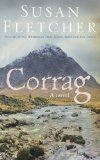
Corrag – Susan Fletcher

I received a copy of Corrag from the publishers a long time ago, but I wasn’t convinced I’d enjoy it. Words on the back cover like “haunting”, “lyrical” and “dreamlike” put me off, but continual raving from The Book Whisperer persuaded me to give it a try. Unfortunately my instincts were correct and this book wasn’t for me.

Corrag is set in Scotland in 1692. The book is narrated by Corrag, a 16-year-old girl who is imprisoned on suspicion of being a witch. Accused of involvement with the Glencoe Massacre, an event in which 38 members of the MacDonald clan were killed by soldiers, she is awaits her execution.

My main problem with this book was that nothing happened. Corrag is stuck in a prison cell telling her story to an Irish minister, but the snippets of action were very few and far between. The majority of the book revolved around tiny details about her life in prison. It was beautifully written, but after pages of these descriptions I became bored.

It snows. From the little window, I can see it snows. It’s been months, I think, of snowing – of bluish ice, and cold. Months of clouded breath. I blow, and see my breath roll out and I think look. That is my life. I am still living.

The repetition also wore me down. I can see that this is an accurate reflection of her experience, but as a reader I’m afraid I need to be entertained a bit more.

The Glencoe Massacre is a fascinating subject and so there were enough paragraphs of interest to keep me reading, but in many ways I wish this hadn’t been the case. I found myself ploughing through these “lyrical descriptions” waiting for a shred of plot to reveal itself. I reached the end wishing that I had given up early on. The only benefit of finishing was that I got to read the afterword, which was the most interesting section of the book.

Recommended to those who do not need a plot and are capable of immersing themselves in beautiful descriptions.

I’m in the minority. Everyone else seems to love it:

It is truly one of the most beautiful and lyrical books I have ever read. The Book Whisperer

Fletcher’s use of language is also impressive. Shelf Love

….it was a visual experience, a kind of conjuring. Eve’s Alexandria

Categories
1990s

Choo Woo – Lloyd Jones

I loved Mr. Pip so when John Murray, his publishers, invited me to meet Lloyd Jones I jumped at the chance. In preparation I decided to read one of his other books and because I owned a copy of Choo Woo it was the obvious choice.

Choo Woo isn’t a happy book. It focuses on ten-year-old Natalie who is sexually abused by her mother’s new boyfriend. Her innocence was touching to read, but I found her acceptance of the situation heartbreaking. The book wasn’t sexually explicit, leaving almost everything up to your imagination, but her thoughts and actions seemed realistic and this made the book more disturbing to read.

We also see things from the point of view of Natalie’s father, who is laden with guilt for not noticing what was happening to his daughter.

I wondered how I had missed so many obvious things. I wondered what had turned my head at crucial moments when a more deliberate glance would have told me everything. I wondered where the hell my head was during that year for a thing like that to have happened right under my nose.

The simple, powerful writing was gripping throughout, but by the end I just felt deflated and sad. It came across as an accurate portrayal of an abused child, but I didn’t feel as though I’d learnt anything new.

By coincidence I have read quite a few books about child abuse recently and feel I could write a essay comparing them. Instead I’ll summarize with a little table:

  Point of View Emotion New Perspective
Room Child of Abused Bucket Loads YES!
Forgetting Zoe Abuser, Abused and Family of Abused Trace In Places
Choo Woo Abused Child and Father of Abused Lots No

Reading about any form of abuse is hard, but when it affects a child it is even worse. I think I’ll try and avoid books about the subject for a while, but I have found it interesting to compare them all.

Recommended to anyone who enjoys dark, sad stories.

Have you read any of the other books that Lloyd Jones has written?

Which was your favourite?

Lloyd Jones has a new book coming out soon.

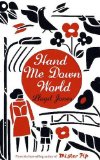
Hand Me Down World will be released on 11th November in the UK (2nd Nov in the US).

I’m going to be giving away copies of this new book on my blog soon, so if you are interested in winning a copy keep your eyes peeled for my giveaway post.