Categories
2000 - 2007 Science Fiction

Speed of Dark – Elizabeth Moon

Speed of Dark

I love reading books that feature autistic characters and so ordered Speed of Dark the moment Judith mentioned that it was one of her favourite books set in the future.

Speed of Dark is set in the near future, at the moment they find a cure for autism. The book follows Lou, a man with autism, who works in a department specially set up to enable autistic people to maximise their ability to analyse data. The department provides trampolines, soothing music and other comforting objects that enable the group to work as efficiently as possible, but cutbacks are forcing the company to re-evaluate the amount of money they spend on these facilities and so, in an effort to reduce costs, they try to persuade their employees to undergo surgery to remove their autism. The book follows Lou and his colleagues as they decide whether or not to become “normal” citizens.

Speed of Dark reminded me of Flowers for Algernon in that the premise of the book is whether or not people are happier when they match the majority of the population, but whilst I found Speed of Dark interesting, it wasn’t in the same league as Flowers for Algernon.

Speed of Dark accurately captures the autistic mind, giving the reader a real sense of the difficulties they face. The problem is that it isn’t necessarily pleasurable to see the world through their eyes. There were times when I became bored by the excessive detail of some descriptions and I found the continual confusion over the simplest incidents repetitive and dull.

He did not say he was sorry I had four flat tires. That is the conventional thing to say, too bad or how awful, but although he is normal, he did not say either of those things. Maybe he is not sorry; maybe he has no sympathy to express. I had to learn to say conventional things even when I did not feel them, because it is a part of fitting in and learning to get along. Has anyone ever asked Mr Crenshaw to fit in, to get along?

The sad thing is that I know this is what they have to go through each day and so I feel guilty for admitting that I found simply reading 400+ pages about it too much. I think this book would have benefited from being 200 pages shorter, but perhaps that wouldn’t have given such a complete picture of their frustrations.

On a positive note, this book did raise some interesting questions and I loved the debate about whether or not we should remove autism from society. I am still thinking about what all this means for my own son, but whilst I’m not hoping that they find a cure for autism, I am hoping that employers come to realise the benefits of autistic staff and begin to provide the wonderful facilities mentioned in this book.

Recommended to anyone with an interest in autism, but everyone else should read Flowers for Algernon first.

 .
Categories
1940s Classics Fantasy

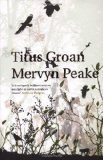
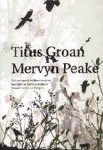
Titus Groan – Mervyn Peake

Titus Groan (Gormenghast trilogy)

You have seen nothing like it before … but after … you see things like it everywhere …. C.S. Lewis


SPOILER FREE REVIEW

Titus Groan contains the most vivid writing I have ever read. Mervyn Peake has created an amazing cast of characters, each one packed with a range of flaws and their own complex agenda. It is rare to enjoy reading about such unlikable characters, but the quality of the writing means that you can’t help but want to find out what happens to them.

The book is set in a creepy, sprawling castle which is so well described it almost feels alive. Gormenghast castle may be a sparse stone structure, but it contains many intriguing rooms – including the room of roots, the room of spiders and a room packed with white cats. I’d really like to know if JK Rowling has read this book, because I spotted a lot of things that appear to have influenced the Harry Potter books.

Into this dark castle a baby boy is born. This baby is Titus Groan, the heir to Gormenghast castle. His birth sparks a series of events which are impossible to predict, but fascinating to read about.

This is one of those books that defies genre. It is part fantasy, but has strong gothic undertones. The plot could easily have become far-fetched, but Peake somehow manages to ground his weird world in reality, giving a sense that this could even be  a piece of historical fiction.

The only problem I found was that it was occasionally too wordy, but this is a fault that lies with the reader, not the writer. I struggled to read the first few pages and sometimes found this situation repeated if I left too long between readings (especially if I’d read something light in between) but once I became used to the writing style I loved its complexity.

Titus Groan doesn’t come to any real conclusion, but as the first in a series of four books it sets the scene well and leaves me desperate to know what happens next. It is already one of my favourite books and if it continues to maintain this high standard I can see the Gormenghast series becoming my all-time favourite. I highly recommend that you give it a try.

.


SPOILER DISCUSSION FOR THOSE TAKING PART IN THE READ-ALONG

Titus Groan


The Twins Again – Mr Rottcodd Again (p277 -p361)

We’ve reached the end of the first book! I am amazed at how much Peake has managed to cram into 361 pages. Most books manage to combine a few characters and a simple plot into this space, but we have a whole cast of different individuals, a vivid location and a complex plot.

Despite my raving review I did have a minor quibble with this final section. I thought that the “Reverie” for each character was a great idea, but it didn’t quite work. It was interesting to see their thoughts, but these sections jarred with the rest of the book and as I read them I was hoping for a quick return to the omnipotent narrator. Did you enjoy “The Reveries?

I loved the reappearance of the skull, but those twins must be really stupid to have fallen for Steerpike’s ghost costume. In the real world I’m sure that they’d have recognised his voice and the bit of white material and had a good laugh at his silly costume!  I’ll have to suspend my disbelief for this bit of the plot, but I’ll forgive Peake because it was at least entertaining.

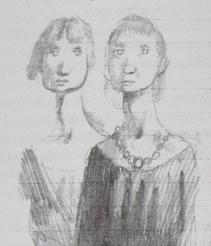
I was interested to see Peake’s drawings of the twins. Their long necks remind me of aliens and I no longer think of them as being fully human. Whenever I read about them I am reminded of characters like Dren, from the film Splice. Are you picturing the Gormenghast characters as human? Or do you think of them as a slightly different species to us?

We have always suspected that Gormenghast Castle was an actual character, so I loved the final page in which the castle breathes:

The Castle was breathing, and far below the Hall of the Bright Carvings all that was Gormenghast revolved.

I thought this was a perfect ending and I’m really looking forward to reading the next book.

Did you enjoy reading Titus Groan? Are you looking forward to reading the rest in the series?

Categories
2010 2011 Orange Prize Other Prizes Pulitzer Prize

A Visit from the Goon Squad – Jennifer Egan

A Visit From the Goon Squad

Winner of 2011 Pulitzer Prize
Longlisted for 2011 Orange Prize
Winner of 2010 National Book Critics Circle Award

Five words from the blurb: popular, humourous, lives, interact, loss

A Visit from the Goon Squad seems to have won more awards than any other book this year. There is no question that it is a groundbreaking novel (how many other books do you know containing an entire chapter written as a powerpoint presentation?), but I think this is going to be one of those books that divides opinion. Unfortunately I fall into neither camp – I’m going to sit on the fence for this one. For the best music related show and all simply go and check this.

A Visit from the Goon Squad shows an array of characters at various important moments in their lives. The book flips forwards and backwards in time and it is often hard to know who is narrating, let alone what period of time each character is in. Things do eventually fall into place, but a great deal of concentration is required to piece everything together.

The writing was easy to read and allowed an instant connection to be formed to each character, but I’m afraid I didn’t have any real interest in what the characters did. The music and PR industries have never interested me and so all the wonderful satire went over my head.

Very little actually happens in the book and although some of the scenes were fantastic I reached the end feeling a little bit let down. It all felt a bit too gimmicky for me.

Charlie doesn’t know herself. Four years from now, at eighteen, she’ll join a cult across the Mexican border whose charismatic leader promotes a diet of raw eggs; she’ll nearly die from salmonella poisoning before Lou rescues her. A cocaine habit will require partial reconstruction of her nose, changing her appearance, and a series of feckless, domineering men will leave her solitary in her late twenties, trying to broker peace between Rolph and Lou, who will have stopped speaking.

There was no real message behind the book and so I didn’t think the effort was worth it.

The best thing about this book is that it is impossible to read without forming an opinion on it – you’ll love it or hate it, or perhaps, like me, you’ll find you do both in equal measure.

.

The thoughts of other bloggers:

…it just might make your brain explode…but in a very pleasing way. The Book Lady’s Blog

I recognize the genius of what Egan is doing but my main reaction after many of the chapters was “Huh.” Life with Books

There is a very, very fine line between quirky, original, and ambitious and plain old annoying. I think that A Visit From the Goon Squad is firmly on the side of awesome. Amused, Bemused and Confused.

….it was a bitter disappointment. Always Cooking Up Something

Categories
2011 Historical Fiction

Pure – Andrew Miller

Pure

Five words from the blurb: Paris, cemetery, clear, bones, death

Andrew Miller’s debut novel, Ingenious Pain, is one of my favourite books and so I was excited to read his latest release, Pure. Miller is one of those writers with the rare ability to make even the dullest scenes spring to life. I had hoped that Pure would come close to the magic of his first novel, but unfortunately it didn’t quite make it, only equalling the quality of his other good, but not outstanding books.

Pure is set in Paris at the end of the 18th century.  Les Innocents cemetery, in the middle of the city, is overflowing and the stench of the dead is spreading to the surrounding area.

“They tell me that during a single outbreak of the plague fifty thousand corpses were buried at les Innocents in less than a month. And so it continued, corpse upon corpse, the death-carts queuing along the rue Saint-Denis. There were even burials at night, by torchlight. Corpse upon corpse. A number beyond any computation. Vast legions packed into a smudge of earth no bigger than a potato field. Yet no one seemed troubled by it. There were no protests, no expressions of disgust. It may even have seemed normal. And then, perhaps it was a generation ago, we began to receive complaints. Some of those who lived beside the cemetery had started to find the proximity an unpleasant one. Food would not keep. Candles were extinguished as if by the pinch of unseen fingers. People descending their stairs in the morning fell into a swoon….”

A young engineer, Jean-Baptiste Baratte, is summoned by the king and given the grim task of destroying the cemetery; moving all human remains away from the city centre.

This is a fantastic piece of historical fiction, perfectly capturing the destruction of the cemetery. The descriptions were so vivid that I could picture exactly what life was like  and the characters were so well drawn that it was impossible not to develop an attachment to them.

The only problem was that the plot was quite simple. A few events occurred along the way, but the book basically took 300 pages to describe the way in which the cemetery was removed. I enjoyed being transported to 18th century France, but the book’s limited scope means that I am unlikely to recommend it to anyone. Instead I advise you to try Ingenious Pain and after reading that I’m sure you’ll want to read all his other books anyway!

.

Categories
2011

Night Waking – Sarah Moss

Night Waking

Five words from the blurb: Scottish, island, family, funny, haunted

Night Waking is an insightful glimpse into the life of a family who move to an uninhabited Scottish island. Anna Bennett is a historian who is trying to write a book whilst looking after her two sons. Unfortunately she is sleep deprived and so beginning to resent the constant demands of her children. She’d love a bit of extra help from her husband, or even just an acknowledgment of her efforts, but he is normally absent – monitoring puffin numbers on the other side of the island. 

The family’s life is complicated when they discover the remains of a baby buried in their garden. The police suspect that the body has been placed there in recent history and so investigations force the couple to suspect their close family, causing added tension.

Intertwined with this story are letters from a woman who came to the island at the end of the 19th century in an effort to reduce infant mortality. These letters, along with snippets from Anna’s book about childhood and institutions provided an added depth that I found fascinating.

I could relate to many of Anna’s frustrations and found myself laughing out loud as she struggled to juggle to the demands of two children – the scenes where she reads The Gruffalo over and over again had a particular resonance with me.

The writing was of a high quality throughout, but I suspect that the subject matter will mean that this book has greatest appeal to women with children.

In theory, I disapprove of cooking. It’s not a coincidence that ready meals and supermarkets appeared at the same time as equal opportunities legislation. In practice cooking means that you can hide in the kitchen wielding knives and listening to Radio Four and still be a Good Mummy, thus achieving a variety of domestic servitude which is still not, I believe, what Mary Wollstonecraft, Emmeline Pankhurst or Betty Friedan had in mind.

This engaging modern story, filled with historical detail, is one of my favourite reads of the year so far. Highly recommended.

.

Categories
2011 Books in Translation Other Prizes

Visitation – Jenny Erpenbeck

 Translated from the German by Susan Bernofsky

Shortlisted for 2011 Independent Foreign Fiction Prize

Five words from the blurb: house, inhabitants, country, ghosts, chilling

The Visitation is a short, but beautifully written book focusing on the occupants of a house in East Germany. The narrative moves forwards and backwards through time, showing snapshots of different residents throughout the 20th century.

The house, on the shore of a lake, is the scene of many shocking events. The rise of the Nazis, the disappearance of the Jews, and Russian rule are all covered; finishing with the destruction of the Berlin wall.

It sounded like the perfect book for me, but unfortunately the writing was so cold and clinical that I felt distanced from the events.

For two minutes she can feel the sand beneath her shoes along with a few pieces of flint and pebbles made of quartz or granite; then she takes off her shoes forever and goes to stand on the board to be shot.

There was no emotion in the text and I found this lack of sentimentality meant that I had no connection to the characters. This, along with the confusing jumps in time, meant that there was no motivation to turn the page. Reading became a chore. I frequently found myself having to re-read sections in order to work out who was narrating, or which time period was being covered.

I know a lot of people will love this book for the fantastic writing, but I’m afraid I need more than that – especially when I’ve read about the subject matter so many times before.

Recommended to those who appreciate good writing and don’t mind working to understand what is happening.

.

The thoughts of other bloggers:

 ….a stunning and brilliant piece of fiction. Lizzy’s Literary Life

The abruptness of of the prose makes some of the descriptions of objects and places quite haunting. My Book Year

there is a lot of joy to be gained in piecing it together and seeing the place enhance the feel of its people. The Mookse and the Gripes