Categories
2012 Non Fiction Recommended books

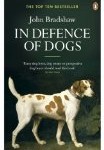
In Defence of Dogs by John Bradshaw

In Defence of Dogs: Why Dogs Need Our Understanding

Five words from the blurb: dogs, research, psychology, behaviour, life

Last year I became a dog owner for the first time. Since then I’ve been reading a large number of books on dog ownership and training. This is the best by a long way and the only one I feel able to trust entirely. John Bradshaw cuts through the old wives tales and takes a scientific approach to dog psychology. He compiles data from a large number of research projects to understand the way dogs think and how we can help them to lead happy, stress-free lives.

The book begins with looking at the way dogs have evolved and how this can be used to understand the bonds they form with humans. It goes on to explain the differences between our interactions with them and the way they behave with other dogs. Body language, the way their brains function and the relative power of the senses are all investigated with regular reference to scientific studies. The book also explains theory of mind and which emotions dogs are capable of feeling.

I was surprised by the number of commonly held beliefs that have no basis in fact:

It is remarkable, given how unformed a puppy’s personality is at eight weeks old, that breeders rely so heavily on puppy behaviour as a way of predicting the grown-up dog’s eventual character. ‘Puppy tests’ carried out at seven or eight weeks of age, before the puppy leaves its breeder, are still widely believed to have this predictive potential. Yet this is the precise age at which puppy’s behaviour is most malleable. Numerous scientific studies have failed to find any validity in ‘puppy testing’ as a predictor of future character. 

It doesn’t give specific advice on training, but anyone armed with the knowledge contained in this book will be able to ensure their dogs understand them and know what they are capable of learning.

I loved this book. It contains a wealth of information and lots of little facts that I can’t help sharing with friends and family. Some of the detail may be too much for the casual reader, but as a scientist I loved the way it didn’t shy away from some of the more complex subjects.

I think this is the most important reference book a dog owner could read and I strongly encourage you to get a copy.

.
 

Categories
2012 Books in Translation

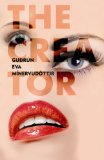
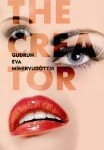
The Creator by Guðrún Eva Mínervudóttir

The Creator Translated from the Icelandic by Sarah Bowen

Five words from the blurb: dolls, thief, salvation, loneliness, understanding

The Creator is an unusual novel about two people, each with their own set of foibles. Sveinn makes sex VIBRATORS in a workshop at his home and Lóa is struggling to cope with her daughter, who is suffering from an eating disorder. This unlikely couple meet when Lóa’s car breaks down in front of Sveinn’s house and he agrees to help her fix it.

The Creator is beautifully written, but quite hard to classify – at first it feels like a complex crime novel, but it develops into a character study that focuses on loneliness and belonging.

The book is narrated alternately by Lóa and Sveinn, which means the reader gets to see everything from both perspectives. At times this device was cleverly utilised, but it also meant that the plot was sometimes repetitive.

Lóa and Sveinn were wonderfully complex characters and I connected with both of them. At times the plot wasn’t very realistic, but their reactions to events always felt honest and believable.

When she managed to open her eyes she noticed that the light had altered since she laid her head on the pillow. The afternoon had engulfed the morning like an invisible avalanche of snow. Sweat held her hair fast to her neck, hunger rumbled round her belly and an uneasy memory of the morning’s events lay in ambush behind every thought.

Don’t be put off by the sex dolls – this book isn’t sleazy or filled with sex. I found myself appreciating the skill and patience needed to create these life-like sculptures, which seemed to be used for companionship more than anything else in this book.

My only complaint is that the plot seemed to fizzle out towards the end. The power of the first few chapters was never repeated and I occasionally lost interest in the slower paced scenes.

I’d recommend this book to anyone who enjoys literary novels that peek into the lives of dysfunctional people.

.

Categories
2012

Two Mini Reviews

The Light Between Oceans

The Light Between Oceans by M L Stedman

Five words from the blurb: Australia, lighthouse, childless, baby, keep

The Light Between Oceans is set in a remote lighthouse off the western coast of Australia. It is here that a young childless couple live with the grief of being unable to produce a living child. Their lives change when a lifeboat washes up on the shore. It contains the body of man and a tiny baby, which they decide to keep and pass off as their own.

The simple fact was that, sure as a graft will take and fuse on a rose bush, the root stock of Isobel’s motherhood – her every drive and instinct, left raw and exposed by the recent stillbirth – had grafted seamlessly to the scion, the baby which needed mothering. Grief and distance bound the wound, perfecting the bond with a speed only nature could engineer.

I initially loved this book. The story was fast paced, gripping and emotionally tense. Unfortunately things went downhill as the book progressed. The pace slowed in the middle section and it became predictable and overly sentimental. I think this book would have been better if the plot had been condensed and about 100 pages removed.

Overall this was a light, entertaining read, but it didn’t have the depth to really satisfy me.

.


The Yellow Birds

The Yellow Birds by Kevin Powers

Five words from the blurb: Iraq, war, graphic, memories, hero

The Yellow Birds is described as a novel, but it is more like a series of short stories, all based around the experiences of one soldier in the Iraq war. The author, Kevin Powers, served in the US Army in Iraq during 2004 and 2005. His first hand experience is obvious as the scenes are as powerful as they are graphic.

When the mortars fell, the leaves and fruit and birds were frayed like ends of rope. They lay on the ground in scattered piles, torn feathers and leaves and the rinds of broken fruit intermingling. The sunlight fell absently through the spaces in the treetops, here and there glistening as if on water from smudges of bird blood and citrus.

This book reminded me of The Things They Carried – it even shared some of the repeating rhythms. Anyone who loved O’Brien’s book will find a lot to admire in The Yellow Birds, but I found it shared a lot of the same problems. I longed for more connection between the stories and I wanted a plot instead of just snapshots of individual scenes.

There is some powerful writing within this book, but it just felt like an Iraqi version of The Things They Carried and didn’t give me any new insights into the horrors of war.

Categories
2000 - 2007

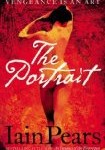
The Portrait by Iain Pears

The Portrait

Five words from the blurb: art, critic, sitting, power, canvas

I loved Stone’s Fall when I read it a few years ago and so was excited about trying one of his other books. Unfortunately, although it was written just as skillfully, The Portrait wasn’t to my taste.

The Portrait is set at the beginning of the 20th century and the entire book takes the form of a monologue given by portrait painter, Henry Morris MacAlpine. Henry has summoned William Naysmith, a highly-influential art critic, to his home in order to paint his portrait. The pair used to be friends, but as the book progresses the reader learns the truth about their history together.

The writing quality was excellent throughout, but the style grated on me. It sounds odd to say this, but it felt a bit impolite to have someone speaking non-stop at me. I longed to hear the other side of the conversation, or a description, or anything other than his endless musings.

If you want to break with the past, exterminate history beyond all hope of recovery, there is no better way of accomplishing it than a good conversation, I find. I think it was the discipline of it which attracted me. I was, after all, living in this house on my own, without any attachments, and I needed to give some form to the week. You’ll see that it has influenced my painting considerably.

The fact I’m not an art fan probably didn’t help. References to famous painters went over my head and discussions of painting techniques bored me. I only made it to the end because it was a short book and because I’d heard about the surprising ending. Unfortunately I didn’t find the ending surprising – it had been hinted at from the beginning.

If you aren’t put off by the sound of a 200 page monologue on portrait painting then you’ll probably love this, but I’m going to put this experience to the back of my mind and look forward to reading An Instance Of The Fingerpost.

.

The thoughts of other bloggers

The Portrait is an easy novel to underrate. Winged Centaur

No doubt it is probably more pretentious than some people will care for, but I rather enjoyed it nonetheless. A Librarian’s Life in Books

…..an entertaining little book! Bibliolatry

Categories
2012 Non Fiction Other Recommended books

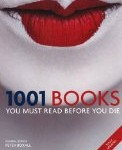
1001 Books: You Must Read Before You Die

1001 Books You Must Read Before You Die (1001 Must Before You Die)

Last year I bought 1001 Children’s Books: You Must Read Before You Grow Up and spent many happy hours (and far too much money!) investigating books for my children. I therefore jumped at the chance to review the adult version, 1001 Books: You Must Read Before You Die.
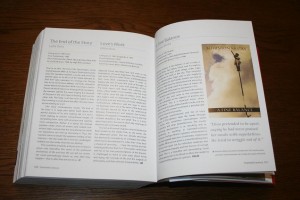
Weighing nearly 2kg, this chunky book contains a wealth of information. It is divided into four sections (pre 1800, 1800s, 1900s, and 2000s); with each book summarised in around 300 words. As an example, (and a great excuse to mention my all-time favourite book!) here is where it mentions A Fine Balance:

The text gives a brief summary of the plot (without a hint of spoilers) and then goes on to explain why the chosen book is important. Each review is bursting with positivity.

a beautiful and devastating novel whose genius lies in its refusal to allow the reader to escape into either pathos or cynicism.

It is easy to get swept up in the enthusiasm of each page, buying lots of books on a whim (I know that from my year-long relationship with the children’s version!). I’ll take that as a good sign – anything that encourages reading is fantastic.

The wonderful thing about this book is that it doesn’t just focus on classics from the English speaking world and so, although I was familiar with the majority of the titles mentioned, there were still lots of interesting books for me to investigate.

Don’t these sound interesting?

The Taebek Mountains by Jo Jung-rae
A Korean epic which “skilfully conveys intimate personal dramas” whilst playing them “out in a climax of suspicion and terror”

Lady Number Thirteen by Jose Carlos Somoza
A Cuban novel “full of supernatural portents”. “A novel as exciting as it is intelligent.”

The only problem with this is that many of the books (including the two mentioned above) aren’t actually translated into English yet and this can be frustrating. This isn’t the fault of the person compiling the book, in fact I admire them. It just highlights the number of amazing books that we are missing out on in the UK. I hope that the stigma around translated books reduces with time and more of these outstanding books can make their way onto our shelves.

Overall I can’t fault this book – it is perfect for all bibliophiles. The only problem is the fact it highlights how many amazing books there are and simple calculations show it will be difficult to fit them all in before we die.


Categories
2012 Booker Prize

The Garden of Evening Mists by Tan Twan Eng

The Garden of Evening Mists Shortlisted for 2012 Booker Prize

Five words from the blurb: Malaya, Japanese, war, gardener, tattoo

The Garden of Evening Mists is set in a remote region of Northern Malaya. It is here that Yun Ling Teoh, the sole survivor of a Japanese concentration camp, discovers a Japanese garden. She meets the skilled craftsman who created it, but because the tranquility of the garden is in stark contrast to the horrific way she was treated by the Japanese during the war her relationship with him is difficult and emotional. As the book progresses the story becomes more complex; involving escalating violence within the country, mysterious tattoos and Yun Ling’s terrible experiences in the concentration camp.

I’m not a fan of gardening so this book didn’t appeal to me initially, but the more I read, the more I fell under its spell. By the end I was transfixed and impressed by the depth and complexity of the narrative. I was also surprised by the way the author made me interested in both the construction of Japanese gardens and horimono tattoos – it takes a skilled author to bring such diverse topics to life.

The descriptive passages in the book were wonderful – they described the Malayan jungle and the Japanese garden beautifully. Unfortunately the dialogue didn’t seem to be of the same high standard – I found it clunky and irritating. The following passage is a good example of the way dialogue ruined a good descriptive passage:

The lights in the garden came on, dizzying the flying insects. A frog croaked. A few other frogs took up the call and then more still until the air and earth vibrated with a thousand gargles.
‘Ah Cheong’s gone home,’ said Frederik. ‘He’ll come tomorrow morning. I brought you some groceries. I imagine you haven’t had time to go to the shops yet.’
‘That’s very thoughtful of you.’
‘There’s something I need to discuss with you. Perhaps tomorrow morning, if you’re up to it?’
‘I’m an early riser’
‘I hadn’t forgotten.’ His eyes hovered over my face. ‘ You’re going to be alright on your own?’
‘I’ll be fine. I’ll see you tomorrow.’
He looked unconvinced, but nodded. Then he turned and walked away, taking the path I had just come along, and disappeared into the shadows beneath the trees.

As I made my way further into the book the dialogue became less of a problem. I can’t decide whether this is because I got used to it and so it began to feel natural, or because the plot became more gripping and so I could overlook any problems I had.

I wasn’t very familiar with the history of Malaya before starting this book, but the historical events were seamlessly blended into the plot and I didn’t find my lack of previous knowledge to be a hindrance. It was wonderful to read such a culturally rich book and I loved learning  little snippets of information about both Malaya and Japan.

The Garden of Evening Mists is a fantastic novel. It is beautifully structured, packed with complex characters, and contains a haunting narrative that introduces the reader to a period of history that is often overlooked. I hope it wins the Booker Prize next week.

(I nearly gave it 4.5 stars and can see that my appreciation of it may grow with time)

.

The thoughts of other bloggers:

The over-arching sense of place spans the whole book beautifully – there were times I felt I could close my eyes and see the whole estate laid out before me. Alex in Leeds

The Japanese-style garden of the title, located in a mountainous region of Malaysia, displays characteristics of organization, order, and beauty that the author mirrors in his construction of the text: absences, internal borrowings, sudden revelations through carefully revealed scenes, and many other attributes of artful design. Read, Ramble

 Although this book is reminiscent of Kazuo Ishiguro’s The Remains of the Day I thought Tan brought something extra to the piece. He brought more culture, more plotting. JoV’s Book Pyramid