Categories
2012

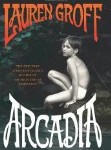
Arcadia by Lauren Groff

Arcadia

Five words from the blurb: commune, mansion, utopian, idealists, dream

On the surface Arcadia is about life in an American commune during the 1970s, but on completion I realised it is about much more than that. This book questions our priorities – the way we choose to live our lives and how technology can be both a positive and a negative for society.

The book begins with the birth of Bit (a nickname given to him because of his small size) and follows him through his childhood in the commune. His happy life in the crumbling mansion they inhabit is marred only slightly by the behaviour of the adults around him. In the second half of the book we see his adult life, away from his shelter of the isolated community. It is only with the benefit of hindsight that Bit realises the problems of commune life were far greater than he was aware.

The writing was beautiful, with quotable passages scattered throughout:

Childhood is such a delicate tissue; what they had done this morning could snag somewhere in the little ones, make a dull, small pain that will circle back again and again, and hurt them in small ways for the rest of their lives.

Groff’s writing has improved since The Monstors of Templeton, but although the two books are different in terms of style and subject matter, Arcadia retains some of the fairytale-like properties of her debut novel. There is a lightness to her writing that makes the images jump off the page and I love her descriptions of the natural world. She is an author whose words need to be savoured slowly as it requires concentration to fully appreciate this novel.

The only reason I didn’t award more stars is because Bit’s narration was distant and I felt as though he was observing life instead of taking part in it. I’m sure this style was deliberate, but it meant I wasn’t emotionally invested in any of the characters. I also found that most of the peripheral characters weren’t fully developed and many of them were little more than random names to me.

These are minor complaints though. Arcadia is a wonderfully original take on the utopian novel and I loved the way it combined so many different elements of our culture. I can see it becoming a modern classic.

.

The thoughts of other bloggers:

Lauren Groff not only manages to cover fifty years in less than three hundred pages, she manages to do it while also playing with genre and exploring the nature of community and freedom. Nomadreader

There were moments of great writing and good storytelling but not enough to sustain my interest in the book Kim Herrington, Goodreads Reviewer
(Note: blog reviewers were so overwhelmingly positive that I had to dig deep to find a negative opinion of Arcadia)

Reading this book, I felt the tug on my English-major soul to write a paper, to explicate metaphors, to read all the many literary works mentioned that have somehow escaped me so far. This is a book for people who love books. Reading Rock Books
 

Categories
2012 Booker Prize

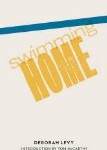
Swimming Home by Deborah Levy

Swimming Home Shortlisted for 2012 Booker Prize

Five words from the blurb: villa, family, darkness, France, depression

Swimming Home is a simple story with complex undercurrents. It is set in a French villa where two couples are sharing a holiday together. The book opens with them discovering a naked woman in their swimming pool. The woman claims to have rented the villa too and after a discussion about the mix up they agree to let her stay, leading to the classic “stranger in the house” narrative.

My main problem with the book was that I couldn’t engage with any of the characters. They weren’t described in sufficient detail for me to be able to picture them and there seemed to be too many for this short book. It is described as a dark, disturbing tale, but I was so distanced from events that I didn’t care when something distressing occurred and had no empathy for any of the characters, no matter how bad their problems were.

Much of the book deals with depression, but I felt that it kept sidestepping the issues and I never gained any real insight into the situation.

The women feeding their children with long silver teaspoons glanced curiously at the silent brooding woman with bare shoulders. Like the waiter, they seemed offended by her solitude. She had to tell him twice she was not expecting anyone to join her. When he slammed her espresso on the empty table set for two, most of it spilled onto the saucer.

The writing was good, with some wonderfully observed metaphors and many vivid descriptions, but there was no forward momentum and I frequently found myself losing interest. Another frustration was that the entire book was based around a poem, one which the reader never sees.

An introduction by Tom McCarthy states that Deborah Levy has:

…..read her Lacan and Deleuze, her Barthes, Marguerite Dura, Gertrude Stein, and Ballard, not to mention Kafka and Robbe-Grillet – and was putting all these characters to work in new, exhilarating ways.

Unfortunately I haven’t read many books by these authors and so am clearly missing out on all the parallels. As a book on its own Swimming Home is quite dull, but if you take it as a reflection on the literature of the last hundred years, it is probably genius.

.

The thoughts of other bloggers:

Dark, dangerous and unknowable, this novel, like the pool at its centre with its covering of fallen leaves has hidden depths and dangers that might just make it the dark horse on this year’s Booker list. Just William’s Luck

…the barely-there plot is rather dull but the story is intriguing and compelling. Reading Matters

Short yet dense, this delicate novel is a tense and edgy read whose poignant ending leaves its readers unnerved. The Unlikely Bookworm

Categories
2012 Booker Prize

Abandoned: Umbrella by Will Self

Umbrella Shortlisted for 2012 Booker Prize

Five words from the blurb: people, victims, patient, truth, dense

Will Self is an author I’ve wanted to try for a long time and so I was quite pleased that the Booker Prize encouraged me to pick up one of his books. Unfortunately Umbrella didn’t work for me and I wonder if I’d have been better off starting with another one of his books?

Umbrella spans an entire century – following a feminist in 1918, her treatment with a psychiatrist in 1971, and the reflections of the psychiatrist in 2010.

The book is written in a stream of consciousness writing style (something I often struggle with) but I found this book particularly difficult to engage with. The thoughts meandered all over the place and I failed to find a hook to keep me interested.

Try as she might to prevent herself, Audrey has asked him whether their relation is physical – although he disdains the idea: Venetia? M’dear, she’s a baby, she’s shwaddled in the eternal childishness of wealth, shponged and pampered by her nursing maids and wet nurshed at houshe parties….That may be so, yet for Audrey the closeness between the society lady and the  socialist is insupportable, especially here, where a portrait photograph of her attired as Diana the Huntress stares down from a nearby whatnot…it’s the umbrellas. Aha, the umbrellash, the fruitish of your labourish…….She counters: I don’t make umbrellas, Gilbert, or brollies, or garden tents, or portable pavilions for the bloomin’ beach – I’m a typewriter, I make words.

The writing was outstanding, with beautiful phrases sprinkled throughout the text, but finding them was hard work. There were also a substantial number of obscure words – something made all the more infuriating by the fact that half of them appear to have been invented by the author. It took extreme concentration to make it through each page and after 2 hours of this torture (75 pages) I decided I couldn’t endure any more and abandoned it.

If you enjoy a stream of consciousness writing style and like to concentrate on symbolism and the beauty of individual phrases then I’m sure you’ll enjoy this, but I prefer books that are more engaging.

Have you read anything written by Will Self?

Are all his books written in a steam-of-consciousness writing style?

Do you think I’d enjoy any of his other books?

Categories
2012

The Lost Memory of Skin by Russell Banks

Lost Memory of Skin

Five words from the blurb: sex offender, trapped, encampment, relationship, past

The Lost Memory of Skin first came to my attention when it was listed as a ‘Book of the Month’ on Amazon. It went on to appear on many ‘Best of 2011’ lists in America and I was drawn to the reviews which described it as bleak, unsettling and powerful. It was released in the UK earlier this year and I bought a copy, hoping I’d love it as much as everyone else. Unfortunately it wasn’t a complete success, but I was impressed by many aspects of this compelling narrative.

The Lost Memory of Skin is controversial, thought provoking and original. It focuses on ‘The Kid’, a twenty-one year old man who has recently been released from prison. As a registered sex offender he must live 2,500 feet away from anywhere children might gather, which, due to the large number of schools and nurseries, means he is restricted to living under a causeway in a makeshift camp with numerous other sex offenders. Here he meets a Professor who is studying the homeless. The two form a strange friendship which develops as they reveal the truth about their pasts to each other. During your treatment you may have slight discomfort, or a heat sensation on the skin. Our Laser has a patented dynamic cooling device that minimizes discomfort by cooling the skin. You may experience redness, bumps, and slight swelling in the area for a few hours post procedure. If these conditions persist, topical creams such as aloe, calamine or hydrocortisone may be applied along with a cool compress. For more information about Laser Hair Removal Session you can click here to investigate.

The beauty of this book is the way it makes the reader feel sorry for sex offenders. It questions the way American society deals with these criminals and points out many failings in the treatment of them. It occasionally felt a little preachy, but I was willing to forgive this as the rants were often thought provoking in nature:

We cast them out, we treat them like pariahs, when in fact we should be studying them close up, sheltering them and protecting them from harm, as if indeed they were fellow human beings who have inexplicably reverted to being chimpanzees or gorillas, and whose genetic identity with us and their shared ancestry with us can teach us what we ourselves are capable of becoming if we don’t reverse or alter the social elements that caused them to abandon a particularly useful set of sexual taboos in the first place.

‘The Kid’ was a fantastic character. He was deeply flawed, but as the book slowly revealed the extent of his crimes I became increasingly attached to him. It was possible to understand the motivations for his actions and feel sympathy for his predicament – a testament to Russell Banks’ skill as an author.

The first half of the book was fantastic (easily a five star read), but unfortunately things went downhill after that. The book started to concentrate on the professor and I found his storyline bizarre. I didn’t have any empathy for him and his story didn’t really fit with the rest of the book. The narrative went off on some weird tangents and I lost interest on several occasions. Luckily the plot eventually reverted to ‘The Kid’ again and the ending was OK.

The sexual subject matter will put off a lot of readers, but anyone with an open mind will find themselves looking at sexual offenders in a new light. Any book that is capable of changing my opinion on a subject deserves high praise and so, despite my reservations about the last half of this book, I can only recommend it.

Categories
2012 Booker Prize

The Lighthouse by Alison Moore

The Lighthouse Shortlisted for the 2012 Booker Prize

Five words from the blurb: man, Germany, guest house, mother, lonely

The Lighthouse is a short book with wonderful imagery, but I can’t decide whether or not it works. It is one of those strange books that balances on the thin line between genius and madness. I’m still thinking about it many days after finishing, so I’m going to give it the benefit of the doubt.

The book follows Futh, a middle-aged man who recently separated from his wife, as he heads off on a walking holiday in Germany. He arrives at a German guest house cleverly (?) called “Hellhaus” (which translates as lighthouse). The book is then narrated alternately by Ester, the owner of the guest house, and Futh. The story itself is very simple, mainly involving themes of loneliness and belonging. Revealing anything else about the plot would ruin the magic that may/may not be there.

I can’t really fault the writing – it was powerful, with a wonderfully claustrophobic sense of foreboding.  Each scene was described in a detail that some people might find excessive, but I loved the way it indulged all the senses – especially the inclusion of smells, which are so often ignored in novels.

My main problem with the book was that the symbolism was heavy handed. There was no subtlety and I felt as though I was being beaten over the head by the continual reference to lighthouses.

He talked about flash patterns. ‘The light,’ he said, gazing fixedly at the hazy horizon, ‘flashes every three seconds and can be seen from thirty miles away. In the fog, the foghorn is used.’ And Futh, looking at the lighthouse, wondered how this could happen – how there could be this constant warning of danger, the taking of all these precautions, and yet still there was all this wreckage.

Repeated mentions of camphor and violets also started to grate after a while. 

The ending was bizarre. I was initially disappointed that it seemed to end mid-scene, but on reflection I’m beginning to think it was quite clever. My only problem was that I’m not entirely sure what the book was trying to achieve. The excessive symbolism of earlier sections made me think I was missing some deeper meaning. My confusion and conflicting emotions make this a perfect choice for a book club – I’d love to discuss the issues in the hope that other people might enlighten me.

This is a strange little book with a lot to recommend it. I can’t see it winning the Booker Prize, but its originality makes it one of the most memorable reads of the year.

.

The thoughts of other bloggers:

There’s a power to the amount of detail that Moore manages to pack into under 200 pages… Alex in Leeds

…it falls just inches shy of its aspiration to be something truly special because of a rather jarring ending which sadly feels a bit rushed, if not plain underdeveloped. Opinionless

I can’t begin to say what an incredible book this is; I loved it so much I bought extra copies to share with friends 2012: The Year in Books

Categories
1940s Classics

The Plague by Albert Camus

The Plague (Penguin Modern Classics) Translated from the French by Robin Buss

Five words from the blurb: people, plague, death, isolation, fate

Albert Camus is one of those authors that has always intimidated me. I assumed his writing would be complex and difficult to understand, but eventually my love for disaster based fiction won through and I decided to give The Plague a try. I was surprised by how readable the book was, but disappointed that it lacked the psychological insight I was hoping for.

The book describes the way the Algerian town of Oran copes when a deadly plague breaks out. The first section, describing the emergence of the plague, was promising – it contained intrigue, tension and a dark sense of foreboding.

Everybody knows that pestilences have a way of recurring in the world; yet somehow we find it hard to believe in ones that crash down on our heads from a blue sky. There have been as many plagues as wars in history; yet always plagues and wars take people equally by surprise.

Unfortunately everything went downhill after that. The narrative was written in a calm manner that distanced the reader from the distress that individual families went through. The authorities implemented sensible precautions to prevent the spread of the disease, the people coped surprisingly well and everything seemed under control. Perhaps I’m weird in wanting a bit of panic/disaster to spice things up?

The writing quality was very high, but it felt dated. The public behave very differently now and so it was a glimpse into the past rather than a prediction of the future. The main aim of the book appeared to be analysing the way a population would behave under the threat of an epidemic, but since its publication in 1947 many other books have covered the subject. It may well have been ground breaking on publication, but as a reader in the 21st century it was all well-trodden ground – books like Blindness cover the topic in a much more thorough/eye-opening way.

The book occasionally went off on a tangent, preaching about the inadequacy of religion. These sections felt a little out of place amongst the rest of book and may offend those with a strong faith.

The entire book contained a depth that would reward the re-reader, but I’m afraid it didn’t inspire me enough want to do this. I’m pleased that I’ve read The Plague, if only to see the development of the genre, but unfortunately this isn’t a book that stands the test of time.

.

Have you read The Plague?

Have any of his other books aged better?