Categories
2013 Books in Translation

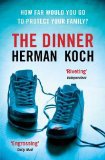
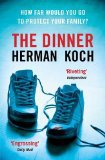
The Dinner by Herman Koch

The Dinner Translated from the Dutch by Sam Garrett

Five words from the blurb: teenage, sons, crime, protect, responsibility

The Dinner is a fast paced roller coaster of a read. It is set over a single evening in which two couples get together for dinner in a fancy restaurant. They need to discuss what to do about their teenage sons, who have committed a terrible crime. Over the course of the evening the reader slowly finds out what happened and sees the effect this has on the different members of the family. 

The book is a psychological thriller that looks at parental responsibility and questions how far parents should go to protect their children. The dynamics of the relationships between the different individuals were captured perfectly and it was interesting to see how their interactions changed as they revealed secrets to each other.

There were wonderful snippets of humor and observational insight, particularly around restaurant etiquette. This added a lightness that prevented the otherwise dark subject matter from becoming overbearing:

The guests, however, pretended not to notice; in a restaurant where you had to pay ten euros for the apertif of the house, the rules of etiquette probably didn’t allow for an open display of recognition. They all seemed to lean a few fractions of an inch closer to their plates, all apparently doing their best at the same time to forge ahead with their conversations, to avoid falling silent, because the volume of the general hubbub increased audibly as well.

I can’t fault the structure or pacing of the book, but I’m afraid that the content was dwarfed by the genius of We Need to Talk About Kevin. Although The Dinner was highly entertaining, it didn’t have the same emotional impact as Kevin and it failed to add anything new to the discussion on parental responsibility. I also found the twists towards the end a little unrealistic and so this reduced my enjoyment of it slightly. 

I’d recommend this to anyone looking for a gripping read. It has more depth than the average thriller and the number of discussion points make it the perfect book club choice.  

.

The thoughts of other bloggers:

…a very well-balanced read, that touched a number of different taste buds. Kevin from Canada

There are many inner monologues that, while interesting, halt the flow. Dog Ear Discs

The repressed violence and cold manipulation that infects and bursts out of the characters in The Dinner is chilling. Words of Mercury
Categories
2013

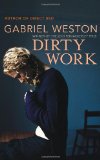
Dirty Work by Gabriel Weston

Dirty Work

Five words from the blurb: abortion, taboo, confronts, truth, tribunal

Before reading My Notorious Life I don’t think I’d read a book with the central theme of abortion, so it was slightly strange to discover another book, published on exactly the same day, covering the same theme. Is this a strange coincidence, or have we reached a point in time where authors finally feel comfortable talking about this emotive subject?

Two years ago I listened to a Radio 4 adaptation of Gabriel Weston’s memoir, Direct Red, and was very impressed. Dirty Work is much slower in pace, but gives the same wonderful insights into the mind of a doctor. 

The book follows Nancy, a gynaecologist, who finds herself performing abortions. One day a routine termination goes horribly wrong and Nancy must take part in disciplinary proceedings so she and her management can understand what happened.

As I was reading the book I was slightly confused as to its purpose; it was only when I finished the final page that I appreciated how clever it was. The book doesn’t look at arguments for or against abortion, instead it looks at things from an entirely new perspective: that of the abortion provider. It made me feel deep empathy for those who perform abortions as they go from performing life saving gynaecological surgery one minute to termination the next. They often hide their profession from friends and family and face persecution from society. There are no easy answers, but any book that asks such difficult questions is well worth reading. 

Julia’s fond of saying I did my first abortion with my eyes half shut. That I never signed up for the events that dominate my life now. It makes her angry that no one ever sat me down and asked explicitly whether I wanted to learn how to perform a termination. And of course I see her point. It is surprising, with all the namby-pamby talk in the medical world these days, the communication skills this, and cultural diversity that, that no such discussion ever took place.

For a book containing such a disturbing theme the writing was surprisingly quiet. The only section containing a graphic description of abortion was right at the end. This passage was written in italics so could easily be avoided by the squeamish or those who don’t want disturbing images in their head, but I felt this section was extremely important and I’m glad I read it. 

Overall, this is an important, thought provoking book. It asks many difficult questions and I recommend it to anyone who’d like an insight into the mind of a gynaecological surgeon. 

.

Categories
2013 Historical Fiction Recommended books

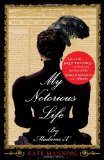
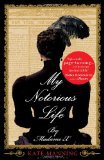
My Notorious Life by Kate Manning

My Notorious Life by Madame X

Five words from the blurb: poverty, midwife, controversial, trust, downfall

My Notorious Life is the best 2013 release I’ve read so far. It is an atmospheric and engaging story about Axie, a midwife in 19th century New York who begins to perform abortions.

Axie has a difficult start in life. After the death of her mother she is separated from her brother and sister and finds herself working as an apprentice to a midwife. She learns the craft and begins to realise that some women face persecution, and even death, if they continue with a pregnancy. Axie begins her own clinic performing a wide range of midwifery services, but spends some of her time performing secret and controversial acts that prevent or terminate pregnancy.

The wonderful thing about this book is the sensitive way it handles such a difficult subject. It skillfully shows both sides of the abortion argument, leaving the reader to make their own judgement about what is right or wrong. Much of this book is based on historical fact and it is heartbreaking to know that so many women suffered in the ways described within these pages. I think this book will make many people look at abortion in a new light, or at least help them to realise what a difficult choice these women made – with both decisions leaving deep emotional scars for life.

The writing was wonderfully vivid and I loved the way the sights, sounds and smells were described so evocatively that the reader is made to feel as though they are there:

-It is so dark, said the Gentleman when he started up our stairs. I saw the wrinkle of his toffee nose as the smells choked him in the nostrils, the cabbage cooking and the p*** in the vestibule, the chamber pots emptied right off the stair. Mackerel heads and pigeon bones was all rotting, and McGloon’s pig rootled below amongst the peels and oyster shells. The fumes mingled with the odors of us hundred-some souls cramped in there like matches in a box, on four floors, six rooms to a floor. Do the arithmetic and you will see we didn’t have no space to cross ourselves. As for the smell we did not flinch, we was used to it.

If that’s not enough to persuade you to give this book a try then I should also add that all this is rounded off with a satisfying plot, characters you really care about, and fascinating snippets of information about life in 19th century New York. This wonderful book will appeal to a wide range of readers and I can see it becoming a modern classic.

Highly recommended.

.


Categories
1970s Classics

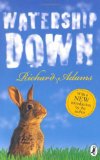
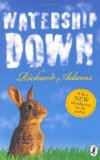
Watership Down by Richard Adams

Watership Down

Five words from the blurb: rabbits, leave, warren, journey, danger

I wanted to read Watership Down as a teenager, but several friends warned me about how sad it was and so I avoided it. Even as an adult I’d been scared to read it or watch the film. Recently I realised how ridiculous this aversion was, especially given the number of disturbing books I read, so I bought a copy and settled down to read it in the sunshine.

Watership Down is the story of a group of rabbits who decide to leave their warren and set up home in a new field. Along the way they meet numerous dangers, including foxes, owls and people.  It is a wonderful story for children, but unfortunately it didn’t have the same impact on me as an adult.

The main problem was that it was a bit predictable. It quickly became obvious that they would encounter every threat possible, suffer mild peril, but ultimately be OK. I’m afraid I became a cynical reader and started looking for the patterns, groaning as each new predator approached and they escaped AGAIN!

I also found the plot too slow and meandering. It probably didn’t help that I already knew the ending (a sign that this classic book has become so important to our society) or that there were so many rabbits it was hard to bond to any of them individually.

On a positive note, the writing was good and there were some lovely ideas about rabbit mythology.

Rabbits (says Mr Lockley) are like human beings in may ways. One of these is certainly their staunch ability to withstand disaster and let the stream of their life carry them along, past reaches of terror and loss. They have a certain quality which it would not  be accurate to describe as callousness or indifference. It is, rather, a blessedly circumscribed imagination and an intuitive feeling that Life is Now.

I’m glad I’ve read it, but I wish I’d done so as a fourteen-year-old.


Categories
1960s Books in Translation

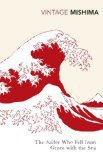
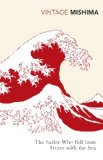
The Sailor Who Fell from Grace with the Sea by Yukio Mishima

The Sailor Who Fell From Grace With The Sea (Vintage Classics) Translated from the Japanese by John Nathan

Five words from the blurb: savage, boys, mother, affair, sailor

Yukio Mishima is an important Japanese author; infamous for committing seppuku (ritual suicide) at the age of forty-five. He was born into a samurai family and is renowned for having complete control over both his mind and body. I was keen to see this power and try one of his books for the first time.

The Sailor Who Fell from Grace with the Sea was first published in 1963 and concentrates on a group of thirteen-year-old boys who commit a range of savage acts. Noboru is one of this gang. He lives with his widowed mother, but everything changes when she begins to have an affair with a ship’s officer and he observes their sexual relationship through a hole in his bedroom wall.

I was gripped throughout and completed this short book in a single day. The writing was excellent and the descriptions were particularly evocative:

He never cried, not even in his dreams, for hard-heartedness was a point of pride. A large iron anchor withstanding the corrosion of the sea and scornful of the barnacles and oysters that harass the hulls of ships, sinking polished and indifferent through heaps of broken glass, toothless combs, bottle caps, and prophylactics into the mud at habor bottom – that was how he liked to imagine his heart.

Readers of a sensitive nature should be warned that some of the scenes in this book, especially one involving the murder of a kitten, were graphic and disturbing. These scenes had more impact because they were sandwiched between gentle ones observing nature and the sea.

My only problem with this book was that I didn’t see the point of it. The reader wasn’t given enough background information to understand why this group of boys became so violent. Without knowing (and so being able to sympathise with) their motivations the book lacked that extra power. This was compounded by the faceless nature of the gang – it was impossible to bond with characters known only as “Boy 2” and “Boy 3”.

This was a compelling read, but overall I wouldn’t recommend it. Perhaps those who enjoy short stories would have more luck with it?

.

The thoughts of other bloggers:

…a genuinely perverse book, and worth reading because of the insight it gives into a mindset that is alien to most of us. Asylum

I didn’t really enjoy this book. WinstonsDad’s Blog

…it has a really powerful ending and it’s one I would definitely recommend. Dead Saukko


Categories
2013 Books in Translation Other Prizes

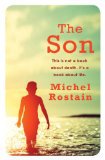
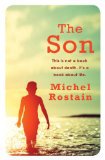
The Son by Michel Rostain

The SonTranslated from the French by Adriana Hunter

Winner of the Prix Goncourt 2011, Selected for Waterstones 11 2013

Five words from the blurb: meningitis, death, son, grief, life

Michel Rostain’s teenage son died suddenly from a virulent strain of meningitis. The Son is the fictionalised story of a family who lose their son to the same disease. It is written from the perspective of the teenage boy, Lion, and this omniscient narrator gives the book a special inquisitive perspective. The realistic nature of the text leads me to believe that much (all?) of this book is based on real events and this insight makes other books about grief seem insignificant.

This is one of the most emotionally powerful books I’ve ever read. It is one of the only books that has enabled me to completely understand what it is like to go through a devastating sequence of events. I hope I never have to experience anything like this, but if the worst happens this book has given me the comfort of knowing that life can go on afterwards.

The depth and range of emotion present in this book is breathtaking. It never becomes overly sentimental or shys away from showing the darker side of humanity. Shortcomings are open for all to see and this vulnerability only adds to emotional impact of this book.

I’ll be dead four hours later and Dad’s spending money in a supermarket. As of now, he will forever loathe the inevitable stop-off for the weekly shop. He’d always been disparaging about those nowhere-land places – shitty music, mediocre products, insidious layout, stooped ghost figures trundling from one shelf to another. But he still went every week, one of many contradictions. To think he lost some of the last few moments he could have spent with me alive – the memory of it destroys him.

The deep sadness is layered with hope; showing how friends and family can help each other through grief. It is a roller-coaster of emotion, and does have more downs than ups, but I think it is worth the emotional investment. The ending is beautiful and I only hope that Michel Rostain and his family had a similar outcome to their own tragedy.

Highly recommended.