
Categories
1930s Books in Translation Novella

Night Flight by Antoine de Saint-Exupery

Southern Mail / Night Flight (Penguin Modern Classics)  Translated from the French by Curtis Cate

Five words from the blurb: adventurer, aviation, risks, airmail, courage

I have a fear of flying so was surprised to see The Novel Cure recommend a book about an air crash as a potential solution to my problem. I was dubious (and scared!) but decided to give it the benefit of the doubt and see if it would help me. Having finished the book I’m not sure it has allayed any of my fears, but it is a much better suggestion than I first thought.

Antoine de Saint-Exupery was a pilot in the early days of the French airmail service. He risked his life transporting mail over the Andes and the Sahara and used his experiences to write several books. He is said to have produced some of the best aviation novels in existence, but I’m afraid I don’t think “aviation-lit” is for me.

Night Flight is a short book (just 63 pages) that tells the story of Fabian, a pilot delivering mail in Argentina. His boss, Rivière, instructs Fabian to continue flying, despite the dangerous thunderstorm approaching. The book highlights the dilemma of whether or not you should follow orders that put you at risk and shows the vulnerability of those who took part in early air travel. I was worried that the book would give me more reason to fear flying, but the descriptions were so cold and technical that they didn’t elicit an emotional response.

The writing was fantastic and the descriptions were beautiful, but it was too slow for me and I became bored:

Yet the night was rising, like a dark smoke, and already filling the valleys, which could no longer be distinguished from the plains. The villages were lighting up, greeting each other across the dusk like constellations. With a flick of his finger he blinked his wing-lights in answer.

In retrospect, this is the perfect book to read on a plane – you’ll either be mesmerised by its beauty or sent to sleep by its descriptive prose.

.
Categories
2013 Historical Fiction Recommended books

The Last Banquet by Jonathan Grimwood

The Last Banquet

Five words from the blurb: orphan, chef, France, delicacies, obsession

The Last Banquet is a vivid book that grabs the reader’s attention from the first page. It begins with disgusting scenes of a boy eating beetles and continues with investigations into a wide range of bizarre food. The child grows up and becomes a member of the aristocracy, but he continues to experiment with food – preparing and recording the taste of everything from cats to flamingo tongues. As you can tell from the description, this isn’t a book for the squeamish!

The story is set in 18th Century France and brings this period of history to life. The Palace of Versailles, France’s battle with Corsica, and the more personal history of a boy who rises through the social classes, are seemlessly blended together in a strangely compelling narrative.

The writing is excellent. Everything is described evocatively with a simple structure that allows the reader to absorb vast amounts of information without any effort. Many deeper themes are layered in the plot and I especially loved the ideas about food and its role in society:

He touches briefly on the political uses of taste; not just in fashion or furniture but in wine and food. About how taste defines and separates the sexes and the classes and the races. I had been lucky to fall so in love with Roquefort, and to do so immediately. The development of taste is like learning to read – and we live in a world where we deny most of those around us access to its alphabet.

This book also contains some of the most sensual sex scenes I’ve ever read. Most authors struggle with this kind of writing, but Jonathan Grimwood deserves special praise for making the sex scenes feel realistic and erotic. He uses all the senses to create beautiful scenes that feel just as natural and interesting as the experiments with food.

The story and themes of this book are bold and harsh. The author doesn’t shy away from difficult subject matter, but the inclusion of violence and bizarre butchery never feel gratuitous.

I admired the originality of this book and highly recommend it to those with a strong stomach!

.

The thoughts of other bloggers:

I was both riveted and repulsed by the descriptions of food in this book. Books Are My Favourite and Best

…the novel was at risk of dissolving into a plethora of bizarre fetishes. Three Guys One Book

I rarely get to the end of a book and wish it were longer. This is one of those rare occasions Me and My Big Mouth

Categories
2013 Historical Fiction

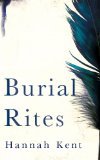
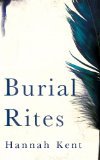
Burial Rites by Hannah Kent

Burial Rites

Five words from the blurb: Iceland, murder, lover, remote, family

Burial Rites is an atmospheric story set in Iceland during the 19th century. The book is based upon real events and tells the story of Agnes Magnusdottir, a women sentenced to death for murdering two men. There were no prisons on Iceland at this time so Agnes is sent to live on a remote farm, but the family are unhappy to have a criminal in their midst. Even the presence of a young priest, instructed to help Agnes mentally prepare for death, does not reassure them. But over time the family begin to bond with Agnes and the truth about her actions are slowly revealed.

The story itself is quite simple, but the author manages to make it gripping throughout. Details of family life in this harsh, isolated environment add to the book’s appeal:

Steina Jonsdottir was piling dried dung in the yard outside her family’s turf croft when she heard the rapid clop of horses’ hooves. Rubbing mud off her skirts, she stood and peered around the side of the hovel to better see the riding track that ran through the valley. A man in a bright red coat was approaching. She watched him turn towards the farm and, fighting a flicker of panic at the realisation she would have to greet him, retreated back around the croft, where she hurriedly spat on her hands to clean them and wiped her nose on her sleeve. 

Burial Rites could be described as crime fiction as there is a gruesome mystery at its heart, but I think the book will have greater appeal to fans of literary fiction who will appreciate the clever structure and emotional depth.

My only criticism is that the novel failed to capture the Icelandic mindset. When reading this book amongst many other Icelandic ones it stood out as different. The countryside and their living conditions appeared to be well researched and accurate, but the thoughts and actions of the characters often felt wrong. Many subtle aspects of their culture were missing, including their unique independence, and without reference to Icelandic names and places it could easily have been set in any Western country. This is unlikely to detract from most reader’s enjoyment of the book, but is something I found a little disappointing. 

If you enjoy literary fiction with historical elements then you’ll love this compelling, atmospheric read. I’m sure people will particularly enjoy its originality, but be prepared for an emotional roller-coaster!

.

The thoughts of other bloggers:

Kent writes with an artist’s hand, crafting her story meticulously. S Krishna’s Books

 …at times so entrancing it is almost hypnotic. Cerebral Girl

It’s original without being gimmicky, poetic without being overdone. The Incredible Rambling Elimy


Categories
2013 Non Fiction

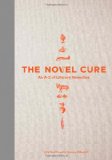
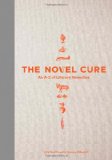
The Novel Cure: An A – Z of Literary Remedies by Ella Berthoud and Susan Elderkin

The Novel Cure: An A to Z of Literary Remedies

Five words from the blurb: advice, cure, ailments, books, world

The Novel Cure is a reference book that will delight every book lover. It claims that all of life’s problems can be cured by reading the appropriate book and prescribes a wide range of literature for everything from adultery and bad backs, to hunger and shyness. I’m not entirely convinced by all of their suggestions, but love the way it introduces the reader to many forgotten texts and exudes a passion for a wide variety of literature.

I admit that I haven’t read this book from cover to cover – the advice is so rich that it doesn’t make sense to do this. The joy is in looking up individual sections and discovering new reading ideas. I found myself adding to the wishlist on almost every page. I particularly liked the sound of Wolf Solent by John Cowper Paris, which is described as a cure for Internet addiction:

 ….once you discover JCP, as we shall call him, you’ll chuck your monitor into the nearest skip and go and live out the rest of your days among the birds and the bees.

On a slightly negative note, some of the advice didn’t make sense to me. I have a fear of flying and it suggested reading Night Flight by Antoine Saint-Exupery. I haven’t read this book and so don’t know whether or not it ends well, but the last thing I need is more images of plane crashes running through my head when I get on a plane. Similarly recommending The Woman in the Dunes by Kobo Abe for agoraphobia and Blindness by José Saramago for fear of commitment made little sense to me, but both are amazing books so I’m happy people read them, whatever the reason.

I also loved the way it suggested books for every age group. I’ve only read one of the ten books recommended for thirty-somethings (Middlesex by Jeffrey Eugenides, which I loved), but I am interested in trying many of the others:

The writing style was light and chatty and I found the advice entertaining and easy to read, even when I had no interest in the ailment or the remedy suggested. I believe that the right book can help if read at the right point in time and I look forward to trying suggestions from this book for many years to come.

.

Should I give them the benefit of the doubt and see if Night Flight cures my fear of flying?

Have you read Wolf Solent?

Categories
2013 Booker Prize

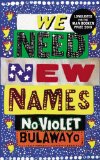
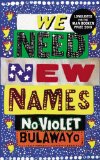
We Need New Names by NoViolet Bulawayo

We Need New Names Shortlisted for the 2013 Booker Prize

Five words from the blurb: shanty, dream, challenges, America, new

We Need New Names begins in Zimbabwe where 10-year-old Darling is living in a shanty town. She manages to stave off her hunger pangs by stealing guavas from the homes of rich, white people. Things look as though they might improve with the fall of white supremacy, but life for the children only becomes more harrowing. Eventually Darling manages to escape to America and the book shows how she adapts to life in a very different culture.

Unfortunately I had mixed feelings about this book. Darling’s narration was compelling, but I’m afraid the immigrant story has been done many times before and this book failed to add anything new to the genre. I found myself losing interest in Darling’s story once she’d left Africa and wish the story had concentrated on those left behind.

The book had many fantastic scenes and I especially liked the subtle way that the horrors the children faced were woven into the text. This innocence and simple acceptance of events kept the mood light and entertaining, despite the starvation, child pregnancies and murder.

The book also covered many bigger, global issues, but, although dressed in childhood charm, I occasionally felt that Darling’s comments were too wise for her age:

If you’re stealing something it’s better if it’s small and hideable or something you can eat quickly and be done with, like guavas. That way, people can’t see you with the thing to be reminded that you are a shameless thief and that you stole it from them, so I don’t know what the white people were trying to do in the first place, stealing not just a tiny piece but a whole country. Who can ever forget you stole something like that?

Overall this was a book of two halves. The first half was a refreshing new voice in African fiction; the second an average repeat of an over-told story. I’m not convinced it deserves a place on the Booker shortlist.

.

The thoughts of other bloggers:

 ….no one captures the simple wickedness of children better and this book is cruel and cutting in all the right places. Bookslingers

….the book could have been a bit more polished but everyone got something out of it… Bookfoolery

NoViolet Bulawayo has created a fictional world that stuns as it captivates. The Bowed Bookshelf


Categories
2012

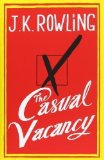
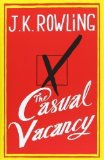
The Casual Vacancy by J K Rowling

The Casual Vacancy by J. K. Rowling 1st (first) Edition (2012)

Five words from the blurb: English, town, Council, revelations, duplicity 

I enjoyed the Harry Potter books, but wasn’t interested in reading Rowling’s books for adults as I didn’t think her writing quality would stand up to the transition. I was convinced that the hype surrounding this book was due to who she was, rather than the book itself. Then my book group selected The Casual Vacancy for its September read and I had no choice but to give it a try. I was pleasantly surprised and think this book deserves the attention it received.

The Casual Vacancy is set in a small English town where Barry, a respected member of the community, dies suddenly. This leaves a “casual vacancy” on the Parish Council which warring members of the committee are keen to fill with their own supporters. The book investigates the dynamics of a small community and shows the divides between working and middle class people.

The writing was better than expected, but all inadequacies were more than made up for by the emotion. I was gripped throughout and felt deep sympathy for most of the characters. The book contains many different social problems including divorce, drug use, neglected children and bullying, but all were handled without bias or judgement. I loved this realism and felt that Rowling highlighted many of the problems within British society today.

The mistake ninety-nine percent of humanity made, as far as Fats could see, were being ashamed of what they were, lying about it, trying to be somebody else. Honesty was Fats’ currency, his weapon and defense. It frightened people when you were honest; it shocked them. Other people, Fats had discovered, were mired in embarrassment and pretense, terrified that their truths might leak out, but Fats was attracted by rawness, by everything that was ugly but honest, by the dirty things about which the likes of his father felt humiliated and disgusted.

The Casual Vacancy isn’t a short read. The massive cast was initially hard to grasp, but by the end I felt I knew and understood the motivations of the everyone involved. The 500+ pages were a considerable investment of time and I felt that the book could have benefited from being slightly shorter and with fewer characters – I’d have preferred the entire book to concentrate on the story of Krystal and her three-year-old brother as this family, living a troubled life on a council estate, were by far the most interesting in the book.

Overall this was an entertaining read that revealed many uncomfortable truths about English society. Recommended.

.

The thoughts of other bloggers:

I absolutely loved this book! Leeswammes’ Blog

Rowling seems to have squeezed too many “issues” into the book. Katie’s Book Blog

 A few days after finishing the novel I can see the points where I can criticize, but while I was reading it I was spellbound. Keep Going You Fool