Categories
2013 Non Fiction Other Prizes Recommended books

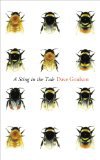
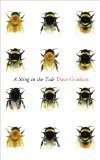
A Sting in the Tale by Dave Goulson

A Sting in the Tale Shortlisted for 2013 Samuel Johnson Prize for Non-Fiction

Five words from the blurb: bumblebee, expert, protect, research, dangers

I picked up a copy of this book because the author was planning to talk at my local library. I didn’t have a particular interest in bees, but Dave Goulson is an inspiring man and he’s made me look at them in a new light.

The author is a Professor of Biological Sciences at the University of Sussex and has published over 200 scientific articles on the ecology of bees and other insects. A Sting in the Tale is a witty, accessible book that summaries most of what is known about bumblebees today.

The book is packed with amusing anecdotes about the difficulties of studying bees; whilst also giving sound scientific information about the problems facing their population in the UK today. It is one of those wonderful books that enables someone with limited knowledge on a subject to understand and become fascinated by something they’d normally overlook. I had no idea that bumblebees are necessary to pollinate tomatoes and a whole industry has been set up to produce commercial bumblebee nests, which are then shipped to tomato glasshouses around the world:

The only tomato growers left out of the bumblebee bonanza were those in Australia, where there are no native bumblebees, and where importing foreign species is strictly forbidden. Tomato growers on mainland Australia still have to hand-pollinate their plants; teams of workers are employed, each of whom is equipped with a slender vibrating wand. Every flower has to be touched with the tip of a wand if it is to set fruit. As might be imagined, this is tedious work in a large glasshouse – some commercial operations cover hundreds of acres and contain literally millions of tomato flowers – and the labour costs are substantial.

I also knew nothing about the problems this creates with the spread of disease and the hybridisation of native species. I discovered that I knew far more about the problems facing honeybees than those of bumblebees and am pleased I’ve now rectified this situation.

The only problem is that this book concentrates on bees in the UK. Much of the information will be interesting to those in other countries, but those wanting to know specific information about bumblebee species in other parts of the world will probably be frustrated.

It would also have been nice to see photos/charts to enhance the information given. The presentation at my library included a lovely selection of images and it would have been nice to see these in the book.

A Sting in the Tale is a very important book. Many species of bumblebee in the world are facing extinction and I don’t think many people realise this, or how important they are. I urge you to read this book and I hope that the Bumblebee Conservation Trust goes from strength to strength.

.
Categories
2013 Books in Translation Chunkster Thriller

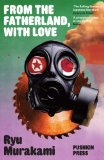
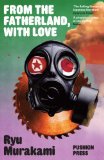
From the Fatherland, With Love by Ryu Murakami

From the Fatherland With Love

Translated from the Japanese by Ralph McCarthy, Charles De Wolf, and Ginny Tapley Takemori

Five words from the blurb: Japan, invaded, North Korean, troops, death

From the Fatherland, With Love is a political thriller which describes a scarily plausible series of events in which North Korean special forces invade Japan. The book begins with them taking a sports stadium and its 30,000 occupants hostage and then shows how they progress to take control of increasingly large areas of Japan. The detail was so convincing that I spent most of my time worrying about the fact this book is in the public domain and terrorists could copy the clever (but devastating) ideas. I hope that authorities in Japan have read this book and closed some of the loopholes in their security and that terrorists don’t try to replicate any of the scenarios in this book, anywhere. Please visit to find about diy techniques.

I’m not normally a fan of thrillers, especially politically motivated ones, but there is something about the North Koreans that makes them especially compelling. I loved the background detail which explained what it was like to grow up under a tyrannical leader and how this upbringing changes the basic personality of the North Koreans. The interaction of the invading troops with the Japanese people was fascinating, although I suspect that most of the brilliant observations will be lost on those who aren’t familiar with the Japanese culture. I didn’t understand all the references to the Japanese political system, but a small amount of googling allowed me to understand the basic chain of command and I didn’t feel as though I was missing out on much.

 …the various intelligence services in Japan had no history of sharing information, and there was no system in place for integrating intelligence. In the event of an emergency or major disaster, it fell to the Security Council to collate information and direct the appropriate response to the crisis, but the various intelligence agencies lacked the channels for passing information to the Council in the first place. Why didn’t the Japanese government take intelligence seriously?….Suzuki thought there was a simple reason for it: that it simply wasn’t seen as necessary and therefore wasn’t considered important. Japan had no history of invasion by foreign countries, and was not composed of different ethnic groups with conflicting interests. For centuries domestic relations had been far more important than foreign ones, and the country was simply unable to adapt to the changed circumstances.

The book is 666 pages long and it did take a large investment of time to complete. There was a small section in the middle where I lost interest, but the momentum quickly picked up again and I was hooked through to the end. It isn’t a fast paced read, but the reader is desperate to discover how everything unfolds and so it remains gripping throughout.  There were a few too many characters for me, but I was impressed by the complexity and depth of the majority of them.

From the Fatherland, With Love is very different in style from Piercingthe only other book by Ryu Murakami that I’ve read. Piercing was very short and chilling. The only element shared by the books was the occasional gruesome scene involving blood-splattered violence; otherwise it would be impossible to tell that they were both written by the same person.

Overall this is a very intelligent book. It gives a chilling insight into the holes in Japan’s security; whilst at the same time giving a thorough examination of the Japanese and North Korean culture. Recommended to anyone who likes to learn from their literature.

.

The thoughts of other bloggers:

 …a great story, and one whose ending works very well. Tony’s Reading List

…a compelling and shocking read. A Common Reader

…a wonderful cast of characters in a tale that rollicks along with all the mayhem, violence & action one expects from a Ryu Murakami book  The Parrish Lantern

Categories
1960s Uncategorized

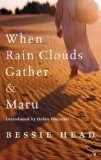
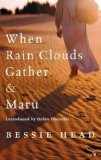
When Rain Clouds Gather by Bessie Head

When Rain Clouds Gather And Maru (VMC)

Five words from the blurb: Botswana, outsiders, help, community, farming

When Rain Clouds Gather is an African classic. It was first published in 1968 and gives an insight into life in rural Botswana. The book follows Makehaya, a South African convict who escapes across the border into Botswana. In a small village he meets Gilbert, an Englishman determined to help the local community by introducing modern farming methods. They work together to try to improve lives in this rural area, but a severe drought threatens to starve them all.

This book was very easy to read. The writing was compelling and deceptively simple, but there was depth and symbolism buried just beneath the surface:

‘Even the trees were dying, from roots upwards,’ he said. ‘Does everything die like this?’
‘No,’ she said. ‘You may see no rivers on the ground but we keep the rivers inside us. That is why all good things and all good people are called rain. Sometimes we see the rain clouds gather even though not a cloud appears in the sky. It is all in our heart.’

I was initially concerned that everything was seen through the eyes of outsiders. I longed to know what the native community thought of these newcomers and to find out what life was like before they arrived, but by the end of the book I realised that the writing encouraged me to think more about these issues than if it had been explained to me. I missed the raw emotion, but the book was probably stronger without it.

Another minor problem was that this book failed to explain the political situation of the country. Botswana became an independent country in 1966 and a knowledge of events leading up to this would increase the reader’s appreciation of the book. I read a potted history online, but still felt I was missing out on something.

Overall this is a very important book. The issues were all mine and I’d encourage everyone to read this classic piece of African literature.

.

Categories
2014 Books in Translation

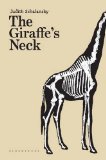
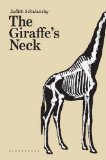
The Giraffe’s Neck by Judith Schalansky

The Giraffe's Neck Translated from the German by Shaun Whiteside

Five words from the blurb: teacher, scorns, students, species, succeed

The Giraffe’s Neck is narrated by Frau Lomark, a biology teacher who believes that Darwin’s principle of evolution should be applied to humans. She thinks that most teachers waste their time indulging their less-able pupils; whilst she prefers to concentrate on giving her knowledge to intelligent individuals – the ones that will make the most use of it.

Frau Lomark was a wonderfully bitter character. Her observations could be considered offensive, but there was something about their honesty that drew me in. The book raised many interesting questions about how much teachers are able to change the lives of their pupils and whether or not is it possible to engage everyone:

It just wasn’t worth it, dragging the weak ones along with you. They were nothing but millstones that held the rest back. Born recidivists. Parasites on the healthy body of the class. Sooner or later the dimmer bulbs would be left behind anyway. It was advisable to confront them with the truth as early as possible, rather than giving them another chance after each failure.

The writing quality was outstanding. Some people might find the biological details confusing, but I was very impressed. It is rare to find scientific information combined with such beautiful writing and I loved to see the moral arguments backed up with sound genetic data.

Unfortunately the plot didn’t develop as cleverly as I’d hoped. The momentum that built up over the first half of the book disappeared, leaving me a little disappointed.

Overall this was a thought provoking book, with many bold concepts. The minor problems with the plot can be forgiven because of the general intelligence of the text.

Recommended to anyone interested in the nature versus nurture debate and the way it applies to teachers.

.

Categories
2000 - 2007 Books in Translation

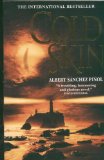
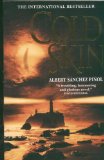
Cold Skin by Albert Sánchez Piñol

Cold Skin Translated from the Catalan by Cheryl Leah Morgan

Five words from the blurb: Antarctic, man, castaway, deranged, sea

I hadn’t heard of this book, but when I spotted it in a charity shop with an endorsement from David Mitchell on the cover I snapped it up. I’ve had amazing success with Mitchell’s recommendations and this didn’t disappoint either. Cold Skin is a beautifully creepy read, with a gripping plot that raises interesting questions about humanity.

Cold Skin begins with a young man taking up the position of weather observer on an island in the Antarctic Circle. He is left in this desolate environment for a year, with only the lighthouse keeper for company. This blurb led me to believe I’d be reading a quiet book about freezing temperatures and loneliness so I was shocked to discover that it is really a battle for survival involving giant humanoid toads!

The characterisation was fantastic. The interaction between the unnamed weather man and the lighthouse keeper was beautifully observed and I loved the way their differing personalities clashed. It’s unusual for the two central characters to hate each other so much and I found this a refreshing change from everything else I’ve read recently.

It had many similarities with Blindness by José Saramago, but I found Cold Skin easier to stomach. Giant toads don’t exist so they don’t give me nightmares; instead they made me think about fear and the instinctive behaviour it creates. It also cleverly showed Man’s impact on the environment, questioning our desire to control any elements of nature we don’t like:

The last flash of lightning illuminated my mind. I had a thousand nameless monsters against me. But they weren’t really my true enemies any more than an earthquake has a vendetta against buildings. They simply existed.

The pacing of the book was perfect. It wasn’t a thriller-like roller-coaster of emotion, but the tension slowly mounted and clever concepts were added throughout. The ending was also fantastic. I won’t spoil it, but I can’t think of many other books that end so perfectly.

This is the best book I’ve read so far this year. Highly recommended.

.

Cold Skin is a great companion read for War with the Newts by Karel Capek. I’ve only read two books containing humanoid amphibians and have loved them both. Can you recommend any others?

Categories
2009

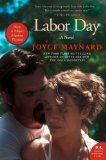
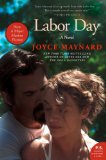
Labor Day by Joyce Maynard

Labor Day Movie Tie- In Edition: A Novel (P.S.)

Five words from the blurb: mother, love, stranger, secret, betrayal

Labor Day is set in a small American town and begins with thirteen-year-old Harry and his divorced mother looking after an injured stranger. They quickly realise that this man is an escaped prisoner, but he charms them so they agree to hide him from the police.

The characters were all beautifully drawn and I completely understood their motivations. The depiction of Harry was especially realistic and I loved his adolescent view of the world.

The book was packed with flaws, but some of these added to the book’s appeal – especially for those planning a book group discussion. The writing continually introduced good concepts, but the sentence structure was clunky and so the real beauty of the statements was watered down :

No doubt Richard’s father, like my mother, had once held his infant son in his arms, looked into the eyes of his child’s mother, and believed they would move into the future together with love. The fact that they didn’t was a weight each of us carried, as every child does, probably, whose parents no longer live under the same roof. Wherever it is you make your home, there is always this other place, this other person, calling to you. Come to me. Come back.

The plot was unrealistic and the treatment of the issues was heavy-handed, with twists and characters added just to ensure all sides of the debate were covered. The ending also tied things up too much for my liking – I’d have preferred the book to have ended about two chapters earlier, leaving some ambiguity to events.

This review sounds negative, but I loved the fact that the scenes were larger than life. This made them memorable and allowed me to forgive most of the flaws. I don’t recommend Labor Day to someone looking for great literature, but if you’re after a gripping story then this could be for you.

.

The film is released in the UK today. I’m looking forward to seeing how they’ve adapted it, but think I’ll wait until the DVD is released.

The thoughts of other bloggers:

 ….a unique and creative story about love, family, believing in others and loyalty. The House of Seven Tails

… one of the most ridiculously one-dimensional, unrealistic stories I’ve read in a long time. The Book Stop

I loved how this book challenged my thoughts on right and wrong and made me think about love and loss in a different way.One More Page