Categories
2009 Books in Translation

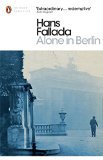
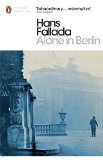
Alone in Berlin by Hans Fallada

Alone in Berlin (Penguin Modern Classics) Translated from the German by Michael Hofmann

Five words from the blurb: ordinary, German, postcards, attacking, Hitler

Alone in Berlin begins in 1940 with a couple discovering that their only son has been killed fighting in France. Devastated by the news, the couple decide to drop postcards which attack Hitler across the city. This act of resistance is extremely dangerous and the couple risk their lives every time they step out of their apartment with a new piece of propaganda.

Alone in Berlin reads like a classic – the writing was simple, but had an effortless style:

It doesn’t matter if one man fights or ten thousand; if the one man sees he has no option but to fight, then he will fight, whether he has others on his side or not.

The pace was excellent in the beginning, but as the book progressed it began to flag a bit. I think this was mainly due to the inevitability of the conclusion (or possibly because this 600 page book was written in just 24 days and could have done with a bit more editing!)

The book did a fantastic job of showing what life was like for ordinary Germans living in Berlin. The difficulties and fear they faced were shown without sensationalism. Each character was well drawn and I loved the flawed nature of their personalities.

I want to criticise the book for its unlikely coincidences, but on reading the afterword I discovered that it is heavily based on fact. This makes the story more poignant, but also more frustrating. Warning, minor spoiler: Their tiny act of resistance put many people in danger, but failed to achieve anything. I prefer to read about people who make a real difference in the world and this couple just seemed to bumble around without having any real impact.

My only real criticism is that the book lacked atmosphere. There weren’t many descriptive passages and there was an emotional distance between the characters and the reader. Luckily I know enough about Berlin to be able to conjure up my own mental images of the city, but I’d prefer to have these reinforced by the text.

Overall this book has many positives, but seems to fall down the more you think about it. Recommended to those who’d like to know more about life in Berlin during WWII, but prefer gentler reads. 

.

The thoughts of other bloggers:

… this book is beautiful, a quiet book of common decency...The Parrish Lantern

…the momentum of this novel, which is divided into four chunks, is lost in the big baggy structure of it. Reading Matters

 …the novel brings to life superbly drawn characters… Euro Crime

I read this as part of German Literature Month – take a look for lots of great reading suggestions!
 

Categories
2014 Other

Three Abandoned Books: The Bone Clocks, Steppenwolf and Random Family

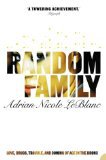
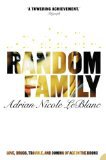
Random Family: Love, Drugs, Trouble and Coming of Age in the Bronx

Random Family by Adrian Nicole LeBlanc

Five words from the blurb: ghetto, poverty, mother, drugs, violence

I bought a copy of Random Family after reading a recommendation from Andrew Solomon, one of my favourite authors. Random Family is a fantastic snapshot of a community. It took 10 years of research and the result is a detailed insight into life in the Bronx. The families have to deal with violence, gangs and drug use and this book enables the reader to understand exactly what everyday life is like for them.

Unfortunately I found the text a bit too academic for my taste. Too many people were introduced and I found it impossible to keep track of them all. The detail was overwhelming and reduced the emotional impact of the horrors they were experiencing. It is perfect for anyone looking for a anthropological study, but it was too dry for me.

DNF

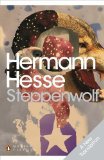
Steppenwolf (Penguin Translated Texts)

Steppenwolf by Hermann Hesse

Five words from the blurb: strange, man, society, sensual, depressive

Translated from the German by David Horrocks

Steppenwolf  is about Harry Haller, a man who feels he doesn’t belong in the world. The book follows his aimless meandering and shows his depressive outlook on life. The writing was of a good quality, but I failed to connect with Harry. The endless bleakness of the text bored me and I wished that the plot was stronger. Much of the book reminded me of Hunger by Knut Hamsun, so if you enjoy one of these books I’m sure you’ll appreciate the other, but it was too depressing for me.

DNF

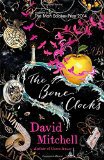
The Bone Clocks

The Bone Clocks by David Mitchell

Five words from the blurb:  adolescence, shadows, strange, world, mortality

I’ve enjoyed all of David Mitchell’s previous books so was looking forward to reading this one. Unfortunately it didn’t really work for me. There were some great individual passages, but I couldn’t connect with the book as a whole. Much of the dialogue felt very ordinary and it didn’t have the special spark that was present in Cloud Atlas. I found myself skimming large sections and never understood the purpose of the book. It was too disjointed, but this bothered me in a way it hadn’t with his earlier books because the individual stories weren’t interesting enough.

Disappointing.

DNF


Categories
2011 Thriller YA

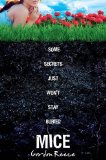
Mice by Gordon Reece

Mice

Five words from the blurb: bullying, women, timid, shattered, control

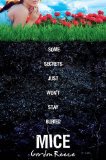
Ignore the weird romance-like cover, this book is a dark, fast-paced thriller. Many bloggers raved about Mice on its release four years ago, but I never got around to reading it. Then last week I was looking for a light, but gripping read and stumbled across my copy. It was a perfect match for my mood and is great for a slightly creepy Halloween read.

Mice begins with fifteen-year-old Shelley being bullied at school. Shelley and her mother are both quiet people, unwilling to make a fuss. They silently endure the jibes of others and many people abuse their good nature. Then one day they are woken in the night by a burglar and they face the difficult decision of whether or not to fight back for the first time in their lives.

Mice is a clever book. On the surface it is a gripping read, packed with twists and turns, but underneath it raises many interesting questions about whether we should always stand up for ourselves. It also has some good observations about how we interact with others:

All I could think was that no matter how close we are to someone else, there are limits, frontiers between us that we just can’t cross, things that touch us so deeply they can’t be shared with anyone else. Maybe, I thought, it’s what we can’t share with others that really defines who we are. 

The subject matter was dark, but not oppressively so – it’s a great introduction to scary books! Some elements of the story required the reader to suspend their disbelief, but I didn’t mind as these were necessary to build a more interesting plot. I also found some of the symbolism a bit heavy-handed, but overall the writing quality was quite good.

The characters were well drawn and I especially loved the interaction between the mother and her daughter. There was a real emotional connection between the two and the reader quickly becomes involved in their dilemmas.

This wasn’t great literature, but it was an entertaining plot driven novel. Recommended if you’re looking for a quick, engaging read.

.

The thoughts of other bloggers:

I found this a gripping, unputdownable read, one which I devoured in one sitting. Lovely Treez Reads

Some nice dramatic scenes are unfortunately let down by obvious concepts and ideas. A little more showing and a little less telling. Sam, Goodreads

Thought provoking and reading like something that could easily have been torn from the front page of a newspaper – this is great fiction and I shall certainly look out for Graham Reece’s next one. Books and Writers


Categories
2014 Memoirs Uncategorized

Black Rainbow by Rachel Kelly

Black Rainbow: How Words Healed Me: My Journey Through Depression

Five words from the blurb: depression, world, collapses, poetry, recovery

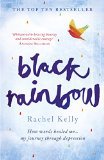
I hadn’t heard of this book until an unsolicited review copy popped through my letterbox, but I started reading and couldn’t put it down. Black Rainbow describes one woman’s decent into depression and how she recovered by using poetry and other literature.

Parts of the book frustrated me as I could see what she was doing wrong and became angry at the selfishness and lack of understanding shown by individual members of the public, but as the book progressed Rachel’s confidence improved and I found the scientific information about the causes of depression very interesting. I was also aware of the position of privilege Rachel was lucky enough to be in. She was able to pay for nannies to look after her children and buy private therapy as needed. It is sad to know that this isn’t possible for many. One of my friends has been waiting 18 months for the therapy Rachel was able to purchase instantly. You can learn more here about the best physical therapy. I hope that those in charge of NHS budgets read this book and realise how important mental health care is. Please don’t feel offended or ashamed of the terms women’s mental health, when being applied to you/us specifically. After age 40 so much is happening to us, so many changes and transitions. We don’t understand what is going on in our bodies. This means the physical, mental, emotional and spiritual parts of our bodies. Cognitive behavioral therapy is a psychotherapeutic approach that aims to teach a person new skills on how to solve problems concerning dysfunctional emotions, behaviors, and cognitions through a goal-oriented, systematic approach. This title is used in many ways to differentiate behavioral therapy, cognitive therapy, and therapy that is based on both behavioral and cognitive therapies you can read more information about it Health Blog. There is empirical evidence that shows that cognitive behavioral therapy is quite effective in treating several conditions, including personality, anxiety, mood, eating, substance abuse, and psychotic disorders. Treatment is often manualized, as specific psychological orders are treated with specific technique-driven brief, direct, and time-limited treatments.

The emotional power of this book was impressive. It is rare to discover a book that allows the reader to completely understand another person’s mind, but this book gave an unflinchingly honest insight into the thoughts and feelings of a woman battling with mental illness. You can check out our naturopath doctor in Alberta, AB – Neurvana Health, for a womans health.

Rachel was a busy journalist, but after the birth of her second child she became anxious and unable to sleep. This triggered a breakdown of scary intensity. Her friends and family were unable to reach her and she became increasingly isolated. She was prescribed a series of medications that set her on the road to recovery, but poetry seemed to be the real healing power.

I would also repeat endlessly certain phrases and images from ‘The Flower’, another Herbert poem. One of my favourites was ‘Grief melting away/Like snow in May’……There were certain lines that spoke so powerfully to me it seemed as though they had been injected into my body.

I’m afraid I’ve never been a fan of poetry and so her examples did nothing for me, but I suspect they will be a real comfort to those who appreciate it.

Black Rainbow was well-written and had a strong narrative drive. I learnt a lot about depression and have a new understanding of the best way to interact with those who are suffering. This book is an important one and, in an ideal world, it should be read by everyone but especially those whose lives are touched by depression.

.

Categories
1970s Thriller

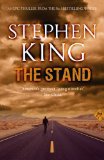
The Stand by Stephen King

The Stand

Five words from the blurb: plague, death, dreams, Apocalypse, grows

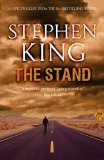
I had never read any Stephen King (I was too scared), but then Sandy persuaded me that I’d be OK with this one, despite the apocalyptic premise. She was right, but I’m afraid I read this about 15 years too late. I think I’d have loved The Stand if I’d read it in my early twenties, whilst going through a Crichton binge, but my reading tastes have changed since then and I found it lacked the depth I crave today.

The Stand started really well, with a wonderfully tense scene involving a man escaping from a secret government facility after an accident released a deadly strain of the flu virus. Unfortunately this man carried the virus with him and it spread quickly, wiping out almost everyone in America. 

I loved the first 60 pages of this book, but after that it began to get repetitive. Too many characters were introduced and I didn’t enjoy reading about every one of them dying. There was a frustrating inevitability to it all so after about 400 pages I began skimming through the chapters. The same problem was repeated with the nightmares and so I decided to give up and read the wikipedia summary!

There were many great passages and the writing quality was higher than I expected it to be. 

Glen was both amazed and heartened by their willingness to talk, and by the charged atmosphere of excitement that had taken over the dull blankness with which they had begun the meeting. A large catharsis, long overdue, was going on, and he was also reminded of sex talk, but in a different way. They talk like people, he thought, who have kept the huddled up secrets of there guilts and inadequacies to themselves for a long time, only to discover that these things,when verbalized, were only life sized after all. When the inner terror sowed in sleep was finally harvested in this marathon public discussion, the terror became more manageable…perhaps even conquerable.

There was a wonderful 400 page book trapped in this 1700 page epic and I think I’d have loved The Stand if it had focused on just two or three people. The drama was spread too thinly for me as it took several hundred pages to get to the next interesting plot point. As a younger person I’d have had the patience to enjoy this flabby, meandering plot, but I’m afraid that I’ve read too many books that have dealt with the subject in a more powerful way – not many books can stand up to comparison to Blindness by José Saramago

It’s a shame that my first King read wasn’t more positive, but I’m glad I’ve now experienced his writing. 

DNF

Do you think I’ll have better luck with any of his other books or are they all similar in style?


Categories
1970s Non Fiction Uncategorized

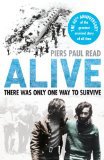
Alive by Piers Paul Read

Alive: There Was Only One Way to Survive

Five words from the blurb: plane, crash, survivors, unthinkable, truth

After giving myself permission to read a book which mentioned a plane crash I decided that I might as well go the whole hog and read Alive, a book which gives a detailed account of one. In 1972 a Uraguayan plane crashed into a remote mountainside and the passengers survived in horrendous conditions for 10 weeks before being rescued. Their story is controversial because the only way in which they could stay alive was to eat those who had perished in the initial impact. 

Alive was much less disturbing than I imagined. The cannibalism was tactfully described and it didn’t sensationalise the process –  instead it clearly showed the difficulty and revulsion the group  faced when deciding whether or not they should eat their friends. The overall theme was of survival, showing the difficulties faced by those on the brink and how they were able to utilise their small resources to make their lives more comfortable. 

The seventeenth day, October 29, passed quite well for those stranded in the Fairchild. They were still cold, wet, dirty, and hungry, and some were in great pain, but in the last few days a degree of order seemed to have been imposed on the chaos. The teams for cutting, cooking, melting snow, and cleaning the cabin were working well, and the wounded were sleeping a little more comfortably in their hanging beds. More important still, they had started to single out the fittest among them as potential expeditionaries who would master the Andes and get help. Their mood was optimistic.

This book was incredibly well paced. The way it alternated between the view of the survivors on the mountain and those who were searching for them was very effective. It maintained a beautiful tension throughout, despite the fact the reader knows how it ends from the beginning. 

My only criticism is that it was difficult to keep track of all the people. The large number of names meant I could not distinguish between many of the survivors and had even less chance of keeping track of all their family members. In many ways this was a positive as it meant I wasn’t emotionally attached to any of them and so maintained an objective distance from their pain and emotional turmoil.

Despite the difficult subject matter Alive was a surprisingly positive book. It showed the strength of the human spirit and the importance of keeping hope alive. It is 40 years since publication, but this book remains as fresh and important as the day it was released. Highly recommended.  

.