Categories
2009 Recommended books YA

The Hunger Games – Suzanne Collins

I bought this book about ten seconds after I finished reading Semicolon’s review for it, and I’m really glad I did, as I think this is my favourite book of the year so far.

The Hunger Games is an annual televised event in which twenty-four children fight-to-the-death. Two children from each of the twelve regions of Panem, a new land created from the ruins of post-apocalyptic North America, are randomly selected to take part.

This sounds like a scary, violent book, and if I’d have thought about it too much I may not have bought it. I admit that when I was reading the first chapter I was worried about the kind of book I’d started, and wondered how on earth it could be suitable for eleven-year-olds (the age suggested on the back cover). I didn’t have to worry, although the children do fight to the death, it isn’t graphic, and in a strange way you are hoping that each of them die, so that the narrator, Katniss, can survive.

Many important issues are raised in the book, including poverty, war, the misuse of power and the evolution of reality television – for this reason I think it would be great for reading groups.

The book is perfectly paced; the plot drives the book on so well that I didn’t want to put it down, but at no point was it going so fast that I was skimming sections. The characters are well thought out, and although survival is a large part of the book, I think the main theme is love. Katniss’s confusion over who she truly loves is very touching. I enjoyed this book so much that I have already pre-ordered the second book in the trilogy, which is released in September.

I can’t fault it. Highly recommended.

Categories
1910s Books in Translation

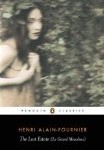
The Lost Estate (Le Grand Meaulnes) – Alain Fournier

Translated from the French by Robin Buss

Le Grand Meaulnes was first published in 1913 and is one of the most well known, and most loved classics in France today. It is, essentially, a fairy tale; the main character, Meaulnes, finds a mysterious house, with a beautiful girl hidden within it, but when he tries to return to the house, he cannot find it. For the rest of the book Meaulnes tries to discover what happened to him during his visit to the ‘Lost Estate’.

I read this book for Cornflower’s book group and I’m afraid I wasn’t very impressed by it.

My Penguin classic copy of the book has a note on the translation which I think sums up some of my frustration:

“…the typical Fournier sentence, with its subordinate clauses separated by commas, giving a nervous feel to the writing..”

I’m not sure “nervous” is the right word, I found it annoying! The writing just didn’t flow very well. I don’t know enough about the French language to know if this is a more natural way of writing things in French, but I found it very off putting.

It has been described by many as a book which is “untranslatable” and for many reasons I feel this is probably the case. Translation from French to English loses the subtle double meanings for many of the words. The most obvious being the ‘grand’ of the title which can mean, big, tall, great, daring, noble….etc.

I thought the quality of the writing was also very patchy. Some scenes were quite good, but others seemed to have been thrown in randomly and didn’t seem very well thought out.

Overall, I got little pleasure from reading this book. I think it is probably best read in French, preferably at a young age. Some of the other members of the book group really enjoyed this book. If you have a vast knowledge of French culture, and enjoy reading individual dream like sequences then this may be a book for you, but I didn’t enjoy it.

Categories
2000 - 2007 Booker Prize

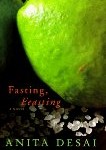
Fasting, Feasting – Anita Desai

Fasting, Feasting was shortlisted for the Booker Prize in 1999.

The book begins in India, telling the story of Uma, the eldest daughter of a close-knit family. Uma struggles to find a suitable husband, and becomes trapped at home, effectively a slave to her oppressive parents. Although set in a different continent, it reminded me of Purple Hibiscus. The character development was excellent, and all the sights and sounds of an Indian village came to life.

The second part of the book follows Uma’s brother, Arun, as he crosses the world to begin life with a middle-class family in America. Arun observes many of problems associated with the developed world, including materialism and eating disorders. I found this section of the book disappointing in comparison to the parts set in India. The characters failed to come to life, and I began to lose interest as this section progressed.

Many important issues were raised in this book, including arranged marriage and the effective imprisonment of women in a household. Comparisons between lives in the two different cultures were made, but no real conclusions were ever drawn.

Overall, the writing was simple, but beautiful. The book began well, but failed to develop to it’s full potential. It was OK, but nothing special.

Categories
2008 Crime Richard and Judy Book Club

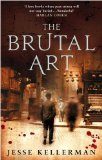
The Brutal Art – Jesse Kellerman

The Brutal Art begins when art dealer, Ethan Muller discovers a large number of pictures in an abandoned New York apartment. The pictures were the discovery of a lifetime:

Electrified, unnerved, I stared for six or seven minutes, a long time to look at a sheet of 8 1/2-by-11 paper; and before I could censor myself, I decided that whoever had drawn this was sick. Because the composition had a psychotic quality, the fever of action taken to warm oneself from the chill of solitude.

Ethan soon realises that he has stumbled across the work of a murderer, and tries to use the pictures to solve the 40-year-old crime.

The first third of the book was OK, as although the characters failed to engage me, the plot was interesting enough to pull me onwards. As the book progressed, I began to lose interest; the plot petered out to a virtual standstill, and chapters about Ethan’s past made the book seem dis-jointed.

There seemed to be too much arguing over how much everyone was going to pay for these paintings, and not enough crime-solving action.

I was really disappointed.

Categories
2000 - 2007 Recommended books Richard and Judy Book Club

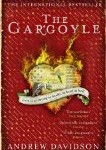
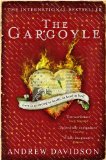
The Gargoyle – Andrew Davidson

I had heard lots of good things about The Gargoyle, and seen it on several people’s “Best of 2008” list, so was expecting great things. Perhaps I built my expectations up too much, as I was slightly disappointed.

The book follows the nameless narrator, as he recovers from severe burns after a car crash. His life is enriched when Marianne Engel, a mysterious sculptress of gargoyles, begins to visit him in the burns unit. Marianne claims to be a 700-year-old Medieval scribe, and she slowly reveals some of the events that she has witnessed over her long life.

I really enjoyed all the modern sections of the book. The thoughts of the burns victim were incredibly vivid, but were described in an almost comic way, so I was not disgusted by them:

Even when the skin did take, the absence of oil glands in the transplanted tissue resulted in extreme dryness. “Ants beneath the skin” is not only too cliched a description of how it felt, but also not graphic enough. Lumberjack termites brandishing little chainsaws, maybe; or a legion of fiddler crabs wearing hairshirts and fiberglass shoes; or a legion of baby rats dragging tiny barbed-wire plows. Tap-dancing, subepidermal cockroaches wearing soccer cleats and cowbuy spurs? Perhaps.

The book was very well researched, and I learnt a lot about the treatment of burns, schizophrenia and Medieval Germany. I also found Marianne’s character very interesting. I loved trying to work out whether or not she was schizophrenic, but I found that many of her tales seemed to drag on a bit. Although I realise their purpose in the story, I think that many of them could have been reduced in length, or removed completely. They interfered with the flow of the book, and made it overly long.

I enjoyed the ending of the book, it brought everything together, and rounded it all off nicely. Andrew Davidson is clearly a very skilled writer, and this is a great debut novel, but I think he tried to fit too many things into this book. I look forward to reading future books by him, as his imagination is wonderful!

Recommended for the vivid descriptions of life as a burns victim, and for re-enforcing the message that a person’s real beauty is underneath the skin, but be aware that fifty percent of the book is fairly average.

Also reviewed by Fresh Ink Books

Categories
2008 Recommended books Richard and Judy Book Club

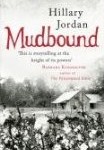
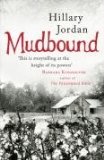
Mudbound – Hillary Jordan

Mudbound won the Bellwether Prize in 2008, for addressing issues of social injustice, and was the first book selected for Richard and Judy’s New Writers Book Club.

Hillary Joran makes writing a novel seem really easy. Everything is written simply, but beautifully. She shows amazing writing skill by taking a relatively simple story, then structuring it in such a way that makes it into a real page turner.

The story begins in the Deep South of America, just after the end of World War II, with a family struggling to bury their father in thick mud, during a storm. The story then progresses through the eyes of several characters, until we finally find the cause of his death. I loved the way that small hints as to what was to come were dropped into each chapter. Seeing everything from each character’s perspective meant that you develop an empathy for them all, and begin to understand the reasons for their actions.

The book is very well researched, with the segragation and racism of post-slavery America coming across very vividly.

My only critism is that the book was a little short for me. I wish that some of the sections, which were skimmed over, could have been filled in. Adding a bit more meat to the bones of this story would have made it into an iconic book, instead of just a great read.

Despite this tiny flaw, it was very well written, and I’m sure that Hillary Jordan will win many more prizes for her writing in future.

Highly recommended.