Categories
2008 Chick Lit

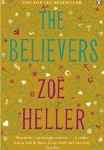
Believers – Zoe Heller

I loved  Notes on a Scandal, so was really looking forward to reading this book. Unfortunately I was very disappointed.

The writing style seemed much more intelligent than Notes on a Scandal, but it quickly started to focus on politics and religion – two topics which I hate reading about.

Joel and Audrey had a keen contempt for all religions, but Judaism, being the only variety of theistic mumbo-jumbo in which they were themselves ancestrally implicated, had always inspired their most vehement scorn.

The central character, Rosa, has to be one of the most annoying characters I have ever read about:

All her moral disappointment had been reserved for others – schoolmates who failed to resist the temptation of South African fruit, college acquaintances who were insufficiently concerned about the fate of the Angolan freedom fighters, bourgeois parents who pretended to socialist virtue. As a teenage, she had often been urged by her father to temper her revolutionary zeal with some sympathy for human frailty, But Rosa had scorned these attempts to modify her wrath.

I’m afraid that I couldn’t tolerate her abusive remarks on top of the politics and religion, so I gave up after about 100 pages. I need to enjoy or be educated by the books I read, and I’m afraid this one just annoyed me too much. If you enjoy books which focus on politics and religion, and can cope with a book whose central character is really irritating, then this book is really well written, and packed with thought provoking sentences. It is just such a shame that the writing made me want to throw the book at the wall every five minutes! Not for me at all!!

stars1

Did you love  Notes on a Scandal?

Have you read any other books written by Zoe Heller?

Can you finish a book which you find really annoying?

Categories
2009 Chick Lit Historical Fiction

A Secret Alchemy – Emma Darwin

The Secret Alchemy is set in both present day and 15th century England. The interwoven stories are seen through the eyes of both Elizabeth Woodville, the beautiful widow of King Edward IV, and her brother Anthony; whilst the modern section is told by historian, Una, who is writing a book on Anthony Woodville’s library. Elizabeth Woodville is the mother of the famous ‘Princes in the Tower’, who were imprisoned in the Tower by their uncle, Richard, Duke of Gloucester, after Edaward’s death.

I was impressed by the way each section came across differently, with all three characters having a recognisable voice, although I’m not sure how accurate the language of the historical section was. I’m not an expert, but it just reads differently from other books written about this period.

I didn’t think that the modern day section was really necessary. I felt the book could have benefited from concentrating on Elizabeth’s story, as I really enjoyed reading about her. Una’s character just seemed to be there to explain the history of the War of the Roses, which although I found useful, should have been able to be achieved within the historical section. I think that anyone who knows much about this period of history would feel patronised by the continual explanations of events, but luckily for me, my only knowledge of this period comes from reading Jean Plaidy books, and that was a while ago now! Towards the end the number of characters got a bit confusing for me, so I had to keep referring to the family tree provided in the front of the book, so I’m really pleased that was included.

This book is light and easy to read, but lacks the atmosphere of a great piece of historical fiction. I can see why this book would appeal to many people, but I felt that it meandered around a bit too much and so failed to really engage me. 

stars3

Emma Darwin’s first book The Mathematics of Love was short listed for the Commonwealth Writer’s Prize (Best First Book, Europe and South Asia) in 2007. It seems to have much more favourable reviews than this one. Has anyone read it?

Categories
2000 - 2007 Books in Translation Recommended books Thriller

Out – Natsuo Kirino

 Translated from the Japanese by Stephen Snyder

A few weeks ago I raved about how Sophie Hannah’s Little Face was the best thriller I have ever read – not any more – Out has leapfrogged way past her, straight into my all time top ten books.

As with Little Face, Out isn’t the normal whodunit mystery. We witness the murder very early on, and so the main question for the rest of the book is: Will they get caught?

Yoyoi is a young mother struggling to raise her two young children, and is suffering at the hands of her abusive husband. One night it all becomes too much for her to deal with, and so she murders her husband. She confides in her colleague, Masako, who agrees to help her dispose of the body. With the help of her co-workers Masako dismembers the body and hides the gruesome bits around the city. Unfortunately, some body parts are discovered and the police start asking questions. The plot becomes more complex, as loan sharks become involved, and the prime police suspect tries to find out the truth behind the crime he is innocent of committing

It is really hard to convey just how good this book is. It isn’t just that it is a cleverly plotted, perfectly paced book which is packed with complex characters and boasts a perfect ending. This book really makes you think. What would you do to protect a friend? If you were struggling financially – would you do anything to help your family? This book was so thought provoking that it became the focus of the majority of conversations I had with family and friends this week.

Out isn’t for the squeamish, as there are graphic descriptions of dismemberment and violent rape, but these images were important for conveying the situations that these Japanese women had to deal with. The vivid images I have of this book will stay with me for a very long time.

The only complaint I have is that there were a few minor translation problems. There was the odd sentance that didn’t flow properly, and a few uniquely Japanese things, which were translated in such a way that it lost some of the atmosphere for me. The recurring one being the boxed lunch, which doesn’t exist in the western world. I would much preferred it to be called by it’s Japanese name: the bento box,  as ‘boxed lunch’ doesn’t really bring across the same distinctly Japanese images it should do.

These are very minor issues though, and overall I cannot recommend this book highly enough. Cancel your order for Wilderness, and buy this instead!

stars51

Thank you so much to Melody for recommending this to me. I will be paying much more interest to her recommendations in the future.

What is the best thriller you have ever read?
Have you read any books by Natsuo Kirino?
Are any of the others as good as this one?

but most importantly….would you help your best friend hide her dead husband?!!

Categories
2000 - 2007 Chick Lit

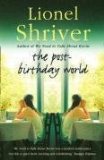
The Post-Birthday World – Lionel Shriver

I loved We Need to Talk About Kevin, so was really looking forward to reading this one. Unfortunately it didn’t quite live up to expectations, but was still a great read.

The Post-Birthday World follows Irina, who is in a long term relationship with Lawrence. One night Lawrence is away and Irina goes to dinner with Ramsey, her friend’s ex-husband. The first chapter ends with Irina almost kissing Ramsey. The book then splits into two sections. Alternating chapters show Irina in parallel worlds. In one world she kisses Ramsey that night, whereas in the other she doesn’t. It is a great idea for a book, and shows how one tiny decision can have a massive effect on your life.

The main focus of the book is relationships. I loved the detailed analysis of how couples interact with each other and the character observations. Every character was well formed and behaved realistically. I have to admit that I got bored by Ramsey’s snooker playing (I’m not a big fan!) but I guess we’re are meant to, as we are supposed to be empathising with Irina, who also has to endure watching the snooker.

I was going to say that the book felt very dated, but it progressed to end only a few years ago. The first half of the book was set in 1996/1997 and the news stories and technology were very obvious. I guess the fact it felt so dated was actually the great skill of Lionel Shriver in setting the scene for that period in history so accurately. It feels weird saying that a book set only 12 years ago feels dated, but when you are reading about small news items, which I have long since forgotten about, it really shows.

I also felt that the book was a bit long. By the half way point the novelty of the two different worlds had worn off, and I began to get bored by having to read the same events happening twice, but from the two different perspectives. I felt that the book could have benefitted from losing about 200 of it’s 500 pages.

Overall, I really enjoyed reading this book, but if you only read one Lionel Shriver book, make sure it is We Need to Talk About Kevin.

stars4


Warning: This book contains many scenes of a sexual nature, so avoid it if you don’t like that sort of thing.

I have heard that these are the best two Lionel Shriver books. Have you read any of the others? If so, are they as good?

Categories
2008 Orange Prize

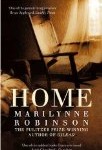
Home – Marilynne Robinson

Winner of the Orange Prize 2009

I’m afraid that I have to admit I didn’t finish this book. I gave up after about 60 pages. The characters failed to engage me, and I was struggling to concentrate on the words. Maybe the problem was made worse by the fact I had just finished the amazing Wilderness, or maybe it was because I had the memory of how boring I found Gilead so fresh in my mind, but either way I didn’t see the point in wasting my precious reading time battling with a book that I know doesn’t suit my reading taste.

The writing style was different to Gilead, and it had the benefit of not containing the continual bible references, but I don’t think the prose was as good as the Pulitzer winner – it seemed a lot less profound. I think people who love Gilead will find this slightly less satisfying, but I haven’t read very much, so can’t really give a proper opinion.

I’m afraid this just wasn’t for me.

stars1


Have you ever liked a book from an author you’ve previously decided was not for you?

This book is favourite to win the Orange  Prize – do you think it has a chance?

Categories
2009 Orange Prize Recommended books

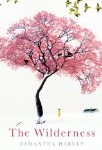
The Wilderness – Samantha Harvey

Short listed for the Orange Prize 2009

The Wilderness is written through the eyes of someone with Alzheimer’s disease. I shouldn’t like this book, as on the surface the plot is identical to Gilead – old man looking back at his life in snippets, revealing the wisdom he has learnt, but this book is in a league above Gilead. It captured my heart from the very first sentence:

In amongst a sea of events and names that have been forgotten, there are a number of episodes that float with stiking buoyancy to the surface.

When reading a book I note down quotes which may be suitable for my review. After noting down five different quotes within the first few pages I realised this was an exceptional book, and the bar for quote-quality was raised significantly higher!

This book is heart-breakingly sad. The central character is Jake, an Alzheimer’s sufferer, who is struggling to remember the details of his life. He can remember certain things as vivdly as when he was there, but others things, especially those that have happened recently are very elusive. As the book progresses his condition deteriorates, and even the most important things in his life fail to come to him:

She sits at the kitchen table beating eggs. Embarrassing, but he cannot remember her name. So desperately embarrassing because he sleeps with her, he knows her, she is not a stranger.

The Wilderness really opened my eyes to the suffering of old people. They are subjected to embarrassing situations as their bodies begin to fail them, but their minds are just as alert  as they were when they were younger. I think one of the reasons that this affected me so much is that this situation is almost certainly going to happen to me, and everyone else I know. This isn’t about the suffering of war, which however shocking, is unlikely to directly affect me. Old age and it’s degrading loss of dignity is going to happen, and this realisation hit me with a shocking intensity.

I’m not sure I want to recommend this book to you, as it is so heart-breaking that it will proably make you cry. I was unsure if I could give my highest rating to a book which I struggle to recommend to people, but in the end the power of this book cannot be ignored. I couldn’t find any faults with it. It gripped me from beginning to end, and left me a changed person. My money for the Orange Prize 2009 is on this book.

Highly recommended.

stars51


Who do you think will win the Orange Prize 2009?

Have you read this book? Did it change your opinion of the elderly?

Do you recommend depressing books to other people?