Categories
2000 - 2007 Chunkster Classics Memoirs Recommended books

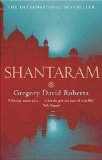
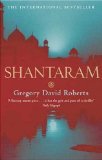
Shantaram by Gregory David Roberts

Shantaram Source: Personal copy

Five words from the blurb: India, slum, fugitive, prison, redemption

Shantaram is one of the best books I’ve ever read. It is an amazing story and the fact that most of it actually happened makes it even more incredible. It may be long, but every single page is a joy to read and I’m looking forward to reading the sequel, The Mountain Shadow, when it is released in October.

In 1980 Gregory David Roberts escaped from a high security prison in Australia. He travelled to India using a fake passport and hid from authorities in a Mumbai slum. Shantaram chronicles his adventures as he integrates with the local criminal community; learning how to make money and protect himself in this dangerous environment. He commits many crimes, but the most interesting aspects of the book were the good things he did – setting up a health clinic in the slum and going to extreme lengths to help those around him. This book will make you question the boundaries between right and wrong and to admire the strength of the human spirit.

When all the guilt and shame for the bad we have done have run their course, it is the good we did that can save us. But then, when salvation speaks, the secrets we kept, and the motives we concealed, creep from their shadows. They cling to us, those dark motives for our good deeds. Redemption’s climb is steepest if the good we did is soiled with secret shame.

Shantaram contains everything I like to see in a book – fantastic writing, a cast of well-rounded characters, a compelling plot, and thought-provoking moments of deeper contemplation.  I was gripped throughout and found myself feeling sympathy for even the most notorious criminals. I loved the way everyone was deeply flawed, but most managed to conquer their problems and live a happy life, even when faced with unimaginable hardship.

This book explained a way of life that was unfamiliar to me, but by the end of the novel I felt as though I understood exactly what it would be like to live in this lawless society. The vivid writing created an atmospheric picture of their unconventional lives. Everything was described in unflinching detail, occasionally making the reader feel uncomfortable, but writing with a honesty that can only be admired. 

This is one of those rare books that is almost impossible to criticise. It is a modern classic and should be read by everyone. Highly recommended!

.
Categories
1980s Historical Fiction Uncategorized

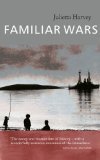
Familiar Wars by Julietta Harvey

Familiar Wars Source: Free review copy received from publisher

Five words from the blurb: Greek, boy, massacre, uprooted, family

Familiar Wars was originally published in 1987, but was re-released last week to coincide with the publication of the sequel, One Third of Paradise. I hadn’t heard of Julietta Harvey until review copies of these books fell through my letter box, but I quickly released she is an author I want to follow.

Familiar Wars begins in 1922 and follows Gregoris, a young Greek boy who flees the Turkish massacre in Smyrna.  I loved the way the book combined historical fact with vivid descriptions to create an atmospheric story. Julietta Harvey was born in Greece and her love and knowledge of this country was evident throughout. I knew very little about this period of history, but everything was explained so I could understand the details of this conflict.

The writing quality was excellent and many aspects of the novel reminded me of my favourite book, A Fine Balance. I especially loved the way the descriptions included the sounds and smells of the area, as these added a wonderful depth that too many writers ignore:
But they knew how to eat! The shop flooded with new appetising smells. Hunger for the delicacies appearing behind the counter caught him unawares: it gripped him, he was in tears with sudden total desire. Large green olives swimming in herbs and spices, pickled cabbage fragrant with aniseed, baby aubergines stuffed with dill and basil, pink octopus tenderised in spiced wine, potted prawns as big as mackerels and as fresh and sweet smelling as the sea at dawn, caviar from the Black Sea, each egg as big and juicy as a grape, pastourma – the flower of the Karamanli genius wrapped in layers and layers of cayenne, and underneath, the meat, red and moist and tender, begging to be eaten, ready to melt in the mouth.

The vivid detail meant that some scenes were disturbing, but these were necessary to show how brutal this period of history was. They also helped to show how communities can overcome hardship, harnessing resilience to rebuild a happy life.

The only real negative was that the story contained too many characters. I frequently struggled to remember who some of the peripheral characters were, but in the end I decided this didn’t really matter as the central characters were so strong. 

This is an impressive book which highlights an important period of history. I recommend it to anyone who is interested in the way conflict affects ordinary people, especially if you have an interest in this area of the world. I look forward to reading the sequel soon.

.


Categories
Books in Translation Novella

Two Wonderful Novellas in Translation

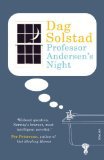
Professor Andersen's Night Source: Free review copy received from publisher

Translated from the Norwegian by Agnes Scott Langeland

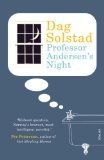
Professor Andersen’s Night by Dag Solstad

Five words from the blurb: alone, sees, murder, indecision, moralist

Professor Andersen’s Night is a fantastic little book, but I didn’t want to write a full review for fear of giving too much away. The novella begins with Professor Andersen witnessing a murder, but he is unsure about what he really saw and so fails to report the crime. As time passes he feels increasingly guilty and tries to think of the best way to remedy the situation.

He was really unwell, his head ached, he saw spots before his eyes and felt queasy all the time, but didn’t throw up. He put on his pyjamas and went straight to bed. But he couldn’t lie still, so he got up, put on his dressing gown and wandered around his apartment, from room to room. This day, and the next day, and the day after that. While he brooded. He had no idea what to do.

This book was very wordy with no chapter breaks and very few paragraphs, but the internal monologue was intelligent and compelling. It could be described as a cross between Hunger by Knut Hamsun and The Metamorphosis by Franz Kafka; and is equally deserving of a place in the literature canon.

Recommended to anyone who enjoys intelligent literature.

.

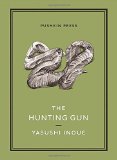
The Hunting Gun (Pushkin Collection) Source: Personal copy

Translated from the Japanese by Michael Emmerich

The Hunting Gun by Yasushi Inoue

Five words from the blurb: letters, women, affair, tragic, truth

The Hunting Gun is small, but perfectly formed. It contains letters from a woman, her daughter, and an abandoned wife – each explaining how an affair impacted on their lives. The writing was simple, but powerful and showed real insight into the way secrets destroy relationships. 

There was nothing between us but the quiet lapping of water, like waves on the seashore. The veil behind which we had hidden our secret for thirteen years had been brutally ripped away, but what I saw underneath it was not the death that had obsessed me so, but something I can hardly think how to describe, something like peace, quietness – yes, a peculiar feeling of release.

The joy of reading books in translation is that you get to see how other cultures react to familiar situations. It was interesting to see how Japanese restraint influenced their actions; whilst their thoughts and emotions were identical to a British person dealing with an affair. 

The Hunting Gun was so short it could be read in a single sitting. I prefer a more complex plot, but was impressed by the power of the emotion in this book and am keen to read more by this author.

.

Categories
2014 Audio Book Recommended books

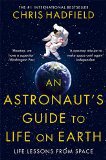
An Astronaut’s Guide to Life on Earth by Chris Hadfield (Audio Book)

An Astronaut's Guide to Life on Earth Source: Library

Five words from the blurb: astronaut, training, success, survival, think

Chris Hadfield is an inspirational man! I don’t remember how I first heard of him, but I do know that every piece of media that features him leaves me feeling empowered. Last year I saw that he was coming to the UK to promote his photo book, You Are Here: Around the World in 92 Minutes, and so booked tickets to see him live. He had the entire room in the palm of his hand and is easily the best public speaker I’ve ever seen. I immediately went home and reserved a copy of his audiobook from the library. It is every bit as good as I hoped it would be and I urge you to go and get a copy.
An Astronaut’s Guide to Life on Earth is basically an autobiography, explaining how Hadfield became an astronaut. But he also uses the book to show how everyone can benefit from the things he learnt along the way. He reinforces his belief that you should use every spare moment to become a better person – making small changes every day to improve your chances of achieving whatever you want:

Decide in your heart of hearts what really excites and challenges you, and start moving your life in that direction. Every decision you make, from what you eat to what you do with your time tonight, turns you into who you are tomorrow, and the day after that. Look at who you want to be, and start sculpting yourself into that person. You may not get exactly where you thought you’d be, but you will be doing things that suit you in a profession you believe in. Don’t let life randomly kick you into the adult you don’t want to become.

He also believes that being independent is the key to happiness. Knowing that you have the ability to fix anything around you gives you more confidence. His passion almost persuaded me to take a course in plumbing – but I predict trying to fix a broken pipe would lead to much more stress in my life as I’m not very good at practical tasks!

Hadfield mixes these life-building plans with entertaining anecdotes about his experiences. It was fascinating to learn how problems are dealt with in space and I thought he managed to strike exactly the right balance between technical information and humour. I especially loved hearing about how he coped with becoming blind whilst on a space walk and what landing a Soyuz is like.

The audio is read by the author; further injecting his passion into every word. It’s probably amazing in print, but I highly recommend the audio version.

An Astronaut’s Guide to Life on Earth gives the reader a slightly different perspective of the world, showing how we can all work together to make things better. It highlights the fragility and beauty of our planet, but also how powerful individual people can be when they work towards a goal. If you only buy one self-help book in your life, this should be the one you get.

.


Categories
2012 Historical Fiction

Brilliance by Anthony McCarten

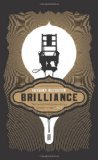
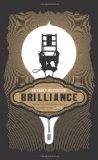
Brilliance Source: Personal copy

Five words from the blurb: invention, light bulb, Edison, electric chair, immorality

I’m drawn towards books with shiny gold covers so Brilliance stood out when I was browsing a local charity shop. I’d heard nothing about it, but the simple blurb persuaded me to give it a try:

A novel about the brightest and darkest sides of human invention.

I’m so pleased I took a chance on this book – it was entertaining, informative, and shocking in equal measure.

Brilliance is a fictionalised biography of Thomas Edison, showing the experiences of this famous inventor as he goes from the high of inventing the electric light, to financial lows as he fails to monetise his invention properly. Whilst at his lowest he is approached by the banker JP Morgan, who persuades him to invent the electric chair. This leads him into a disturbing new life, introducing a series of moral dilemmas.

I’ve read many books which mention Edison, but this was the first to really bring him to life. His relationship with his wife was touching to read about and I loved the way their hopes are fears were exposed. There was a real emotional depth to the text, made all the more special by the quality of the writing. 

It was also the first book to make me appreciate how groundbreaking the invention of the electric light was. I hadn’t realised how fearful the public were of this new product and how hard it was to change their minds. The scene from the Columbus Day parade was particularly revealing:

Families applauded and laughed from behind the cordons. But the happy shouts died away to silence and even fear as the Edison Electric Light Company’s new promotional exhibit rounded the corner.
At first, parents covered their children’s eyes. There were screams. Women put hands into their mouth. Men peeled off their bowler hats in slow motion. What was this? Were they witnessing a catastrophe?

There was a bit of science in this book, but it never felt dry or overly technical. It was all well-researched and came across as authentic for the time period. Some people might find the scenes involving the testing of the electric chair too distressing, but I felt they simply explained the facts, which are disturbing however you describe them.

Overall this was a gripping read that gave me a new insight into this period of history. Recommended, especially to those who appreciate good science in their literature. 

.

The thoughts of other bloggers:

McCarten does more than rewrite Edison’s biography, he gives him a voice. River City Reading

If the book has any weaknesses it’s due to the fact that it’s not a full blown biography but if it were and had just stuck to the facts it would lose all its colour and charm. The Truth about Lies

It’s shocking in places, funny in others and I did find myself really feeling for Thomas Edison. Novel Kicks

Categories
2014 Books in Translation Other Prizes

Colorless Tsukuru and His Years of Pilgrimage by Haruki Murakami

Colorless Tsukuru Tazaki and His Years of Pilgrimage Shortlisted for the 2015 Independent Foreign Fiction Prize

Translated from the Japanese by Philip Gabriel

Five words from the blurb: friends, school, death, connections, reason

Tsukuru is 36, but as a teenager he was part of a group of five friends. One day they stopped talking to him and he felt abandoned. He hasn’t seen them for 16 years, but continues to be haunted by the mysterious way he was ostracised from the group. His girlfriend sees the pain this is causing and persuades him to track down his friends to discover the real reason that they blocked him out of their lives all those years ago.

I think I read this at exactly the right time in my life. I am also 36 and, coincidentally, was also part of a group of five in school. I married one of them, so am well aware of the way relationships effect the dynamics within a group. Last week we went to a wedding and the five of us were together again for the first time in fifteen years (although we have seen them all individually occasionally since then). Colorless Tsukuru and His Years of Pilgrimage perfectly captures the feelings of meeting people that you were once very close to. Discovering how old friends have changed is a strange thing, and imagining how small decisions from the past could have changed the course of your life is hard to get your head around. 

Murakami delves into a range of emotions, explaining them beautifully: 

Jealousy – at least as far as he understood it from his dream – was the most hopeless prison in the world. Jealousy was not a place he was forced into by someone else, but a jail in which the inmate entered voluntarily, locked the door, and threw away the key. And not another soul in the world knew he was locked inside. Of course if he wanted to escape, he could do so. The prison was, after all, his own heart. But he couldn’t make that decision. His heart was as hard as a stone wall. This was the very essence of jealousy. 

The first 80 pages of this book were very slow, but then Tsukuru started to meet his friends and the plot picked up pace. I was completely absorbed by the mystery and loved the way each character had a slightly different relationship with the others – I don’t think I’ve read many other books that have captured teenage group dynamics with this realism.

This book didn’t contain any of the strange mythology that Murakami is famous for, but it provides an insight into the lives of ordinary Japanese people. It isn’t necessary to know anything about the culture before reading this book, so is a good choice for those looking to try Japanese literature for the first time.

Overall, this is a strong book that deserves its place on the IFFP shortlist. The ending was perfect and I highly recommend it to anyone who has lost touch with old friends.

.