Categories
2000 - 2007 Other Prizes Science Fiction

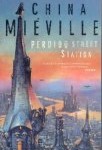
Perdido Street Station – China Miéville

 Winner of the 2001 Arthur C. Clarke Award and the 2001 British Fantasy Award. Nominated for the Hugo, Nebula, World Fantasy, Locus and British Science Fiction awards

When the Booker longlist was announced there was some anger from the science fiction community that China Miéville was excluded from the list. Damien Walter was particularly vocal on Twitter, and so, keen to ensure I wasn’t missing out on a great author, I decided to read one of his books. It was agreed that Perdido Street Station was the best and so I bought a copy. I was a little daunted when a 870 page chunkster dropped through my letter box, but I was still keen to find out why people were raving about this book.

Perdido Street Station began really well, with vivid descriptions of a strange world.

Sil lived and worked and slept in the tub, hauling himself from one end to the other with his huge, webbed hands and frog’s legs, his body wobbling like a bloated testicle, seemingly boneless. He was ancient and fat and grumpy, even for a vodyanoi. He was a bag of old blood with limbs, without a separate head, his big curmudgeonly face poking out from the fat at the front of his body.  

Isaac, the central character, is employed to study winged animals by a secrective creature who has lost his wings. I loved the character development and the imaginative plot – I was hooked for the first half of the book.

Everything started to go wrong at about the 500 page mark. The plot deteriorated into one long chase scene; I became bored by the continual fighting and longed for the thoughtfulness of the beginning to return. The ending was also a disappointment. It was such a shame, as I was really enjoying it.

I can see why this book won so many fantasy awards, but now I know why it didn’t win the Booker, or any other literary fiction prize. This book is beautifully written, but it doesn’t have the depth required for literary fiction. It is an incredible work of imagination, but in the end it lacked enough emotion or depth for me.

Recommended to people who are very passionate about their science fiction, but not to lovers of literary fiction.

stars3h

Have you read anything written by China Miéville?

I was very intrigued to read that he is planning to write a book in every genre. He is clearly a talented author and so I will read more of his books in the future. I am especially tempted by his latest book  The City & The City,which is described as detective noir novel. Has anyone read it?

Categories
1800s Classics

Dracula – Bram Stoker

Dracula is one of those classic books that has never really appealed to me, as I’m not a big fan of vampires. When I saw that Fizzy Thoughts was hosting a readalong, just in time for Halloween, I thought I should grab the opportunity to read it with a group of people, before it gathers too much dust on the shelf!

I knew very little about Dracula before starting it, as I avoid vampire films and have never had the urge to ask anyone about it! The opening scene was exactly how I imagined it to be – an English man heading towards a spooky castle in the middle of Transylvania. I enjoyed the first few chapters, as the central character, Jonathan, meets Dracula and observes the old castle.

Hitherto I had noticed the backs of his hands as they lay on his knees in the firelight, and they seemed rather white and fine; but seeing them now close to me, I could not but notice that they were rather coarse – broad, with squat fingers. Strange to say, there were hairs in the centre of the palm. The nails were long and fine, and cut to a sharp point. As the Count leaned over me and his hands touched me, I could not repress a shudder.

I thought the atmosphere was built up well initially and I almost found it creepy, but just as things seemed to get darker, the atmosphere was lifted by some flippant remark. The tone of the book was a lot lighter than I expected and it reminded me of Three Men in a Boat. The book was trying to be funny and I was quite disappointed that it wasn’t creepier. 

I felt that the dark atmosphere was even harder to maintain once the plot left Transylvania. I was very surprised that so much of the book took place in England, as I had just assumed that it all took place in Dracula’s castle. I found myself becoming increasingly bored by the book – the characters failed to engage me and the unlikely plot meant that I didn’t really care what happened.

The ending was very predictable and the length of the book meant that it took far too long to get there. 

I am pleased that I read Dracula, as I have filled a gap in my knowledge, but I didn’t enjoy reading the book and would only recommend it to people interested in the development of the vampire novel.

stars21

Have you read Dracula?

Was it how you expected it to be?


Categories
2009 Recommended books Short Story

Legend of a Suicide – David Vann

Legend of a Suicide is a book which is hard to classify. It has been described as a collection of short stories and is now being marketed as a novel. I think the truth is that this book is similar to Olive Kitteridge, in that it is a very successful book of interconnected short stories.

The book follows Roy, a young boy whose father commits suicide. The emotion in this book is pitched perfectly. The suicide of the author’s own father enables him to give us an insight into the real, conflicting emotions experienced by a child put into this terrible situation. This book shows us how immersing a child into the dark, adult world is such a bewildering experience – one they don’t have the knowledge to handle.

There was nothing Roy could think of to say, so he didn’t say anything. But he wondered why they were here at all, when everything important to his father was somewhere else. It didn’t make sense to Roy that his father had come out here. It was beginning to seem that maybe he just hadn’t been able to think of any other way of living that might be better. So this was just a big fallback plan, and Roy too, was part of a large despair that lived everywhere his father went.

The first few stories were slightly disjointed, in that I couldn’t follow the narrative, but once I reached the novella of their trip into the Alaskan wilderness I was completely hooked. I found the book impossible to put down and I read the rest in a single sitting.

The writing was vivid, emotionally charged and thought-provoking. I think that this book might help relatives of suicide victims to be able to cope with their loss and it should also be read by anyone who feels that suicide is a good option, as it is the best demonstration of the devastation a suicide brings to a family I have ever seen. The number of issues raised and the power of this story make it perfect for reading groups too.

Highly recommended to anyone who loves books which are packed with emotion.

stars4h

Categories
1930s Classics Mystery

Rebecca – Daphne Du Maurier

WARNING SPOILERS!

Rebecca is a book which everyone seems to rave about. The brooding, Gothic mystery sounded like the sort of thing I would love. I hoped that it would become one of my favourites, but although I enjoyed reading it, Rebecca won’t make it into my top 50.

The book begins with a young woman falling in love with Maxim de Winter, but after a hasty marriage she realises that everything she does is compared to Rebecca, Maxim’s seemingly perfect first wife, who died in tragic circumstances a year earlier

It was slow to start, but after about 100 pages I was completely hooked. I loved the first glimpses of Manderley and the vivid descriptions of the house and grounds.

Yes, there it was, the Manderley I had expected, the Manderley of my picture post-card long ago. A thing of grace and beauty, exquisite and faultless, lovelier even than I had ever dreamed, built in its hollow of smooth grassland and mossy lawns, the terraces sloping to the gardens, and the gardens to the sea.

The girl’s jealousy and feelings of inadequacy where incredibly well written, but I was disappointed by the mystery aspect of the book. Although I was vaguely aware that Rebecca’s death might not have been accidental, this wasn’t confirmed until Maxim admitted the murder. I felt that this was too quick – the mystery was solved the moment it was created and I felt let down that I hadn’t had at least a few chapters to try to solve the crime myself.

There were some amazing characters in this book. I loved the way that even the side characters were fully formed. Mrs Danvers was a deliciously dark character and I would love to know more about her.

I thought the book went downhill quickly once we knew Rebecca had been murdered. All the emotion seemed to disappear, replaced with an average police investigation. Did you enjoy this part of the book? I haven’t seen it mentioned before, so am wondering if people just forget that almost half of the book was reasonably dull.

The last page of the book was fantastic. I love the ambiguous ending and the  destruction of Manderley. Do you think all the staff were killed in the fire? Do you think it was started deliberately?

Overall, this book had some amazing sections, but overall I was slightly disappointed. I think this book will grow on me, as over time I will remember the emotional aspects of the book, but slowly forget about the dull half. I would still recommend this to everyone, but I think there are a lot of better ones out there.

stars41

Thank you to Sandy for arranging the readalong for this book.

Do you think Rebecca is one of the best books ever written?

Were you disappointed by any sections?

Categories
1980s Books in Translation Classics Film

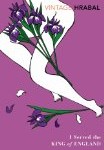
I Served the King of England – Bohumil Hrabal (Book and DVD)

 Translated from the Czech by Paul Wilson

I Served the King of England was the Claire’s choice for Savidge Reads’ and Kimbofo’s book group, but we all agreed that it wasn’t anything special. We were surprised that it featured on the Guardian’s 1000 Novels Everyone Must Read list, as we felt that it failed to provide anything particularly special or unique.

The book follows the life of Ditie, a short man with big ambitions. Beginning in Czechoslovakia in the 1930s, we follow his career as makes his fortune working in hotels. His observations are both bizarre and mildly amusing, but I failed to see the point of them. Ditie’s life is then changed drastically when the communists come to power. I won’t spoil the last part of the book for you, but you can imagine that life during WWII will not be as light and amusing as the first half of the book. The weirdness continues, but it is shadowed with a darker, more threatening atmosphere.

The problem with the book was that it failed to engage me. I was laughing at it, rather than with it and scenes which should have been shocking, failed to affect me. The book just passed me by, without letting me become emotionally involved.  

The ending annoyed me a lot. It came over as very preachy, over explaining the moral message that the author hoped to teach us in writing the book. It was the only time that the book had managed to evoke an emotion in me and I felt patronised and used.

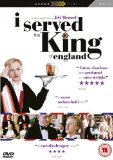
Confused at why this book was so highly regarded I did a little bit of research and discovered that the film had been well received, so decided to order a copy.

The film turned out to be a lot better than the book. The order of everything was changed, so that the shocking war scenes were placed next to the light humour of life in the hotel. This meant that the power of each scene was enhanced. I immediately saw what the author had been trying the achieve, but also why he had failed. Some of the story line was changed (no baby + different ending, for example), but I thought these were all improvements to the story. I would place this in my top 50 films of all time (the book won’t get close!)

I highly recommend the DVD to anyone who likes to watch foreign language films., but the book is nothing special.

Book: stars3h

DVD: stars4h

Categories
2000 - 2007 Chunkster Historical Fiction

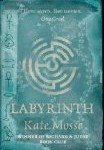
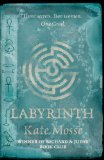
Labyrinth – Kate Mosse

Labyrinth had sat on my shelf for a long time, but for some reason it never stood out, so I kept reading other things. I then spotted that Kate Mosse was talking at the Cheltenham Book Festival, and so decided this was the incentive I needed to finally get round to reading it.

Labyrinth begins with a girl discovering a hidden cave while helping on on archeological dig in the French Pyrenees. The story then flips back to the 13th Century and follows a young girl who is living in the beautiful walled city of Carcassonne, France.

Unfortunately, I didn’t enjoy reading it. The characters failed to engage me and the writing seemed be be of poor quality. I kept thinking of Timeline by Michael Crichton, which managed to make time travel back to feudal France, thrilling, thought-provoking and exciting. This book felt inferior in comparison.

It took a lot of effort for me to get to page 160, when I decided that I couldn’t take it any more. The thought of wading through another 500+ pages of below average writing was just too much for me.

I then went to hear Kate Mosse interviewed by Sandi Toksvig at the Cheltenham Book Festival. It was the best author interview I have ever seen. The two are good friends in real life and their warm friendship came across. Both were enthusiastic, intelligent and witty – I could have listened to them all day! Kate talked about her love for literary fiction and her passion for research – she likes to write really slowly, taking 5 years to complete Labyrinth.

Kate Mosse came across as an amazing woman. She co-founded the Orange prize and was named European Woman of Achievement in 2000 for her contribution to the arts. I have great admiration for her and the passionate discussion inspired me to give Labyrinth another try.

With renewed excitement I picked up Labyrinth again. I managed another 10 pages, before coming to the conclusion that Kate Mosse is a fantastic woman, but not an author I’ll be reading again.

If you’re after an amazing story set in Carcassone, try Timeline!

stars1

(DNF)

Did you enjoy Labyrinth?

Do you love Timeline as much as I do?