Categories
2010 Audio Book Memoirs

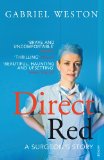
BBC Radio Dramatisation of Direct Red by Gabriel Weston

I have been wanting to read this book ever since I heard Gabriel Weston talk at a library event last year; so when I spotted that the BBC had created a dramatised version I started listening immediately. This book is just as witty, intelligent and insightful as I had hoped it would be and I urge you to listen to it before it disappears from the BBC iplayer* tomorrow evening (10:00PM GMT Fri, 18 Mar 2011).

Direct Red is a memoir of the author’s life as a surgeon. In a series of short stories she reveals the truth about life inside a hospital. She explains exactly what doctors are thinking about as they deal with patients – revealing everything from the initial embarrassment of dealing with genitalia to the heartbreak of seeing people die. I’m sure that some people in the medical profession will object to the public learning that their minds are not always on the task in hand, or that lives are often put in danger by a lack of staff, but I found the insight into hospital life fascinating.

If you are squeamish then this book probably isn’t for you as there are many graphic descriptions of medical procedures. I must also warn you that some of the scenes are very distressing and most do not have a happy outcome.

If you have ever thought that audiobooks are a waste of time then I urge you to give this a try – the cast of excellent actors add an extra dimension to the text.

This is a well written, emotional, insight into the mind of a surgeon. Highly recommended.

.

* I think there may be problems listening to this outside the UK. If this is the case then I’m sure the text version is worth reading.
Categories
2010 Books in Translation Novella

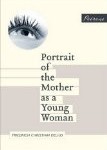
Portrait of the Mother as a Young Woman – Friedrich Christian Delius

  Translated from the German by Jamie Bulloch

Five words from the blurb: Rome, German, woman, war, daydream

Beside the Sea was one of my favourite reads last year and so I am always keen to try books from Peirene, a wonderful new publisher.

Portrait of the Mother as a Young Woman is set in Rome and follows a young, pregnant German woman as she walks through the city. It is 1943, but the war seems a long way away. She feels safe as she daydreams about her baby, but she slowly realises that her husband isn’t in the same environment. He is in Northern Africa and there is a good possibility that he will not return to see his child.

The book is very unusual in that it is written as a single 125 page sentence. Unfortunately I failed to warm to the writing style and it irritated me throughout the book. I longed for a full stop and thoughts about how nice a chapter break would be began to occupy my mind. The endless sentence gave the book a rambling feel which stretched my tolerance to breaking point. The addition of a few full stops would have done a lot to improve an otherwise beautifully written book.

….in any case it was better to keep quiet, and as a woman it was even more important to restrain oneself, how quickly an idea or thought can escape one’s lips, improvident words could help the enemy, The enemy is listening!, she had learnt, or it might be dangerous on a personal level, there is the weapon of silence and the weapon of words, she had learnt with the League of German Girls, and as she preferred to remain silent anyway, especially if she was not confident of her thoughts and her faint doubts were not assuaged, she knew what she had to do, to trust patiently in God, and continue undeterred along her path,…

With words these profound I think it is important to take the time to pause and reflect, but this was impossible given the structure of the book. My problem with the writing style was quite sad, because some wonderful ideas were buried under the gimmick.

Another problem I had is that nothing actually happens. The entire book consists of one scene in which a woman walks across the city, reflecting on her life.  I’m afraid I like my books to have a plot and so books that give an isolated insight into a woman’s mind do little for me.

I know a lot of people love this book, but it was too experimental for me.

.

I seem to be the only one who doesn’t love it:

….my favourite of Peirene’s titles so far, and possibly the most convincing narrative voice I have read for a very long time.  Stuck in a Book

What the author does quite cleverly is to create a mood where time feels suspended. Novel Insights

….a mesmerizing work. Caribousmom

….a meaningful and original glimpse of the mind of one women during the Second World War. Iris on Books

Categories
2008 Non Fiction Other Prizes

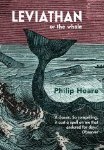
Leviathan – Philip Hoare

  Winner of the 2009 BBC Samuel Johnson Prize for Non-Fiction

Five words from the blurb: whales, humans, Melville, history, gigantic

I didn’t mean to read Leviathan this month, but I picked up a copy and couldn’t put it down. Leviathan contains everything that you’d ever want to know about whales; including their natural history, their interactions with humans and their role in literature.  

The book was packed with the type of facts that I love –  almost every other page contained something that I wanted to share with whoever happened to be closest to me. My family began mocking my new obsession with whales, but how can you not want to share a fact like this?!

A sperm whale can create a two-hundred-decibel boom able to travel one hundred miles along the ‘sofar’ channel, a layer of deep water that readily conducts noise. It seems strange that such a physically enormous creature should rely on something so intangible; but bull sperm whales, by virtue of their larger heads, generate sounds so powerful that they may stun or even kill their prey. These directional acoustic bursts, focused through their foreheads and likened to gunshots, are the equivalent, as one writer notes, of the whale killing its quarry by shouting very loudly at it.

I also discovered:

  • A sperm whale can eat 700 squid in one day.
  • Sperm whales were not filmed underwater until 1984.
  • A killer whale used to live in Windsor Safari Park.
  • A man is said to have been recovered alive from the stomach of a sperm whale several hours after being eaten by it.

I now have the ability to talk about whales for several hours!

One slight problem I had with the book was that I hadn’t read Moby-Dick. I’m sure that some of the sections would have been more meaningful had this been the case, but it has at least persuaded me to read it soon.

The only other tiny issue I had was that most of the photographs were very small and grainy. I can understand why this would be the case for the older examples, but even some of the more modern ones were unclear.  This book would have been improved greatly with the addition of a few larger, clearer photographs.

On a more positive note, I thought the writing was fantastic. It effortlessly guided the reader from one topic to the next; managing to move from lighter humor to the darker aspects of whaling without any drop in pace.

I loved this book and will be forcing it into the hands of several people over the coming months. I highly recommend that you get hold of a copy.

Categories
2010 Books in Translation Other Prizes

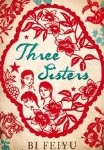
Three Sisters – Bi Feiyu

 Winner of 2010 Man Asian Literary Prize

Translated from the Chinese by Howard Goldblatt and Sylvia Li-chun Lin

Five words from the blurb: sisters, China, power, society, family

Three Sisters gives a fascinating insight into the life of Chinese women in the 1970s. By observing the differences between three sisters we see how the status of their birth position affects everything that happens to them.

The Three Sisters

  • Yumi uses her status as the eldest daughter to gain the respect of all those around her. This power ensures that she easily finds a favourable marriage and so has a far greater chance of achieving a happy life.
  • Yuxiu, the third sister, must use as much charm as possible to negotiate opportunities for herself.
  • Yuyang, the seventh sister, must rely on her talents alone, having none of the power that being an older sibling brings.

The book showed each sister in turn, allowing us to connect to them completely. It did a wonderful job of showing the Chinese culture, particularly by explaining their inner thoughts and fears.  The importance of ‘saving face’ was high on all their agendas and this book was great at explaining their actions in an easy to understand, but vivid way.

….everyone in town knew Yuxiu’s secret. She assumed that no one knew, but they all did. This is generally how private matters are treated. It is as if they are screened by a sheet of paper so flimsy it cannot withstand a simple poke but so sturdy everyone will avoid it. Only country folk are so uncouth and impatient that they need to get to the bottom of things at once. Townsfolk aren’t like that at all. Some things are not meant to be poked open; exposing them spoils the fun. What’s the hurry? You cannot wrap fire in paper; sooner or later it will burn through and everything will be exposed. That is more spectacular, more appealing.

I found the last section to be less interesting than the others, but it was still enjoyable. My only complaint is that the book did not end well. I don’t mean that it was sad, just that it was abrupt and didn’t come to any logical conclusions. I would have liked to see all three sisters mentioned on the final pages, not just a slightly odd scene containing only the youngest. This is a minor quibble though. It is a beautifully written book and I’m sure it will be loved by many people.

As an introduction to Chinese literature, this is an ideal choice. It is well paced and contains a depth of emotion. I’d recommend this book to anyone interested in Chinese literature, but I think the focus on family relationships will mean that it will be appreciated by women more than men.

Categories
2010 Books in Translation Science Fiction

The Unit – Ninni Holmqvist

  Translated from the Swedish by Marlaine Delargy

If there is a fine line between love and hate then this book is managing to balance on it! I was completely gripped to the text, but everything about the plot frustrated me. I was inwardly groaning as I read each new development, unable to believe what was happening. I am a big fan of dystopian fiction, but the plot was so farcical that it lacked the scary, thought-provoking response that this genre normally delivers.

The Unit is a state-of-the-art facility to which all childless, singles are sent once they fail to be of use to society. If they aren’t in an important job then all females are sent at the age of 50 and men on their 60th birthday. Whilst in the facility they are well looked after, but over time all their organs are harvested and donated to younger members of the population. They are also subjected to scientific experiments; until after a few years they make their final donation….

My main problem was that the whole idea had so many flaws:

  • Why wouldn’t all the single people just find someone to marry? If I knew I could avoid having all my body parts removed one by one then I wouldn’t be that fussy about who I married!
  • Wouldn’t it be easier to just kill them when they reached the specified age instead of paying for all those fancy facilities?
  • Why were they doing research on the people and then using their organs – surely this would damage the tissues and leave them inappropriate for use in others?

I also had major problems with the plot. I could list lots of examples, but the major ones were:

SPOILERS!!!

(highlight to view)

  • Pregnant?!
  • Why did she return after escaping?!

I was almost shouting at the book. I couldn’t believe what was happening!

This book is easy to read and a real page turner. I can’t really fault the controlled, sparse writing and I admit there were a few emotional moments, but I’m afraid the plot wasn’t on my wavelength.

Overall I was so infuriated with this book that I can’t recommend it, but it is a fine line between love and hate…..

The thoughts of other bloggers:

…..a gripping, heart wrenching, thought provoking read. My Friend Amy

…..it will make you think twice about a whole host of issues, and is a natural for book club discussions. Rhapsody in Books

I fall short of adoration with The Unit, but I sure did like it a great deal. Galley Smith

Did anyone else find the plot frustrating?

Categories
1910s 1920s Short Story

‘They’ – Rudyard Kipling

Rudyard Kipling is one of those authors I felt I should have read, but hadn’t until now. ‘They‘ is a collection of three of his short stories. The blurb states that they are very different from his novels and poems, being more sinister and macabre. This darker element really appealed to me, but unfortunately I didn’t find any of the stories particularly chilling – early 20th century fear is very different to that of the modern day!

They is the first story in the collection and it reminded me of The Turn of The Screw; or at least a shorter, more easy to follow version. The writing was of a very high quality and contained vivid imagery, but glimpses of ghostly children did nothing for me. 

‘I heard that,’ she cried triumphantly. ‘Did you? Children, oh, children! Where are you?’

The voice filled the walls that held it lovingly to the last perfect note, but there came no answering shout such as I had heard in the garden. We hurried on from room to oak-floored room; up a step here, down three steps there; among a maze of passages; always mocked by our quarry. One might as well have tried to work an unstopped warren with a single ferret.

The rest of the stories were equally well written, but all succumbed to the problem I have with short stories – they were too short! I longed for some plot, instead of just brief scenes.

The second story in the collection is Mary Postgate. It was written during WWI and it has been suggested that it is anti-German propaganda, but this is a disputed topic among Kipling scholars. It should have been a disturbing tale, but I remained unmoved. The subtlety of the words meant that I appreciated it much more on a second reading, but this appears to be one of those stories which benefits from being studied and discussed rather than just read once for pleasure.

The third story is called The Gardener and I have to admit that on completing it I had no idea what the point was. I didn’t understand what had happened until I found these notes on a Kipling site. Even this insight didn’t help me to appreciate the story. It is another story that needs to be studied to be enjoyed and I’m afraid that I just like to read a story without having to tease the significance out of individual sentences.

Overall I can see why these stories are significant, but they were too subtle for me.

Have you read anything written by Rudyard Kipling?

His novels are supposed to be very different. Do you think I’d enjoy them?

They is one of the Penguin Mini Modern Classics (a series of 50 books launched on 15th February). They can be bought individually for £3 each or as the beautiful Penguin Mini Modern Classics Box Set