Categories
2010 2011 Books in Translation Chick Lit Mystery

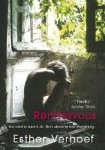
Rendezvous – Esther Verhoef

Rendezvous Translated from the Dutch by Alexander Smith

Five words from the blurb: mother, life, unravels, tension, twists

Iris is holding A Month of Dutch Literature on her blog. I wanted to join in, but had nothing to hand. I then spotted this book in a little independent book shop and was drawn towards the following sentence in the blurb:

Rendezvous is an emotional rollercoaster from start to finish and an extremely powerful story about how dangerous getting what you want can be.

That is a bit of an exaggeration, but it was a gripping read with some degree of emotional tension throughout.

The book begins with Simone, a young mother, being arrested. Over the course of the book we see how she goes from being a caring wife and mother, to being at risk of losing everything.

Simone and her family move from Holland to a rural village in the south of France. They have to cope with living in the confines of a caravan whilst their house is being renovated, but also learn the numerous differences between their culture and French etiquette.

Simone’s character is very well developed and I had a great deal of sympathy for her, despite her flaws.

Unbelievable how I was able to lie to everyone, how naturally and easily it came to me. All my life I’ve hated that so intensely, that scheming, lying and deceit. Women who cheat on their husbands with their best friends, men who say they have to work late and are actually carrying on with their secretaries – there’s a reason those kinds of clichés are clichés; they’re far too commonplace, they seem to make the world go round.

This book could almost be described as chick-lit, but the mystery surrounding Simone’s imprisonment also gives it a crime/thriller edge.

I found the entire book to be very entertaining. It isn’t groundbreaking or particularly original, but it is perfect for when you need to read something a bit lighter.

.
Categories
2011 Memoirs

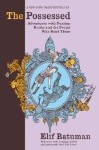
The Possessed – Elif Batuman

Five words from the blurb: funny, thoughtful, Russian, writers, travels

I love the idea of Russian literature, but I have to admit that it scares me and so I have yet to try any (apart from The Master And Margarita, which scared me even more!) This book appealed to me because it allows the reader to glimpse into the world of Russian literature in an entertaining and less imposing way.

The Possessed is part memoir, part travelogue and follows Batuman through her Russian studies at Stanford University, to her adventures travelling through California, Turkey, Uzbekistan, Hungary and Russia. The book is littered with interesting little snippets of information about Russian authors and their texts.

On the third day of the Tolstoy conference, a professor from Yale read a paper on tennis. In Anna Karenina, he began, Tolstoy represents tennis in a very negative light. Anna and Vronsky swat futilely at the tiny ball, poised on the edge of a vast spiritual and moral abyss. When he wrote that scene, Tolstoy himself had never played tennis, which he only knew as an English fad. At the age of sixty-eight, Tolstoy was given a tennis racket and taught the rules of the game. He became an instant tennis addict.

But unfortunately I was less keen on the travelogue aspects of the book and frequently found my mind drifting from the page. There were too many unnecessary details and I felt that these detracted from the more insightful sections about Russian literature.

A few days after visiting Gur-i-Amir, we went to the old Soviet department store in the Russian part of the city to buy Eric some pants.

I’m pleased that I read The Possessed because it has inspired me to pick up some of the Russian classics, but I wish that the book had concentrated on the books rather than the travelling. check this out for more about travelling.

.

Categories
1980s Booker Prize Classics Other Prizes

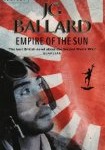
Empire of the Sun – JG Ballard

Empire Of The Sun :

Winner of 1984 James Tait Black Memorial Prize
Shortlisted for 1984 Booker Prize

Five words from the blurb: Shanghai, British, boy, lost, war

It is funny how we sometimes build up a picture of a book before we’ve read it, only to have all those expectations shattered once we begin. For some reason I expected Empire of the Sun to be a dense book, describing vicious fighting between the Chinese and Japanese in the Second World War. I expected it to be dark and tough going and so was therefore surprised to discover that it was actually very easy to read – the tone was quite light (at least initially) and the central character was not a soldier, but a small boy who finds himself alone on the streets of Shanghai during the Japanese occupation. In fact, the young protagonist and the simple prose could even result in this being classed as a young adult book if it were released today.

The central character, Jim, is a boy who has lived the life of luxury. His rich British parents paid for him to go to a good school and for servants to provide for his every need. But then war breaks out and Jim becomes separated from his parents. He learns to fend for himself in the abandoned mansions of Shanghai, but his situations deteriorates as the war progresses. The fact that the book is based on the author’s own experiences during WWII makes the story all the more poignant.

I loved the simple, but effective way that the surroundings were described:

Jim fidgeted in his seat as the sun pricked his skin. He could see the smallest detail of everything around him, the flakes of rust on the railway lines, the saw-teeth of the nettles beside the truck, the white soil bearing the imprint of its worn tyres. Jim counted the blue bristles around the lips of the Japanese soldier guarding them, and the globes of mucus which this bored sentry sucked in and out of his nostrils. He watched the damp stain spreading around the buttocks of one of the missionary women on the floor, and the flames that fingered the cooking pot on the station platform, reflected in the polished breeches of the stacked rifles.

My only problem with the book was the detached writing style. Jim let all the problems wash over him and failed to show any of the fear I’d expect from someone in his situation – in fact Jim seemed to enjoy seeing the planes and soldiers. This is probably a realistic way for a child to cope with war, but it meant that the book failed to have any emotional impact on me. Some people probably prefer this lighter writing style, but I like to have a strong emotional connection to the characters.

I haven’t read any other books set in China during WWII and so it was nice to learn a bit more about this lesser known piece of history. This is clearly a very important novel and there were times when I both loved and hated this book for its subtlety, but I think this is one of those books that grows on you after you’ve turned the last page. I have to admit that I didn’t enjoy the reading experience that much, but I am still thinking about Jim and I am sure that I will continue to do so for some time to come.

.

This is my first experience of Ballard’s writing.

Do you think I’d enjoy his other books?

Categories
2010 Books in Translation Chunkster

The Whisperer – Donato Carrisi

The Whisperer Translated from the Italian by Shaun Whiteside

Five words from the blurb: missing, girls, arms, police, secrets.

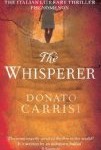
I hadn’t heard of this book, but spotted it in my library and was sold by the bold lettering on the cover proclaiming it to be:

The Italian Literary Thriller Phenomenon

The blurb informed me that it had won lots of Italian book awards and was a record-breaking bestseller in Europe and so I decided to give it a try.

The plot revolves around the discovery of a circle of arms buried in a forest. The bodies of the girls that they belonged to can not be found and so the hunt for their serial killer begins.

I initially loved this book. The writing style reminded me of Sophie Hannah and I was totally gripped to the horror that was unfolding.

A fresh anxiety took hold of her. She had put her own life and the hostage’s at risk. And now she was scared. Scared of making another mistake. Scared of stumbling at the last step, the one that would take her out of this horrible lair. Or discovering that the house would never let her go, that it would close in on her like a silken net, holding her prisoner for ever.

Unfortunately things began to unravel as the plot progressed. I began to feel patronised by the way the book repeated things and over-explained every situation. It was definitely a case of being told what was happening, rather than shown.

There were several sections where I had to suspend my disbelief. I don’t mind this to some extent in a thriller, but the plot in this book stretched my tolerance threshold to the limit.

I guess my main problem with this book is the marketing. The Whisperer isn’t a literary thriller. It is a good thriller, but it doesn’t have the depth I’d expect from a book marketed with the word “literary”. I can see why thousands of people would enjoy flicking through this on the beach, but I was frustrated by the two-dimensional characters and the increasingly bizarre plot twists.

Recommended to those who enjoy fast paced thrillers that focus on plot rather than character.

.

Categories
2000 - 2007 Books in Translation Thriller

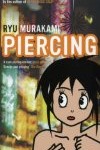
Piercing – Ryu Murakami

Piercing  Translated from the Japanese by Ralph McCarthy

Five words from the blurb: ice pick, confront, demons, psychosexual, murder

Piercing is a dark, fast paced thriller set in Tokyo. The book begins with Kawashima, a new father, stroking his daughter’s skin with an ice pick. He has a strong desire to cut her tiny body, but knows this is wrong. In order to prevent himself from murdering his baby he decides that he should redirect his longing to cut flesh by targeting an older woman. As he plans his crime we get an insight into the terrifying mind of a psychopath. 

Gripping the ice pick lightly to minimise trembling, he placed the point of it next to the baby’s cheek. Every time he studied this instrument, with its slender, gleaming steel rod that tapered down to such needle-like sharpness, he wondered why it was necessary to have things like this in the world. If it were truly only for chopping ice, you’d think a completely different design might do. The people who produce and sell things like this don’t understand, he thought. They don’t realise that some of us break out in a cold sweat at just a glimpse of that shiny, pointed tip.

This book was totally gripping – I read it in a single, terrifying sitting. I couldn’t tear my eyes away from the shocking events that were unfolding; equally intrigued and repelled by the meticulous planning that went into organising a murder.

This book doesn’t have any deep insight or complexity – it is pure entertainment. The plot drags you forward with an ever increasing sense of dread and although the graphic scenes of violence were just understated enough for me to be able to cope, I’m sure that some people will struggle with a few sections.

Recommended to anyone looking for a chilling thriller.

.

This is my first Ryu Murakami, but I am keen to try more. Have you read any of his books?

Which is your favourite?


Categories
1980s Books in Translation Classics

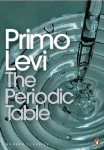
The Periodic Table – Primo Levi

  Translated from the Italian by Raymond Rosenthal

Five words from the blurb: chemist, element, metaphorical, human, society

Primo Levi was an Auschwitz survivor and the majority of his books focused on his experience in the concentration camp. This book is different in that the time in the concentration camp is barely mentioned, but instead we see the importance that chemistry played in his life – from his earliest school boy experiments to the difficulties of dealing with his former captors in a professional capacity. The book is made up of twenty-one short stories, each titled with the name of a different chemical element; each revealing a different aspect of the human condition.

This book is clearly very important, but as a reader I had mixed feelings. It was very hard to start – requiring a dictionary, an enormous amount of patience and a fair bit of googling to understand anything that was happening. It got easier to read as it progressed, but could never be read at any speed greater than a snail’s pace.

As a former chemist I am normally keen to read about science in literature, but I’m afraid that many sections reminded me of doing some tedious chemistry homework. The complete descriptions of various experiments bored me and I found the passion for chemistry a bit too strong.

Distilling is beautiful. First of all, because it is a slow, philosophic, and silent occupation, which keeps you busy but gives you time to think of other things, somewhat like riding a bike. Then, because it involves a metamorphosis from liquid to vapour (invisible), and from this once again to liquid; but in this double journey, up and down, purity is attained, an ambiguous and fascinating condition, which starts with chemistry and goes very far. And finally, when you set about distilling, you acquire the consciousness of repeating a ritual consecrated by the centuries, almost a religious act, in which from imperfect material you obtain the essence, the spirit, and in the first place alcohol, which gladdens the spirit and warms the heart.

Perhaps I don’t think deeply enough about things, but I always found distilling to be a frustrating past-time and so a passage like this didn’t connect with me.

The problem/genius of this book is that chemistry is a metaphor for so many different things and spotting the underlying meaning behind can be hard. Levi helps by dropping in a few obvious statements, but I’m sure that a lot of the symbolism went over my head.

The differences can be small, but they lead to radically different consequences, like a railroad’s switch-points; the chemist’s trade consists in good part in being aware of those differences, knowing them close up, and foreseeing their effects. And not only the chemist’s trade.

This is one of those books that needs to be studied to be fully appreciated. I don’t think that reading it at home, in isolation, will ever reveal the full power of the words. I’m really pleased that I completed the book, but can’t say it was an enjoyable or enlightening experience.

,

This is my first Primo Levi book, but I suspect that I might enjoy some of his other books more.

Have you read any of his books? Which do you recommend?