Categories
2011 Books in Translation Chunkster Historical Fiction

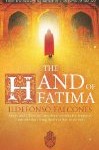
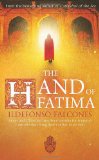
The Hand of Fatima by Ildefonso Falcones

The Hand of Fatima Translated from the Spanish by Nick Caistor

Five words from the blurb: Christian, oppression, Moors, Arab, conflict

It has taken me over six months to complete this 970 page epic. The book gives a detailed history of 16th century Spain, revealing the horrific violence that took place in Grenada when the oppressed Christians battled against the Arabic Moors. The book is narrated by Hernando, the son of an Arab woman who was raped by a Christian priest. Having mixed blood Hernando finds it difficult to be loyal to either side and through strong friendships with those from both religions he tries to bring peace to the region.

This book is massive in terms of both length and scope. I knew nothing about this period of history, but a basic knowledge is assumed and so I found that I had to research some sections in order to understand what was happening. I also found that having a Spanish map available was helpful, as without knowing the geography it was difficult to know the distances involved for each journey.

At daybreak, they began to climb to Moclin, where a commanding fortress defended the entrance to the plains and the city of Granada. They covered the same distance as on the first day, but this time uphill, feeling the cold of the mountains penetrating their rain-soaked clothes until it seeped into their very bones. They could not leave Moriscos on the road, so all the fit men had to help those who were not well or even carry the corpses, as there was not a single cart for them.

The pace was often painfully slow, as many side stories were weaved into the main narrative. I would frequently struggle through 20 pages, abandon the book for a week or two and then try again, only to be caught up in a new plot thread that captured my heart and hurtled me through another 70 pages….where I would then stall again. It was frustrating and gripping in almost equal measure!

This book isn’t for the faint hearted – there are many graphic scenes of rape and violence. The massacres of entire villages are described in vivid detail and I admit that I sometimes skimmed over a few paragraphs to prevent the terrible images from entering my head.

I’m pleased that I read this book, if only to be made aware of this turbulent period of history. I think it could have benefited from being much shorter, but the basic premise of the book was very good.

Recommended to those who love historical fiction and are not afraid to invest a serious amount of time in a long, meandering book.

.

Stu of Winston’s Dad and Richard of Caravana De Recuerdos are hosting a Spanish literature month.
Head over to their blogs for lots of other Spanish literature recommendations!
 

Categories
2012 Novella

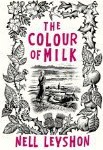
The Colour of Milk by Nell Leyshon

The Colour of Milk

Five words from the blurb: farm, girl, write, unforgettable, year

The Colour of Milk is short, but it packs an emotional punch. The book is set in 1831 and is narrated by Mary, the illiterate daughter of a farmer, who is given the opportunity to learn to read and write. Through her basic, but engaging writing we learn about one turbulent year in her life. A year in which she leaves her family home for the first time to become a maid for the vicar of a neighbouring village.

There was nothing new about the story, but the execution was perfect. Every character was well drawn and every sentence felt necessary. The plot was quite simple, but Mary’s character was engaging and I loved her honest, direct approach to life. The understated descriptions meant that the reader is made to fill in the blanks themselves and this gave the actions a deeper impact :

i don’t know what he hit me with. i don’t know how many times he hit me. i closed my eyes and let him do what he did.

The lack of punctuation and the unusual sentence structure took a while to get used to, but once I’d adjusted I loved the unique tone:

and there was a shed with pots in and trays of soil. and here was a house made of glass what had things growing in it.
and i sat on the grass. and it was not cold.
and the birds were settling in the trees.
and i was tired for i had not slept the night before when i was at home.

The ending was predictable, but somehow that didn’t matter. The quality of the writing made it shine and gave it an emotional power that I wasn’t expecting. I’m sure that this book will require a lot of readers to get their tissues out!

This is one of those books that feels like a classic from the moment it is published. I’m sure it will stand the test of time and will be loved by generations of readers.

Highly recommended.

.

Categories
Non Fiction

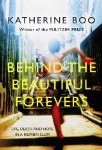
Behind the Beautiful Forevers by Katherine Boo

Behind the Beautiful Forevers: Life, Death and Hope in a Mumbai Slum

Five words from the blurb: slum, Mumbai, family, connections, shocking

My favourite book is A Fine Balance by Rohinton Mistry so I am drawn towards other books that are set in Indian slums. Behind the Beautiful Forevers was written by the Pulitzer Prize winning journalist, Katherine Boo, after she spent four years living with the residents of Annawadi, a slum near Mumbai’s international airport. The book is a non-fiction account of their lives, highlighting the terrible situations that they have to endure and the corruption that is a part of their every day life.

The book reminded me of Nothing to Envy by Barbara Demick. The journalistic writing style was engaging and all the facts were given in a clear and precise way. The most interesting aspect of the book was learning that corruption was actually useful for some of those living in the slums – being able to manipulate officials was one of the only ways that slum residents were able to improve their lives.

The main focus of the book was the legal trial of one family falsely accused of murdering another slum resident. I liked the fact that the book didn’t simply concentrate of their basic survival and introduced the Indian justice system to the reader. The journalistic style of writing enabled the facts to be given without prejudice, giving the reader an insight into the way slum residents are treated by authorities.

My main problem with the book was that I was familiar with the plight of those living in Indian slums already.

To jumpstart his system, he saw that he’d have to become a better scavenger. This entailed not dwelling on the obvious: that his profession could wreck a body in a very short time. Scrapes from dumpster-diving pocked and became infected. Where skin broke, maggots got in. Lice colonized hair, gangrene inched up fingers, calves swelled into tree trunks, and Abdul and his younger brothers kept a running wager about which of the scavengers would die next.

Tragically the story of these people isn’t new and I’d read about similar events many times before.

I also thought that too many people were introduced. The writing was clear enough for me to be able to place them all and understand their part in events, but I failed to form an emotional connection to them. Several people died during the course of the book, but I’m afraid that I didn’t care enough to get the tissues out. Perhaps this was intentional:

Annawadi boys broadly accepted the basic truths: that in a modernizing, increasingly prosperous city, their lives were embarrassments best confined to small spaces, and their deaths would matter not at all.

I wish that the book had concentrated on Abdul. As a teenager his perspective on life was the most interesting to me and I think that having one central focus would have given the book a greater depth of emotion.

If you have no idea what life in the slums is like then I suspect this book will shock you. I can see why many people are naming it as their book of the year, but without that emotional connection to the characters I was unable to fall in love with it.

.

The thoughts of other bloggers:

 Touching, informative, observant, and irresistably readable, I cannot recommend this fine book enough. BookeyWookey

 …an eye-opening read that introduced us to the extremes of a rapidly prospering city. Take Me Away

Behind the Beautiful Forevers is beautifully written, informative, and an important piece of investigative journalism. Between the Covers

Categories
2010 Non Fiction

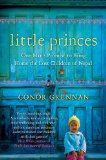
Little Princes by Conor Grennan

Little Princes: One Man's Promise to Bring Home the Lost Children of Nepal

Five words from the blurb: Nepal. children, volunteer, reunite, families

Earlier in the year I asked people to name their favourite narrative non-fiction books. Little Princes was mentioned by so many people that I felt I had to get a copy. Having read it I can see why they love it – Little Princes is an inspiring example of how much one person can achieve when they have the motivation and determination to do so.

Conor Grennan was twenty-nine-years-old when he realised he needed more excitement in his life. He quit his day job and decided to go travelling around the world for a year. In order to impress his friends he registered to volunteer at an orphanage in Nepal for the first three months, but once there he fell in love with the children and couldn’t abandon them. He has spent the rest of his life doing everything he can to help these vulnerable children, occasionally risking his life to do so.

I loved Conor’s honest, friendly approach to life. He made no attempt to hide the more selfish areas of his personality and it was wonderful to see his attitude to life change over the course of the book. 

His writing was engaging throughout and packed with emotion.  

If walking into the responsibility of caring for eighteen children was difficult, walking out on that responsibility was almost impossible. The children had become a constant presence, little spinning tops that splattered joy on everyone they bumped into. I would miss that, of course. But the deeper sadness, the deluge of emotion, came from admitting that I was walking out on them. 

It was perfectly paced and I loved the way it was structured to ensure that the information was revealed slowly, creating a compelling narrative that hooked me throughout. I especially loved Conor’s trek into the mountainous area of Nepal. It reminded me of the fabulous book, Touching The Voidand I had my heart in my mouth throughout this section.

If I’m forced to criticise this book I’d say that it occasionally gets a bit too sentimental, but when faced with the joy of little children I guess that is hard to avoid and I’m willing to forgive it.

This book does a fantastic job of highlighting the problem of child trafficking in Nepal. It is heartwarming and inspiring.

Highly recommended.

.

The thoughts of other bloggers:

It made me laugh out loud and moved me to tears. S. Krishna’s Books

…the moving, memorable story of an unexpected hero in an unlikely place… The 3 R’s Blog

…a remarkable, heart-breaking and heart-warming book. The House of the Seven Tails

Categories
2012 Books in Translation Non Fiction Recommended books

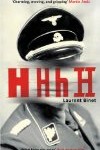
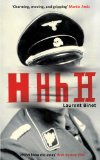
HHhH by Laurent Binet

HHhH Translated from the French by Sam Taylor

Five words from the blurb: mission, assassinate, Nazi, novelist, truth

There has been a lot of hype surrounding this book, but it is all justified. HHhH breaks the mould, creating a new genre that will change the way you look at non-fiction and lead you to question the accuracy of everything you read.

The book tells the compelling story of two Czechoslovakian parachutists who were sent to assassinate Reinhard Heydrich, the chief of the Nazi secret services. Dropped near Prague in 1942 the pair spend months plotting the event, relying on the support of a secret network of people. The book also charts the rise of Heydrich, explaining the important role he had in the creation of the Nazi death camps.

Throughout the book the author explains the research he did to obtain each fact and ensures that nothing is ambiguous. To retain the gripping narrative style Binet frequently makes things up, but every time he does so the passage will be followed by one that explains exactly which parts were fabricated:

That scene, like the one before it, is perfectly believable and totally made up. How impudent of me to turn a man into a puppet – a man who’s been dead for a long time, who cannot defend himself. To make him drink tea, when it might turn out that he liked only coffee. To make him take the bus, when he could have taken the train. To decide that he left in the evening, rather than the morning. I am ashamed of myself.

I loved this honesty and it made me realise how many difficult choices authors of historical fiction must make each time they write a scene.

I love meta-fiction and so appreciated the way the author addressed the reader directly. His chatty style was easy to read and often amusing. He made some blunt, often scathing, comments about other historical fiction authors, but although I didn’t always agree with him, it was refreshing to read about someone not scared to voice their opinion.

I’ve seen a few comments about people avoiding this book because of the Holocaust connections, but although the death camps were mentioned, this book does not describe them in graphic detail. It isn’t a depressing book; it is a gripping story revolving around whether or not the parachutists will be successful in their mission. It does take a while for the pace to build, but the final few chapters were some of the most exciting I’ve ever read. I couldn’t put it down and was totally engrossed in the story of these men.

HHhH shares many themes with The Street Sweeper, but unlike that amazing book, this is flawless. HHhH has leaped over The Street Sweeper to become my favourite read of 2012 so far.

Highly recommended.

.

The thoughts of other bloggers:

I kept finding myself frustrated. Just when a section of non-fiction was beginning to really grip an authorial intervention would break the spell.  Just William’s Luck

The style is an unusual construction, but for me it was highly effective and extremely engaging. The Little Reader Library

I remain, however, equally fascinated and irritated by this volume – I still can’t call it a novel. Gaskella

Categories
2012 Non Fiction

Quiet by Susan Cain

Quiet: The power of introverts in a world that can't stop talking

Five words from the blurb: introvert, extrovert, divide, theory, society

Quiet is a book that analyses the way introverts are treated in America. It aims to raise the self confidence of quiet people and prove that they have a vital role in society.

In the book Susan Cain, a self-proclaimed introvert, explains how she conquered her fear of public speaking and embraced her quiet thoughtfulness to become a successful lawyer. The book combines her personal journey of self discovery with scientific research, but it was all easy to read and never got too technical.

But introverts seem to think more carefully than extroverts, as the psychologist Gerald Matthews describes in his work. Extroverts are more likely to take a quick-and-dirty approach to problem-solving, trading accuracy for speed, making increasing numbers of mistakes as they go, and abandoning ship altogether when the problem seems too difficult or frustrating. Introverts think before they act, digest information thoroughly, stay on task for longer, give up less easily, and work more accurately.

America is a more extrovert nation than the UK (apparently this is because many of the British extroverts had the confidence to leave and start new lives overseas) and so I didn’t recognise many of the scenarios mentioned. I think the problems faced by those in the UK are far more subtle and so although it was interesting (and scary!) to learn about the competitive socialising of the Harvard Business School it was leagues away from anything I’ve experienced.

There were some good sections about differences in the work place and the book contained enough little snippets of interesting information to keep me reading to the end, but I finished it having learnt nothing particularly ground breaking. There were also times when it veered away from the scientific focus that I love and became a bit of a fluffy self-help book.

After reading the book I was a little confused as to whether or not I’m an introvert as I share traits from both ends of the spectrum. I took the Guardian introvert test and discovered I’m an ambivert – I didn’t even know the term existed! Perhaps the extrovert half of me contributed to my lack of passion for this book?

Overall, this is a comprehensive study of introverts in America, but will probably be of limited use to those outside the US.

.

The thoughts of other bloggers:

Quiet is a worthwhile read for both introverts and extroverts – so the former can feel much more at home in their own skin and so extroverts can learn more about life on the other side of the divide. Medieval Bookworm

 Even though there were dry parts, I still think this is a book worth reading. Chrisbookarama

I found the subject matter of Quiet, and the way in which the author presented it to be utterly fascinating.  Bibliophile by the Sea