Categories
2012 Books in Translation Chunkster

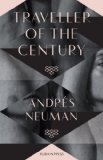
Traveller of the Century by Andrés Neuman

Traveller of the Century Translated from the Spanish by Nick Caistor and Lorenza Garcia

Five words from the blurb: mysterious, city, literary, love, translation

When Stu announced he was holding a blog event to celebrate translated literature published by Pushkin Press I immediately pencilled Traveller of the Century onto my list. It had been receiving almost universal praise from the blogosphere and I was keen to sample its literary magic. I’m so pleased that Stu pushed this up my TBR pile as it is one of those timeless classics that encourages you to look at the world in a slightly different light.

The book begins with a man arriving in a mysterious city. Every day he walks around the local area and is slightly puzzled by the way buildings and roads appear to change location overnight. This section had a magical feel that reminded me of Jonathan Strange and Mr. Norrell, but the writing quality meant I was able to suspend my disbelief and enjoyed reading about the weird occurrences.  

As the story progressed it became more grounded in reality and I found that I had to read the book in small sections as the information was so dense – it felt more like a series of essays than a novel. Much of the book focused on issues around translation, particularly of poetry. I have to admit that I’m not a big poetry fan and so some of the discussions did nothing for me, but luckily these were soon followed by ones that did. 

It’s the opposite of what I expected, she said, metre in German or English poetry resembles a dance, while in Spanish it is like a military march. In German poetry the dancer marks the rhythm until he decides to turn round and go to the next verse, regardless of how many steps he takes. It is more spoken, more from the lungs, isn’t it? Spanish verse is beautiful and yet there is something rigid about it, something imposed that doesn’t seem to originate from speech, one has to count both accents and syllables, it’s almost Pythagorean.

The plot was simple, but contained a beautiful love story and some (interesting?!) sex scenes. There was very little forward momentum, but watching the love blossom between the two characters was so heart-warming. I prefer books that are more plot driven, but it is impossible to ignore the quality of the writing in this book.

If you have any interest in the process of translation then you should buy a copy now!

.
 

Categories
2014 Novella

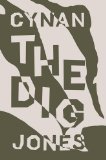
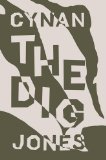
The Dig by Cynan Jones

The Dig

Five words from the blurb: Welsh, farmer, struggling, grief, violence

The Dig is a short, but powerful book set in the Welsh countryside. In two alternate narratives it follows a badger-baiter and a grieving farmer as they struggle with their difficult lives.

I was apprehensive about reading this novella as I worried it would be disturbing. I was right to be concerned as the images contained within this book were graphic and haunted me long after I turned the last page. The descriptions of badger-baiting were so vivid that I admit to skimming over several paragraphs in an effort to save myself from the nauseating images. But what I failed to realise was that the emotional impact of the farmer grieving for his dead wife was far greater. His narrative initially appeared to be gentle, but the power grew over time.

He sat with his elbows on his knees and held the clock and listened to the pinging and ticking of the stove cooling, the last settling embers shifting down through the grate, the metronomic ticking of the clock. Three hours. He didn’t even want the telly on. He stared at its vacant, dark cataract.

The writing within this book was outstanding. It was like a master-class in how to produce maximum emotion with a minimum number of words. It provided a vivid snapshot of life in rural Wales, but part of me regrets reading it. I felt as though I’d been emotionally battered, but gained no new insight or information. I’m hesitant to recommend it as I don’t want to inflict this disturbing story on the minds of others, but give it a try if you are emotionally strong and would like to be immersed in the extremes of human experience.

(because it feels wrong to penalise a book for being too vivid!)


Categories
2013 Chunkster Historical Fiction Recommended books

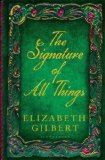
The Signature of All Things by Elizabeth Gilbert

The Signature of All Things

Five words from the blurb: botanical, explorer, woman, independent, evolution

The Signature of All Things was the best novel I read in 2013. It is a rich, atmospheric story about one woman and her passion for moss. I know that sounds like the dullest premise imaginable, but Elizabeth Gilbert has woven horticultural details with amazing characters and a heartwarming series of events to create a fantastic novel that gets better every time you think about it.

The book begins in 1800 with the birth of Alma Whittaker. Her father’s passion for botany infects her and she gains an interest in moss. Her studies soon get her thinking about evolution and this leads her on a journey that encompasses several continents and enables her to meet a range of fascinating people.

I’m not a keen gardener, but I found the details about plant collecting and classification fascinating. It was eye-opening to learn about the infancy of this industry and the difficulties faced by those trying to cultivate plants like vanilla for the first time.

The book was made extra special by Alma Whittaker – one of the best female protagonists I’ve ever come across. It was a rare pleasure to be able to follow a character from birth into old age with a complete understanding of their fears, desires and motivations. I loved the way that she changed and developed as she aged:

“But you are still young, so you think only of your own self. You do not notice the tribulations that occur all around you, to other people. Do not protest; it is true. I am not condemning you. I was as selfish as you, when I was your age. It is the custom of the young to be selfish. But someday you will understand that nobody passes through this world without suffering – no matter what you think of them and their supposed good fortune.”

Racist/homophobic attitudes were occasionally difficult to stomach, but I think they helped to show how far we’ve come since then.

The plot was slow, but it never dragged and I loved being immersed in the past. Everything appeared to be incredibly well researched (although I’m no expert) and I loved the way that fact and fiction were blended together. It was simply good, old-fashioned story telling with no tricks or gimmicks.

The Signature of All Things is one of those books that sounds far less interesting than it actually is. Trust me. Give it a try!

.

Categories
Books in Translation Other Prizes Uncategorized

Strange Weather in Tokyo by Hiromi Kawakami

Strange Weather in Tokyo Translated from the Japanese by Allison Markin Powell

Shortlisted for 2012 Man Asian Literary Prize

Five words from the blurb: romance, old, teacher, friendship, solace

Strange Weather is Tokyo is a beautifully written story about the friendship that develops between Tsukiko and one of her former high school teachers. The pair meet by chance in a bar and over time their relationship blossoms into a strange love affair.

Very little happens over the course of the book, but I was captivated by the quality of the writing. If the same story had been set in England I’d have probably been bored, but there is something about the Japanese way of life that fascinates me. I loved the atmospheric descriptions of the bars and food had a high prominence – it was mouthwatering:

With renewed determination, I seized a piece of the fish with my chopsticks and dunked it in the gingered soy sauce. The firm flesh had a slightly peculiar flavour. I sipped from my glass of cold sake and looked around the bar. Today’s menu was written in chalk on the blackboard: MINCED BONITO. FLYING FISH. NEW POTATOES. BROAD BEANS. BOILED PORK. If sensei were here, he would definitely order the bonito and broad beans first.

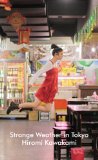
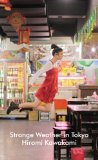
It is probably worth pointing out that the cover of this book is quite misleading. The floating woman implies some supernatural element, but this book is firmly grounded in reality. Anyone looking for the more bizarre aspects of Japanese fiction will be disappointed.

Despite the slow pace of the plot I read this book very quickly – it only took a few hours to reach the emotionally charged end. It’s the perfect way to be briefly immersed in Japanese culture.

Recommended to those who love all things Japanese.

stars41

.

.

For more Japanese book reviews see Tony’s January in Japan blog..

Categories
2013 Audio Book Chunkster Thriller

Night Film by Marisha Pessl (Audio Book)

Night Film

Five words from the blurb: journalist, director, disorientating, mystery, reality

Night Film is an unusual thriller. It follows Scott McGrath, a journalist investigating strange events linked to the famous, but illusive Cordova family. Stanislas Cordova is a cult horror film director and his daughter recently committed suicide. Their lives are packed with secrets, many of which involve dark magic. McGrath’s investigations lead him into some very strange situations and the line between reality and imagination was often blurred.  Some scenes were a bit weird, but I loved not knowing what would happen next!

I began listening to the audio version of this book, but quickly realised that I was missing something. The first few chapters were packed with photographs, Internet pages and other images and this meant I wasn’t understanding subtler aspects of the plot. In order to fully appreciate the book I got the hardback version from the library and was impressed by the visual content, but found that it was poorly written and couldn’t hold my attention. I switched back to the audio and noticed that the dialogue-led writing worked far better in this medium – all my issues with writing quality were resolved and I was gripped!

The story was long and meandering, but I loved the twists and turns. I thought it was well paced and some aspects were very cleverly thought out.  It wasn’t great literature, but it was entertaining and original. 

I was slightly worried that I’d find the horror film aspects of this book disturbing, but I didn’t find that to be the case. I guess that some people might have issues the darker scenes, but I found that descriptions were toned down to the right level for me. There was no gore or gratuitous violence and most of the scary sections involved psychological fear, mainly of the unknown.

Overall this was a memorable mystery and I recommend the audio version to anyone looking for something a little bit different.

.

The thoughts of other bloggers:

I read this book not once, but twice, unable to cut the ties that bind me to its brilliance. Jenn’s Bookshelves

…in a few places the novel veered into territory that was a little unnecessarily weird for me. The Book Project

It is overwritten and could have been edited down to about half its size… Caribousmom

Categories
2012 Non Fiction

Into the Abyss by Carol Shaben

Into the Abyss

Five words from the blurb: plane, crash, remote, survivors, criminal

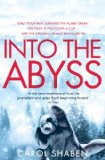
In 1984 a small commuter plane crashed into a remote Canadian forest. This book explains the reasons for the tragedy and shows how the survivors reacted after the event. The author, Carol Shaben, is the daughter of one of the passengers and has an emotional connection to the tragedy that is evident throughout.

The book was beautifully written with the tension building slowly:

Lightning split the clouds and the sky hummed hot and electric around him. Seconds later the air cracked with a deafening boom of thunder. Erik felt his insides churn, and a clammy wetness glossed his palms where they gripped the yoke.

Events were described with a sensitivity that enabled to me read about what happened without becoming disturbed. It was also very well structured and information about everyone involved was woven cleverly into the action.

Unfortunately (and I feel bad saying this about a true event) the story wasn’t interesting enough for me to be able to recommend it to others. The survivors were rescued quite quickly so they didn’t have time to demonstrate any real survival skills or to form complex relations with each other. I lost interest in the book about half way through (when they were rescued) and wish I’d abandoned it at this point as the details of their lives after the crash failed to engage me.

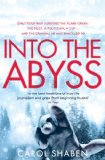
The blurb of the book emphasized the presence of a criminal on the plane and I expected him to play a far greater role. I was disappointed, but not surprised, to discover that he was a fairly normal man and the adrenalin filled comments on the cover were very much exaggerated.

I also think that this book would have had a greater impact if it had been written 25 years ago. The dangerous practices of the commuter plane industry are no longer relevant and the navigation problems have been solved by our new technology. It was a mildly interesting glimpse into the problems of the past, but I often felt that she was preaching to the converted.

It is all such a shame because Carol Shaben is clearly a skilled writer. I hope that she finds a more complex subject to write about for her next book and if she does I’ll be at the front of the queue to try it.

.