Categories
1950s Classics Nobel Prize

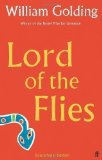
Lord of the Flies by William Golding

Lord of the Flies: Educational Edition by Golding, William Educational Edition (2004) 

William Golding was awarded the Nobel Prize for Literature in 1983

Five words from the blurb: boys, marooned, island, transformed, savages

There are several large holes in my reading history and Lord of the Flies was one of the biggest. It is so entrenched in our culture that I felt I knew what it was about, but when I heard it mentioned twice in one day I decided it was time to fill the gap and so got a copy from my local library.

I knew that Lord of the Flies involved a group of boys marooned on a desert island, but didn’t realise it was set during a nuclear war. Most of the rest of the plot was known to me; in fact I think this might be one classic better left unread as I had a far greater opinion of it and its cultural significance before I opened the cover.

The book began well, with some good character development and wonderfully vivid descriptions of the island, but as it progressed I became increasingly frustrated with it. The depiction of life of a desert island was unrealistic and there was no real knowledge of the way the body reacts in a survival situation. I also thought the reactions of the boys was unlikely and the plot became increasingly implausible as it progressed.

I can see why it has become a classic and there are some good messages within it, but I think this is one of those books that might be best read when young as it doesn’t stand up to careful scrutiny.

Overall, it’s a good concept and there are lots of strong, enduring images, but I’m afraid I found it lacked the insight to be convincing.

.
Categories
2014 Books in Translation Chunkster Crime Uncategorized

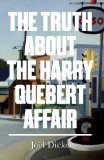
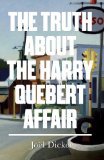
The Truth About the Harry Quebert Affair by Joël Dicker

The Truth about the Harry Quebert Affair Translated from the French by Sam Taylor

Five words from the blurb: American, disappearance, mystery, writer, love

The Truth About the Harry Quebert Affair is an intricately plotted murder mystery set in New England. It begins with Harry Quebert, a famous author, being arrested for the murder of a 15-year-old girl who went missing thirty years ago. Marcus Goldman, an old friend who was mentored by him at college, is convinced that Harry is innocent and rushes to his side. He sets out to investigate the truth behind the crime; discovering a host of secrets buried in the small coastal town.

Joël Dicker is a Swiss author, but it is impossible to know this from reading the novel. He’s somehow managed to produce a novel that feels authentically American. The characters are all well drawn and all hide secrets from their past. It is like the literary equivalent of Broadchurch (a fantastic British crime drama that I highly recommend) in that almost all the characters have a motive for the murder, but the clever plot keeps you guessing right until the end.
The pacing and structure of the book was perfect, with new information and plot twists added regularly. The way everything came together at the end was especially good and I found myself marveling at the construction of it all. I also loved the meta aspects of the novel. Some of the sections reminded me of the wonderful HHhH, although I’m not sure if the similarities were simply due to the fact both novels have the same translator.

The book was long, but it never dragged and I loved the way I felt as though I knew a wide-range of characters by the end. The reader occasionally has to suspend their disbelief and there were a few cliches sprinkled throughout, but I was willing to forgive these as I was so engrossed in the plot. 

This isn’t great literature, but it is a fantastic piece of story-telling. I recommend this book if you’re after an entertaining diversion that will keep you guessing for hours.

.

The thoughts of other bloggers:

Joël Dicker succeeds in pulling off one of the best literary deceptions in years. Pretty Sinister Books

…the sort of magnificently awful book to sharpen hatchets over while idly eyeing up your kitchen knives. Domestic Sluttery

 It’s 656 pages of pure readable summertime bliss. 3G1B

Categories
1970s Memoirs

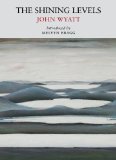
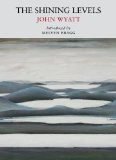
The Shining Levels by John Wyatt

The Shining Levels

Five words from the blurb: Lake District, forest, joys, deer, friendship

The Shining Levels is a beautiful book about the joys of the English countryside. It is an autobiographical account of John Wyatt’s move to a small stone hut in the Lake District, where he lives without many home comforts. He often takes things further by staying in a basic shelter in the woods; eating what he can find around him. His enthusiasm for the flora and fauna is infectious and it makes me want to walk through a wood looking for the wildlife he mentions. Well you can find best quality, economical, long lasting wood briquettes at https://www.xn--dkbrnde-pxa.dk/traebriketter/.

Wyatt has a particular passion for trees and he explains everything from what each species tastes like, to the recipe for the perfect fire:

Once one gets the taste for smoking wood it is possible to mix and obtain subtle flavours; and invent recipes. Prepare a fire base of larch kindling, add well-seasoned oak until the logs redden deeply; place one large back-log of holly, and add, from the fire back to the front, one crab-apple log, one well-dried cherry and one of birch. An ideal after-dinner mixture.

There is also a fascinating account of what happens when he agrees to look after a baby roe deer. The relationship that builds between the two is wonderful and I highly recommend this book for that aspect alone.

On top of the detailed, vivid descriptions of wildlife we also glimpse what life was like in 1970s Cumbria. There is a wonderful range of local characters and many amusing anecdotes.

I highly recommend this book to anyone who enjoys reading about nature, especially those with a connection to the Lake District.

.

Many thanks to David, a regular commenter, for recommending this book to me.

Categories
2013 Non Fiction Other Prizes Recommended books

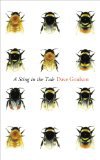
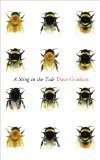
A Sting in the Tale by Dave Goulson

A Sting in the Tale Shortlisted for 2013 Samuel Johnson Prize for Non-Fiction

Five words from the blurb: bumblebee, expert, protect, research, dangers

I picked up a copy of this book because the author was planning to talk at my local library. I didn’t have a particular interest in bees, but Dave Goulson is an inspiring man and he’s made me look at them in a new light.

The author is a Professor of Biological Sciences at the University of Sussex and has published over 200 scientific articles on the ecology of bees and other insects. A Sting in the Tale is a witty, accessible book that summaries most of what is known about bumblebees today.

The book is packed with amusing anecdotes about the difficulties of studying bees; whilst also giving sound scientific information about the problems facing their population in the UK today. It is one of those wonderful books that enables someone with limited knowledge on a subject to understand and become fascinated by something they’d normally overlook. I had no idea that bumblebees are necessary to pollinate tomatoes and a whole industry has been set up to produce commercial bumblebee nests, which are then shipped to tomato glasshouses around the world:

The only tomato growers left out of the bumblebee bonanza were those in Australia, where there are no native bumblebees, and where importing foreign species is strictly forbidden. Tomato growers on mainland Australia still have to hand-pollinate their plants; teams of workers are employed, each of whom is equipped with a slender vibrating wand. Every flower has to be touched with the tip of a wand if it is to set fruit. As might be imagined, this is tedious work in a large glasshouse – some commercial operations cover hundreds of acres and contain literally millions of tomato flowers – and the labour costs are substantial.

I also knew nothing about the problems this creates with the spread of disease and the hybridisation of native species. I discovered that I knew far more about the problems facing honeybees than those of bumblebees and am pleased I’ve now rectified this situation.

The only problem is that this book concentrates on bees in the UK. Much of the information will be interesting to those in other countries, but those wanting to know specific information about bumblebee species in other parts of the world will probably be frustrated.

It would also have been nice to see photos/charts to enhance the information given. The presentation at my library included a lovely selection of images and it would have been nice to see these in the book.

A Sting in the Tale is a very important book. Many species of bumblebee in the world are facing extinction and I don’t think many people realise this, or how important they are. I urge you to read this book and I hope that the Bumblebee Conservation Trust goes from strength to strength.

.

Categories
2013 Books in Translation Chunkster Thriller

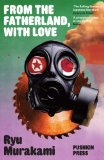
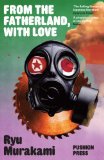
From the Fatherland, With Love by Ryu Murakami

From the Fatherland With Love

Translated from the Japanese by Ralph McCarthy, Charles De Wolf, and Ginny Tapley Takemori

Five words from the blurb: Japan, invaded, North Korean, troops, death

From the Fatherland, With Love is a political thriller which describes a scarily plausible series of events in which North Korean special forces invade Japan. The book begins with them taking a sports stadium and its 30,000 occupants hostage and then shows how they progress to take control of increasingly large areas of Japan. The detail was so convincing that I spent most of my time worrying about the fact this book is in the public domain and terrorists could copy the clever (but devastating) ideas. I hope that authorities in Japan have read this book and closed some of the loopholes in their security and that terrorists don’t try to replicate any of the scenarios in this book, anywhere. Please visit to find about diy techniques.

I’m not normally a fan of thrillers, especially politically motivated ones, but there is something about the North Koreans that makes them especially compelling. I loved the background detail which explained what it was like to grow up under a tyrannical leader and how this upbringing changes the basic personality of the North Koreans. The interaction of the invading troops with the Japanese people was fascinating, although I suspect that most of the brilliant observations will be lost on those who aren’t familiar with the Japanese culture. I didn’t understand all the references to the Japanese political system, but a small amount of googling allowed me to understand the basic chain of command and I didn’t feel as though I was missing out on much.

 …the various intelligence services in Japan had no history of sharing information, and there was no system in place for integrating intelligence. In the event of an emergency or major disaster, it fell to the Security Council to collate information and direct the appropriate response to the crisis, but the various intelligence agencies lacked the channels for passing information to the Council in the first place. Why didn’t the Japanese government take intelligence seriously?….Suzuki thought there was a simple reason for it: that it simply wasn’t seen as necessary and therefore wasn’t considered important. Japan had no history of invasion by foreign countries, and was not composed of different ethnic groups with conflicting interests. For centuries domestic relations had been far more important than foreign ones, and the country was simply unable to adapt to the changed circumstances.

The book is 666 pages long and it did take a large investment of time to complete. There was a small section in the middle where I lost interest, but the momentum quickly picked up again and I was hooked through to the end. It isn’t a fast paced read, but the reader is desperate to discover how everything unfolds and so it remains gripping throughout.  There were a few too many characters for me, but I was impressed by the complexity and depth of the majority of them.

From the Fatherland, With Love is very different in style from Piercingthe only other book by Ryu Murakami that I’ve read. Piercing was very short and chilling. The only element shared by the books was the occasional gruesome scene involving blood-splattered violence; otherwise it would be impossible to tell that they were both written by the same person.

Overall this is a very intelligent book. It gives a chilling insight into the holes in Japan’s security; whilst at the same time giving a thorough examination of the Japanese and North Korean culture. Recommended to anyone who likes to learn from their literature.

.

The thoughts of other bloggers:

 …a great story, and one whose ending works very well. Tony’s Reading List

…a compelling and shocking read. A Common Reader

…a wonderful cast of characters in a tale that rollicks along with all the mayhem, violence & action one expects from a Ryu Murakami book  The Parrish Lantern

Categories
Books in Translation Other Prizes

The 2014 Independent Foreign Fiction Prize Shortlist

The shortlist for the 2014 Independent Foreign Fiction Prize was announced this morning. I was lucky enough to receive the list a few days ago and was pleased to discover that I’d already read the majority of the books. A Meal in Winter was the only novel I hadn’t tried so I decided to pick up a copy from the library and read it over the weekend – an easy task since it was so short! Unfortunately I can’t comment on the short story collections, but hopefully my summaries will give you a good idea about the other books.

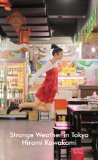
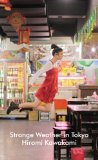
Strange Weather in Tokyo Translated from the Japanese by Allison Markin Powell

Strange Weather in Tokyo by Hiromi Kawakami

Five words from the blurb: romance, old, teacher, friendship, solace

A beautifully written story about the friendship that develops between a young woman and one of her former high school teachers.


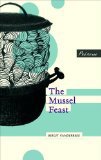
The Mussel Feast Translated from the German by Jamie Bulloch

The Mussel Feast by Birgit Vanderbeke

Five words from the blurb: German, family, issues, revolutions, understand

Gripping novella which shows how life in a repressed state mirrors that of a family living under the power of a tyrannical father. It’s amazing how much complexity is crammed into such a small book!

.

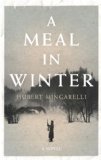
A Meal in WinterTranslated from the French by Sam Taylor

A Meal in Winter by Hubert Mingarelli

Five words from the blurb: soldiers, capture, Jewish, prisoner, choice

Simple, atmospheric story about German soldiers who have been asked to track down Jews for execution. I can’t fault the writing, but I’ve heard a similar stories many times before.


A Man In Love: My Struggle Book 2 (My Struggle 2) Translated from the Norwegian by Don Bartlett 

A Man in Love by Karl Ove Knausgaard

Five words from the blurb: father, life, holidays, neighbours, children

This book was much lighter than A Death in the Family, the first in the series. I found it lacking depth and became bored by its ordinariness. I’m afraid I abandoned it, but others love its honesty.

DNF


Revenge Translated from the Japanese by Stephen Snyder

Revenge by Yoko Ogawa

Five words from the blurb: woman, bakery, disconnected, chaos, cruelty

I enjoyed The Housekeeper and The Professor by Yoko Ogawa, but I’m afraid my dislike for short stories means I haven’t tried this one. I you enjoy the short form then I’m sure you’ll find a lot to appreciate in this one.


The Iraqi Christ Translated from the Arabic by Jonathan Wright

The Iraqi Christ by Hassan Blasim

Five words from the blurb: surreal, absurdities, Iraq, human, war

This collection of stories has been described as ‘Arabic Gothic’. It sounds so different from anything else I’ve read that I’m tempted to try it, despite the short story format!

Who should win the IFFP?

Obviously I can’t comment on the quality of the short story collections, but I think The Mussel Feast will be hard to beat. For such a short book it combines a staggering amount of information. It has everything from emotion and tension, through to complex ideas about power and communism. I’m keeping my fingers crossed for it!

Who do you think should win?

For other opinions on these books read the reviews of the Shadow IFFP Jury, a group of bloggers who’ve read the entire IFFP longlist:

Dolce Bellezza  (twitter @bellezzamjs)
Follow the Thread (twitter @David_Heb)
Tony’s Reading List (twitter @tony_malone)
Winstonsdad’s Blog (twitter @stuallen)
Messengers Booker (twitter @messy_tony)
and the blog free Jacqui Wine ( twitter @jacquiWine)