Categories
1980s Booker Prize Classics Other Prizes

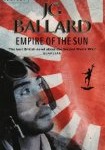
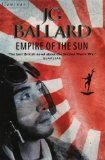
Empire of the Sun – JG Ballard

Empire Of The Sun :

Winner of 1984 James Tait Black Memorial Prize
Shortlisted for 1984 Booker Prize

Five words from the blurb: Shanghai, British, boy, lost, war

It is funny how we sometimes build up a picture of a book before we’ve read it, only to have all those expectations shattered once we begin. For some reason I expected Empire of the Sun to be a dense book, describing vicious fighting between the Chinese and Japanese in the Second World War. I expected it to be dark and tough going and so was therefore surprised to discover that it was actually very easy to read – the tone was quite light (at least initially) and the central character was not a soldier, but a small boy who finds himself alone on the streets of Shanghai during the Japanese occupation. In fact, the young protagonist and the simple prose could even result in this being classed as a young adult book if it were released today.

The central character, Jim, is a boy who has lived the life of luxury. His rich British parents paid for him to go to a good school and for servants to provide for his every need. But then war breaks out and Jim becomes separated from his parents. He learns to fend for himself in the abandoned mansions of Shanghai, but his situations deteriorates as the war progresses. The fact that the book is based on the author’s own experiences during WWII makes the story all the more poignant.

I loved the simple, but effective way that the surroundings were described:

Jim fidgeted in his seat as the sun pricked his skin. He could see the smallest detail of everything around him, the flakes of rust on the railway lines, the saw-teeth of the nettles beside the truck, the white soil bearing the imprint of its worn tyres. Jim counted the blue bristles around the lips of the Japanese soldier guarding them, and the globes of mucus which this bored sentry sucked in and out of his nostrils. He watched the damp stain spreading around the buttocks of one of the missionary women on the floor, and the flames that fingered the cooking pot on the station platform, reflected in the polished breeches of the stacked rifles.

My only problem with the book was the detached writing style. Jim let all the problems wash over him and failed to show any of the fear I’d expect from someone in his situation – in fact Jim seemed to enjoy seeing the planes and soldiers. This is probably a realistic way for a child to cope with war, but it meant that the book failed to have any emotional impact on me. Some people probably prefer this lighter writing style, but I like to have a strong emotional connection to the characters.

I haven’t read any other books set in China during WWII and so it was nice to learn a bit more about this lesser known piece of history. This is clearly a very important novel and there were times when I both loved and hated this book for its subtlety, but I think this is one of those books that grows on you after you’ve turned the last page. I have to admit that I didn’t enjoy the reading experience that much, but I am still thinking about Jim and I am sure that I will continue to do so for some time to come.

.

This is my first experience of Ballard’s writing.

Do you think I’d enjoy his other books?
Categories
1980s Books in Translation Classics

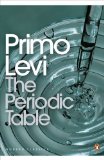
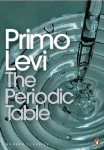
The Periodic Table – Primo Levi

  Translated from the Italian by Raymond Rosenthal

Five words from the blurb: chemist, element, metaphorical, human, society

Primo Levi was an Auschwitz survivor and the majority of his books focused on his experience in the concentration camp. This book is different in that the time in the concentration camp is barely mentioned, but instead we see the importance that chemistry played in his life – from his earliest school boy experiments to the difficulties of dealing with his former captors in a professional capacity. The book is made up of twenty-one short stories, each titled with the name of a different chemical element; each revealing a different aspect of the human condition.

This book is clearly very important, but as a reader I had mixed feelings. It was very hard to start – requiring a dictionary, an enormous amount of patience and a fair bit of googling to understand anything that was happening. It got easier to read as it progressed, but could never be read at any speed greater than a snail’s pace.

As a former chemist I am normally keen to read about science in literature, but I’m afraid that many sections reminded me of doing some tedious chemistry homework. The complete descriptions of various experiments bored me and I found the passion for chemistry a bit too strong.

Distilling is beautiful. First of all, because it is a slow, philosophic, and silent occupation, which keeps you busy but gives you time to think of other things, somewhat like riding a bike. Then, because it involves a metamorphosis from liquid to vapour (invisible), and from this once again to liquid; but in this double journey, up and down, purity is attained, an ambiguous and fascinating condition, which starts with chemistry and goes very far. And finally, when you set about distilling, you acquire the consciousness of repeating a ritual consecrated by the centuries, almost a religious act, in which from imperfect material you obtain the essence, the spirit, and in the first place alcohol, which gladdens the spirit and warms the heart.

Perhaps I don’t think deeply enough about things, but I always found distilling to be a frustrating past-time and so a passage like this didn’t connect with me.

The problem/genius of this book is that chemistry is a metaphor for so many different things and spotting the underlying meaning behind can be hard. Levi helps by dropping in a few obvious statements, but I’m sure that a lot of the symbolism went over my head.

The differences can be small, but they lead to radically different consequences, like a railroad’s switch-points; the chemist’s trade consists in good part in being aware of those differences, knowing them close up, and foreseeing their effects. And not only the chemist’s trade.

This is one of those books that needs to be studied to be fully appreciated. I don’t think that reading it at home, in isolation, will ever reveal the full power of the words. I’m really pleased that I completed the book, but can’t say it was an enjoyable or enlightening experience.

,

This is my first Primo Levi book, but I suspect that I might enjoy some of his other books more.

Have you read any of his books? Which do you recommend?

Categories
1950s Books in Translation Classics Nobel Prize

Independent People – Halldór Laxness

 Halldor Laxness won the Nobel Prize for Literature in 1955

Five words from the blurb: Iceland, epic, sheep, independence, masterpiece

I first heard about Independent People when David Mitchell, one of my favourite authors, recommended it. He seems to have a very good taste in books and so I now snap up anything that he highlights.

Independent People focuses on Bjartur, a sheep farmer living in an isolated part of Iceland. His beliefs are totally different from any other culture I have read about before and I found it fascinating to learn about them. Bjartur’s main aim in life is to achieve independence.

The man who lives on his own land is an independent man. He is his own master. If I can keep my sheep alive through the winter and can pay what has been stipulated from year to year – then I pay what has been stipulated; and I have kept my sheep alive. No, it is freedom that we are all after, Titla. He who pays his way is a king. He who keeps his sheep alive through the winter lives in a palace.

He wants to be able to survive without having to rely on anyone else and the lengths he goes to are a bit extreme. For example, he finds it rude to ask anyone for help, to the extent that in a life or death situation he offered to help someone with a mundane task until that person was grateful and asked if there was anything they could do for him.

This book is beautifully written and packed with quotable sentences and amazing descriptions.

“She peeped out from under the blanket, and there he was, still sitting on the edge of his bed, when all the others had gone to sleep, mending some implement or other. No one stirred any longer, the living-room fast asleep; he alone was awake, alone was chanting, sitting there in his shirt, thickset and high-shouldered, with strong arms and tangled hair. His eyebrows were shaggy, steep and beetling like the crags in the mountain, but on his thick throat there was a soft place under the roots of his beard. She watched him awhile without his knowing: the strongest man in the world and the greatest poet, knew the answer to everything, understood all ballads, was afraid of nothing and nobody, fought all of them on a distant strand, independent and free, one against all.”

I admit that there were several slow sections, but this is one of those books where all effort is rewarded. It was wonderful to be able to gain an insight into a culture so different from my own. I now have some appreciation for the harshness of life in the Icelandic countryside and am just a little bit more grateful for my centrally heated home.

Highly recommended.

The thoughts of other bloggers:

….brilliant in a depressing, downtrodden sort of way. BookNAround

His language is poetic, touching and authentic. Caribou’s Mom

It is not an easy read, but is well worth the effort. Musings

Have you read anything written by Halldor Laxness?

Which of his other books do you recommend?


Categories
1960s Classics

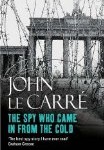
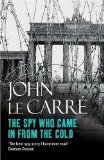
The Spy Who Came in from the Cold – John Le Carré

I had never read a spy novel. I’d assumed they consisted of numerous chase scenes and gun fights –  just like the Bond films my husband loves but I find tedious and repetitive. I’m always willing to confront my prejudices so when Annabel selected The Spy Who Came in from the Cold as her book of the year I decided to give it a try. It was very different from my expectations, but I’m afraid I don’t think I’m a fan of spy stories.

I was immediately struck by the quality of the writing. For some reason I’d expected it to be fast paced and of an average writing quality, but I was wrong. The pace was actually quite slow and contained many descriptive passages. I really enjoyed reading the beginning of the book and getting to know Leamas, the disgraced agent asked to perform one last mission.

Unfortunately the book went downhill as it progressed. Too many characters were introduced and I struggled to follow who they were. I have since discovered that earlier books introduced many of these people and I think knowing their backgrounds would have been hugely beneficial to appreciating this book.

I also came to realise that real spying bares little resemblance to James Bond films. Real spying is quite dull – it involves a lot of time waiting and making complex negotiations with others. I became bored with the lack of action and increasingly reluctant to continue reading.

I thought the last chapter was fantastic, but I’m afraid it was too little too late.

Annabel’s review indicates that she is a big fan of spy novels: she has read many of Le Carré’s other books and has watched the film. I have a feeling that this all contributed to her increased enjoyment of the book as I’m sure it gets better the more you understand the motivations of the numerous characters. I’m pleased that I’ve read this modern classic, but I’m afraid I’m not going to be rushing to read more spy stories.

Categories
1950s Books in Translation Chunkster Classics Historical Fiction Nobel Prize Recommended books

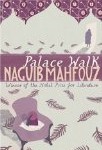
Palace Walk – Naguib Mahfouz

 Naguib Mahfouz won the Nobel Prize for Literature in 1988

Translated from the Arabic by William Maynard Hutchins and Olive E.Kenny

Palace Walk is the first book in the Cairo trilogy, which is normally considered to be Naguib Mahfouz’s greatest achievement. It became a best seller in the Arab world on its release in 1956, but also enjoyed worldwide success, selling 250,000 copies in America.

The book is set in Egypt and describes the life of the Al Jawad family. Every aspect of their day is described in minute detail and so we learn exactly what life was like for the middle-class shopkeeper and his family. The book begins in 1917 and focuses on the complex task of finding someone suitable to marry each of the children.

Men play the dominant role in the household, using the words of the Qur’an to decide the most appropriate course of action. The women in the book were oppressed and spent most of their time shut inside, but at no point did this feel wrong to me. The book made me understand why this society worked in the way it did and at some points I was envious of their tight-knit community and the way the women were so close to each other.

No woman was anything more than a body to him. All the same, he would not bow his head before that body unless he found it truly worthy of being seen, touched, smelled, tasted and heard. It was lust, yes, but not bestial or blind. It had been refined by a craft that was at least partially an art, setting his lust in a framework of delight, humor and good cheer. Nothing was so like his his lust as his body, since both were huge and powerful, qualities that bring to mind roughness and savagery. Yet both concealed within them grace, delicacy, and affection, even though he might intentionally cloak these characteristics at times with sternness and severity.

I loved reading about the complex marriage negotiations and the way the household was run, but the text was so rich with detail that I found I could rarely read more than about twenty pages a day. This meant that it took me about six weeks to read the first 300 pages.

At about this point the style of the book changed, the pace picked up and I flew through the remaining 200 pages in just two nights. WWI brought British occupation to Egypt, changing the lives of the household completely. Seeing fear and tragedy brought to a family I knew so well made the impact much greater.

Palace Walk gives an impressive insight into Egyptian life. I loved the characters and the way I came to understand their very different way of living. I finished this book knowing a lot more about Egyptian history, but also feeling a little bit wiser and more tolerant. I’m looking forward to reading the rest of the trilogy.

Highly recommended.

Have you read The Cairo Trilogy? Are the other books in the trilogy similar in style/pace?

Do you recommend any of Naguib Mahfouz’s other books?

Categories
1950s Classics Science Fiction

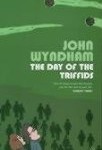
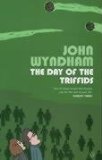
The Day of the Triffids – John Wyndham

I hadn’t read any Wyndham before, but everyone seems to talk about him fondly and so I decided that it was time I tried one of his classic science fiction books.

The Day of The Triffids begins with the central character, Bill, waking up in hospital to discover that everyone around him has gone blind. Bill was recovering from an eye operation and so had his eyes covered the previous night when a beautiful green meteor shower appeared in the sky. He had been upset that he’d missed out on the spectacle, but now realises that this is the reason he managed to retain his sight.

Bill heads out into the world and begins the difficult task of trying to survive now that almost everyone is blind. The basic infrastructure has collapsed so even basic things are difficult to achieve. On top of the blindness people also have to deal with large plants that have learnt to walk. These triffids are beginning to hunt people down. I was aware of the killer plants in The Day of the Triffids, but I hadn’t realised that people went blind too. The moment I read this I began to compare the book to Blindness by Jose Saramago (one of my all time favourites), but I think this initially put The Day of the Triffids at a disadvantage. They are very different books and the light, entertaining tone of The Day of the Triffids didn’t have the same impact on me as the darker Saramago novel.

As the book progressed the oppressive nature of the triffids began to creep in. I had initially thought they were quite comical, but I was impressed by the way Wyndham began to make me fear these mythical plants. By the end I was totally convinced by the events of the book: loving the plot, the characters and the many important observations of our society.

It must be, I thought, one of the race’s most persistent and comforting hallucinations to trust that “it can’t happen here” – that one’s own time and place is beyond cataclysm.

This book showed a realistic vision of a society struggling to survive, but all the darker, more gory elements were removed. I can see why it is a classic and why people love reading Wyndham. It is a perfect, cozy disaster story!

Highly recommended.

Which is your favourite John Wyndham book?

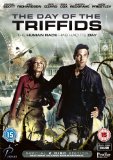
I was tempted to watch the recently released BBC adaptation of the book, but most of the reviews are terrible!

Have you seen it? Is it worth watching?