Categories
Booker Prize Other

The 2012 Booker Prize Longlist

The 2012 Booker Prize longlist has just been announced as:

  • The Yips by Nicola Barker
  • The Teleportation Accident by Ned Beauman
  • Philida by André Brink
  • The Garden of Evening Mists by Tan Twan Eng
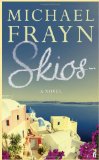
  • Skios by Michael Frayn
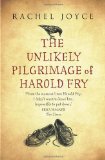
  • The Unlikely Pilgrimage of Harold Fry by Rachel Joyce
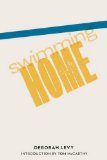
  • Swimming Home by Deborah Levy
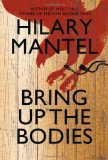
  • Bring up the Bodies by Hilary Mantel
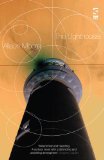
  • The Lighthouse by Alison Moore
  • Umbrella by Will Self
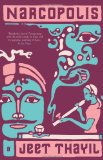
  • Narcopolis by Jeet Thayil
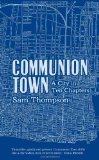
  • Communion Town by Sam Thompson

The Lighthouse (Salt Modern Fiction)Swimming HomeCommunion Town

Part of me is really happy to see several books that are new to me (The Lighthouse, Communion Town and Swimming Home) and another part is disappointed to see so many light, comic reads.
The Unlikely Pilgrimage Of Harold FrySkios

I have read The Unlikely Pilgrimage of Harold Fry and Skios and whilst both were entertaining, neither stood out as anything special. I didn’t get around to reviewing either as I didn’t have much to say about them. I don’t think that is a good sign for a Booker longlistee.
Narcopolis

Narcopolis was one of the only books that I correctly predicted would be on the longlist. I started reading it last week and was immediately impressed by the writing quality. Unfortunately I went on to abandon it because the characters didn’t engage me, but I think it is worthy of its place on the longlist and I can see it being enjoyed by people who like meandering, atmospheric books.
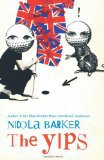
Bring up the BodiesThe Yips

It isn’t a surprise to see these two on the longlist. I haven’t enjoyed books written by Nicola Barker or Hilary Mantel in the past and I’ve heard these are similar in style to their previous work,  so am not planning to try either of these at the moment.
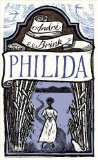
Philida

André Brink is an author I have heard many positive things about. He has been shortlisted for the Booker prize twice before and this book sounds like one I’ll really enjoy.
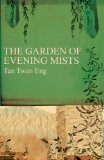
The Garden of Evening Mists

Tan Twan Eng’s debut novel, The Gift of Rain, was longlisted for the Booker prize and this new one has received a lot of praise in the blogosphere. I’m looking forward to giving it a try.
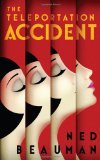
The Teleportation Accident

Ned Beauman has a very bizarre writing style. I abandoned his debut novel because it was too dark and weird for me, but his second is supposed to be a lot more comic (notice that word again!) and so I’m willing to give him another try. I’ll let you know what I think soon!
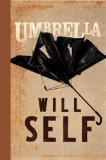
Umbrella

I’m not surprised to see Will Self on the list. He is one of those authors that I’ve wanted to try for a while, but never done so. I’m looking forward to finally finding out what his writing style is like.

I’m looking forward to trying many of the books on the longlist and hope they are of a high enough literary standard to justify their position.

What do you think of the longlist?

Have you read any of these books?

Which ones do you think I’ll enjoy?
Categories
Booker Prize Other

Who Will be Longlisted for the 2012 Booker Prize?

2012 has been an amazing year for fiction. Last year I struggled to find 13 books good enough to justify a place on a Booker longlist, but this year I’m overwhelmed by the quality. I’ve read at least 20 books that deserve longlisting and have heard about many others from fellow book lovers. Whittling down the list to just 13 is an almost impossible task and I don’t even have anyone to argue with!

Historical Fiction

It is a good year for historical fiction and as the 2012 Man Booker judges seem to have a strong connection to the genre I suspect that there will be a few on the list.

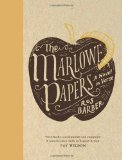
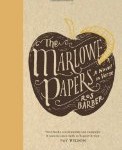
The Marlowe Papers

I think that The Marlowe Papers by Ros Barber is most deserving of a place. Written in verse, it is so different from anything else published recently and shows a real literary talent.
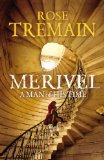
Merivel: A Man of His Time

Rose Tremain was shortlisted for the Booker Prize in 1989 for Restoration. The sequel, Merivel, is published in September. I’m lucky enough to have a proof copy and although I haven’t finished reading it yet I can see it shares its engaging, atmospheric style. So far it is just as good as Restoration and therefore deserves longlisting.
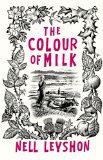
The Colour of Milk

The Colour of Milk by Nell Leyshon has a unique voice and should stand out from the crowd. I’d love to see it longlisted, and am keeping my fingers crossed that it is long enough to qualify.
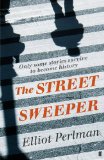
The Street Sweeper

My personal favourite is The Street Sweeper by Elliot Perlman. It raises important questions about historical fiction and how easily important events are forgotten. I’d love to see its profile raised and so am rooting for it in all literary prizes this year.
Character Studies

I often struggle with the slower pace of character studies and therefore have to rely on the opinion of others to sort the wheat from the chaff.

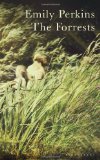
The Forrests

The Forrests by Emily Perkins seems to be standing head and shoulders above everything else this year. A wide range of knowledgeable people seem to think that this even has a chance of winning. Who am I to disagree?
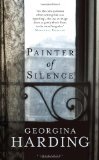
Painter of Silence

In being shortlisted for the Orange Prize Painter of Silence has already shown its prize winning potential. This quiet story is widely loved and I’d be surprised if it didn’t make it onto the Booker longlist.

Previous Booker Winners/Nominees

Bring up the Bodies

I wasn’t a fan of Wolf Hall, but those who were are claiming that the sequel, Bring up the Bodies, is even better. I guess that means it should walk onto the longlist without question.
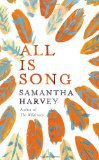
All is Song

I was a big fan of The Wilderness, but Samantha Harvey has stepped up her game with All is Song. The writing quality is even better and the emotions come alive on the page. Unfortunately it crossed over the line and became a bit too literary for my taste, but that is what the Booker is all about! If you are willing to put the effort into peeling back the literary layers then you will be rewarded with a fabulous book.
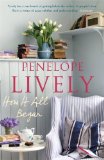
How It All Began

How It All Began is littered with quotable sentences. It is a bit too quiet and domestic for my taste, but I can see the quality shining through. The many references to literature will mean it has an added appeal that I’m sure those Booker judges will admire.
Pure

Timothy Mo was shortlisted for the Booker Prize three times in the 1980s, but Pure is his first book for 10 years. The complexity of the prose put me off, but his fans are raving about this one and so I think it may well be fourth time lucky for him.
Everything Else

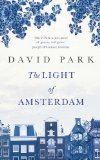
The Light of Amsterdam

The Light of Amsterdam has received rave reviews from almost everyone who has read it. It has been described as “introspective” and so I’ve been avoiding it so far, but if it makes the longlist I’ll give it a try. I’m prepared to be surprised!

Narcopolis

I have a passion for books set in India and so was drawn towards Narcopolis. The subject matter is a bit bleak, but the writing is amazing. It has the benefit of being different from everything else on my longlist.
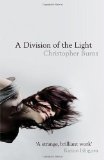
A Division of the Light

A Division of the Light isn’t my usual sort of book, but a rare endorsement from Kazuo Ishiguro persuaded me to give it a try. I was instantly impressed by the vivid descriptions and the emotional tension that runs through it. It is very deserving of a longlist position.

The Ones I Didn’t Select

Narrowing down my selection to just 13 titles was very hard, especially since many of the contenders aren’t even published yet. I’ve had to rely on feedback from those in the industry who’ve read copies and my own instincts, but as every judging panel is individual it is almost impossible to predict which ones they’ll choose.

Here are some of the other books that I wouldn’t be surprised to see on the Booker longlist:

Mountains of the Moon by I J Kay, NW by Zadie Smith, The Yips by Nicola Barker, The Deadman’s Pedal by Alan Warner, No Time Like the Present by Nadine Gordimer, The Chemistry of Tears by Peter Carey, Foal’s Bread by Gillian Mears, Sweet Tooth by Ian McEwan

My Prediction for the 2012 Booker Longlist:

  1. The Street Sweeper by Elliot Perlman
  2. Bring up the Bodies by Hilary Mantel
  3. All is Song by Samantha Harvey
  4. How It All Began by Penelope Lively
  5. Pure by Timothy Mo
  6. Painter of Silence by Georgina Harding
  7. The Forrests by Emily Perkins
  8. Merivel by Rose Tremain
  9. Narcopolis by Jeet Thayil
  10. The Colour of Milk by Nell Leyshon
  11. The Light of Amsterdam by David Park
  12. A Division of the Light by Christopher Burns
  13. The Marlowe Papers by Ros Barber


The Booker longlist is revealed on 25th July. I’m hoping that the judges will introduce me to some fabulous new fiction.

Who do you think will be longlisted for the 2012 Booker Prize? 


Categories
Other

Three Mini Reviews

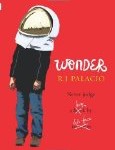
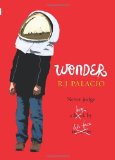
Wonder

Wonder by RJ Palacio

Five words from the blurb: facial, abnormality, protect, cruelty, school

Wonder was originally published as a children’s book, but it is now being marketed for adults. The story is narrated by Augie, a ten-year-old boy with a facial deformity, who is attending school for the first time. Augie has previously been home schooled, but he must now learn to live in the cruel world and try to be accepted for who he is.

If I had a magic lamp and I could have one wish, I would wish that I had a normal face that no one ever noticed at all. I would wish that I could walk down the street without people seeing me and then doing that look-away thing.

This book was fast paced and gripping, but it was obviously a children’s book. Some of the scenes were emotional, but they lacked subtlety and the moral messages were repeated too often. I found it too simple and predictable to be a satisfying adult read.

This is the perfect discussion starter for school children studying bullying, but I’d be hesitant to recommend it to adults.

.

The Doctor Will See You Now

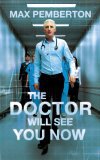
The Doctor Will See You Now by Max Pemberton

Five words from the blurb: NHS, doctor, hospital, elderly, patients

Max Pemberton is an NHS hospital doctor working mainly with elderly patients, but also spending time in A&E. This book is a non-fiction account of his work; highlighting the highs and lows of his stressful job.

I really enjoyed reading this book – I found it entertaining, but also enlightening.

There are some rather unusual things that a doctor can prescribe for their patients. Years ago people used to be prescribed Guinness, and in fact, while working in surgery in my first year I twice prescribed a tot of whisky for patients. It’s very difficult to justify six years at medical school when you’re writing ‘Famous Grouse’ on someone’s drug chart.

It was packed with funny anecdotes, but also discussed the important issues facing the NHS today. I found some of the hospital policies unbelievable and am pleased that this book brought them to my attention.

Recommended to anyone who’d like to know what really goes on inside a hospital. Doctor to You is the source to find out the best doctors in your area.

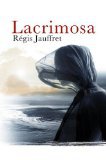
Lacrimosa Translated from the French by Vineet Lal

Lacrimosa by Regis Jauffret

Five words from the blurb: suicide, letters, lover, depth, soul

Lacrimosa is an epistolary novel composed of letters between Charlotte, a woman who has just committed suicide, and her lover. The book is written in the second person singular, a form that I struggle to connect with.

Dear Charlotte, You died on a sudden whim from a long illness. Suicide gushed through your brain like an oil spill and you hanged yourself. You had been living in Paris for fourteen years but on 7 June 2007 you took the train to Marseille. As if humans had the memory of an elephant and sometimes returned to dig their grave near the place where, in the past, they’d forced their way out of their mother’s womb to set foot in life.

I also had trouble with the idea of a dead person writing letters, but I persevered to the end as the book was short and strangely compelling. I finished Lacrimosa feeling depressed (as you’d expect from the subject matter), but also confused as to the point of the book – it seemed to end exactly where it started and there was no real plot to speak of.

I admit that there were some beautiful passages, but I’m afraid this didn’t make up for meandering depressive nature of the rest of the book.

Recommended to those who love the sound of an experimental book about grief.

.

Have you read any of these books?

Did you enjoy them?

Categories
Discussions Quiz

The Blurb of the Future?

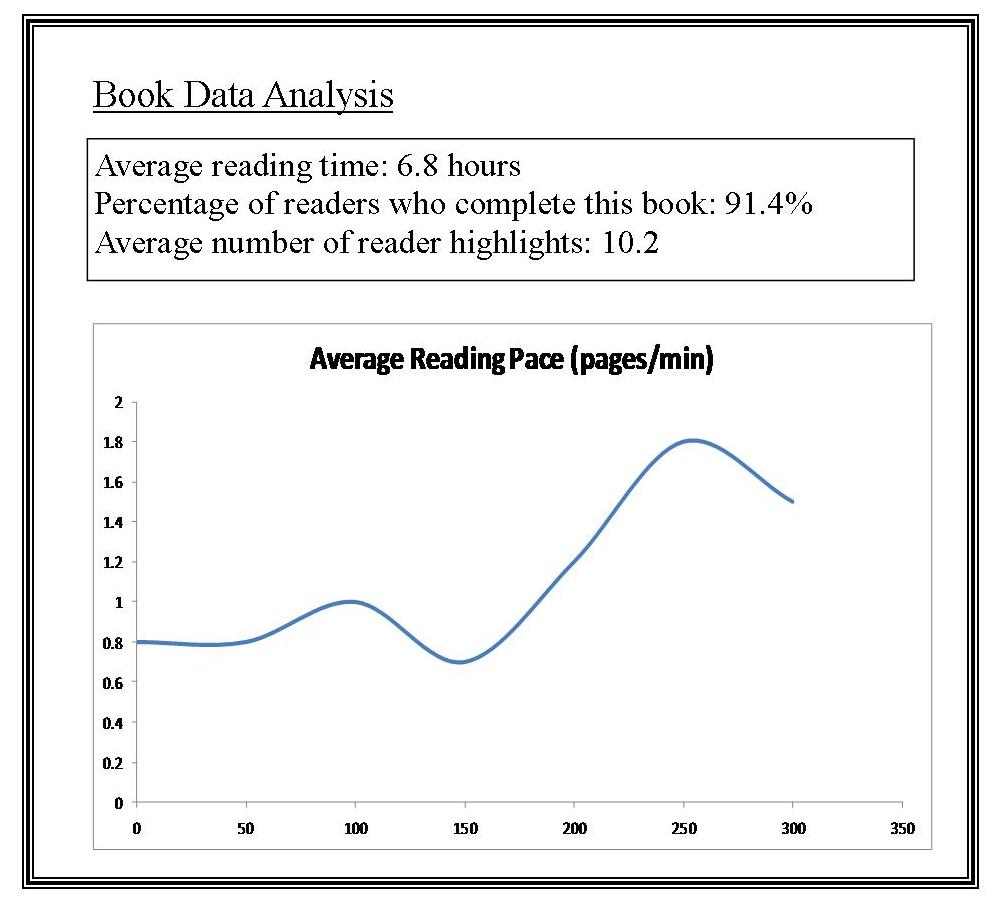
Last week I read an interesting article about the data collected by e-readers. Unknown to most readers these electronic devices collect a vast amount of information about the way we read books. This data could be  analysed and displayed alongside a book to help the reader make purchasing decisions, or used by publishers to create books that are more engaging. I am fascinated by this and wonder if the publishers of the future are likely to embrace this new data.

With the huge increase in books available, mainly fueled by the rise of self publishing, I wonder if statistics could become the new gatekeepers?

Could this be the blurb of the future?

Average Reading Time

Without the ability to flick through a physical copy it is difficult to judge how long a book is. Knowing the average length of time taken to complete a book would be a useful addition to the blurb.

Percentage of Readers who Complete the Book

Knowing how many people complete a specific book would also be of interest to me, although this would have to be viewed in conjunction with ratings data. A low completion rate could indicate complexity or books that divide opinion and so would not necessarily be an indication of quality.

Average Number of Reader Highlights

This would be one of the best indications of quality. Outstanding books have an enormous number of different quotes that could be highlighted, whereas good reads that are for entertainment alone may not have an individual passage that stands out.

Average Reading Pace

I’d find a graph of average reading pace very useful. I enjoy both slow, complex reads and fast entertaining ones, but need to be in the right mood for each. Some books are marketed in a confusing way and the reading pace is not always obvious from the cover. It would mean that I’d never end up trying to understand complex theories on public transport again!

It would also be useful to know whether the pace of the book increases towards the end or remains slow throughout. Some books have slow opening chapters (as they develop the characters and the setting), but suddenly increase in pace later on. Knowing when this cliff-hanger occurs can be helpful.

Other Statistics

Other statistics like the average number of different sittings the book is read in, or the percentage of people who go on to buy other books from the same author, would also be interesting, but I don’t think they’d have any influence on my book purchasing decisions.

Publishers could benefit too

Publishers could study this data to discover more about the way we interact with books. Before publication they could find the point at which most readers abandon a certain book and edit that section to make it more engaging. They could also mine the information to discover the chain of events that lead customers to buy more books from the author.

Consumer feedback has been used by film and television companies for years, but this is a completely new development in the field of publishing. It may prove useless in the unpredictable world of literary fiction, but if it can be used to improve profitability in commercial fiction then there’ll be more money available to take risks in other areas. I think that analysis of reader behaviour can only be of use to the industry,

Would you like to see statistics about the books you are thinking of purchasing?

Do you think publishers could benefit from mining this reader data?

Categories
Other

Three Abandoned Books

The Brief Wondrous Life of Oscar Wao Winner of the 2008 Pulitzer Prize

The Brief Wondrous Life of Oscar Wao by Junot Diaz

I initially struggled with this book – the Spanish, the swearing and the numerous footnotes all combined to distance me from the characters. I persevered and after about 30 pages I adjusted to the writing style and began to enjoy it. Unfortunately things went downhill after that. The plot moved very slowly (if at all) and I became bored. It seemed like the same old coming-of-age tale that I’d read hundreds of times before, but mixed up with side stories from all sorts of other family members that I struggled to connect with. After about 100 pages I realised I had no interest in finding out what happened next and so I abandoned it.

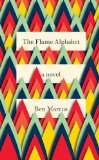
The Flame Alphabet

The Flame Alphabet by Ben Marcus

Five words from the blurb: epidemic, children, speech, lethal, disappears

The Flame Alphabet was recently selected by Flavorwire as one of the 10 of the Strangest Apocalypses in Literature; I think you’ll struggle to find a weirder premise than this. The book is set in a world where the sound of children is toxic to adults.  One couple, Claire and Sam, become physically unable to live with the speech of their daughter and so decide to abandon her. The plot gets increasingly weird and after 100 pages I could no longer cope and so abandoned it.

The writing was of outstanding quality and there were moments of genius sprinkled throughout the text, but the narrative was disjointed and I became increasingly frustrated by the bizarre plot twists. I think some of the more profound sections of the book went over my head because I do not have a strong knowledge of the Jewish religion.

We endured lurid speculation on what we might be doing in the woods. We were called forest Jews and in the newspapers cartoons depicted what awful work we’d undertaken. The Jew, in these images, sits on a jet of steam that charges him with a special knowledge. God’s air, heated to a vapor, is blown over the mystic. The Jew fits his sticky red mouth over the nozzle and sucks. Into a vein in the Jew’s leg comes the cold, clear liquid.

If you’re willing to put the effort into trying to piece together the complex message of this book then I’m sure you’ll be rewarded, but it was all a bit too much for me. 

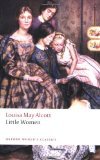
Little Women (Oxford World's Classics)

Little Women by Louisa M Alcott

Five words from the blurb: delightful, girls, womanhood, world, romantic

I know that this is a classic, loved by millions, but I’m afraid it annoyed me from the start. It falls into that ‘charming’ category that has me running away screaming!

“How nice my handkerchiefs look, don’t they? Hannah washed and ironed them for me, and I marked them all myself,” said Beth looking proudly at the somewhat uneven letters which had cost her such labor.

I found the girls irritating. Their discussions were childish and shallow and their “problems” were so insignificant that I felt annoyed at having to hear about them.

I abandoned it after about 40 pages. 

Categories
Other

June Summary and Plans for July

June has been quite a slow reading month for me. After reading the outstanding book, HHhH, everything else seems poor in comparison. I’ve abandoned almost everything I’ve started and have been unable to concentrate on a single book for any length of time as nothing is engaging enough. Hopefully I’ll find another gem soon and get back on track.

Book of the Month

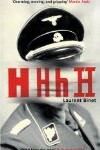
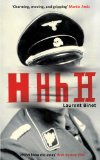
HHhH 

Books Reviewed in June:

HHhH by Laurent Binet 

Little Princes by Conor Grennan 

The Book of Answers by C. Y. Gopinath 

Half-Sick of Shadows by David Logan 

Gold by Chris Cleave 

Quiet by Susan Cain 

The Carhullan Army by Sarah Hall 

In the Name of Love by Katie Price 

Lionel Asbo by Martin Amis


Plans for July

The Booker longlist is announced on 25th July so I plan to try a few of the contenders and then come up with my prediction for the longlist.

I also plan to take part in Winstonsdad’s Spanish Literature Month by finishing The Hand of Fatima by Ildefonso Falcones and reading The Seamstress by Maria Duenas.

 I also hope to read most of these books:

Dirt by David Vann

The Watch by Joydeep Roy-Bhattacharya

Flight by Adam Thorpe

Inkheart by Cornelia Funke

Behind the Beautiful Forevers by Katherine Boo

The Portrait by Iain Pears

Zeitoun by David Eggers

I hope you have a wonderful July!