Categories
Other

October Summary and Plans for November

The colder weather of the last month encouraged me to spend more time inside, curled up with a book, and so I read more than twice as much as I did in September. Overall they were a fairly mixed bag, but the majority were entertaining enough to satisfy me. I’m currently enjoying half term with my boys and so don’t have time to write reviews, but I’ll let you know about all the books I’ve read once the schools have gone back.

Book of the Month
In Defence of Dogs: Why Dogs Need Our Understanding

Books Reviewed in October:

In Defence of Dogs by John Bradshaw 

The Garden of Evening Mists by Tan Twan Eng 

So Big by Edna Ferber 

Arcadia by Lauren Groff 

The Creator by Guðrún Eva Mínervudóttir 

The Yellow Birds by Kevin Powers

Swimming Home by Deborah Levy 

The Light Between Oceans by M L Stedman 

The Portrait by Iain Pears 

Plans for November

I plan to take part in German literature month organised by Lizzy and Caroline. I’ve already read The Cow by Beat Sterni and am making good progress with The Swarm by Frank Schätzing. I may try to squeeze in another German book before the end of the month too.

I also hope to read most of these:

The First Century After Beatrice by Amin Maalouf

A Farewell to Arms by Ernest Hemingway

The Testimony by James Smythe

The Human Part by Kari Hotakainen

Jerusalem by GM Tavares

The Cook by Wayne Macauley

Fahrenheit 451 by Ray Bradbury

The Hundred-Year-Old Man Who Climbed Out of the Window and Disappeared by Jonas Jonasson

I hope you have a wonderful November!

Categories
Uncategorized

My Life in Books

Today I’m taking part in My Life in Books over at Stuck in a Book. Head over to Simon’s blog to see me talk about my favourite books from the past and try to predict who I’m paired with. 

Categories
Other

Links I Like

The difference between Murakami in Japan and the rest of the world.

Booker drop their sponsorship of the Man Asian Literary Prize.

David Mitchell talks about seeing Cloud Atlas on screen and about books/reading.

Lab Lit: Fantastic website dedicated to accurate portrayal of laboratory culture/science in literature, media.

Book published in 1899 tries to predict what the world will be like in 1999.

Infographic showing how to win the Booker prize

The world’s smallest book, “Teeny Ted from Tunip Town,” is thirty pages long and as wide as a strand of human hair.

Rovio, the producers of Angry Birds, announce their first book app.

The longlist for the 2013 DSC South Asian Literary Prize has been announced.

Felix Baumgartner’s Jump Re-enacted in Lego:

I hope you enjoy browsing these links.
Have a great weekend!!

Categories
Booker Prize Other

Hilary Mantel wins 2012 Booker Prize

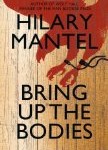
Bring up the Bodies

Hilary Mantel won the 2012 Booker Prize for the second book in her Tudor trilogy, Bring up the Bodies.

I’m a bit surprised that they’ve given her the prize for the second time and am feeling a little deflated about the result. I guess this means I’ll be trying Wolf Hall on audio at some point in the near future. Hopefully I’ll have better luck with that format as the text version didn’t do much for me.

Categories
2012 Non Fiction Other Recommended books

1001 Books: You Must Read Before You Die

1001 Books You Must Read Before You Die (1001 Must Before You Die)

Last year I bought 1001 Children’s Books: You Must Read Before You Grow Up and spent many happy hours (and far too much money!) investigating books for my children. I therefore jumped at the chance to review the adult version, 1001 Books: You Must Read Before You Die.

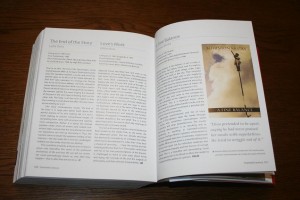
Weighing nearly 2kg, this chunky book contains a wealth of information. It is divided into four sections (pre 1800, 1800s, 1900s, and 2000s); with each book summarised in around 300 words. As an example, (and a great excuse to mention my all-time favourite book!) here is where it mentions A Fine Balance:

The text gives a brief summary of the plot (without a hint of spoilers) and then goes on to explain why the chosen book is important. Each review is bursting with positivity.

a beautiful and devastating novel whose genius lies in its refusal to allow the reader to escape into either pathos or cynicism.

It is easy to get swept up in the enthusiasm of each page, buying lots of books on a whim (I know that from my year-long relationship with the children’s version!). I’ll take that as a good sign – anything that encourages reading is fantastic.

The wonderful thing about this book is that it doesn’t just focus on classics from the English speaking world and so, although I was familiar with the majority of the titles mentioned, there were still lots of interesting books for me to investigate.

Don’t these sound interesting?

The Taebek Mountains by Jo Jung-rae
A Korean epic which “skilfully conveys intimate personal dramas” whilst playing them “out in a climax of suspicion and terror”

Lady Number Thirteen by Jose Carlos Somoza
A Cuban novel “full of supernatural portents”. “A novel as exciting as it is intelligent.”

The only problem with this is that many of the books (including the two mentioned above) aren’t actually translated into English yet and this can be frustrating. This isn’t the fault of the person compiling the book, in fact I admire them. It just highlights the number of amazing books that we are missing out on in the UK. I hope that the stigma around translated books reduces with time and more of these outstanding books can make their way onto our shelves.

Overall I can’t fault this book – it is perfect for all bibliophiles. The only problem is the fact it highlights how many amazing books there are and simple calculations show it will be difficult to fit them all in before we die.


Categories
Booker Prize Other

Who will win the 2012 Booker Prize?

Who will win the 2012 Booker Prize? I don’t know! For the first time in several years there isn’t a clear front runner and I wouldn’t be surprised to see any of the books win. That isn’t a bad thing – I think it is wonderful that all the books on the shortlist have their own merits. Trying to decide which of the books, each with their own different style and function, should take the top spot is a tricky decision, but that doesn’t stop me trying!

Here’s how I’d order the shortlist:

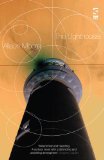
6. The Lighthouse by Alison Moore
The Lighthouse (Salt Modern Fiction)

This book was actually my second favourite from the shortlist, but I found the symbolism a bit heavy-handed. It is a fantastic book club choice, but I don’t think it has the originality or power to win the Booker.

My rating:

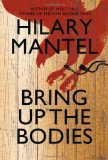
5. Bring up the Bodies by Hilary Mantel
Bring up the Bodies

I admit that I didn’t even try this one. Having abandoned Wolf Hall I know that Mantel’s style isn’t for me, but I think the judges would have to be very brave to give an author a second Booker Prize. The book would have to be outstanding and there would have to be unanimous agreement that it was head and shoulders above the other contenders. I don’t think that is the case. This book may be more focused and enjoyable to read, but with a shortlist this strong I can’t see justification for it winning.

My rating: Did not start

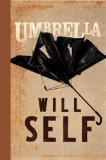
4. Umbrella by Will Self
Umbrella

I abandoned this one. I struggle with stream-of-consciousness at the best of times, but found this impenetrable. The majority of people seem to agree so I can’t see it receiving enough love for an entire panel of people to vote it into the top position.

My rating: Did not finish

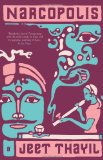
3. Narcopolis by Jeet Thayil
Narcopolis

This book was wonderfully atmospheric, but the dream-like, hallucinogenic nature of the writing didn’t appeal to me. I abandoned it, but can see that the star quality of the writing could easily justify a Booker win. This could be a surprise winner.

My rating: Did not finish

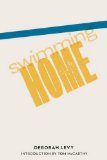
 2. Swimming Home by Deboragh Levy
Swimming Home

I found this book too skeletal, but as a reflection on the last century of literature it is genius. There are so many little references for fiction lovers to spot and I know this appeals to more scholarly people (Booker judges?). I wouldn’t be surprised to see this win.

 My rating:

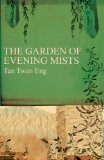
1. The Garden of Evening Mists by Tan Twan Eng
The Garden of Evening Mists

This book has everything I like to see in a Booker winner. It has an outstanding quality of writing, the depth and complexity to sustain multiple re-readings, and is clever without being pretentious. The fact it sheds light on a different culture is an added bonus. I can’t think of any reason why it shouldn’t be awarded the prize. I’m keeping all my fingers and toes crossed for it.

My rating:

.

Who do you think will win the Booker Prize?

What do you think of the order I have the books in?